
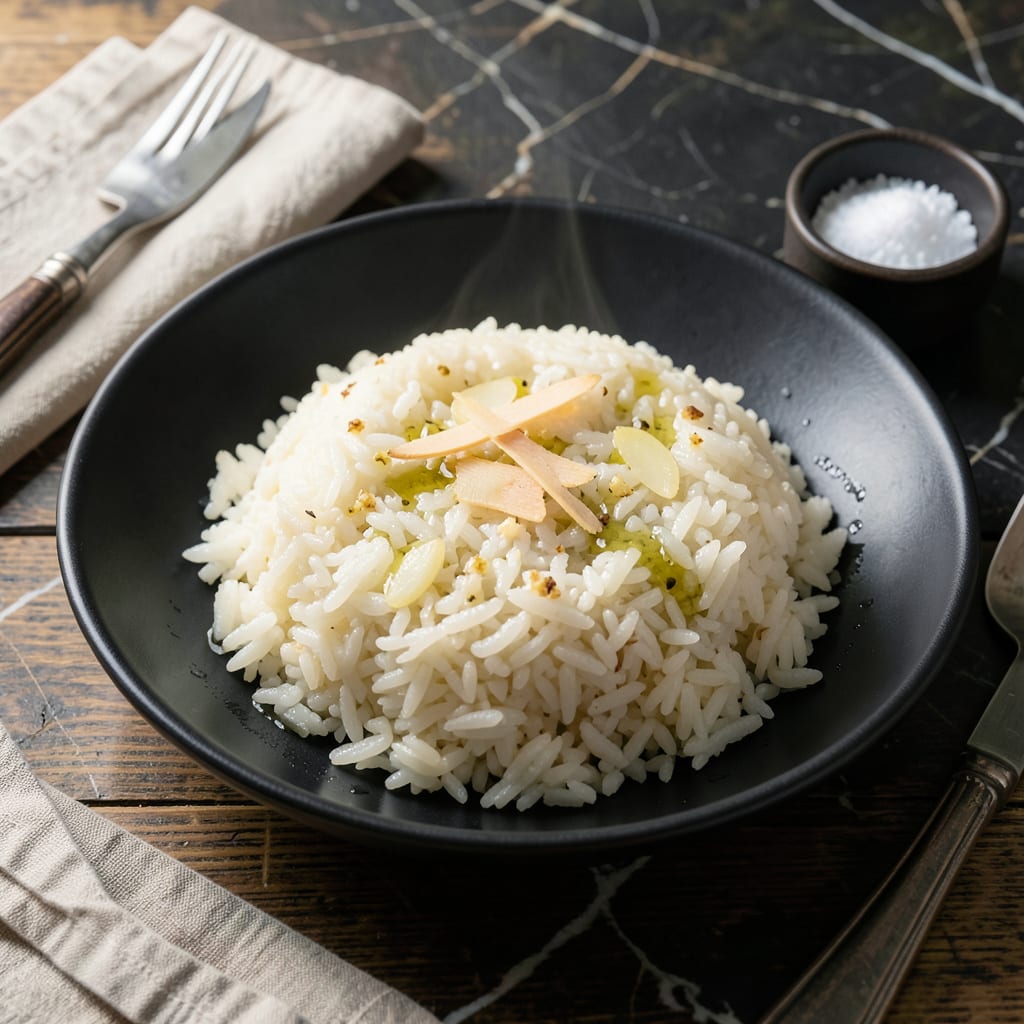
Mastering Asian steamed rice begins with the right ratio of water to grain and precise heat control. This foundational technique yields consistently fluffy, separate grains every time.
The method is simple yet exact: rinse the rice, use the correct water ratio, and steam until tender. No special equipment is needed—just patience and attention to detail.
Ingredients for Asian Steamed Rice
Ten ingredients for perfectly fluffy, aromatic steamed rice every single time.
| Ingredient | Amount | Notes |
|---|---|---|
| Jasmine Rice 🌾 | 2 cups | Long-grain, rinsed thoroughly |
| Water 💧 | 2 ½ cups | Filtered for best results |
| Kosher Salt 🧂 | ½ tsp | Diamond Crystal preferred |
| Neutral Oil 🫒 | 1 tsp | Avocado or vegetable oil |
| Garlic Cloves 🧄 | 2 cloves | Minced, optional for flavor |
| Fresh Ginger 🌿 | 1 tbsp | Finely grated, optional |
| Green Onions 🧅 | 2 whole | Thinly sliced for garnish |
| Sesame Oil 🫒 | 1 tsp | Toasted, for finishing |
| Rice Vinegar 💧 | 1 tsp | Seasoned or unseasoned |
| Sesame Seeds 🌰 | 1 tsp | Toasted, for garnish |
The rice quality is paramount here. Jasmine rice from Thai brands like Elephant or Three Ladies yields the best texture and fragrance. Look for unbroken grains and a fresh, slightly sweet aroma (stale rice smells musty). For the water, filtered or distilled prevents mineral buildup in your rice cooker or pot. The salt—Diamond Crystal kosher salt—dissolves cleanly without bitterness.
No jasmine rice? Basmatis at a 1:1.25 rice-to-water ratio works, but the texture will differ. Short on green onions? Chives or cilantro add freshness. Skip the ginger? A pinch of ground ginger works in a bind. For oil, any neutral option is fine—avoid olive oil (its flavor competes). The sesame oil and seeds are garnishes, so omit if unavailable (the dish still shines).
Cooked rice keeps 4-5 days refrigerated in an airtight container. Freeze for up to 6 months in portions. Reheat with a splash of water to restore moisture. Store uncooked rice in a cool, dark place for up to 1 year (or check the package date).
Why You’ll Love This Recipe
- Set and Forget: I toss everything in the rice cooker and walk away—no stirring, no babysitting, just perfectly fluffy jasmine rice every time.
- Garlic Kiss: The neutral oil and minced garlic cloves infuse every grain with a subtle, savory warmth that plain rice just can’t match.
- Pairs With Anything: I serve it under stir-fries, alongside grilled proteins, or even as a base for fried rice the next day.
- Pennywise Staple: Jasmine rice stretches a meal for pennies per serving, and leftovers reheat like a dream.
Step-by-Step Instructions for Asian Steamed Rice
Master the technique for perfect, fragrant grains with this precise, professional approach.
Step 1: Rinse and Prepare the Jasmine Rice
Place the 2 cups Jasmine Rice in a fine-mesh strainer and rinse under cold running water. I agitate the grains gently with my hand, watching as the water runs from cloudy to nearly clear—this removes excess starch that would otherwise make the rice gummy.
After rinsing, drain the rice thoroughly and transfer it to a medium bowl. Add the 0.5 tsp Kosher Salt and toss to distribute evenly. This pre-salting ensures the seasoning penetrates each grain uniformly. Let the rice soak in fresh water for 10 minutes—this hydrates the grains for even cooking.
Step 2: Infuse the Cooking Liquid with Aromatics
In a medium saucepan, combine the 2.5 cups Water with 1 tsp Neutral Oil. If using, add the 2 cloves Garlic Cloves (minced) and 1 tbsp Fresh Ginger (finely grated). Bring to a gentle boil over medium-high heat, then reduce to medium-low to maintain a steady simmer.
Let the aromatics infuse for 3-4 minutes until the water takes on a subtle fragrance. Strain out the solids if you prefer a cleaner presentation, or leave them in for rustic flavor. This step imparts depth without overpowering the delicate jasmine rice.
Step 3: Cook the Rice with Precision
Drain the soaked rice and add it to the aromatic water in the saucepan. Stir once to distribute the grains evenly, then level the surface with the back of a spoon. Bring to a boil over high heat, then immediately reduce to the lowest setting, cover with a tight-fitting lid, and cook for 12 minutes.
Resist the urge to lift the lid—steam is critical for proper cooking. After 12 minutes, turn off the heat and let the rice steam, undisturbed, for an additional 10 minutes. This resting period ensures the grains absorb all moisture evenly.
Step 4: Fluff and Finish with Bright Flavors
Gently fluff the rice with a fork, breaking up any clumps while preserving the individual grains. Drizzle with 1 tsp Sesame Oil and 1 tsp Rice Vinegar, then fold lightly to incorporate. These finishing touches add a subtle nutty aroma and balanced acidity.
Transfer to a serving bowl and garnish with the thinly sliced 2 whole Green Onions and 1 tsp Sesame Seeds. The rice should be tender yet distinct, with a glossy sheen and a faintly sweet, floral fragrance characteristic of properly cooked jasmine rice.
Pro Tips For Making Asian Steamed Rice
- Rinse the Rice: I learned this the hard way—skipping the rinse leaves your jasmine rice gummy. Swirl it in cold water until the water runs clear to remove excess starch.
- Soak for 20 Minutes: After burning a few batches, I finally figured out that soaking the rice before steaming guarantees even cooking and fluffier grains.
- Use the Right Ratio: For jasmine rice, stick to 1:1.25 rice-to-water ratio—any more and you’ll end up with mushy rice, any less and it’ll be undercooked.
- Infuse with Garlic Oil: Heat the neutral oil with crushed garlic cloves until fragrant, then drizzle over the rice before steaming. Sounds weird, but it adds a subtle depth of flavor.
Regional Styles of This Dish
Thai Style
In Thailand, I always use 1:1.25 rice-to-water ratio for jasmine rice, which yields slightly firmer grains perfect for sticky dishes. The rice is often cooked in a bamboo steamer over boiling water for about 20 minutes. 🌾
Japanese Method
Japanese cooks typically rinse rice until water runs clear, then soak for 30 minutes before cooking. They use a 1:1 ratio in a heavy pot with a tight lid, cooking at low heat for 15 minutes before resting.
Chinese Approach
Chinese steamed rice often uses long-grain rice with a 1:1.5 ratio. The rice is cooked in a clay pot or rice cooker, with steam circulating freely. I love the slightly chewy texture this method produces.
Korean Variation
Koreans prefer short-grain rice with a 1:1.1 ratio, creating stickier grains ideal for eating with chopsticks. They often add a pinch of salt to the cooking water for extra flavor. 💡
Vietnamese Technique
Vietnamese cooks use a 1:1.2 ratio for jasmine rice, cooking it in a pot with a tight lid. The rice is fluffed with a fork and often served with a drizzle of fish sauce for extra umami.
Indonesian Style
In Indonesia, rice is often cooked with coconut milk instead of water for a richer flavor. They use a 1:1.5 ratio and cook it in a bamboo steamer for about 25 minutes. ✨
Nutrition Facts
Frequently Asked Questions
Why is rinsing the rice important?
Rinsing removes excess starch that could make your rice gummy. It also helps achieve fluffier, separate grains. Aim for water that runs nearly clear for best results.
Can I use a different type of rice?
Yes, but adjust the water ratio. For basmati, use 1:1.25. Short-grain rice needs slightly less water for stickier results. Jasmine gives the best texture though.
What if my rice turns out too dry?
Add 2-3 tablespoons hot water, cover, and let it steam for 5 minutes. This usually restores moisture without making it mushy.
How long can I store leftover rice?
Keep it in an airtight container in the fridge for 4-5 days. For longer storage, freeze for up to 6 months. Reheat with a splash of water.

- 6 Egg Cake Recipe with Oil: Light as Air With Buttery Moisture - October 4, 2026
- 4 Bean Casserole Recipe: One-Pan Heartiness With Smoky Paprika Depth - October 4, 2026
- 3-Ingredient Keto Mug Cake Recipe: Microwave Magic in 2 Minutes - October 4, 2026