
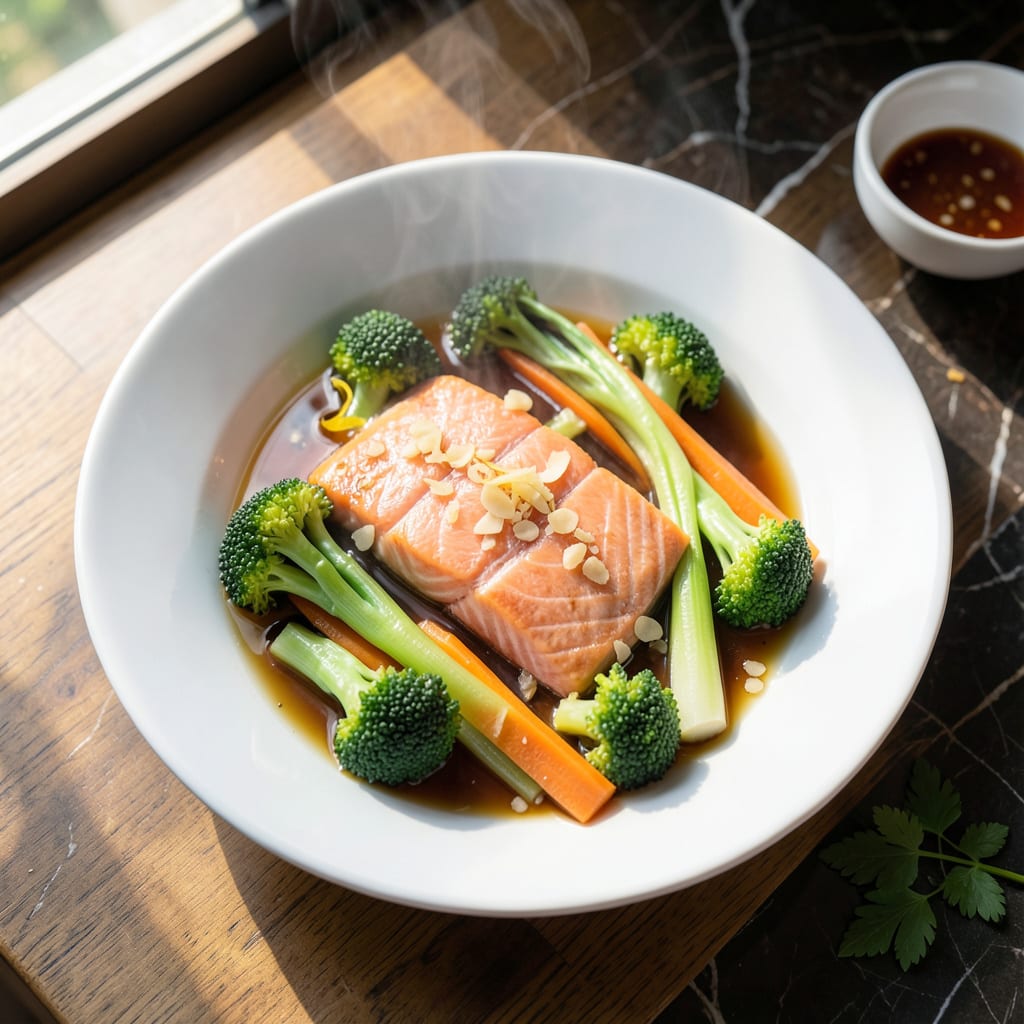
There’s a certain elegance to steaming that preserves both nutrition and natural flavors. This method delivers light yet satisfying results with minimal effort.
By using gentle heat and moisture, the dish maintains its vibrant colors and delicate textures. The process is surprisingly simple yet yields restaurant-quality outcomes every time.
Ingredients for Steamed
Gentle heat and fresh ingredients create vibrant, delicate flavors in this elegant preparation.
| Ingredient | Amount | Notes |
|---|---|---|
| Fresh Salmon Fillets 🐟 | 1 ½ lb | Skin-on, boneless preferred |
| Broccoli Florets 🥦 | 4 cups | Fresh, trimmed into even pieces |
| Carrots 🥕 | 3 whole | Peeled, cut into matchsticks |
| Baby Bok Choy 🥬 | 4 whole | Halved lengthwise, rinsed |
| Fresh Ginger 🌿 | 1 tbsp | Minced, for aromatic base |
| Garlic Cloves 🧄 | 3 cloves | Thinly sliced, not minced |
| Soy Sauce 💧 | 2 tbsp | Low-sodium preferred for balance |
| Sesame Oil 🫒 | 1 tsp | Toasted, for finishing |
| Rice Vinegar 💧 | 1 tbsp | Adds brightness to dish |
| Scallions 🧅 | ½ cup | Thinly sliced, for garnish |
| Red Pepper Flakes 🌶️ | ½ tsp | Adjust for heat preference |
| Sea Salt 🧂 | 1 tsp | Fine grain, to taste |
The salmon quality is paramount here. Wild-caught sockeye or coho from Whole Foods or your local fishmonger offers superior texture and flavor. For vegetables, organic broccoli and carrots provide the most vibrant color and sweetness. Look for firm bok choy with crisp stalks and deep green leaves—avoid any with wilting or yellowing edges.
No salmon? Cod or halibut fillets steam beautifully with similar timing. Substitute asparagus or snap peas for the broccoli if preferred. The soy sauce can be replaced with tamari for gluten-free or coconut aminos for a milder taste. Fresh ginger is ideal, but ground ginger at one-quarter the amount works in a pinch (though the texture differs).
This reheats gently—best within 2 days to maintain texture. Store leftovers in airtight containers in the refrigerator for up to 3 days. For optimal results, steam vegetables and fish separately if making ahead, then combine just before serving.
Why You’ll Love This Recipe
- One Pot Wonder: I just stack everything in the steamer basket—salmon on top, veggies below—and let the heat do the work.
- Ginger-Kissed Perfection: That fresh ginger infuses the salmon and bok choy with a warm, zingy brightness I can’t get enough of.
- Meal Prep Magic: I make a big batch on Sunday, and it reheats beautifully for lunches all week.
- Budget Stretcher: A little salmon goes a long way when paired with hearty, inexpensive veggies like carrots and broccoli.
Step-by-Step Instructions for Steamed Salmon and Vegetables
This method ensures perfectly cooked salmon and vibrant vegetables with minimal effort and maximum flavor.
Step 1: Prepare the Aromatic Base
Begin by combining the 1 tbsp Fresh Ginger, 3 cloves Garlic Cloves, 2 tbsp Soy Sauce, 1 tbsp Rice Vinegar, 0.5 tsp Red Pepper Flakes, and 1 tsp Sea Salt in a small bowl. This aromatic mixture will infuse the dish with depth as it steams.
I use thinly sliced garlic instead of minced to prevent burning and ensure even distribution of flavor. The rice vinegar adds a subtle brightness that balances the richness of the salmon, while the red pepper flakes provide just enough heat to complement the dish without overpowering it.
Step 2: Arrange the Vegetables for Steaming
Place the 4 cups Broccoli Florets, 3 whole Carrots, and 4 whole Baby Bok Choy in a single layer on a heatproof plate or steamer basket. Distribute the 1 tbsp Fresh Ginger and 3 cloves Garlic Cloves evenly over the vegetables.
The carrots should be cut into matchsticks for even cooking, and the baby bok choy halved lengthwise to expose the stems to the steam. This ensures all the vegetables cook uniformly and absorb the aromatic flavors.
Step 3: Steam the Salmon and Vegetables Together
Place the 1.5 lb Fresh Salmon Fillets on top of the vegetables, skin-side down. Drizzle half of the soy sauce mixture from Step 1 over the salmon and vegetables. This layering technique allows the salmon to steam in the fragrant liquid while the vegetables cook underneath.
Set the plate or steamer basket in a large pot with 2 inches of boiling water. Cover tightly with a lid and steam for 12-15 minutes until the salmon is opaque and flakes easily with a fork, and the vegetables are tender-crisp. Keep an eye on the water level to ensure it doesn’t evaporate completely during cooking.
Step 4: Finish and Serve
Carefully transfer the plate to a serving tray. Drizzle the remaining soy sauce mixture over the salmon and vegetables. Finish with the 1 tsp Sesame Oil and sprinkle with the 0.5 cup Scallions for a fresh, vibrant garnish.
The sesame oil adds a nutty aroma that enhances the dish’s depth, while the scallions provide a crisp, oniony contrast. Serve immediately while hot, ensuring the salmon stays moist and the vegetables retain their bright color and texture.
Pro Tips For Making Steamed
- Steam Salmon Last: Add the salmon to the steamer only after the veggies have cooked for 5 minutes—it finishes in 8-10 while they stay crisp.
- Slice Ginger Thin: Cut the ginger into paper-thin slices or matchsticks so its flavor infuses the steam quickly without overpowering the fish.
- Skip Overcrowding: I learned this the hard way—leave space between the bok choy and broccoli so steam circulates and they cook evenly.
- Use a Rack: Place a heatproof rack or upside-down bowl in the pot to keep the food above the water—no soggy bottoms, ever.
Essential Equipment for Great steamed
Steamer Basket Essentials
For perfect results, I swear by a bamboo steamer basket—it allows steam to circulate freely while keeping ingredients elevated above water. A 10-inch diameter size fits most home pots. Look for one with 2-3 tiers to steam multiple items simultaneously. 💡
Heatproof Plate Option
If you don’t have a steamer basket, a heatproof ceramic plate works beautifully. I use my Le Creuset stoneware—just ensure it fits inside your pot with 1-2 inches of water beneath it. The plate should be shallow enough to allow steam circulation.
Pot Requirements
A large, heavy-bottomed pot with a tight-fitting lid is non-negotiable. I recommend a 5-8 quart stainless steel pot for even heat distribution. The lid must seal completely to trap steam effectively—glass lids let you monitor without lifting. 🔥
Water Level Tool
An instant-read thermometer helps maintain precise water temperature. Keep it at a rolling boil (212°F) throughout cooking. I also keep a 1-cup measuring cup nearby to add hot water if levels drop during longer steaming sessions.
Serving Utensils
Use tongs or a wide, flat spatula to transfer delicate salmon fillets without breaking them. For vegetables, a slotted spoon works perfectly. I always have a small bowl ready to catch any drippings from the plate.
Finishing Touches
Keep small ramekins on hand for your finishing sauces and garnishes. I use mine for the sesame oil and scallions, making it easy to drizzle and sprinkle evenly. A microplane is also handy for fresh ginger if you’re making extra. ✨
Nutrition Facts
Frequently Asked Questions
Can I use a metal colander instead of a steamer basket?
Yes, a metal colander works as a substitute. Ensure it fits snugly over your pot and won’t fall in. Line it with parchment paper for easy cleanup.
How do I prevent my salmon from sticking to the plate?
Lightly grease the plate with oil or use parchment paper. Avoid overcrowding to ensure even cooking and easy release.
Can I add other vegetables to this dish?
Try snap peas, asparagus, or zucchini. Cut them into even sizes for consistent cooking and timing.
What if my water boils dry during steaming?
Check the water level every 5 minutes. If it’s low, add hot water carefully to avoid temperature drops.

- 6 Egg Cake Recipe with Oil: Light as Air With Buttery Moisture - October 4, 2026
- 4 Bean Casserole Recipe: One-Pan Heartiness With Smoky Paprika Depth - October 4, 2026
- 3-Ingredient Keto Mug Cake Recipe: Microwave Magic in 2 Minutes - October 4, 2026