
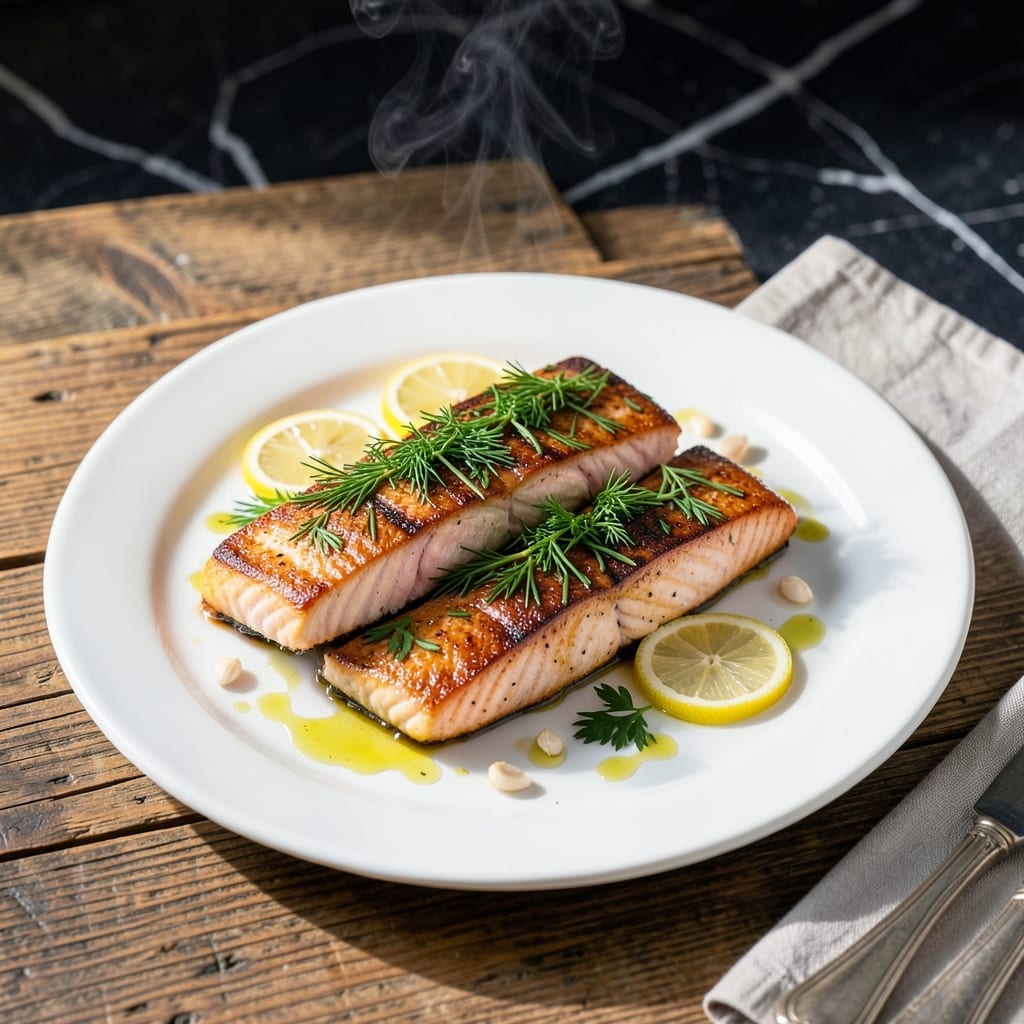
There’s an art to baking salmon that keeps the center flaky while creating a golden exterior. This method delivers precisely that, with bright lemon notes that elevate every bite.
The technique involves precise timing and temperature control to maintain moisture. A simple herb and lemon preparation enhances the natural richness of the fish without overwhelming it.
You’ll achieve restaurant-quality results with minimal effort. The salmon emerges tender and perfectly cooked, with a vibrant citrus finish that makes it irresistible.
This dish works beautifully for weeknight dinners or impressive gatherings. The balanced flavors and elegant presentation never fail to satisfy.
Ingredients for Baked Salmon Recipe Jamie Oliver
Elegant yet simple ingredients transform into a restaurant-quality baked salmon dish with vibrant citrus notes.
| Ingredient | Amount | Notes |
|---|---|---|
| Salmon Fillets 🐟 | 1 ½ lb | Skin-on, center-cut preferred |
| Extra-Virgin Olive Oil 🫒 | 3 tbsp | Divided for cooking and finishing |
| Lemon 🍋 | 1 whole | Zested and juiced |
| Fresh Dill 🌿 | ¼ cup | Chopped, stems removed |
| Fresh Parsley 🍃 | ¼ cup | Chopped, for garnish |
| Garlic Cloves 🧄 | 3 cloves | Minced finely |
| Dijon Mustard 🟡 | 1 tbsp | Whole grain preferred |
| Honey 🍯 | 1 tbsp | Or maple syrup for vegan option |
| Salt 🧂 | 1 tsp | Flaky sea salt preferred |
| Black Pepper 🌶️ | ½ tsp | Freshly cracked |
| Unsalted Butter 🧈 | 2 tbsp | Melted, for basting |
| Shallot 🧅 | 1 whole | Finely diced |
The salmon fillets are the star—opt for wild-caught Alaskan or Norwegian if available. Center-cut pieces ensure even cooking and that coveted flaky texture. Whole Foods and Costco consistently carry high-quality options. Freshness is key: the fish should smell clean and bright, never fishy. For the herbs, organic bunches from the farmers market pack more aromatic punch than pre-packaged grocery store varieties.
No fresh dill? Dried dill at one-third the amount works in a pinch, though fresh delivers superior flavor. Swap parsley for chives or tarragon if that’s what you have. The honey can be replaced with maple syrup or agave for a vegan twist. Dijon mustard is non-negotiable for its tangy depth, but whole-grain mustard adds a pleasant texture. If shallots are unavailable, red onion makes an acceptable substitute.
This dish is best served immediately, but leftovers keep refrigerated for 2 days. Store salmon in an airtight container with a paper towel to absorb excess moisture. The herb mixture can be prepped 1 day in advance—keep it covered in the fridge until ready to use. Avoid freezing cooked salmon, as it compromises the delicate texture.
Why You’ll Love This Recipe
- One Pan Wonder: I toss the salmon, lemon, and herbs on a sheet pan—no piles of dishes, just a quick bake and dinner’s ready.
- Bright & Zesty: The lemon and fresh dill make every bite taste like a sunny Mediterranean escape.
- Weeknight Hero: Honestly, I’ve served this for casual dinners and impress-the-in-laws nights with zero stress.
- Leftovers Winner: Cold the next day, it’s even better in salads or on toast—my lunch saved twice this week.
Step-by-Step Instructions for Baked Salmon
This method ensures a flaky center with a bright, citrusy finish every time.
Step 1: Prepare the Salmon and Aromatics
Pat the 1.5 lb salmon fillets dry with paper towels—this guarantees a good sear and prevents steaming. Season both sides with the 1 tsp salt and 0.5 tsp black pepper, ensuring even coverage. Place the fillets skin-side down in a baking dish just large enough to hold them without crowding.
Finely dice the 1 whole shallot and mince the 3 cloves garlic cloves. Chop the 0.25 cup fresh dill, removing any tough stems. Zest the 1 whole lemon and set the zest aside, then halve and juice it—this fresh citrus will elevate the dish.
Step 2: Make the Lemon-Herb Basting Sauce
In a small bowl, whisk together the 1 tbsp Dijon mustard, 1 tbsp honey, zest of the lemon, and 2 tbsp juice from the lemon. Slowly drizzle in 2 tbsp extra-virgin olive oil while whisking to emulsify the mixture. Stir in the diced shallot, minced garlic, and half of the chopped dill.
Melt the 2 tbsp unsalted butter and incorporate it into the sauce. This mixture will baste the salmon, infusing it with layers of flavor while keeping the fillets moist during baking. The acidity from the lemon balances the richness of the butter and honey perfectly.
Step 3: Bake the Salmon to Flaky Perfection
Preheat your oven to 400°F. Pour the remaining 1 tbsp extra-virgin olive oil into the baking dish, ensuring it coats the bottom. Place the salmon fillets skin-side down in the oil. Spoon the basting sauce evenly over the top of each fillet, ensuring full coverage.
Bake on the middle rack for 12-15 minutes, depending on thickness. The salmon is done when it reaches an internal temperature of 145°F and flakes easily with a fork. Look for the flesh to turn from translucent to opaque and pull away from the skin slightly at the edges.
Step 4: Rest and Garnish for Serving
Remove the salmon from the oven and let it rest in the baking dish for 5 minutes. This allows the juices to redistribute, ensuring every bite is tender and moist. Sprinkle the remaining chopped dill and the 0.25 cup fresh parsley over the top for a fresh, vibrant finish.
Serve the salmon immediately, spooning any pan juices over the fillets. The combination of the flaky fish, bright lemon, and aromatic herbs creates a dish that’s both elegant and approachable. Pair with a simple green salad or roasted vegetables to complete the meal.
Pro Tips For Making Baked Salmon Recipe Jamie Oliver
- Pat Fillets Dry: I learned this the hard way—moisture on the salmon makes it steam instead of roast. A quick pat with paper towels guarantees that crisp, golden crust Jamie’s recipe is known for.
- Preheat the Pan: Sounds obvious, but I used to skip this and my salmon stuck like crazy. Get that baking tray screaming hot in the oven for 5 minutes before adding the fish.
- Don’t Overcrowd: After ruining two batches with soggy results, I finally realized the fillets need space. Leave at least an inch between each piece so the heat circulates properly.
- Zest Before Juicing: My grandmother swore by this, and she was right: always zest the lemon first—it’s impossible to do after you’ve juiced it. You’ll get way more flavor for the garnish.
Common Mistakes When Making This Dish
Overcooking the Salmon
Salmon continues cooking after it’s removed from the oven, so pull it at 145°F internal temperature. Overcooking is the most common mistake—I use an instant-read thermometer to ensure precision. Even 1-2 minutes too long can turn your flaky center dry and mealy. 🌡️
Skipping the Pat Dry
Wet salmon steams instead of baking, resulting in a soggy exterior. Always pat the fillets dry with paper towels before seasoning. This simple step guarantees that golden crust while keeping the inside moist and tender.
Crowding the Pan
Give each fillet space in the baking dish—crowding causes uneven cooking. I recommend a dish just large enough to hold your 1.5 lb salmon without touching. This ensures even heat circulation for consistent results.
Ignoring the Skin
Place fillets skin-side down in the dish to prevent sticking and promote even cooking. The skin acts as a natural barrier, protecting the delicate flesh. If the skin sticks, your presentation will suffer and cleanup becomes a nightmare.
Skipping the Rest
Let your salmon rest for 5 minutes after baking. This allows juices to redistribute throughout the fillet. Cutting too soon causes those precious juices to spill onto the cutting board, leaving your fish dry.
Using Cold Ingredients
Take salmon out of the fridge 15-20 minutes before cooking. Cold fish cooks unevenly, with a dry exterior by the time the center reaches temperature. Room temperature salmon bakes more evenly and consistently. 💡
Nutrition Facts
Frequently Asked Questions
What oven temperature ensures flaky salmon?
Bake at 400°F for even cooking without drying out the center. This temperature creates a perfect balance between a golden exterior and moist interior.
Can I use frozen salmon fillets?
Yes, but thaw completely in the fridge overnight first. Pat very dry before seasoning to prevent steaming. Never bake from frozen.
How can I tell when it’s done?
Check for 145°F internal temperature with a meat thermometer. The flesh should flake easily and pull away from the skin.
What’s the best way to prevent sticking?
Use parchment paper and place fillets skin-side down. A well-oiled dish also helps release the salmon cleanly after baking.

- 6 Egg Cake Recipe with Oil: Light as Air With Buttery Moisture - October 4, 2026
- 4 Bean Casserole Recipe: One-Pan Heartiness With Smoky Paprika Depth - October 4, 2026
- 3-Ingredient Keto Mug Cake Recipe: Microwave Magic in 2 Minutes - October 4, 2026