
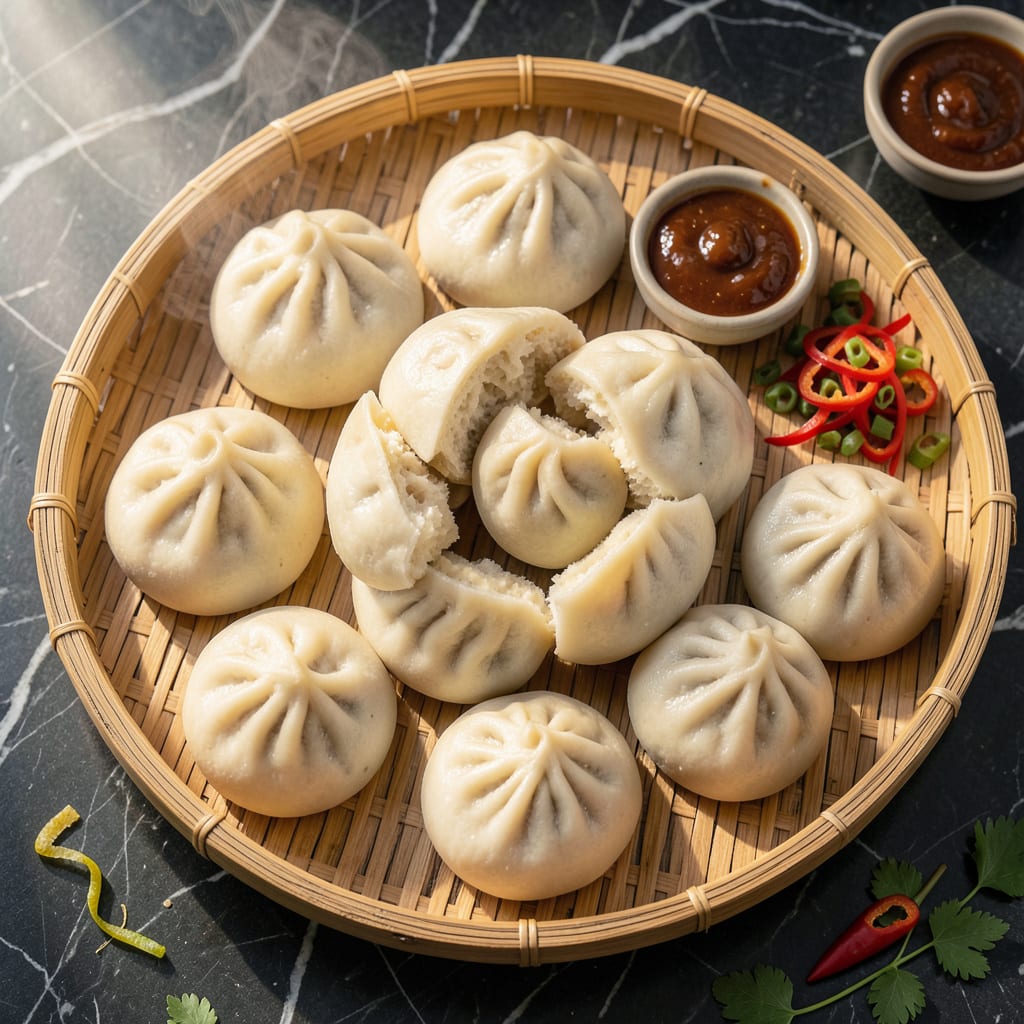
I’ve perfected a method for making soft, pillowy bao buns without a traditional steamer. Using just a skillet and a lid, you can achieve that signature fluffy texture at home.
The key is creating a makeshift steaming environment. With 10 minutes of prep and 15 minutes of cooking, these buns will rival any restaurant version.
Ingredients for Bao Recipe Without Steamer
Pantry staples and a few fresh additions create these dreamy buns with ease.
| Ingredient | Amount | Notes |
|---|---|---|
| All-Purpose Flour 🌾 | 3 cups | Plus extra for dusting |
| Instant Yeast 🍞 | 2 ¼ tsp | Or active dry yeast |
| Sugar 🍬 | ¼ cup | Granulated, for activating yeast |
| Warm Water 💧 | 1 ¼ cups | About 110°F, not hot |
| Vegetable Oil 🫒 | 2 tbsp | Plus extra for greasing |
| Baking Powder 🧂 | 1 tsp | For extra lift |
| Salt 🧂 | ½ tsp | Fine sea salt preferred |
| Cornstarch 🌽 | 2 tbsp | For dusting work surface |
| Pork Belly 🥩 | ½ lb | Thinly sliced, optional filling |
| Green Onions 🧅 | 4 whole | Thinly sliced for garnish |
| Hoisin Sauce 🥫 | ¼ cup | For brushing or dipping |
| Sesame Seeds 🌿 | 1 tbsp | Toasted, for garnish |
The flour is the foundation here—King Arthur or Gold Medal are my go-tos for consistent results. Instant yeast is a must for quick rise (check the expiration date, old yeast kills the fluff). Warm water should feel like bathwater—too hot and you’ll murder the yeast, too cold and it’ll snooze. I keep a thermometer in my baking drawer just for this (worth the extra minute).
No pork belly? Chicken thighs or even shredded rotisserie chicken work great. Vegetarian? Marinated tofu or mushrooms are stellar. Swap hoisin for oyster sauce (or vegetarian oyster sauce if needed). The cornstarch helps prevent sticking—rice flour works too if that’s what you’ve got. Skip the filling and just make plain buns for breakfast sandwiches.
Dough rises fastest in a warm spot—turn your oven to its lowest temp for 2 minutes, turn it off, then pop the bowl in. Uncooked dough keeps 24 hours in the fridge. Baked buns? Best the same day, but they reheat okay—steam them 30 seconds in the microwave with a damp paper towel.
Why You’ll Love This Recipe
- No Steamer Needed: I just use a pot with a lid and a rack—no special equipment, and they turn out fluffy every time.
- Sweet Pillow Softness: The sugar in the dough gives them that slightly sweet, cloud-like texture I crave.
- Freezer Friendly: I double the batch, freeze the extras, and steam them straight from frozen for a quick snack.
- Pantry Staples Only: All-purpose flour, yeast, and a few basics I always have on hand—no last-minute grocery runs.
Step-by-Step Instructions for Bao Without a Steamer
Here’s how I make perfect fluffy bao using just a skillet and a lid.
Step 1: Activate Yeast and Mix the Dough
In a large bowl, whisk together the 1.25 cups warm water, 0.25 cup sugar, and 2.25 tsp instant yeast. Let it sit for 5-7 minutes until the mixture turns foamy and cloudy—this tells you the yeast is active and ready to work its magic.
Add the 3 cups all-purpose flour, 1 tsp baking powder, and 0.5 tsp salt to the bowl. Pour in the 2 tbsp vegetable oil and mix until a shaggy dough forms. The dough should be slightly sticky but pull away from the sides of the bowl.
Turn the dough out onto a surface dusted with 2 tbsp cornstarch and knead for 8-10 minutes until smooth and elastic. The cornstarch prevents sticking while keeping the dough tender. You’ll know it’s ready when it springs back slowly after pressing with your finger.
Step 2: Let the Dough Rise Until Doubled
Lightly oil a clean bowl with some of the extra vegetable oil, place the dough inside, and cover it with a damp kitchen towel. Let it rise in a warm, draft-free spot for 1-1.5 hours, or until it has nearly doubled in size.
I like to preheat my oven to the lowest setting (170°F), turn it off, and place the bowl inside—this creates the perfect rising environment. The dough should look puffy and jiggle slightly when gently shaken.
While you wait, thinly slice the 0.5 lb pork belly if using it as a filling. This gives the meat time to come to room temperature, ensuring even cooking later.
Step 3: Shape the Bao and Add Filling
Punch down the risen dough to release the air, then turn it out onto your cornstarch-dusted surface. Divide it into 8 equal portions (about 4 oz each) and roll each into a ball. Flatten a ball into a 3-inch circle with a rolling pin, keeping the edges slightly thicker than the center.
Place a small piece of pork belly (or a spoonful of hoisin) in the center of each dough circle. Pleat the edges by pinching and folding them inward, creating the classic bao shape. Twist slightly at the top to seal—this prevents the filling from leaking during cooking.
Arrange the filled bao on a piece of parchment paper, spacing them about 2 inches apart. Cover them with the damp towel and let rest for 15 minutes while you heat the skillet.
Step 4: Cook the Bao in a Skillet
Heat a large, nonstick skillet over medium-low heat. Add just enough vegetable oil to lightly coat the bottom—about 1 tsp. Place the parchment paper with the bao into the skillet, then cover with a tight-fitting lid.
Cook for 8-10 minutes without peeking. The steam created inside the skillet will puff the bao beautifully, while the direct heat browns the bottoms. You’ll hear a gentle sizzling sound—this is the bao cooking perfectly.
Remove the lid and cook for another 2-3 minutes to crisp the bottoms. The bao are done when the tops are puffed and the bottoms are golden brown. Use a spatula to carefully transfer them to a plate.
Step 5: Garnish and Serve
Brush the tops of the bao with a little hoisin sauce for extra flavor and shine. Thinly slice the 4 whole green onions and sprinkle them over the top, along with the 1 tbsp sesame seeds for a nutty crunch.
Serve warm with additional hoisin on the side for dipping. The bao should be soft and pillowy with a slightly crisp bottom and a juicy, tender filling. These are best enjoyed fresh, but leftovers reheat beautifully in the same skillet method.
Pro Tips For Making Bao Recipe Without Steamer
- Proof in Warmth: Place your dough in the oven with a bowl of boiling water for 1 hour—this mimics steamer humidity better than a cold countertop. I learned this the hard way after my first few bao came out dense and dry.
- Use Bread Flour: Swap half the all-purpose flour for bread flour if you have it. The extra gluten gives that chewy, fluffy texture you expect from bao, even without a steamer.
- Skip Cold Water: Use warm water around 110°F to activate the instant yeast properly. After ruining a batch with cold tap water, I now double-check with a thermometer.
- Pan-Fry Instead: Heat 1 tablespoon of vegetable oil in a pan, add the bao, then cover with a lid and cook on medium-low for 8-10 minutes. Sounds weird, but it works—you get a crispy bottom and soft top, just like steamed.
Perfect Pairings for bao recipe without steamer
Dipping Sauces
I love pairing these with a tangy hoisin sauce mixed with 1 tsp rice vinegar and ½ tsp sriracha for heat. The sweetness balances the pork belly perfectly. 💫
Refreshing Sides
A crunchy Asian slaw with shredded cabbage, carrots, and a sesame-ginger dressing cuts through the richness. I use 2 cups cabbage and 1 cup carrots for four servings.
Tea Pairings
Jasmine green tea enhances the flavors beautifully—its floral notes complement the savory filling. Serve it hot or iced depending on the weather.
Simple Salad
A light cucumber salad with 1 tbsp soy sauce, 1 tsp sesame oil, and ½ tsp sugar adds freshness. Thinly slice 1 English cucumber for best texture.
Beer Option
A crisp Asian lager like Sapporo or Asahi cleanses your palate between bites. The light body won’t overpower the delicate bao flavors.
Quick Pickles
For extra zing, serve with quick-pickled daikon radish and carrots. Slice thinly and soak in rice vinegar with 1 tbsp sugar for 30 minutes. 🥗
Nutrition Facts
Frequently Asked Questions
Can I use a different pan instead of a skillet?
Yes, any deep pan with a tight lid works. A stainless steel pot or cast iron Dutch oven are great alternatives. Just ensure the lid seals well to trap steam.
Why did my buns not puff up?
Check that your yeast was fresh and the water was 110°F. Also, avoid peeking while cooking—releasing steam prevents proper rising. Resting the dough 15 minutes before cooking helps too.
Can I make these ahead of time?
Shape and fill the buns, then refrigerate up to 24 hours before cooking. Let them sit at room temperature for 30 minutes before steaming in the skillet.

- 6 Egg Cake Recipe with Oil: Light as Air With Buttery Moisture - October 4, 2026
- 4 Bean Casserole Recipe: One-Pan Heartiness With Smoky Paprika Depth - October 4, 2026
- 3-Ingredient Keto Mug Cake Recipe: Microwave Magic in 2 Minutes - October 4, 2026