
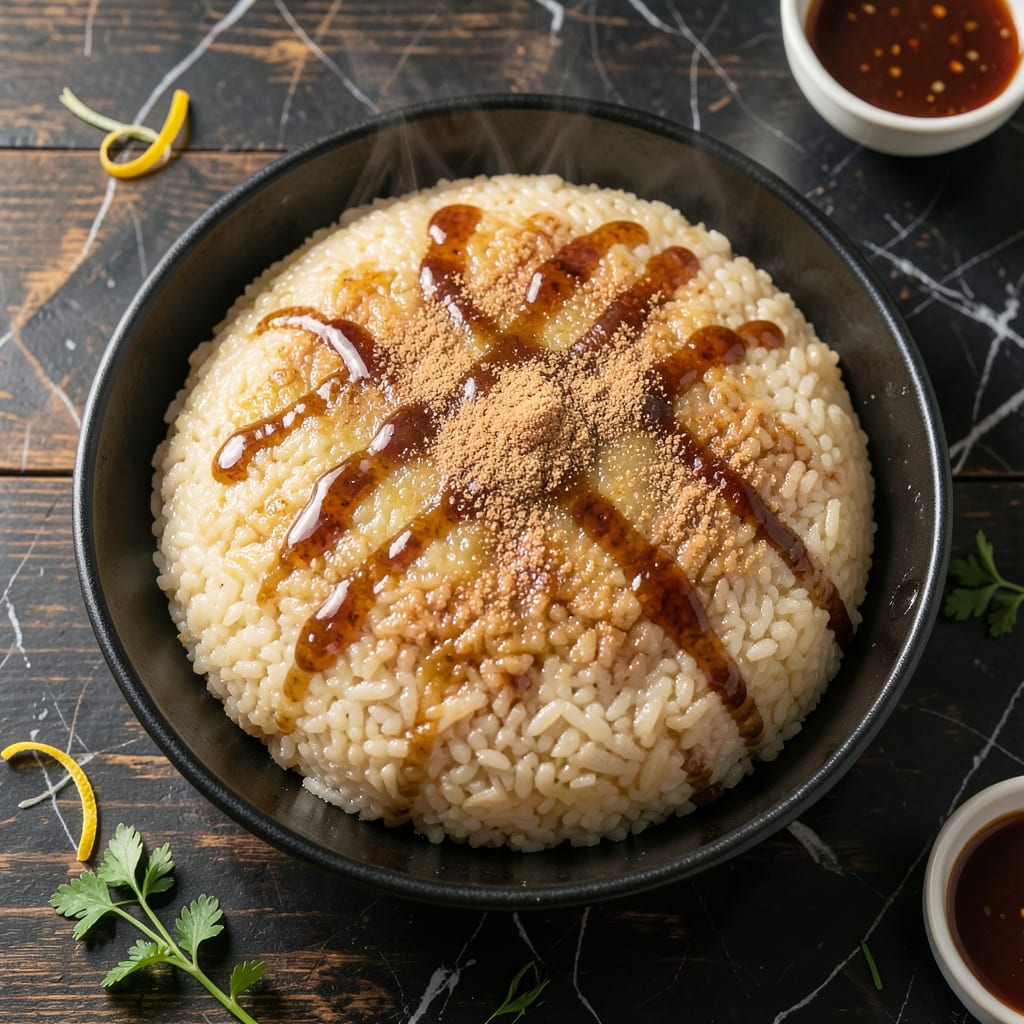
This traditional Chinese steamed rice cake delivers pillowy soft texture with sweet brown sugar swirls throughout. The method is simple but precise, requiring just a few pantry staples and 20 minutes of steaming.
What makes this recipe special is the contrast between the soft, chewy cake and the caramelized sugar ribbons. The result is a lightly sweet treat that’s perfect for breakfast or dessert.
Ingredients for Chinese Steamed Rice Cake
A few pantry staples transform into this pillowy soft traditional treat with caramelized swirls.
| Ingredient | Amount | Notes |
|---|---|---|
| Glutinous Rice Flour 🌾 | 2 cups | Also called sweet rice flour |
| Light Brown Sugar 🍚 | ¾ cup | Packed, for swirls |
| Granulated Sugar 🍚 | ¼ cup | For cake batter |
| Coconut Milk 🥥 | 1 ¼ cups | Full-fat for richness |
| Vegetable Oil 🫒 | 2 tbsp | Neutral flavor preferred |
| Water 💧 | ½ cup | Room temperature |
| Cornstarch 🌾 | 1 tbsp | For dusting pan |
| Vanilla Extract 🌿 | 1 tsp | Pure extract preferred |
| Salt 🧂 | ¼ tsp | Fine sea salt |
| Sesame Seeds 🌰 | 1 tbsp | Toasted, for garnish |
The rice flour is non-negotiable here—glutinous rice flour (not regular rice flour) gives that signature chewy texture. Look for it at Asian markets or the international aisle at Whole Foods. I prefer Bob’s Red Mill for consistency. The coconut milk adds richness; full-fat cans from Thai Kitchen work perfectly. Don’t shake the can first—use the thick cream from the top for extra decadence.
No coconut milk? Oat milk with 1 tbsp melted coconut oil mimics the richness. Light brown sugar can be swapped for dark brown sugar (deeper flavor) or muscovado sugar (more molasses notes). If avoiding refined sugar, coconut sugar at 1:1 ratio works, though the texture differs slightly. The vanilla extract can be omitted, but it adds depth to the sugar swirls.
Store uncooked batter in the fridge for 1 day max. Steamed cakes keep at room temperature for 2 days or frozen for 1 month. Re-steam to refresh. Toast the sesame seeds just before serving—they lose crunch quickly (worth the extra minute).
Why You’ll Love This Recipe
- One Bowl Wonder: I mix glutinous rice flour, coconut milk, and sugars right in the bowl I’ll steam in—no extra dishes, no fuss.
- Sweet Coconut Hug: The coconut milk gives these cakes a rich, creamy sweetness that’s way more interesting than plain sugar.
- Feeds a Lazy Brunch: Honestly, I make a batch on Sunday and reheat slices all week—great warm or cold.
- Pantry Staples: Between us, it’s just flour, sugar, and coconut milk I already keep on hand for other recipes.
Step-by-Step Instructions for Chinese Steamed Rice Cake
Master the technique for achieving the perfect tender texture and caramelized brown sugar swirls in this dish.
Step 1: Prepare the Steaming Setup
Begin by lightly greasing a 9-inch round cake pan with 2 tbsp Vegetable Oil, ensuring the entire surface is coated. This prevents sticking during steaming and after inversion. Dust the pan with 1 tbsp Cornstarch, tapping out any excess to create a thin, even layer.
The cornstarch barrier is essential—it creates a non-stick surface that helps the cake release cleanly while maintaining its delicate structure. Fill a large pot or wok with 2 inches of water and bring to a boil. The water level should be high enough to generate steady steam but not so high that it touches the pan when placed on the steamer rack.
Step 2: Create the Brown Sugar Swirl Mixture
In a small bowl, combine 0.75 cup Light Brown Sugar with 2 tbsp of the 1.25 cups Coconut Milk. Mix until it forms a thick, spreadable paste. The consistency should resemble wet sand—thick enough to hold its shape when swirled but not dry or crumbly.
This mixture will create the signature caramelized ribbons throughout the cake. Set it aside while you prepare the batter. I find that using packed light brown sugar gives the best color and depth of flavor for the swirls, as it melts beautifully during steaming to create those coveted gooey pockets.
Step 3: Mix the Glutinous Rice Flour Batter
In a large mixing bowl, whisk together 2 cups Glutinous Rice Flour, 0.25 cup Granulated Sugar, 0.25 tsp Salt, and 1 tsp Vanilla Extract. These dry ingredients form the base of your cake, with the glutinous rice flour providing the essential chewy texture.
Gradually add the remaining 1 cup plus 2 tbsp Coconut Milk and 0.5 cup Water while whisking continuously until smooth. The batter should be thin enough to pour but thick enough to coat the back of a spoon. Allow it to rest for 5 minutes to hydrate the flour fully.
Step 4: Assemble and Steam the Cake
Pour half of the batter into the prepared pan. Using a spoon, dollop the brown sugar mixture evenly over the batter, leaving a 1-inch border around the edge. This border prevents the sugar from burning against the hot pan sides. Top with the remaining batter, spreading gently to cover.
Using a butter knife or chopstick, swirl the brown sugar mixture through the batter in a figure-eight pattern to create marbled ribbons. Place the pan on a steamer rack over boiling water, cover with a tight lid, and steam on medium-high heat for 45-50 minutes. The cake is done when the center springs back when lightly pressed and a toothpick inserted comes out clean.
Step 5: Cool and Finish
Carefully remove the pan from the steamer and let it cool for 10 minutes. This resting period allows the cake to set and makes it easier to handle. Run a thin knife around the edges to loosen, then invert onto a serving plate.
Sprinkle the top with 1 tbsp Sesame Seeds while still warm so they adhere slightly. The sesame seeds add a nutty contrast to the sweet cake. Slice into wedges and serve warm or at room temperature, where the texture is at its pillowy best.
Pro Tips For Making Chinese Steamed Rice Cake
- Steam Evenly: Use a bamboo steamer with a tight lid and keep the water at a rolling boil—any less and the center stays gummy. I learned this the hard way after pulling out a raw middle more times than I’d like to admit.
- Sift the Flour: Glutinous rice flour clumps like crazy, so sift it twice before mixing. Sounds tedious, but it’s the only way to avoid those annoying little lumps in your finished cake.
- Skip Cold Coconut Milk: Let the coconut milk come to room temperature first, or it’ll seize up when mixed with the sugars. My first batch looked like cottage cheese—edible, but not ideal.
- Oil the Mold: Grease your steaming dish generously with vegetable oil, even if it’s nonstick. After burning one cake to the pan, I now use about 1 tablespoon and swirl it thoroughly.
Pro Cooking Tips for chinese steamed rice cake
Steamer Selection
Use a bamboo steamer for even heat distribution and that traditional touch. I swear by my 12-inch bamboo set from Eellen—it fits perfectly over my wok. Avoid metal steamers as they can create hot spots that overcook the edges.
Water Temperature Control
Maintain a rolling boil before adding your pan to the steamer. The water should be at a vigorous boil, not just simmering. Add 1 tbsp white vinegar to the water to prevent mineral deposits on your pan. 💡
Swirling Technique
Use a chopstick instead of a knife for swirling—it creates more delicate, feathery patterns. Drag it through the brown sugar mixture in S-shapes rather than circles for better distribution. Don’t overmix or the swirls will disappear.
Steaming Time Precision
Check at 45 minutes by inserting a toothpick in the center. If it comes out with wet batter, steam for another 5-10 minutes. The top should look matte, not shiny. I set a timer for 40 minutes to start checking early.
Cooling Method
Let the cake cool in the pan for exactly 10 minutes—no longer. This prevents condensation from making the top soggy. Then invert onto a wire rack to cool completely. The rack allows air circulation to prevent a gummy bottom. ✨
Slicing Pro Tip
Use a plastic knife or a very sharp chef’s knife dipped in hot water to slice clean wedges. Wipe the blade between cuts. A serrated bread knife can tear the delicate texture if you’re not careful.
Nutrition Facts
Frequently Asked Questions
Can I use regular rice flour instead of glutinous?
No, regular rice flour won’t give the right chewy texture. Glutinous rice flour is essential for that pillowy soft result. It’s different from wheat gluten and safe for gluten-free diets.
Why did my cake turn out dense?
Overmixing the batter or using too much liquid can cause density. Measure ingredients precisely and steam for the full 45-50 minutes. The batter should be smooth but not thin.
Can I make this without a steamer?
Yes! Use a colander or sieve over a pot of boiling water. Cover tightly with foil to trap steam. Check water level frequently to prevent boiling dry.

- 6 Egg Cake Recipe with Oil: Light as Air With Buttery Moisture - October 4, 2026
- 4 Bean Casserole Recipe: One-Pan Heartiness With Smoky Paprika Depth - October 4, 2026
- 3-Ingredient Keto Mug Cake Recipe: Microwave Magic in 2 Minutes - October 4, 2026