
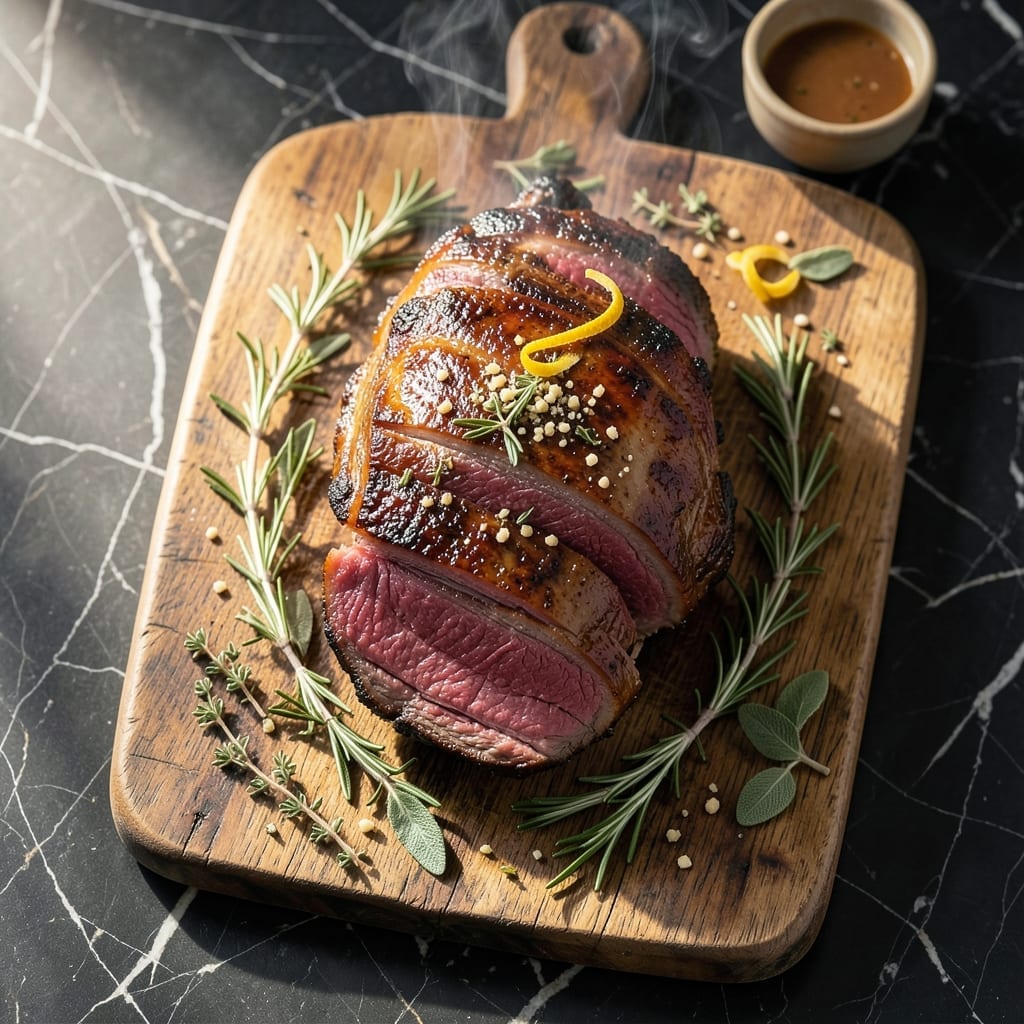
This prime rib delivers the holiday showstopper you’ve been searching for. The herb crust forms a fragrant seal that locks in juices while creating a golden, flavorful exterior.
I’ve refined this method over years of holiday dinners, ensuring a tender center and perfectly crispy edges every time. The key lies in a slow roast followed by a high-heat finish.
The result is a centerpiece worthy of any festive table—succulent, aromatic, and impossibly rich. Each bite offers the perfect balance of savory herbs and natural beef flavor.
Serve with roasted vegetables and red wine for a meal that feels as special as it tastes. Here’s how to make it right.
Ingredients for Barefoot Contessa Prime Rib
This holiday centerpiece starts with quality beef and fresh herbs—nothing less will do.
| Ingredient | Amount | Notes |
|---|---|---|
| Bone-In Prime Rib Roast 🥩 | 5 lb | First cut, well-marbled preferred |
| Kosher Salt 🧂 | 2 tbsp | Diamond Crystal preferred for texture |
| Freshly Ground Black Pepper 🌶️ | 1 tbsp | Coarse grind for crust |
| Fresh Rosemary 🌿 | 3 sprigs | Leaves stripped and finely chopped |
| Fresh Thyme 🍃 | 6 sprigs | Leaves stripped and finely chopped |
| Fresh Sage 🌿 | 4 leaves | Finely chopped for herb crust |
| Garlic Cloves 🧄 | 6 cloves | Minced to a paste consistency |
| Dijon Mustard 🟡 | ¼ cup | Whole grain preferred for texture |
| Extra-Virgin Olive Oil 🫒 | ¼ cup | For binding herb crust |
| Unsalted Butter 🧈 | ½ cup | Softened to room temperature |
| Red Wine 🍷 | 1 cup | Dry bold variety for au jus |
| Beef Stock 🥩 | 2 cups | Low-sodium preferred for control |
| Shallots 🧅 | 2 whole | Finely minced for au jus |
| All-Purpose Flour 🌾 | 2 tbsp | For thickening au jus |
The prime rib is the star here. Look for USDA Prime or Choice with abundant marbling—this ensures tenderness after the long roast. most butchers will bone and tie it for you if you ask (worth the extra minute). I always go to Whole Foods for theirs—they age it properly and the fat cap is perfect. For the herbs, fresh is non-negotiable—dried just won’t give you that vibrant aromatic crust.
No fresh rosemary? Dried at one-third the amount works in a pinch, but the flavor won’t be as bright. For the wine, any bold dry red like Cabernet Sauvignon or Merlot is perfect—whatever’s open works too. If you’re skipping the au jus, substitute beef broth with a splash of soy sauce for depth. The butter can be salted if that’s what you’ve got (just reduce the kosher salt by half).
The roast can rest at room temp for 2 hours before cooking (don’t skip this part). Leftovers? They make killer sandwiches. Store carved meat in its juices for up to 5 days, or freeze portions for 3 months.
Why You’ll Love This Recipe
- Set It and Forget: The bone-in roast goes straight from the fridge to the oven—no pre-searing, no fuss.
- Herb Perfection: Fresh rosemary and thyme with kosher salt and pepper create a crust so good you’ll want to eat it plain.
- Holiday Hero: This is the one dish that makes Christmas dinner feel special without keeping me in the kitchen all day.
- Next-Day Magic: The leftovers make unreal sandwiches. Honestly, I look forward to them as much as the first serving.
Step-by-Step Instructions for Herb-Crusted Prime Rib
This method guarantees a showstopping centerpiece with a fragrant crust and perfect medium-rare center.
Step 1: Prepare the Herb Crust
Finely chop the leaves from the 3 sprigs fresh rosemary, 6 sprigs fresh thyme, and 4 leaves fresh sage. In a bowl, combine these with the 6 cloves garlic cloves (minced to paste), 2 tbsp kosher salt, and 1 tbsp freshly ground black pepper.
Stir in the 0.25 cup dijon mustard and 0.25 cup extra-virgin olive oil until it forms a thick paste. This paste will create that signature Barefoot Contessa herb crust that everyone raves about. The consistency should be spreadable but not runny—add a touch more oil if needed.
Step 2: Season and Sear the Roast
Pat the 5 lb bone-in prime rib roast completely dry with paper towels. This is crucial—moisture prevents proper browning. Rub the herb paste all over the roast, pressing it into every crevice. Let it sit at room temperature for 1 hour to allow the flavors to penetrate.
Preheat your oven to 450°F. Place the roast bone-side down in a roasting pan (the bones act as a natural rack). Roast for 20 minutes to develop a deep, flavorful crust. You’ll see the surface turn a rich, dark golden brown—that’s your signal it’s ready for the next phase.
Step 3: Slow Roast to Perfection
Reduce the oven temperature to 325°F. Continue roasting until the internal temperature reaches 120-125°F for medium-rare (about 1.5-2 hours for a 5 lb roast). Use a meat thermometer inserted into the thickest part—avoid touching the bone.
Baste the roast with the 0.5 cup unsalted butter (softened) every 30 minutes. This adds richness and helps the crust develop a beautiful sheen. The roast is done when it feels slightly soft when pressed and the thermometer confirms the temperature.
Step 4: Make the Au Jus
Transfer the roast to a cutting board and tent with foil. Place the roasting pan on the stovetop over medium heat. Add the 2 whole shallots (finely minced) and cook for 2 minutes until softened.
Pour in the 1 cup red wine and scrape up all the browned bits with a wooden spoon. Simmer for 3-4 minutes until reduced by half. Stir in the 2 cups beef stock and 2 tbsp all-purpose flour, then simmer for 5-7 minutes until thickened. Strain before serving.
Step 5: Rest and Carve
Let the roast rest for 20-30 minutes before carving—this is non-negotiable for juicy results. The internal temperature will rise to 130-135°F during this time. Carve between the bones into thick slices, serving with the au jus on the side.
Each slice should reveal a perfect pink center with a thick, herbaceous crust. The au jus will have deep, concentrated flavor from the wine and drippings. This is the kind of dish that makes holidays unforgettable.
Pro Tips For Making Barefoot Contessa Prime Rib
- Room Temp First: Pull the prime rib out of the fridge 2 hours before cooking—cold meat roasts unevenly, and I learned this the hard way with a dry center.
- Salt Aggressively: Use a full tablespoon of kosher salt per pound and press it in hard so it sticks to the fat cap. Sounds like a lot, but it’s what makes that crust sing.
- Don’t Crowd the Herbs: Lay the rosemary and thyme sprigs directly on the meat, not the pan, so they infuse flavor instead of burning in the drippings.
- Rest Before Carving: Tent it with foil and let it sit 20-30 minutes after roasting—skipping this step turns all those beautiful juices into a sad puddle on your board.
Perfect Pairings for These Flavors
Wine Pairings
A bold Cabernet Sauvignon from Napa Valley is my top choice—its dark fruit and tannins complement the herb crust beautifully. Look for Opus One or Caymus for splurge-worthy options. The wine’s acidity cuts through the rich beef perfectly. 🍷
Side Dishes
Creamy horseradish mashed potatoes are a must—they add a tangy contrast to the rich meat. I use Yukon Gold potatoes with ½ cup sour cream for the creamiest texture. Roasted Brussels sprouts with balsamic glaze add a nice, bitter contrast.
Bread Options
Warm sourdough bread is ideal for soaking up the au jus. I buy mine from a local bakery and warm it at 350°F for 5 minutes. For a festive touch, try rosemary focaccia—the herb notes echo the crust.
Vegetable Pairings
Roasted root vegetables like carrots, parsnips, and celery root add earthy sweetness. Toss with 2 tbsp olive oil and roast at 400°F for 25-30 minutes. The caramelization complements the prime rib’s crust.
Cheese Course
Serve a sharp aged cheddar or Gorgonzola alongside for cheese lovers. The bold flavors stand up to the beef. I like to include Cabot Clothbound Cheddar for its nutty depth.
Dessert Follow-Up
A light dark chocolate mousse is the perfect finish—it’s rich but not heavy. I fold in 1 tsp espresso powder to enhance the chocolate flavor. The bitterness balances the meal beautifully. ✨
Nutrition Facts
Frequently Asked Questions
What’s the ideal internal temperature for medium-rare?
Remove the roast at 120-125°F—it will rise to 130-135°F while resting. This ensures a perfect pink center with juicy results every time.
Can I use boneless instead of bone-in?
Yes, but bone-in adds flavor and acts as a natural rack. For boneless, reduce cooking time by about 15-20% and use a roasting rack to elevate the meat.
How far in advance can I prep the herb crust?
You can mix the herb paste up to 24 hours ahead. Spread it on the roast and refrigerate uncovered for up to 12 hours before cooking for deeper flavor penetration.
Why does my prime rib turn out dry?
Overcooking is the main culprit. Always use a meat thermometer and remove it at 120-125°F. Letting it rest for 20-30 minutes also prevents moisture loss.

- 6 Egg Cake Recipe with Oil: Light as Air With Buttery Moisture - October 4, 2026
- 4 Bean Casserole Recipe: One-Pan Heartiness With Smoky Paprika Depth - October 4, 2026
- 3-Ingredient Keto Mug Cake Recipe: Microwave Magic in 2 Minutes - October 4, 2026