
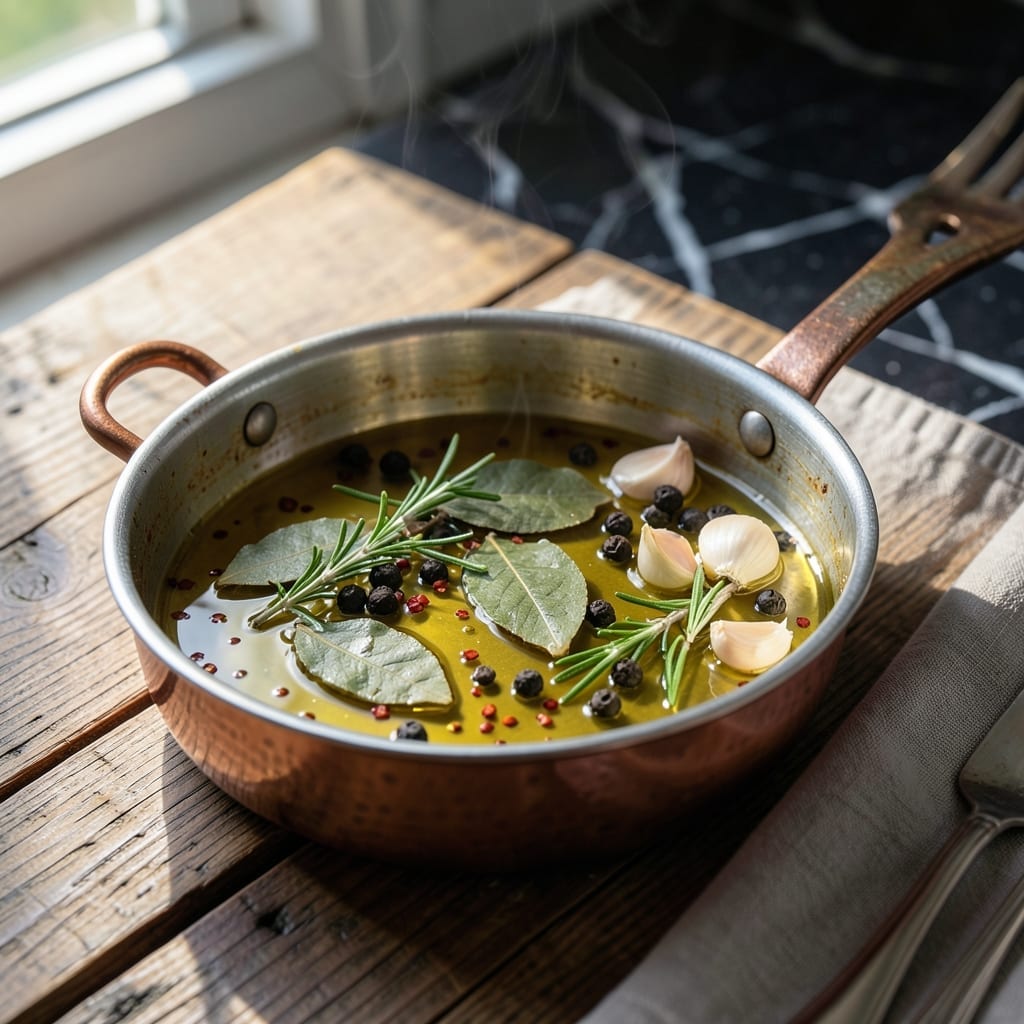
This aromatic oil transforms ordinary dishes into gourmet creations with its rich, herbaceous depth. I developed this method after discovering how bay leaves release their complex flavors through gentle heat.
The process is simple yet precise: slowly infuse high-quality oil with dried bay leaves to extract their essential oils without bitterness. This creates a versatile condiment that elevates everything from roasted vegetables to grilled meats.
You’ll end up with a golden, fragrant oil that captures the warm, slightly floral notes of bay. It stores beautifully for up to 3 months, ready to add sophistication to your cooking.
Use it to finish soups, drizzle over pasta, or as a dipping oil for bread. Here’s how to make it perfectly.
Ingredients for Bay Leaf Oil
Seven ingredients transform plain oil into a fragrant, golden elixir for finishing dishes.
| Ingredient | Amount | Notes |
|---|---|---|
| Dried Bay Leaves 🍃 | 10 pieces | Turkish or California variety |
| Extra-Virgin Olive Oil 🫒 | 2 cups | High-quality, cold-pressed preferred |
| Fresh Rosemary Sprigs 🌿 | 2 pieces | Optional for depth |
| Black Peppercorns 🌶️ | 1 tsp | Whole, lightly crushed |
| Garlic Cloves 🧄 | 3 cloves | Lightly smashed, peeled |
| Red Pepper Flakes 🔥 | ½ tsp | Optional for subtle heat |
| Lemon Peel 🍋 | 1 piece | 1-inch strip, no pith |
The bay leaves are everything here. Turkish bay leaves (slightly sweeter, more floral) or California bay leaves (stronger, more pungent) both work—just avoid the fresh ones, as they can impart bitterness. Whole Foods or Penzeys have excellent dried options. The olive oil should be something you’d happily drizzle on bread (I like California Olive Ranch for a reliable, high-quality option).
No bay leaves? Honestly, skip this one—there’s no good substitute for that distinctive flavor. But if you want to experiment, try dried thyme or oregano at half the amount. Want more complexity? Toss in a cinnamon stick or a star anise pod (remove after infusing). The garlic and rosemary are optional but add layers—fresh is best (dried just doesn’t infuse the same way).
Strain and store in a clean glass bottle in a cool, dark place. Keeps beautifully for 3 months—if it lasts that long. The flavor deepens over time, so make a big batch. Perfect for gifting (just add a pretty label and a note about its uses).
Why You’ll Love This Recipe
- Minimal Effort: I just toss everything in a pot and let it simmer—no chopping, no fuss, just bay leaves, rosemary, and garlic doing their thing.
- Deep, Earthy Flavor: Honestly, the garlic and peppercorns infuse the oil with a rich, aromatic warmth that makes everything taste better.
- Weeknight Hero: I drizzle this over roasted veggies, soups, or even toast—it’s my secret for making simple meals feel special.
- Long Shelf Life: One batch lasts me months in the pantry, so I always have flavor-boosting oil ready to go.
Step-by-Step Instructions for Bay Leaf Oil
This simple infusion process transforms basic olive oil into an aromatic powerhouse with minimal effort.
Step 1: Prepare and Combine the Aromatics
Lightly crush the 1 tsp black peppercorns with the flat side of a knife to release their essential oils. Smash the 3 cloves garlic cloves just enough to split them open—no need to mince. This exposes more surface area for infusion without making them bitter.
In a clean, dry saucepan, combine the 2 cups extra-virgin olive oil with the crushed peppercorns, smashed garlic, 10 pieces dried bay leaves, 2 pieces fresh rosemary sprigs, 0.5 tsp red pepper flakes, and 1 piece lemon peel. The oil should completely submerge all the aromatics.
Step 2: Gently Heat the Infusion
Place the saucepan over low heat—this is critical. You want the oil to warm to about 180-200°F, never hot enough to simmer. The ideal temperature creates tiny bubbles around the aromatics without any sizzling.
This gentle heat extracts the flavors gradually. I maintain this temperature for 15-20 minutes, stirring occasionally. You’ll notice the oil taking on a golden hue as the bay leaves and rosemary release their essential oils. The kitchen will fill with an intoxicating herbal aroma.
Step 3: Steep Off Heat
Remove the saucepan from heat and let the mixture steep at room temperature for 1 hour. This resting period allows the flavors to fully develop and meld together. The residual heat continues the infusion process even after removing from the burner.
Cover the pan with a lid or clean kitchen towel during this time to prevent any debris from falling in. The garlic will soften slightly, the peppercorns will plump, and the bay leaves will unfurl—all signs that the infusion is working perfectly.
Step 4: Strain and Store
Line a fine-mesh strainer with cheesecloth and place it over a clean glass bottle or jar. Pour the oil through the strainer, pressing gently on the solids to extract every last drop of aromatic oil. Discard the spent aromatics—they’ve given all their flavor to the oil.
Let the infused oil cool completely to room temperature before sealing the container. Store in a cool, dark pantry where it will keep for up to 1 month. The flavor actually improves over the first few days as the oil continues to absorb the aromatics’ essences.
Pro Tips For Making Bay Leaf Oil
- Use Low Heat: Simmer the oil with bay leaves and aromatics on the lowest heat possible—any higher and the oil can turn bitter or the garlic can burn.
- Crush The Peppercorns: Lightly crush the black peppercorns before adding them to release their oils and flavor more effectively into the oil.
- Skip Old Bay Leaves: I learned this the hard way—dried bay leaves lose their potency after a year, so check the date and use fresh ones for better flavor infusion.
- Strain While Warm: Strain the oil while it’s still warm to make sure all the aromatic flavors are fully extracted, but not so hot that it’s hard to handle.
Regional Styles of bay leaf oil
Mediterranean Tradition
In Greece, bay leaf oil is a staple for drizzling over grilled octopus or roasted lamb. They often add oregano and thyme to the infusion for extra depth. The warm, earthy notes complement the region’s love for bold, herbal flavors. 🗺️
Italian Approach
Italian cooks prefer a simpler version with just bay leaves and garlic. They use it to finish pasta dishes or drizzle over bruschetta. The key is using high-quality extra-virgin olive oil—I recommend Colavita for authenticity.
French Technique
In Provence, they cold-infuse bay leaves in oil for 2-3 weeks, creating a milder flavor. This method preserves the delicate floral notes. They often pair it with herbes de Provence for a fragrant blend.
Middle Eastern Twist
Lebanese cooks add cinnamon sticks and cardamom pods to their bay leaf oil. This creates a warm, spiced oil perfect for drizzling over hummus or labneh. The combination is aromatic and slightly sweet.
American Fusion
For a modern take, I’ve seen chefs add dried citrus peel or star anise to the infusion. This works especially well with California bay leaves, which have a stronger, more pungent flavor. 💛
Storage Tip
No matter the regional style, always store your infused oil in a cool, dark place to preserve its flavor. A glass bottle with a tight-sealing lid works best.
Nutrition Facts
Frequently Asked Questions
What’s the best oil to use for infusion?
Use high-quality extra-virgin olive oil for the best flavor. Avoid refined oils as they lack depth. The oil’s quality directly impacts the final taste, so choose something you’d enjoy on its own.
Can I use fresh bay leaves instead of dried?
No, fresh bay leaves can make the oil bitter. Dried leaves provide the right flavor balance without overpowering. Stick to 10 dried bay leaves for a 2-cup batch.
How long does the flavor last in storage?
The oil stays fresh for 1 month in a cool, dark place. Over time, the flavor deepens, but discard it if it smells off or develops cloudiness.
Can I add other herbs to the infusion?
Try rosemary, thyme, or garlic for extra depth. Just avoid overcrowding the oil to prevent spoilage.

- 6 Egg Cake Recipe with Oil: Light as Air With Buttery Moisture - October 4, 2026
- 4 Bean Casserole Recipe: One-Pan Heartiness With Smoky Paprika Depth - October 4, 2026
- 3-Ingredient Keto Mug Cake Recipe: Microwave Magic in 2 Minutes - October 4, 2026