
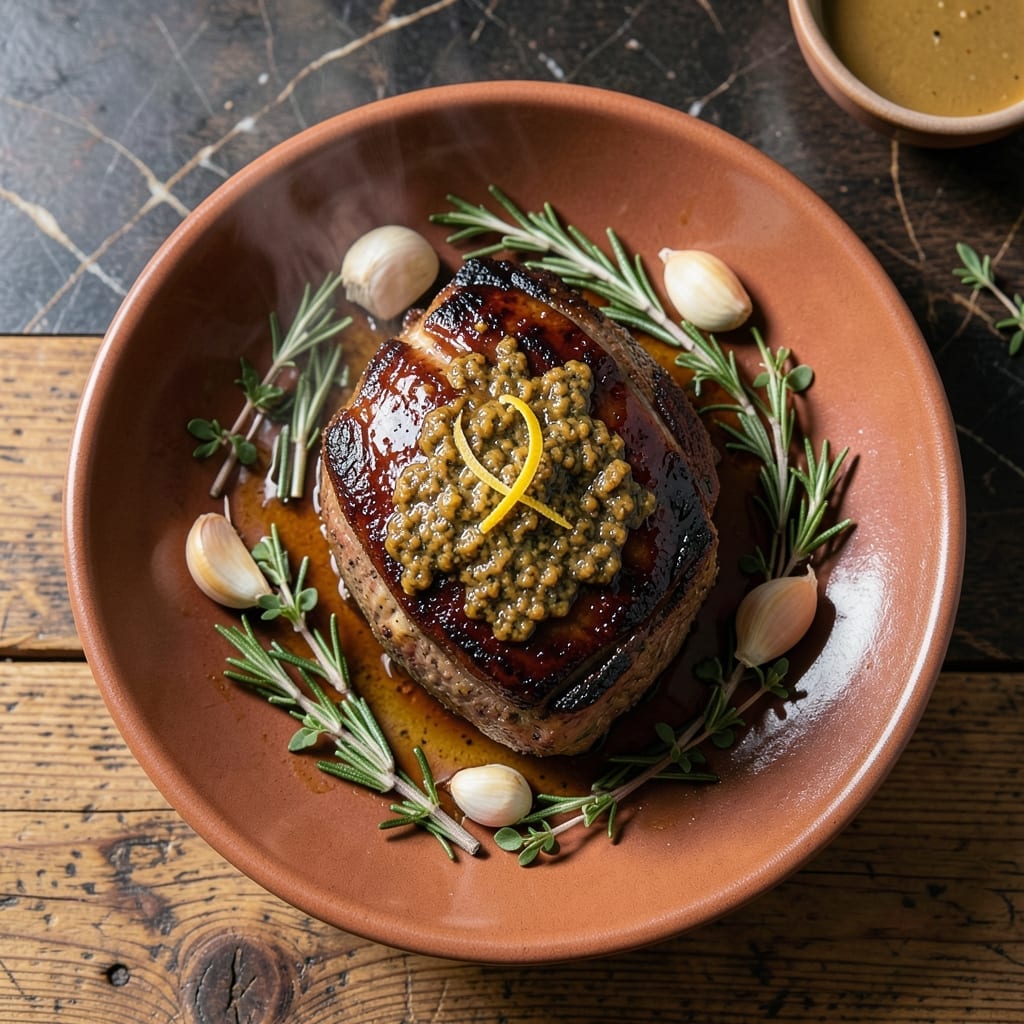
This herb-crusted beef ribeye roast transforms a simple piece of meat into a showstopping centerpiece for any special occasion. The key lies in a perfectly balanced crust that locks in juices while creating an aromatic seal.
I’ve refined this method over years of holiday dinners, focusing on a straightforward approach that ensures tender, flavorful results every time. The ribeye’s natural marbling does most of the work—your job is simply to enhance it.
The process is intentional but uncomplicated: sear, crust, roast, and rest. Each step builds on the last, delivering a roast with a golden crust and a rosy, juicy interior that slices beautifully.
This is the kind of dish that earns compliments before the first bite is even taken. The aroma alone sets the stage for an unforgettable meal.
Ingredients for Beef Ribeye Roast Boneless
A few quality ingredients elevate this roast to centerpiece status for your table.
| Ingredient | Amount | Notes |
|---|---|---|
| Boneless Beef Ribeye Roast 🥩 | 3 lb | Well-marbled, trimmed of excess fat |
| Kosher Salt 🧂 | 1 ½ tbsp | Diamond Crystal preferred for texture |
| Freshly Ground Black Pepper 🌶️ | 1 tbsp | Coarse grind for crust adhesion |
| Fresh Rosemary 🌿 | 3 tbsp | Finely chopped, stems discarded |
| Fresh Thyme 🌿 | 2 tbsp | Leaves stripped from stems |
| Garlic Cloves 🧄 | 6 cloves | Minced to a paste consistency |
| Dijon Mustard 🟡 | 2 tbsp | Whole grain adds texture |
| Olive Oil 🫒 | ¼ cup | Extra-virgin for searing and crust |
| Unsalted Butter 🧈 | 2 tbsp | Softened for herb paste binding |
| Red Wine 🍷 | ½ cup | Dry variety for deglazing pan |
| Beef Stock 🥘 | ½ cup | Low-sodium preferred for reduction |
| Shallot 🧅 | 1 whole | Finely minced for pan sauce |
The beef is everything here. USDA Prime or Choice ribeye from a trusted butcher—Whole Foods or a local shop—gives you the marbling you need. Look for bright red color with creamy fat streaks (that’s the good stuff). If you’re buying pre-trimmed, ask them to leave a thin fat cap—it adds flavor. For the herbs, fresh is non-negotiable; dried just won’t give you that aromatic punch.
No ribeye? A bone-in prime rib works too, but adjust cooking time. Swap rosemary for sage if that’s your jam. Fresh out of Dijon? Whole grain mustard at a 1:1 ratio is fine. For the wine, any dry red will do—Cabernet or Merlot are safe bets. The stock can be homemade or Better Than Bouillon paste (mix with hot water).
The roast needs to rest after cooking—30 minutes minimum—so the juices redistribute. Leftover pan sauce keeps 3-4 days in the fridge. Slice only what you’ll serve; the roast holds heat better whole. Reheat slices gently in the sauce to keep them moist.
Why You’ll Love This Recipe
- Set It and Forget It: I just season, sear, and let the oven do the heavy lifting—honestly, it’s almost too simple.
- Herb-Crusted Heaven: That crust of rosemary, thyme, and cracked pepper on the ribeye? Ridiculously good with every bite.
- Sunday or Tuesday: This roast feels fancy enough for company but unfussy enough for a regular weeknight.
- Leftovers for Days: One roast means sandwiches, tacos, or hash for the next three meals—my wallet loves that.
Step-by-Step Instructions for Beef Ribeye Roast Boneless
Here’s how I create that perfect herb-crusted roast with minimal effort and maximum flavor.
Step 1: Create the Herb Paste and Prep the Roast
In a small bowl, combine the 1.5 tbsp kosher salt, 1 tbsp freshly ground black pepper, 3 tbsp fresh rosemary, 2 tbsp fresh thyme, 6 cloves garlic cloves, 2 tbsp Dijon mustard, 0.25 cup olive oil, and 2 tbsp unsalted butter. Mix until it forms a thick paste—the butter helps it adhere to the meat.
Pat the 3 lb boneless beef ribeye roast completely dry with paper towels. This is crucial for getting that perfect crust. Rub the herb paste all over the surface of the roast, pressing it in firmly so it creates a thick, even coating. Let it sit at room temperature for 30 minutes while your oven preheats.
Step 2: Sear the Roast for a Flavorful Crust
Preheat your oven to 450°F. Heat a large oven-safe skillet or roasting pan over medium-high heat. When hot, add the roast and sear for 2-3 minutes per side until deeply browned. The herb paste will create a fragrant, sizzling crust.
Don’t rush this step—you want a good sear on all sides. The roast should release easily from the pan when it’s ready to flip. If it sticks, let it cook a bit longer to develop that perfect crust. This searing process locks in juices and creates a flavorful foundation for the pan sauce.
Step 3: Roast to Perfect Doneness
Transfer the seared roast to the preheated oven. Roast for 20-25 minutes or until the internal temperature reaches 125°F for medium-rare. Use a meat thermometer to check—this is the most accurate way to ensure perfect doneness.
The roast will continue cooking as it rests, so remove it from the oven when it’s 5-10°F below your desired final temperature. For medium-rare, that’s about 125°F; for medium, aim for 135°F. The herbs will have created a beautiful, fragrant crust that fills your kitchen with an incredible aroma.
Step 4: Make the Pan Sauce and Rest
Remove the roast from the pan and transfer it to a cutting board. Tent loosely with foil and let it rest for 15-20 minutes. This resting period allows the juices to redistribute throughout the meat, ensuring every slice is moist and flavorful.
Place the pan over medium heat and add the 1 whole shallot, minced. Cook for 1-2 minutes until softened. Deglaze the pan with the 0.5 cup red wine, scraping up all the browned bits. Simmer for 2-3 minutes until reduced by half, then add the 0.5 cup beef stock. Simmer for another 3-4 minutes until slightly thickened. Strain and serve with the roast.
Pro Tips For Making Beef Ribeye Roast Boneless
- Pat It Dry: I learned this the hard way—moisture is the enemy of a good sear. Blot the ribeye roast thoroughly with paper towels before seasoning, or you’ll steam it instead of browning it.
- Salt Overnight: Sounds weird, but it works: Dry-brine the roast with kosher salt 12-24 hours ahead. It seasons deep into the meat and guarantees a juicier result.
- Rest Twice: Let the roast sit at room temp for 45 minutes before cooking, then give it a solid 15-20 minutes under foil after roasting. Skipping this leaves you with a dry, tense cut.
- Crush the Herbs: My grandmother swore by this, and she was right: Lightly crush the rosemary and thyme before rubbing them on. It releases the oils and actually changes the outcome.
Essential Equipment for Great beef ribeye roast boneless
Oven-Safe Skillet
I always use a 12-inch cast iron skillet—my Lodge is perfect for searing and transferring straight to the oven. The heavy base prevents hot spots that can burn your herb crust. A stainless steel oven-safe pan works too if you prefer easier cleanup.
Meat Thermometer
A instant-read thermometer is non-negotiable for perfect doneness. I rely on my ThermoWorks Thermapen for 1-second readings. It’s the difference between a perfect medium-rare and overcooked meat. Check multiple spots in the thickest part. 🌡️
Mixing Bowls
For the herb paste, a medium glass or stainless steel bowl works best. I use a Pyrex 4-cup because it’s easy to clean and won’t absorb odors. The paste needs room to mix thoroughly with all those fresh herbs and garlic.
Tongs and Spoons
Use 12-inch locking tongs for flipping the roast—they give you control without piercing the meat. A wooden spoon is ideal for stirring your pan sauce. These are kitchen basics, but quality matters for a dish this special.
Resting Setup
Have a large cutting board and aluminum foil ready for resting. I place my roast on a wooden board and tent it loosely with foil. This keeps it warm while the juices redistribute for 15-20 minutes. 💡
Pan Sauce Tools
A fine-mesh strainer removes shallot pieces for a smooth sauce. I also keep a whisk handy to emulsify the wine and stock. These small tools make a big difference in your final sauce texture.
Nutrition Facts
Frequently Asked Questions
What temperature should I use for medium-rare?
Remove the roast from the oven when it reaches 125°F internally. It will rise to 130-135°F while resting, giving you perfect medium-rare results. Always use a meat thermometer for accuracy.
How long should the roast rest before slicing?
Let it rest for 15-20 minutes tented with foil. This allows juices to redistribute throughout the meat, ensuring every slice stays moist and flavorful. Skipping this step risks dry meat.
Can I use dried herbs instead of fresh?
Fresh herbs are strongly recommended for best flavor. If using dried, reduce quantities by half (1.5 tbsp rosemary, 1 tbsp thyme) and rehydrate in 1 tbsp olive oil first.
Why is my herb crust burning?
This happens if the oven is too hot or the roast sits too long before cooking. Sear at medium-high heat and roast at 450°F no longer than 25 minutes. Tent with foil if browning too quickly.

- 6 Egg Cake Recipe with Oil: Light as Air With Buttery Moisture - October 4, 2026
- 4 Bean Casserole Recipe: One-Pan Heartiness With Smoky Paprika Depth - October 4, 2026
- 3-Ingredient Keto Mug Cake Recipe: Microwave Magic in 2 Minutes - October 4, 2026