
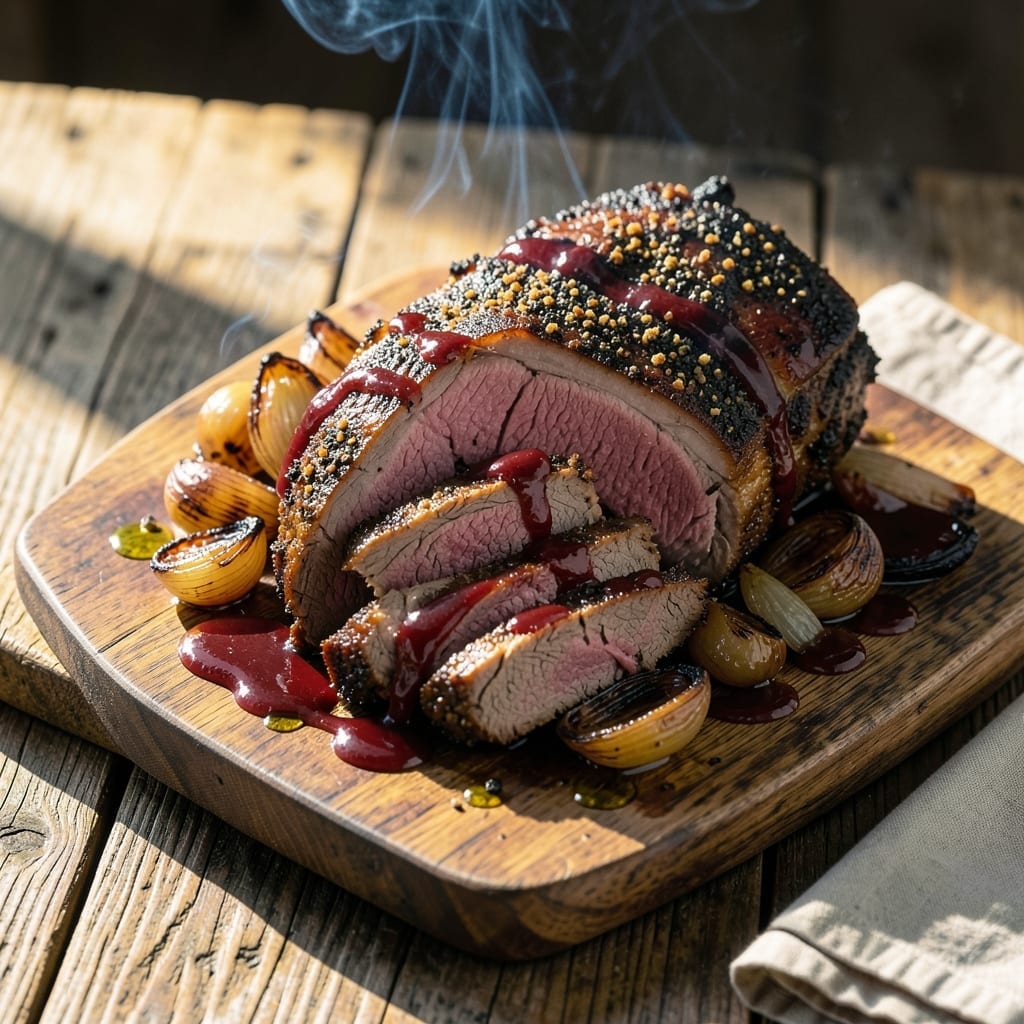
Mastering brisket on a charcoal grill is all about patience and precision. This method transforms a tough cut into tender, smoky perfection through controlled heat and time.
The key lies in maintaining a consistent low temperature, typically between 225-250°F, for 8-12 hours. Charcoal placement and air flow management become your best tools for this slow cooking process.
What emerges is meat so tender it falls apart at the touch of a fork, with a deep red smoke ring and bark that’s both crisp and flavorful. The wait is long, but the result is worth every minute.
This approach stays true to traditional BBQ techniques while making it achievable for home grillers. The reward is restaurant-quality brisket from your own backyard.
Ingredients for Bbq Brisket Recipe Charcoal Grill
Long cook, short list. Just beef, spices, and time to transform it perfectly.
| Ingredient | Amount | Notes |
|---|---|---|
| Beef Brisket 🥩 | 5 lb | Whole packer cut, trimmed |
| Kosher Salt 🧂 | ¼ cup | Diamond Crystal preferred |
| Coarse Black Pepper 🌶️ | ¼ cup | Freshly ground for best bark |
| Brown Sugar 🍚 | ¼ cup | Light or dark variety |
| Paprika 🌶️ | 2 tbsp | Sweet or smoked variety |
| Garlic Powder 🧄 | 1 tbsp | Not garlic salt |
| Onion Powder 🧅 | 1 tbsp | Fine ground preferred |
| Chili Powder 🌶️ | 1 tbsp | Mild or hot variety |
| Cayenne Pepper 🔥 | ½ tsp | Adjust for heat preference |
| Lump Charcoal 🔥 | 20 lb | Natural hardwood preferred |
| Hickory Wood Chunks 🪵 | 4 pieces | Soaked in water 1 hour |
| Apple Cider Vinegar 🍏 | ½ cup | For spritzing during cook |
| Water 💧 | 1 cup | For spritz bottle mix |
| Yellow Mustard 🟡 | ¼ cup | Binder for dry rub |
The brisket itself is non-negotiable. Full packer cut (point and flat together) gives you the best results—avoid pre-trimmed flats, they dry out faster. Look for good marbling throughout (those white fat streaks). Costco or Sam’s Club have great options, or hit up a local butcher for prime grade. The fat cap should be at least a quarter-inch thick to protect the meat during the long cook. Don’t skimp on the lump charcoal—briquettes have additives that can add unwanted flavors.
No hickory? Oak or pecan wood chunks work just as well. Short on time for the full rub? Salt, pepper, and paprika are the holy trinity—you can skip the rest in a pinch. The apple cider vinegar in your spritz helps the bark form (that crispy, flavorful crust). If you can’t find Diamond Crystal salt, Morton’s kosher salt works but use about 25% less since it’s denser. The mustard binder might seem weird, but it’s just a carrier for the rub—you won’t taste it.
Uncooked brisket keeps in the fridge for 3-4 days before cooking. After cooking, rest it wrapped in foil for at least 1 hour (2 is better) before slicing. Leftovers freeze beautifully for up to 3 months—slice before freezing for easy portioning. That smoke ring? It’ll deepen over time, so don’t rush the process.
Why You’ll Love This Recipe
- I’ll be real: it tastes even better the next day, and freezes perfectly for future cravings.
- Set and Forget: I just season the brisket with salt, pepper, and brown sugar, then let the charcoal do the work—no babysitting required.
- Smoky Sweet Crust: That paprika and brown sugar rub forms the most ridiculous bark, crispy outside with tender meat underneath.
- Feeds a Hungry Crowd: Between us, this brisket stretches for sandwiches, tacos, or straight-up plates for a full weekend of meals.
Instructions
Here’s the method for achieving that perfect low-and-slow tenderness everyone raves about.
Step 1: Prep and Season the Brisket
Pat the 5 lb Beef Brisket completely dry with paper towels. This is non-negotiable—moisture prevents the rub from adhering and creates steam instead of smoke absorption.
Spread a thin layer of 0.25 cup Yellow Mustard all over the brisket. This acts as a binder for the rub. In a bowl, combine 0.25 cup Kosher Salt, 0.25 cup Coarse Black Pepper, 0.25 cup Brown Sugar, 2 tbsp Paprika, 1 tbsp Garlic Powder, 1 tbsp Onion Powder, 1 tbsp Chili Powder, and 0.5 tsp Cayenne Pepper.
Apply the rub generously to all sides, pressing it into the meat so it sticks. Let the seasoned brisket sit at room temperature for 30-45 minutes while you prepare the grill.
Step 2: Set Up the Charcoal Grill for Indirect Heat
Arrange the 20 lb Lump Charcoal in a snake or ring pattern around the perimeter of your grill. This creates indirect heat, essential for low-and-slow cooking. Light one end of the charcoal and let it burn until it’s covered with white ash, about 15-20 minutes.
Add the 4 pieces Hickory Wood Chunks (pre-soaked for 1 hour) directly onto the hot coals. Maintain a grill temperature of 225-250°F throughout the cook. Use the vents to control the heat—this is where most beginners struggle, so monitor closely.
Step 3: Smoke the Brisket to Perfection
Place the brisket on the grill grates, fat-side up, over the indirect heat. Close the lid and resist the urge to peek for at least 2 hours. Every time you open the lid, you lose heat and add 10-15 minutes to your cook time.
After 2 hours, check the brisket and spritz it lightly with a mix of 0.5 cup Apple Cider Vinegar and 1 cup Water in a spray bottle. This keeps the surface moist and enhances bark formation. Repeat this spritzing every 45-60 minutes.
Step 4: Wrap and Finish the Cook
When the brisket reaches an internal temperature of 165-170°F (usually after 6-8 hours), it will stall. Wrap it tightly in butcher paper or foil to push through this phase. Return it to the grill and continue cooking until the internal temperature hits 200-205°F.
This final stretch can take another 4-6 hours, depending on your grill’s consistency. Use a probe thermometer to check for doneness—the brisket is ready when the probe slides in like butter with no resistance.
Step 5: Rest and Slice
Remove the brisket from the grill and let it rest, wrapped, in a cooler or warm oven for at least 1 hour. This resting period allows the juices to redistribute, ensuring every slice is moist and tender.
Unwrap the brisket and slice against the grain into ¼-inch thick pieces. Serve immediately for the best texture and flavor.
Pro Tips For Making Bbq Brisket Recipe Charcoal Grill
- Start Low and Slow: Keep your charcoal grill between 225-250°F—I learned this the hard way after my first brisket turned into chewy leather at 300°F. That temperature range breaks down the collagen without drying out the meat.
- Trim the Fat Cap: Leave about 1/4 inch of fat on the brisket but trim the rest, especially the thick, hard chunks. Sounds tedious, but it works: the rub penetrates better and you avoid grease flare-ups on the grill.
- Skip the Early Peek: Resist the urge to open the lid for the first 3-4 hours. Every time you lift it, you lose heat and add 15-20 minutes to your cook time—I was skeptical until I tried it and cut an hour off my usual time.
- Rest Under Foil: Once it hits 195-203°F internally, pull it off, double-wrap in foil, and let it rest for at least 1 hour. My grandmother swore by this, and she was right: the juices redistribute and the meat stays moist when you slice it.
Health Benefits of This bbq brisket recipe charcoal grill
Protein Powerhouse
Brisket is packed with high-quality protein—about 50 grams per 6-ounce serving—providing all nine essential amino acids your body needs. This supports muscle growth and repair, making it an excellent choice for active lifestyles. I always feel satisfied and energized after enjoying this dish. 💪
Iron and Zinc Boost
Beef brisket is rich in heme iron, which your body absorbs more easily than plant-based iron. A 6-ounce serving provides about 3.5 mg of iron and 8 mg of zinc, essential for immune function and metabolism.
B Vitamin Complex
This cut delivers a robust dose of B vitamins, including B12, B6, and niacin. These nutrients play key roles in energy production and nervous system health. A serving covers a significant portion of your daily B12 needs.
Healthy Fats
While brisket contains fat, much of it renders out during the long cook. The remaining fats include monounsaturated and saturated fats that provide sustained energy. Moderation is key, as with any rich protein source.
Collagen Benefits
The connective tissue in brisket breaks down into gelatin during cooking, which supports joint health and skin elasticity. That’s why slow-cooked brisket feels so nourishing—it’s literally good for your joints. ✨
Low-Carb Friendly
With 0 grams of carbs in the meat itself, brisket fits perfectly into low-carb or keto diets. Just be mindful of any sugary rubs or sauces you add. The protein and fat content keep you full for hours.
Nutrition Facts
Frequently Asked Questions
What’s the ideal charcoal setup?
Use a snake or ring method with 20 lb lump charcoal around the perimeter. This creates consistent indirect heat for 225-250°F. Add soaked hickory wood chunks for smoke flavor.
How do I know when it’s done?
At 200-205°F internal temp, the probe should slide in like butter. Don’t rush it—this can take 10-12 hours total. Resting for 1 hour after is crucial.
Can I wrap in foil instead of paper?
Yes, but butcher paper lets the brisket breathe, creating a better bark. Foil works fine but may steam the bark. Wrap after the 165-170°F stall point.
Why did my brisket turn out dry?
Likely cooked too hot or too fast. Stick to 225-250°F and spritz every 45-60 minutes. Also, rest it properly to retain juices.

- 6 Egg Cake Recipe with Oil: Light as Air With Buttery Moisture - October 4, 2026
- 4 Bean Casserole Recipe: One-Pan Heartiness With Smoky Paprika Depth - October 4, 2026
- 3-Ingredient Keto Mug Cake Recipe: Microwave Magic in 2 Minutes - October 4, 2026