
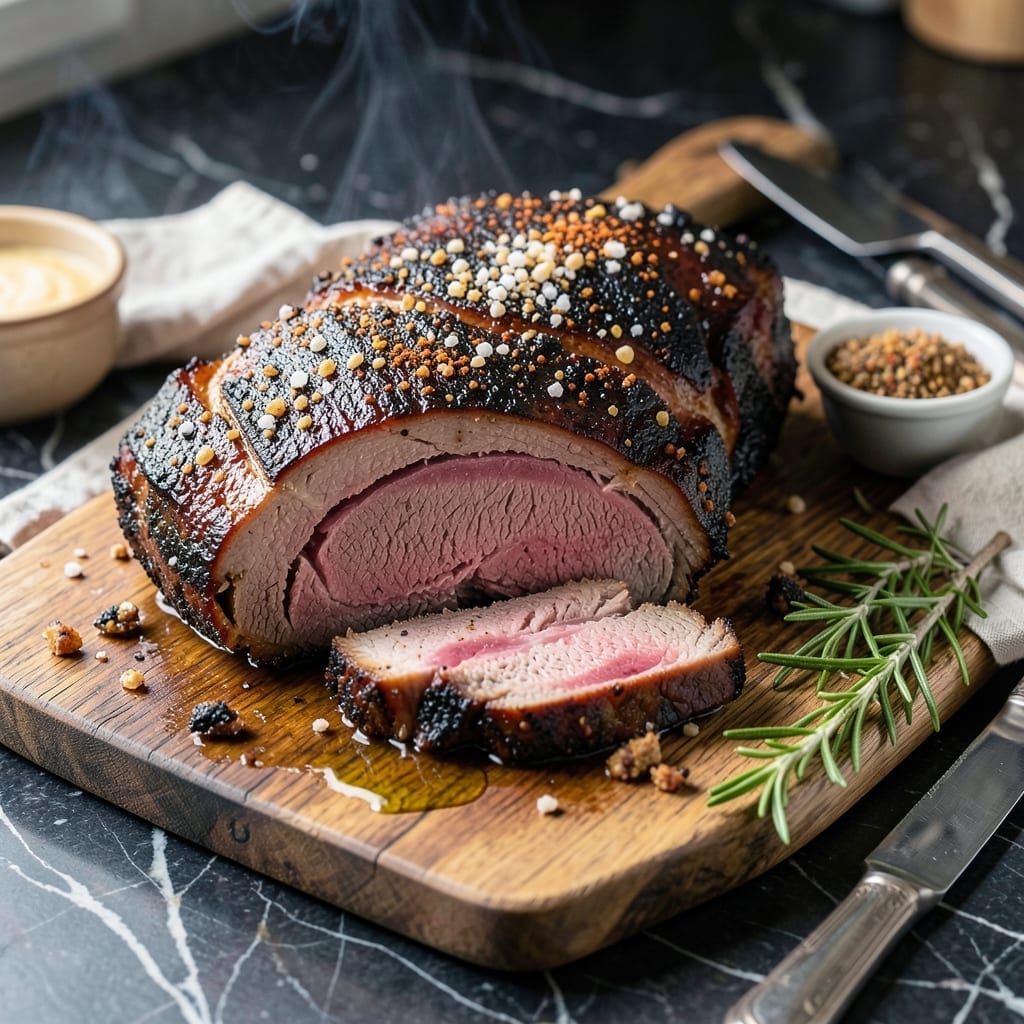
Mastering tender brisket on the smoker is all about patience and precision. Low heat, consistent smoke, and the right wood selection transform tough beef into melt-in-your-mouth perfection.
This method relies on a simple but effective dry rub, steady 225°F temperature, and a long, slow cook that can take 12 to 16 hours. The result is a brisket with a rich, smoky bark and juicy interior.
Resting the meat is just as important as the smoke—it locks in moisture and ensures every slice is uniformly tender. Skip this step, and you’ll lose the magic.
Whether you’re feeding a crowd or honing your pitmaster skills, this approach delivers competition-level results every time.
Ingredients for Bbq Brisket Recipe Smoker
Low and slow requires quality beef and a bold rub. Nothing less will do.
| Ingredient | Amount | Notes |
|---|---|---|
| Beef Brisket 🥩 | 12 lb | Whole packer cut, untrimmed |
| Coarse Kosher Salt 🧂 | ½ cup | Diamond Crystal preferred |
| Coarse Black Pepper 🌶️ | ½ cup | Freshly ground preferred |
| Granulated Garlic 🧄 | 2 tbsp | Not garlic salt |
| Granulated Onion 🧅 | 2 tbsp | Uniform fine grind |
| Paprika 🌶️ | 2 tbsp | Sweet or smoked variety |
| Brown Sugar 🍚 | ¼ cup | Light or dark, packed |
| Mustard Powder 🟡 | 1 tbsp | Dry, not prepared |
| Cayenne Pepper 🔥 | 1 tsp | Adjust for heat preference |
| Olive Oil 🫒 | ¼ cup | For binder in rub |
| Apple Cider Vinegar 🍏 | ½ cup | For spritz during cooking |
| Hickory Wood Chunks 🪵 | 8 pieces | Or oak for milder smoke |
| Beef Broth 🥩 | 2 cups | Low-sodium preferred for spritz |
The brisket is everything. Whole packer cut from a reputable butcher (or Costco for solid quality) is non-negotiable—avoid pre-trimmed flat cuts, as they dry out faster. Look for good marbling and a thick, even fat cap. The rub spices? Freshly opened containers make a noticeable difference. I get mine from Penzeys or bulk sections where turnover is high.
No paprika? Chili powder at half the amount works in a pinch. Out of apple cider vinegar? White vinegar plus a teaspoon of sugar mimics the balance. The hickory can be swapped for pecan or cherry wood—lighter smoke but still delicious. For the spritz, apple juice instead of broth adds sweetness without overpowering.
Store the brisket in the fridge for up to 3 days before cooking. The rub keeps indefinitely in a cool, dark place. Leftovers? Slice, vacuum-seal, and freeze for 3 months. They reheat beautifully in the sous vide or slow cooker.
Why You’ll Love This Recipe
- Set It and Forget It: I rub the brisket with salt, pepper, garlic, and onion, then let the smoker do all the work for hours.
- Smoky, Savory Perfection: That coarse black pepper crust with the deep, rich beef flavor? It’s what BBQ dreams are made of.
- Feeds a Hungry Crowd: Perfect for summer cookouts or Sunday family dinners—everyone leaves happy and full.
- Leftovers for Days: Honestly, it tastes even better the next day in tacos, sandwiches, or just straight from the fridge.
Step-by-Step Instructions for BBQ Brisket Smoker
Here’s the method. Straightforward, tested, works every time.
Step 1: Trim and Apply the Rub
Start by trimming the fat cap on the 12 lb Beef Brisket to ¼ inch thickness. I use a sharp boning knife for precision. Leave enough fat to protect the meat during the long smoke, but remove any hard or excessive fat that won’t render down.
In a bowl, combine the 0.5 cup Coarse Kosher Salt, 0.5 cup Coarse Black Pepper, 2 tbsp Granulated Garlic, 2 tbsp Granulated Onion, 2 tbsp Paprika, 0.25 cup Brown Sugar, 1 tbsp Mustard Powder, and 1 tsp Cayenne Pepper. Stir in the 0.25 cup Olive Oil to create a paste-like rub. This binder ensures the seasoning adheres to the meat throughout the cook.
Apply the rub liberally to all sides of the brisket, pressing it into the meat so it forms a good bark. Let it rest at room temperature for 1 hour while you prepare your smoker.
Step 2: Set Up the Smoker and Start Cooking
Preheat your smoker to 225-250°F using the 8 pieces Hickory Wood Chunks. I prefer hickory for its bold, classic smoke flavor, but oak works if you want something milder. Maintain a consistent temperature—this is key for even cooking and that perfect low-and-slow tenderness.
Once the smoker is at temperature and producing thin blue smoke, place the brisket fat-side up on the grates. The fat cap will render down and baste the meat as it cooks. Close the lid and resist the urge to peek—every time you open it, you lose heat and add to your cook time.
Step 3: Spritz and Monitor for the Stall
After about 4-5 hours, the brisket will develop a beautiful bark. Mix the 0.5 cup Apple Cider Vinegar and 2 cups Beef Broth in a spray bottle. Every 45-60 minutes, spritz the brisket lightly to keep the surface moist and prevent it from drying out.
Around 165-170°F internal temperature, you’ll hit “the stall”—this is when the temperature plateaus as moisture evaporates. This is completely normal. Be patient and let the brisket work through it. This can last several hours, but the wait is worth it.
Step 4: Wrap and Finish the Cook
Once the internal temperature pushes past the stall, wrap the brisket tightly in pink butcher paper. This step, called the “Texas crutch,” helps power through the final phase of cooking while keeping the bark intact. Return it to the smoker fat-side up.
Continue cooking until the internal temperature reaches 200-205°F and a probe slides in like butter. This usually takes another 4-6 hours, depending on the size of the brisket. Trust the probe test over the thermometer—tenderness is what matters most.
Step 5: Rest and Slice
Remove the brisket from the smoker and let it rest wrapped in the butcher paper for at least 1 hour. I prefer 2 hours wrapped in towels in a cooler. This resting period allows the juices to redistribute, ensuring every slice is moist and flavorful.
Unwrap the brisket and slice against the grain into ¼-inch thick slices. The flat and point have different grain directions, so adjust your angle as you go. Serve immediately while still warm for the best texture and flavor.
Pro Tips For Making Bbq Brisket Recipe Smoker
- Trim the Fat: Leave about 1/4 inch of fat on the brisket to protect the meat, but trim any thick chunks—too much fat won’t render properly and can block smoke penetration.
- Season Overnight: I learned this the hard way—give the salt, pepper, garlic, and onion at least 12 hours to work into the meat; it makes the bark deeper and the flavor more even.
- Hold at 225°F: After burning a few briskets at higher temps, I finally stuck to a steady 225°F in the smoker—low and slow is the only way to keep it tender without drying out.
- Wrap in Paper: Sounds weird, but it works: at the stall, wrap the brisket in butcher paper instead of foil to let it breathe while still powering through the last stretch.
Pro Cooking Tips for Great bbq brisket recipe smoker
Temperature Control
Consistent 225-250°F is non-negotiable for even cooking. I use a ThermoWorks Smoke dual-probe thermometer—one for smoker temp, one for meat. Avoid built-in smoker gauges; they’re often off by 25-50°F. 🌡️
Thin Blue Smoke
White smoke means dirty fire; thin blue smoke is ideal. Use dry, seasoned hickory wood chunks and avoid green or wet wood. I add 2-3 chunks every hour to maintain steady smoke.
The Texas Crutch
At 165°F internal, wrap in pink butcher paper to power through the stall. This keeps moisture in while preserving bark. Foil works but softens the bark—paper wins for texture.
Probe Test
Don’t rely solely on temp; probe tenderness matters more. When your thermometer slides in like butter at 200-205°F, it’s done. I test multiple spots to confirm.
Resting Period
Rest wrapped in towels in a cooler for 1-2 hours. This lets juices redistribute. Slice too soon, and you’ll lose moisture. I’ve ruined brisket by skipping this. 💡
Slice Against Grain
The flat and point grain run in different directions. Slice perpendicular to fibers in ¼-inch thick slices. A sharp 12-inch knife is essential for clean cuts.
Nutrition Facts
Frequently Asked Questions
How long does it take to smoke a brisket?
At 225-250°F, expect 12-16 hours for a full packer. The stall around 165°F can add several hours, so start early and be patient.
What wood is best for smoking brisket?
Hickory gives classic bold flavor, while oak is milder. Pecan or cherry work too. Always use dry, seasoned wood for thin blue smoke.
Can I skip resting the brisket?
No! Resting for 1-2 hours lets juices redistribute. Slicing too soon = dry meat. Wrap in towels in a cooler for best results.
How do I know when the brisket is done?
Use a probe test: when it slides in like butter at 200-205°F, it’s ready. Always check multiple spots for tenderness.

- 6 Egg Cake Recipe with Oil: Light as Air With Buttery Moisture - October 4, 2026
- 4 Bean Casserole Recipe: One-Pan Heartiness With Smoky Paprika Depth - October 4, 2026
- 3-Ingredient Keto Mug Cake Recipe: Microwave Magic in 2 Minutes - October 4, 2026