
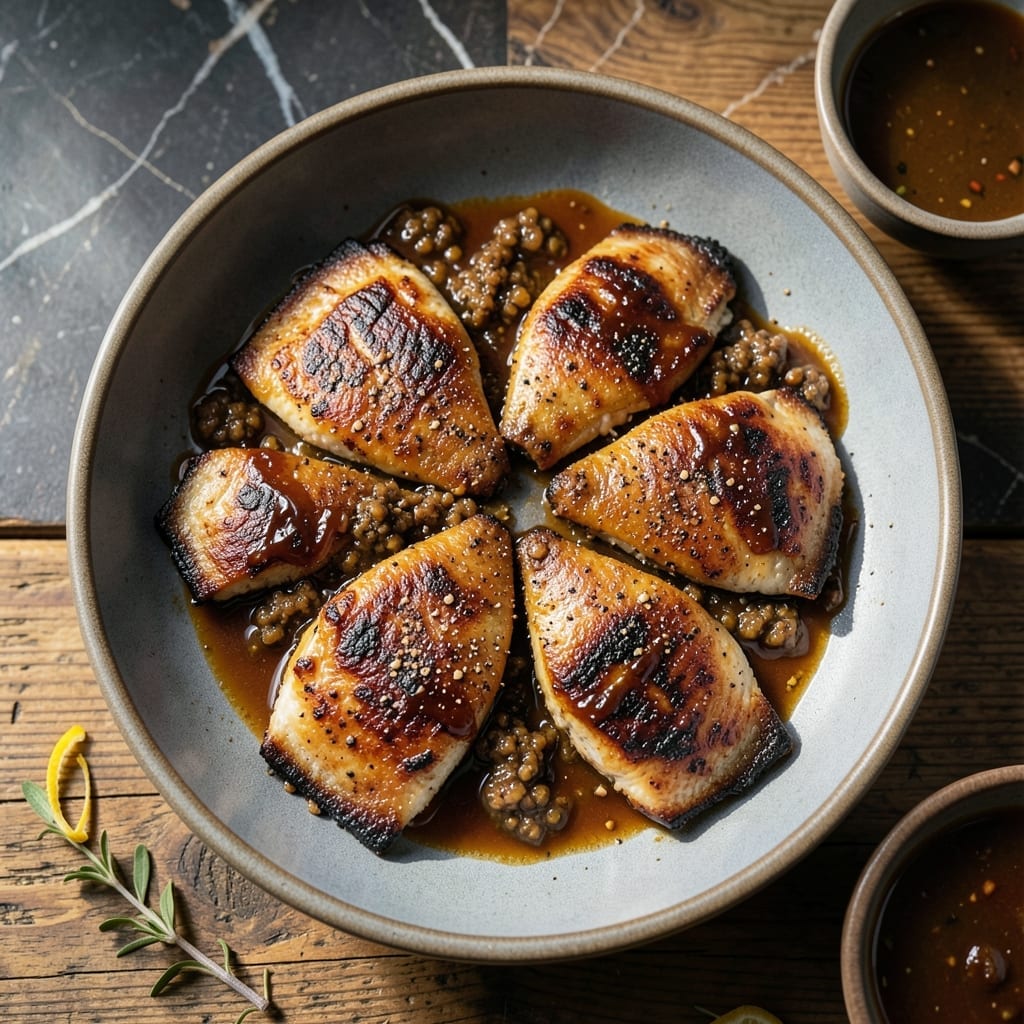
This oven-baked catfish delivers flaky, tender perfection with a smoky-sweet glaze that caramelizes beautifully in the heat. The secret is a simple marinade that infuses the fish with bold BBQ flavor before baking.
I developed this method to achieve restaurant-quality results without the grill. A 400°F oven transforms the glaze into a sticky, slightly charred coating that complements the fish’s natural sweetness.
The catfish emerges moist and perfectly cooked, with the glaze forming a glossy, finger-licking finish. Each bite offers a balance of smoky, sweet, and savory notes that highlight the fish’s delicate texture.
Serve with coleslaw and cornbread for a complete meal. Here’s how to make it.
Ingredients for Bbq Catfish Recipe Oven
Pantry staples and fresh catfish come together for a restaurant-worthy oven-baked dish.
| Ingredient | Amount | Notes |
|---|---|---|
| Catfish Fillets 🐟 | 1 ½ lb | Skinless, boneless, about 4 fillets |
| Barbecue Sauce 🍯 | ¾ cup | Smoky-sweet variety preferred |
| Olive Oil 🫒 | 2 tbsp | Extra-virgin for marinade |
| Brown Sugar 🍚 | 2 tbsp | Light or dark, packed |
| Smoked Paprika 🌶️ | 1 tsp | For depth of flavor |
| Garlic Powder 🧄 | 1 tsp | Fresh minced works too |
| Onion Powder 🧅 | 1 tsp | Balances sweetness |
| Salt 🧂 | ½ tsp | Kosher or sea salt |
| Black Pepper 🌶️ | ½ tsp | Freshly ground preferred |
| Lemon Juice 🍋 | 1 tbsp | Freshly squeezed for brightness |
| Worcestershire Sauce 🍶 | 1 tbsp | Vegan version if needed |
| Dijon Mustard 🟡 | 1 tsp | Adds tangy depth |
The catfish is the star—fresh or frozen works (thaw overnight if frozen). Look for fillets that are firm, moist, and smell clean, not fishy. Whole Foods or local seafood markets usually have the best selection. I prefer domestic farm-raised for consistency (and it’s more sustainable). Avoid pre-marinated fillets—they won’t absorb the BBQ glaze as well.
Swap the barbecue sauce for half ketchup, half molasses with a dash of liquid smoke if you’re out. No smoked paprika? Regular paprika plus a pinch of cayenne gets you close. The Worcestershire can be omitted, but it adds umami depth—soy sauce or coconut aminos work in a pinch. The brown sugar can be maple syrup or honey (though honey isn’t vegan).
Marinate the fish no longer than 30 minutes—the acid in the lemon juice can start to break it down. Bake immediately after marinating for best texture. Leftovers keep in the fridge for 2-3 days, but the glaze is best fresh out of the oven. Reheat gently in a 300°F oven to avoid drying out.
Why You’ll Love This Recipe
- One Pan Magic: I toss the catfish with olive oil, brown sugar, and smoked paprika, then let the oven do the work—no flipping, no fuss.
- Sticky-Sweet Perfection: The barbecue sauce caramelizes with the brown sugar, creating this addictive glaze that clings to every bite.
- Weeknight Hero: Honestly, it’s my go-to when I need dinner on the table fast but still want something flavorful.
- Budget-Friendly Feast: Catfish fillets are affordable, and a little barbecue sauce goes a long way—feeds my family without breaking the bank.
Step-by-Step Instructions for BBQ Catfish Oven Style
This method delivers tender, flaky catfish with a perfectly caramelized smoky-sweet glaze.
Step 1: Prepare the Marinade and Season the Fillets
In a small bowl, whisk together the 2 tbsp olive oil, 2 tbsp brown sugar, 1 tsp smoked paprika, 1 tsp garlic powder, 1 tsp onion powder, 0.5 tsp salt, and 0.5 tsp black pepper until fully combined. The brown sugar will begin to dissolve, creating a thick, fragrant paste that clings to the fish.
Place the 1.5 lb catfish fillets in a shallow dish and pour the marinade over them, turning to coat evenly. This step infuses the fillets with flavor and helps create a caramelized crust during baking. Let them marinate for 15 minutes at room temperature while you preheat the oven.
Step 2: Preheat and Prepare the Baking Sheet
Preheat your oven to 400°F and line a baking sheet with parchment paper. The high heat ensures the fish cooks quickly while developing a caramelized exterior. Lightly grease the parchment with a bit of the marinade residue to prevent sticking.
This temperature is critical—it’s hot enough to create a beautiful glaze on the barbecue sauce without drying out the delicate catfish. Arrange the fillets on the prepared sheet, leaving space between each piece to allow for even air circulation and browning.
Step 3: Bake the Catfish Until Flaky
In a separate small bowl, combine the 0.75 cup barbecue sauce, 1 tbsp lemon juice, 1 tbsp Worcestershire sauce, and 1 tsp Dijon mustard. Stir until smooth and well incorporated. Brush this mixture generously over the catfish fillets, ensuring they are fully coated.
Bake for 12-15 minutes, or until the catfish flakes easily with a fork and the sauce has thickened slightly. The edges of the fillets should be just beginning to caramelize, and the internal temperature should reach 145°F.
Step 4: Broil for a Caramelized Finish
Switch the oven to broil and return the catfish to the oven for an additional 2-3 minutes. Watch closely to prevent burning—the barbecue sauce will bubble and develop a deep, glossy sheen as it caramelizes under the direct heat.
Remove the catfish from the oven when the sauce is thick and sticky, with charred edges forming around the fillets. This final step enhances the smoky-sweet flavor and ensures a visually appealing presentation.
Pro Tips For Making Bbq Catfish Recipe Oven
- Preheat the Oven: Set it to 400°F and give it a full 15 minutes to stabilize—I learned this the hard way after my first batch came out undercooked in the middle.
- Pat the Fillets Dry: Use a paper towel to remove excess moisture from the catfish before seasoning; it helps the brown sugar and smoked paprika stick better.
- Skip the Over-Saucing: Brush on the barbecue sauce only in the last 5 minutes of baking to prevent burning—sounds weird, but it works.
- Use a Wire Rack: Place the catfish on a wire rack over a baking sheet for even cooking and to avoid a soggy bottom—this isn’t the prettiest method, but it’s the tastiest.
Flavor Customization for bbq catfish recipe oven
Extra Spicy Kick
Add ½ tsp cayenne pepper to the marinade for a noticeable heat boost. For serious spice lovers, mix 1 tbsp hot sauce into the BBQ glaze. I’ve found Crystal or Tabasco work well without overpowering the dish. 🌶️
Sweet & Tangy Twist
Swap 1 tbsp of brown sugar for 1 tbsp honey in the marinade for a deeper sweetness. Add 1 tsp apple cider vinegar to the glaze for extra tang. This variation reminds me of my favorite Kansas City-style BBQ.
Smoky Depth
Enhance the smokiness by adding ½ tsp chipotle powder to the marinade. For a stronger effect, use smoked salt instead of regular salt. A few drops of liquid smoke in the glaze also works wonders.
Herb-Infused Brightness
Stir 1 tbsp fresh chopped parsley or 1 tsp dried thyme into the marinade for an herby freshness. This balances the richness of the BBQ sauce beautifully. I love this version with a squeeze of extra lemon.
Garlic Lovers’ Version
Double the garlic by using 1 tbsp fresh minced garlic in place of the powder. Add ½ tsp garlic salt to the glaze for an extra punch. This creates a bold, aromatic profile that garlic enthusiasts will adore. 💡
Citrus Zing
Boost the citrus notes with 1 tsp orange zest in the marinade. Replace the lemon juice with lime juice in the glaze for a tropical twist. This pairs especially well with a cold beer.
Nutrition Facts
Frequently Asked Questions
Can I use frozen catfish fillets?
Yes, but thaw them overnight in the fridge first. Pat dry before marinating to ensure the glaze adheres properly.
What temperature should the oven be?
Set it to 400°F for baking. This high heat caramelizes the sauce while keeping the fish moist inside.
How do I know when it’s done?
Check for 145°F internal temperature and flaky texture. The sauce should be thick and slightly charred.
Can I skip the broiling step?
Not recommended—the final 2-3 minutes under the broiler creates that signature smoky crust.

- 6 Egg Cake Recipe with Oil: Light as Air With Buttery Moisture - October 4, 2026
- 4 Bean Casserole Recipe: One-Pan Heartiness With Smoky Paprika Depth - October 4, 2026
- 3-Ingredient Keto Mug Cake Recipe: Microwave Magic in 2 Minutes - October 4, 2026