
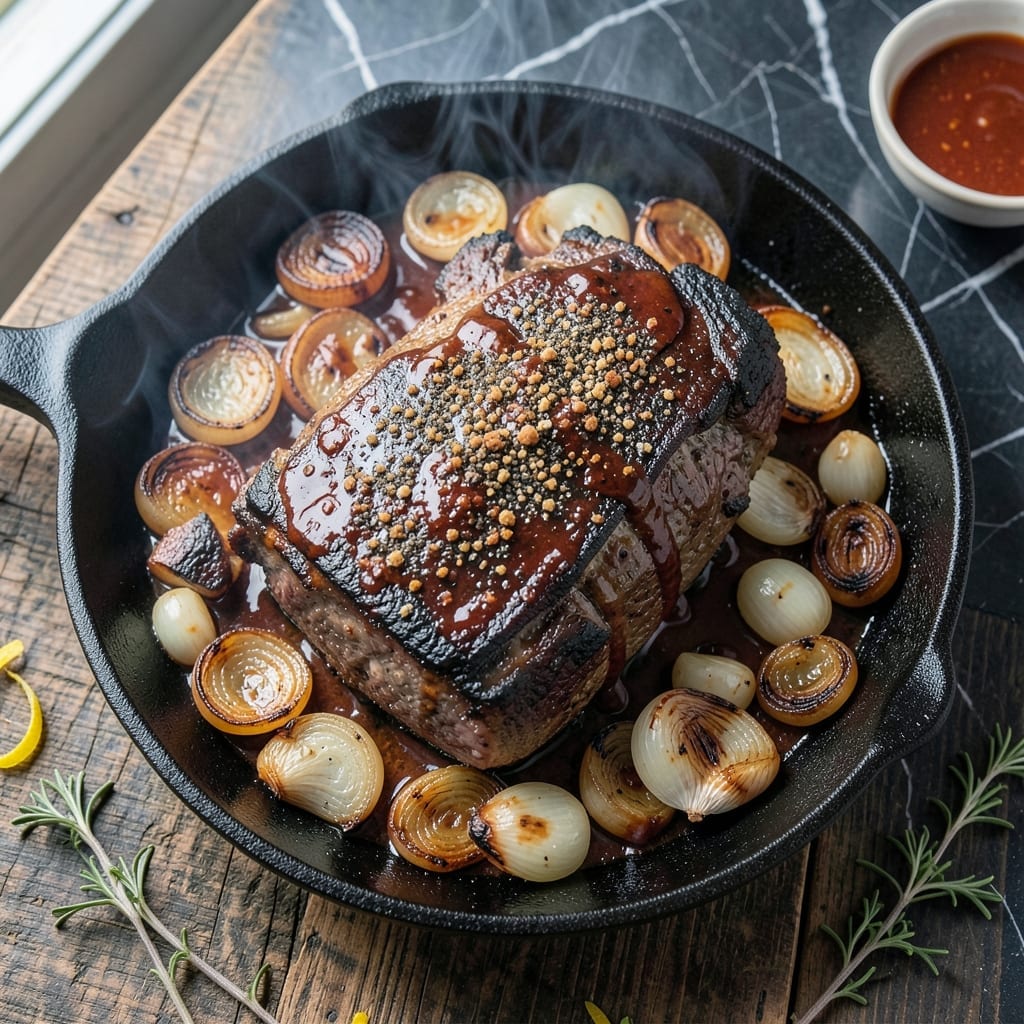
Smoking a chuck roast transforms this budget-friendly cut into a melt-in-your-mouth masterpiece with deep smoky flavor and fall-apart tenderness. This method leverages low and slow cooking to break down tough connective tissue while infusing every bite with authentic BBQ character.
The process begins with a well-seasoned rub and proper preparation of the meat. Maintaining consistent heat between 225-250°F in your smoker is crucial for achieving that perfect tender texture without drying out the roast.
After several hours of smoking, the chuck roast emerges with a beautiful bark on the outside and juicy, pull-apart meat on the inside. The collagen renders into gelatin, creating that signature mouthfeel that defines great BBQ.
This technique delivers competition-worthy results with minimal active effort, making it ideal for weekend cookouts or feeding a crowd.
Ingredients for Bbq Chuck Roast Recipe Smoker
Quality chuck plus a bold rub yields competition-worthy BBQ with minimal effort required.
| Ingredient | Amount | Notes |
|---|---|---|
| Chuck Roast 🥩 | 4 lb | Well-marbled, boneless preferred |
| Coarse Kosher Salt 🧂 | 2 tbsp | Diamond Crystal preferred for texture |
| Freshly Ground Black Pepper 🌶️ | 2 tbsp | Coarse grind for bark formation |
| Brown Sugar 🍚 | ½ cup | Light or dark, packed |
| Paprika 🌶️ | 2 tbsp | Sweet or smoked variety |
| Garlic Powder 🧄 | 1 tbsp | Not garlic salt substitute |
| Onion Powder 🧅 | 1 tbsp | Fresh ground preferred |
| Cayenne Pepper 🔥 | ½ tsp | Adjust for heat preference |
| Yellow Mustard 🟡 | ¼ cup | Binder for rub adhesion |
| Apple Cider Vinegar 🍏 | ½ cup | For spritzing during smoke |
| Hickory Wood Chunks 🪵 | 4 pieces | Or chips for consistent smoke |
| Beef Broth 💧 | 1 cup | Low-sodium preferred for reduction |
The chuck roast quality is paramount. Select a well-marbled piece (look for white fat streaks throughout) from a reputable butcher or Costco for consistent results. The fat cap should be at least 1/4 inch thick to baste the meat during the long smoke. Avoid pre-cubed chuck—whole roasts maintain moisture better. USDA Choice grade offers the best balance of quality and price for this application.
For the rub, freshly ground spices make a noticeable difference in bark development. No onion powder? Granulated onion at half the quantity works. Brown sugar can be swapped for turbinado (just pulse it finer). If avoiding sugar, increase the paprika by 1 tablespoon for color. The mustard binder is traditional, but olive oil works in a pinch (though it may create a softer bark).
Store the seasoned roast uncovered in the fridge overnight for optimal bark formation. Smoked leftovers keep 4-5 days in the fridge or freeze for 3 months. Reheat gently in a covered dish with a splash of broth to maintain moisture. The rub can be pre-mixed and stored in an airtight container for 6 months.
Why You’ll Love This Recipe
- Set It and Forget: I toss the chuck roast with salt, pepper, and brown sugar, then let the smoker do the work for hours.
- Smoky Sweet Crust: That paprika and brown sugar rub caramelizes into a sticky, finger-licking bark.
- Feeds a Crowd: One 4-pound roast makes enough for sandwiches, tacos, and leftovers for days.
- Budget-Friendly Luxury: Chuck roast is cheap, but with this rub and slow smoke, it tastes like a fancy brisket.
Step-by-Step Instructions for BBQ Chuck Roast Smoker
Master the technique for melt-in-your-mouth tenderness with these proven smoker steps.
Step 1: Create the Bark-Building Rub
Combine the 2 tbsp Coarse Kosher Salt, 2 tbsp Freshly Ground Black Pepper, 0.5 cup Brown Sugar, 2 tbsp Paprika, 1 tbsp Garlic Powder, 1 tbsp Onion Powder, and 0.5 tsp Cayenne Pepper in a bowl. The coarse texture of the salt and pepper creates the foundation for a robust bark.
Stir in the 0.25 cup Yellow Mustard to form a thick paste. This acts as your binding agent, ensuring the rub adheres to the 4 lb Chuck Roast throughout the long smoke. The mustard’s tang will mellow during cooking, leaving only its adhesive properties behind.
Step 2: Apply Rub and Prepare for the Smoker
Pat the chuck roast completely dry with paper towels—this is critical for bark formation. Apply the mustard-rub mixture evenly over all surfaces of the meat, pressing firmly to create a uniform coating. The rub should look almost pasty at first; this thickness contributes to the final bark.
Let the seasoned roast sit at room temperature for 30-45 minutes while you prepare your smoker. This allows the salt to begin penetrating the meat and the surface to dry slightly, which improves smoke absorption.
Step 3: Smoke with Hickory at Low Temperature
Preheat your smoker to 225°F using the 4 pieces Hickory Wood Chunks. When thin blue smoke is billowing steadily, place the roast directly on the grates, fat-side up. The fat cap will render during cooking, basting the meat and enhancing flavor.
Smoke undisturbed for 4 hours, then begin spritzing with the 0.5 cup Apple Cider Vinegar every 45-60 minutes. The vinegar helps prevent the bark from becoming too dark while adding a subtle tang to complement the hickory smoke.
Step 4: Wrap and Continue Cooking to Tenderness
After 6-7 hours of smoking, when the internal temperature reaches 165-170°F, wrap the roast tightly in pink butcher paper. Add the 1 cup Beef Broth to the wrap for moisture before returning it to the smoker. This braising step is essential for breaking down the chuck’s connective tissues.
Continue cooking until the internal temperature reaches 203-205°F and a probe slides in with no resistance—this typically takes another 2-3 hours. The meat should feel like butter when tested, indicating perfect tenderness.
Step 5: Rest and Serve
Remove the roast from the smoker and let it rest in the butcher paper for 1 hour. This allows the juices to redistribute and the collagen to fully transform into gelatin, ensuring each bite is moist and tender.
Unwrap and pull the meat apart with forks or slice against the grain. The exterior should have a dark, crusty bark while the interior remains incredibly juicy. Serve immediately while still warm for the ultimate smoky experience.
Pro Tips For Making Bbq Chuck Roast Recipe Smoker
- Dry the Roast: Pat the chuck roast completely dry with paper towels before seasoning—this guarantees the brown sugar and spices stick properly and form a better bark in the smoker.
- Low and Slow: Keep your smoker between 225-250°F and plan for 1.5-2 hours per pound. I learned this the hard way after pulling tough meat at 195°F internal temp.
- Skip the Early Sauce: Resist the urge to add BBQ sauce early—it burns easily. Wait until the last 30-45 minutes to brush it on for perfect caramelization.
- Rest Before Slicing: Let the roast rest wrapped in foil for at least 20 minutes after pulling from the smoker. This keeps all those juices inside instead of on your cutting board.
Creative Variations of This bbq chuck roast recipe smoker
Texas-Style Hot and Fast
For a quicker version, smoke at 275°F instead of 225°F. This cuts total cook time to about 8-9 hours while still delivering tender results. Use pecan wood for a sweeter, more subtle smoke profile. I find this works great for weeknight smokes when time is tight. 🔥
Kansas City Sweet Glaze
During the last 2 hours of cooking, brush with a glaze of 1 cup BBQ sauce, ¼ cup brown sugar, and 2 tbsp apple cider vinegar. This creates a sticky, sweet crust that’s signature to Kansas City-style BBQ. Let the glaze set for 30 minutes before slicing.
Spicy Coffee Rub
Replace 2 tbsp of brown sugar in the rub with finely ground coffee beans and add 1 tbsp chili powder. The coffee deepens the smoky flavor while the chili adds heat. This variation pairs exceptionally well with a dark beer like Guinness. 💛
Asian-Inspired Twist
Swap the traditional rub for 3 tbsp gochujang, 2 tbsp soy sauce, 1 tbsp grated ginger, and 1 tbsp sesame oil. Smoke as usual, then shred and toss with sliced scallions and sesame seeds. Serve on steamed rice or in tacos.
Beer-Braised Version
When wrapping, add 12 oz dark beer (like Shiner Bock) along with the beef broth. The beer adds malt complexity and helps tenderize the meat further. This is my go-to for game day gatherings—everyone loves the depth of flavor. 🍺
Smoke-Free Oven Method
No smoker? Use your oven at 225°F with a stovetop smoker box filled with hickory chips. Place the box on the lower rack and the roast on the upper rack. The result won’t be identical, but it’s a solid backup for apartment dwellers.
Nutrition Facts
Frequently Asked Questions
What’s the ideal smoker temperature?
Maintain a consistent 225°F for the best results. This low-and-slow approach ensures the collagen breaks down properly without drying out the meat.
How do I know when it’s done?
The roast is ready when it reaches 203-205°F internally and a probe slides in like butter. This typically takes 8-10 hours total.
Can I use a different wood?
Yes! While hickory is classic, pecan or oak work well too. Avoid softwoods like pine—they can impart bitter flavors.
Why wrap in butcher paper?
Wrapping at 165-170°F helps retain moisture and speeds up the final phase of cooking. Butcher paper allows some smoke to penetrate while preventing the bark from getting soggy.

- 6 Egg Cake Recipe with Oil: Light as Air With Buttery Moisture - October 4, 2026
- 4 Bean Casserole Recipe: One-Pan Heartiness With Smoky Paprika Depth - October 4, 2026
- 3-Ingredient Keto Mug Cake Recipe: Microwave Magic in 2 Minutes - October 4, 2026