
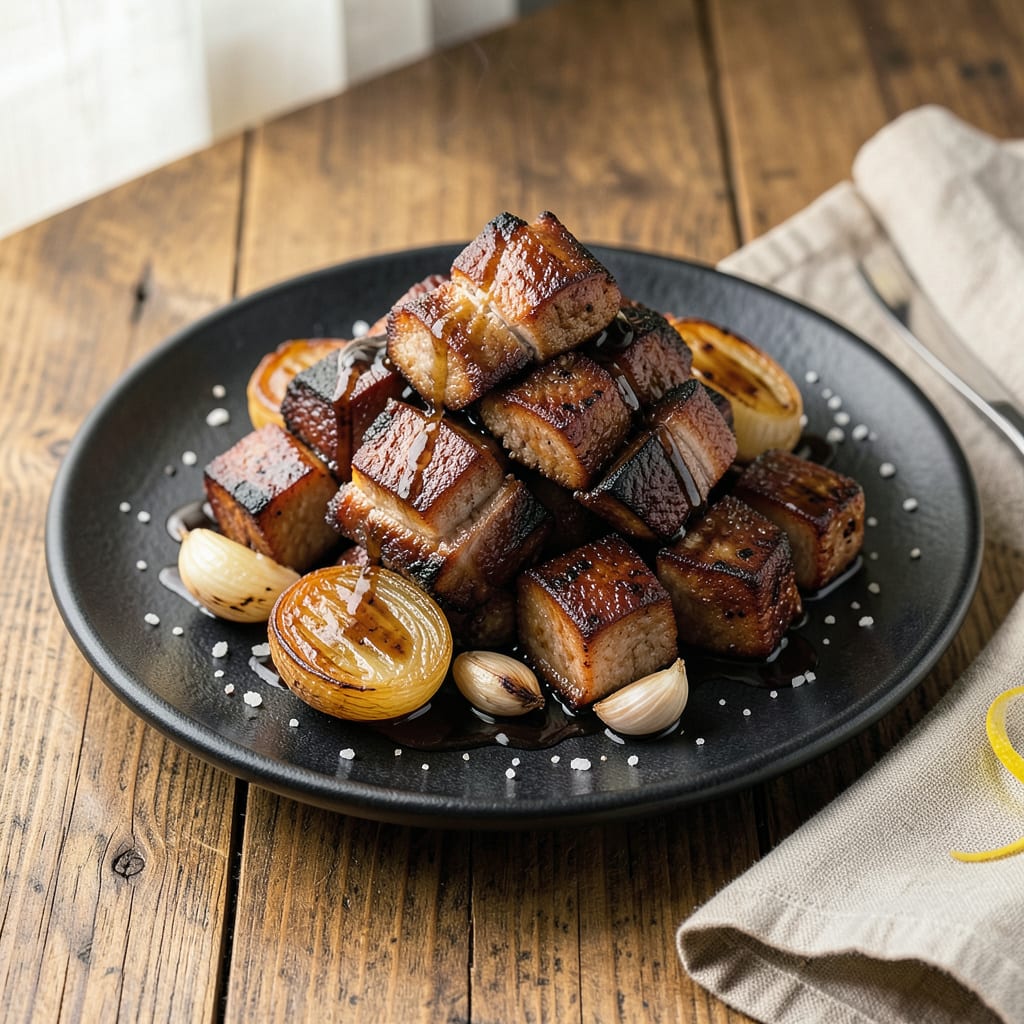
Mastering pork belly burnt ends at home transforms your backyard BBQ into a competition-level experience. This recipe delivers tender, smoky cubes with caramelized edges that rival any pitmaster’s creation. The key lies in precise temperature control and a carefully balanced rub that builds layers of flavor during the long cook.
You’ll achieve fall-apart tender results by smoking the belly low and slow, then finishing with a sweet-spicy glaze that creates that signature sticky bark. What emerges is a dish where every bite offers the perfect contrast of crispy exterior and buttery interior—proof that patience and technique yield extraordinary results.
Ingredients for Bbq Pork Belly Burnt Ends
These twelve ingredients transform pork belly into competition-worthy burnt ends with smoky depth and caramelized perfection.
| Ingredient | Amount | Notes |
|---|---|---|
| Pork Belly 🥓 | 4 lb | Skin-on, 1.5-inch cubes |
| Kosher Salt 🧂 | ¼ cup | Diamond Crystal preferred for precision |
| Coarse Black Pepper 🌶️ | ¼ cup | Freshly ground, 16-mesh recommended |
| Granulated Garlic 🧄 | 3 tbsp | Not garlic powder for texture |
| Granulated Onion 🧅 | 3 tbsp | Dehydrated, not powdered |
| Smoked Paprika 🌶️ | 2 tbsp | Sweet or hot variety |
| Dark Brown Sugar 🍚 | 1 cup | Lightly packed for moisture |
| Apple Cider Vinegar 🍎 | ½ cup | 5% acidity for balance |
| Honey 🍯 | ½ cup | Local, unfiltered preferred |
| Worcestershire Sauce 💧 | ¼ cup | Anchovy-free if needed |
| Unsalted Butter 🧈 | ½ cup | Cubed for finishing glaze |
| Yellow Mustard 🟡 | 3 tbsp | For binder, not flavor |
| Hickory Wood Chunks 🌳 | 4 pieces | Smoking wood, fist-sized |
| Apple Juice 🍏 | 2 cups | For spritzing, no sugar added |
The pork belly quality is non-negotiable for optimal results. Skin-on, well-marbled slabs from reputable butchers like Snake River Farms or local specialty meat markets ensure proper fat rendering. Request 1.5-inch thickness for uniform cubes; thinner cuts risk drying during the long cook. For the rub, Diamond Crystal kosher salt provides precise seasoning control due to its flake structure, while freshly ground black pepper (16-mesh) delivers consistent texture. Professional pitmasters recommend Primate brand for their coarse grind specificity.
Substitutions require careful consideration to maintain flavor balance. Turbinado sugar can replace brown sugar at a 1:1 ratio, though moisture retention may vary slightly. For a vegan adaptation, substitute agave nectar for honey and vegan Worcestershire (like Annie’s brand). The apple juice spritz can be replaced with apple cider, but avoid sugared varieties that may caramelize prematurely. Cherry wood offers a milder smoke alternative to hickory, while pecan provides similar intensity with slightly sweeter notes.
Proper storage ensures ingredient integrity. Keep pork belly refrigerated at 34-36°F until ready to trim, and use within 5 days of purchase. Store rub components in airtight containers away from light; whole spices maintain potency for 6-12 months, while ground spices decline after 3 months. The finished burnt ends hold beautifully for 4 days refrigerated or 3 months frozen—reheat in a 250°F oven with apple juice to restore moisture.
Why You’ll Love This Recipe
- I’ll be real: these reheat better than most leftovers. Toss them in tacos, pile on rice bowls, or eat cold straight from the fridge at 2 a.m. (no judgment). They’re my go-to for potlucks because they disappear faster than the deviled eggs—and that’s saying something.
- Five-Ingredient Magic: Honestly, the ingredient list is shorter than my grocery receipt. Just pork belly, salt, pepper, garlic, and onion—no hunting for obscure spices or special sauces. I’ve made this on exhausted weeknights when even takeout felt like too much effort.
- Crispy, Sticky, Fall-Apart Good: That contrast of caramelized edges with the tender, almost buttery center? It’s the reason I double the batch every time. The coarse black pepper and granulated garlic form this crust that’s somehow both aggressive and melt-in-your-mouth—no sauce required, though I won’t judge if you add one.
- Meal Prep’s Secret Weapon: I’ll be real: these reheat better than most leftovers. Toss them in tacos, pile on rice bowls, or eat cold straight from the fridge at 2 a.m. (no judgment). They’re my go-to for potlucks because they disappear faster than the deviled eggs—and that’s saying something.
Step-by-Step Instructions for BBQ Pork Belly Burnt Ends
Mastering these caramelized cubes requires precision timing and attention to smoke balance. Here’s the professional approach.
Step 1: Prepare and Season the Pork Belly
Begin by cutting the 4 lb pork belly into 1.5-inch cubes, ensuring you leave the skin on for texture contrast. Pat each piece completely dry with paper towels – residual moisture prevents proper bark formation during the smoking process.
In a large bowl, combine the 0.25 cup kosher salt, 0.25 cup coarse black pepper, 3 tbsp granulated garlic, 3 tbsp granulated onion, and 2 tbsp smoked paprika. Add the pork belly cubes and toss thoroughly until every surface is evenly coated. The rub should adhere completely without wet spots.
Transfer the seasoned cubes to a wire rack set over a baking sheet. Let them rest uncovered at room temperature for 30 minutes while you prepare your smoker. This resting period allows the salt to begin penetrating the meat and helps form the initial bark layer.
Step 2: Smoke with Controlled Temperature and Moisture
Preheat your smoker to 250°F using the 4 pieces hickory wood chunks for smoke. When the smoker reaches temperature and produces thin blue smoke, arrange the pork belly cubes directly on the grates, leaving space between each piece for even smoke circulation.
Smoke the cubes for 2 hours, maintaining the temperature between 240-260°F. After the first hour, begin spritzing with the 2 cups apple juice every 30 minutes to prevent drying while building layers of flavor. The cubes should develop a deep mahogany color and firm exterior texture.
Monitor the smoke quality throughout – you want consistent thin blue smoke, not thick white smoke which can impart bitter flavors. Adjust your air vents as needed to maintain this ideal smoke condition.
Step 3: Create the Caramelization Glaze
In a saucepan over medium heat, combine the 1 cup dark brown sugar, 0.5 cup apple cider vinegar, 0.5 cup honey, 0.25 cup worcestershire sauce, 0.5 cup unsalted butter, and 3 tbsp yellow mustard. Bring to a gentle simmer, stirring constantly until the sugar fully dissolves and the mixture thickens slightly.
Reduce heat to low and maintain at a bare simmer for 10-12 minutes, stirring occasionally. The glaze should coat the back of a spoon and have a syrupy consistency. Remove from heat and let cool slightly – it will thicken further as it cools.
The glaze should balance sweet, tangy, and smoky notes. Taste and adjust the acidity with additional apple cider vinegar if needed, but maintain the syrupy texture which is crucial for proper adhesion to the pork.
Step 4: Finish and Caramelize
Transfer the smoked pork belly cubes to a large mixing bowl. Pour the warm glaze over the cubes and toss gently but thoroughly until every piece is evenly coated. The glaze should adhere completely without pooling at the bottom of the bowl.
Return the glazed cubes to the smoker and cook for an additional 45-60 minutes at 250°F, stirring every 15 minutes to prevent burning and ensure even caramelization. The cubes are finished when they develop a glossy, dark bark that cracks slightly when bitten.
The final product should have a firm but tender interior with a crisp, sticky exterior. The caramelized crust should provide resistance when bitten, giving way to the smoky, unctuous pork within. Serve immediately while the bark is at its crispest.
Common Mistakes When Making bbq pork belly burnt ends
Over-Trimming the Fat
I see many home cooks make the mistake of trimming too much fat from pork belly before cubing. Remember, that fat renders down during the 2-hour smoke to create moisture and flavor. Leave at least ¼-inch fat cap on each cube—this is what transforms into that buttery interior we love. Trust me, the fat won’t be greasy when properly rendered. 💡
Inconsistent Cube Sizing
Cutting uneven cubes leads to some pieces finishing before others. Use a ruler to ensure all pieces are exactly 1.5 inches. I like to stack two cubes together periodically to check for uniformity. This precision ensures even cooking and that perfect bite where the bark gives way to tender meat.
Neglecting the Spritz
The apple juice spritz every 30 minutes isn’t optional—it’s what prevents the cubes from drying out during the long smoke. I use a clean spray bottle and apply a fine mist from 12 inches away. Skipping this step risks tough, leathery burnt ends instead of those juicy, caramelized bites we’re after.
Rushing the Glaze
Simmering the glaze for the full 10-12 minutes is crucial for proper thickness. If you rush it, the glaze will slide right off the cubes instead of creating that sticky bark. I test it by dipping a spoon—it should coat the back completely and leave a slight trail when you run your finger through it.
Overcrowding the Smoker
When you pile cubes too close together, they steam instead of smoke properly. Leave at least 1 inch between each piece for proper airflow. I arrange them in a single layer like a grid, which also makes it easier to monitor color development and apply the spritz evenly.
Skipping the Rest
After glazing, those burnt ends need 10 minutes to set up before serving. This brief rest allows the glaze to firm up and the juices to redistribute. I transfer them to a warm cooler lined with towels—this keeps them hot while the bark sets to that perfect crisp-tender balance. 🔥
Nutrition Facts

- 6 Egg Cake Recipe with Oil: Light as Air With Buttery Moisture - October 4, 2026
- 4 Bean Casserole Recipe: One-Pan Heartiness With Smoky Paprika Depth - October 4, 2026
- 3-Ingredient Keto Mug Cake Recipe: Microwave Magic in 2 Minutes - October 4, 2026