
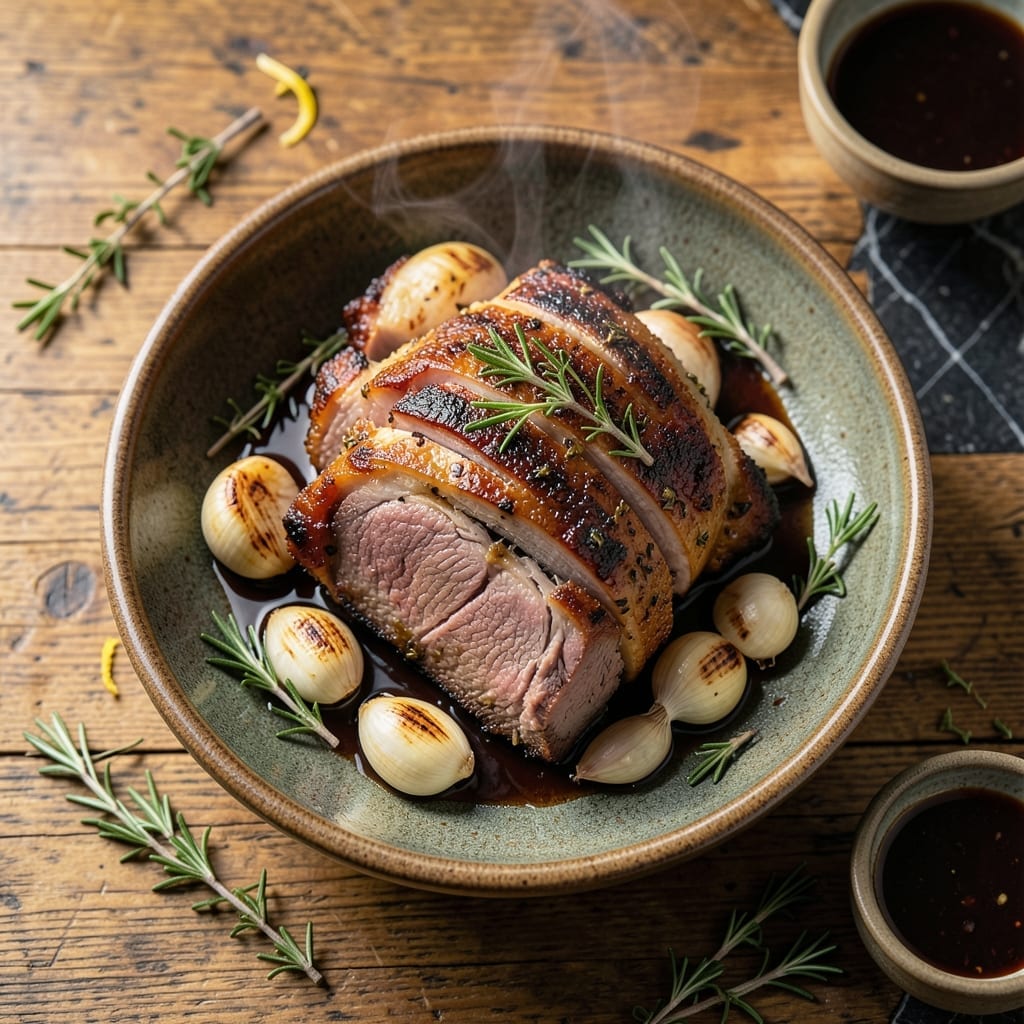
This recipe transforms wild game into a tender, herb-crusted centerpiece worthy of any dinner table.
I developed this method after testing various cooking approaches to ensure both safety and flavor. The herb crust seals in moisture while adding aromatic depth to the rich, lean meat.
The result is a perfectly cooked roast with a golden-brown exterior and juicy, flavorful interior. Proper handling and cooking temperatures are crucial when preparing wild game.
Serve with root vegetables for a hearty, rustic meal that highlights the natural richness of the meat.
Ingredients for Bear Roast
Lean bear meat and aromatic herbs create a rustic roast worthy of a feast.
| Ingredient | Amount | Notes |
|---|---|---|
| Bear Meat 🐻 | 2 ½ lb | Lean shoulder or hindquarter, trimmed |
| Kosher Salt 🧂 | 2 tsp | Diamond Crystal preferred for even seasoning |
| Black Pepper 🌶️ | 1 tsp | Freshly cracked for robust flavor |
| Fresh Rosemary 🌿 | 3 tbsp | Finely chopped, stems discarded |
| Fresh Thyme 🍃 | 2 tbsp | Leaves stripped from stems |
| Garlic Cloves 🧄 | 6 cloves | Minced for herb crust |
| Olive Oil 🫒 | ¼ cup | Extra-virgin for richness |
| Dijon Mustard 🥄 | 2 tbsp | For crust adhesion and tang |
| Red Wine 🍷 | 1 cup | Dry variety for deglazing |
| Beef Stock 🥣 | 1 ½ cups | Low-sodium preferred for control |
| Carrots 🥕 | 3 whole | Peeled and cut into chunks |
| Yukon Gold Potatoes 🥔 | 1 ½ lb | Peeled and quartered |
| Yellow Onion 🧅 | 1 whole | Sliced into wedges |
| Unsalted Butter 🧈 | 2 tbsp | For finishing herb crust |
The bear meat is paramount here. Source from a reputable hunter or specialty butcher—look for deep red color and minimal fat marbling. Shoulder or hindquarter cuts yield the most tender results. Wild Fork Foods offers quality wild game if local sourcing isn’t available. Ensure the meat has been properly field-dressed and aged (7-10 days minimum) for optimal tenderness and safety.
No fresh herbs? Dried rosemary and thyme at one-third the quantity can substitute, though fresh delivers superior aromatic complexity. Red wine can be replaced with additional beef stock plus 1 tbsp balsamic vinegar for acidity. For a non-alcoholic version, beef stock with a splash of apple cider vinegar works well. The Dijon mustard is essential for crust adhesion—do not omit.
The roast benefits from resting 15-20 minutes before carving to redistribute juices. Leftovers keep in the refrigerator for up to 4 days or can be frozen for 3 months. Reheat gently in a covered dish with a splash of stock to prevent drying out.
Why You’ll Love This Recipe
- Set It and Forget: I just rub the bear meat with salt, pepper, and those fresh herbs, then let the oven do the work.
- Wildly Rich Flavor: The rosemary and thyme pull out this deep, earthy taste from the bear that’s honestly unlike anything else.
- Feeds the Crew: One roast means leftovers for sandwiches or tacos the next day—no extra cooking.
- Budget-Friendly Wild: Here’s what sold me—bear meat stretches further than beef, and the flavor is just as satisfying.
Step-by-Step Instructions for Bear Roast
Master the technique for transforming this wild game into a tender, herb-crusted centerpiece.
Step 1: Prepare the Herb Crust and Sear the Bear Meat
Combine the 3 tbsp Fresh Rosemary, 2 tbsp Fresh Thyme, 6 cloves Garlic Cloves, 2 tsp Kosher Salt, and 1 tsp Black Pepper in a bowl. Stir in the 0.25 cup Olive Oil and 2 tbsp Dijon Mustard to form a thick paste. This mixture will create a robust, aromatic crust that complements the bear meat’s natural richness.
Pat the 2.5 lb Bear Meat dry and rub the herb paste evenly over its surface. Sear the meat in a hot Dutch oven until deeply browned on all sides—about 3-4 minutes per side over medium-high heat. This step develops a flavorful fond that will enhance the final dish.
Step 2: Deglaze and Add Vegetables
Remove the seared bear meat and set it aside. Pour the 1 cup Red Wine into the Dutch oven, scraping up all the browned bits from the bottom. Let it simmer for 2-3 minutes until the liquid reduces by half. This deglazing process captures all the concentrated flavors from the searing step.
Add the 3 whole Carrots, 1.5 lb Yukon Gold Potatoes, and 1 whole Yellow Onion to the pot. These vegetables will absorb the rich flavors of the wine and meat juices as they cook, creating a hearty accompaniment to the roast.
Step 3: Braise to Perfection
Return the bear meat to the Dutch oven and pour in the 1.5 cups Beef Stock. The liquid should come about halfway up the meat. Cover and transfer to a preheated 325°F oven. Braise for 2.5 to 3 hours, turning the meat occasionally.
You’ll know it’s done when the meat is fork-tender and the internal temperature reaches 195°F. The low and slow cooking method breaks down the tough fibers in the bear meat, transforming it into a melt-in-your-mouth experience.
Step 4: Finish and Rest
Remove the Dutch oven from the oven and transfer the bear meat to a cutting board. Stir the 2 tbsp Unsalted Butter into the cooking liquid to add a silky finish to the braising sauce. Taste and adjust seasoning if needed.
Let the meat rest for 15-20 minutes before slicing. This resting period allows the juices to redistribute throughout the meat, ensuring each serving is moist and flavorful. Serve the bear roast with the braised vegetables and a generous spoonful of the rich cooking liquid.
Pro Tips For Making Bear Roast
- Low and Slow Wins: Bear meat is lean and tough—cook it at 275°F for 4-5 hours until fork-tender. I learned this the hard way after my first attempt came out like chewy leather.
- Soak the Meat Overnight: Soak the bear meat in salted water for 12 hours to draw out impurities and mellow the wild flavor. My grandfather swore by this, and it actually changes the outcome.
- Don’t Skip the Rest: Let the roast rest under foil for 15-20 minutes after cooking. Sounds weird, but it works—every slice stays juicier when you give it time to reabsorb the juices.
- Crush the Herbs: Rub crushed fresh rosemary and thyme directly into the meat before roasting. I was skeptical until I tried it, but the oils release way more flavor than whole sprigs.
Creative Variations of This Recipe
Juniper Berry Infusion
Add 1 tbsp crushed juniper berries to the herb paste for a piney, woodsy note that pairs beautifully with bear meat. I soak them in 2 tbsp warm water for 10 minutes first to soften. This variation nods to traditional European game preparations. 🌲
Maple-Glazed Version
Replace the red wine with ½ cup pure maple syrup mixed with ½ cup beef stock for a sweet-savory glaze. Brush the roast with this mixture during the last 30 minutes of cooking. The maple complements the meat’s natural richness without overpowering it.
Smoky Chipotle Twist
Stir 1 tbsp chipotle powder and 1 tsp smoked paprika into the herb paste for a Southwestern flair. I also add 1 chopped chipotle pepper in adobo to the braising liquid. The smokiness enhances the wild game’s deep, earthy flavors.
Mushroom and Bacon
Sauté 8 oz cremini mushrooms and 4 slices chopped bacon before deglazing. Return them to the pot with the bear meat. The umami from mushrooms and saltiness from bacon create a complex, hearty dish. 🍄
Asian Five-Spice
Swap the rosemary and thyme for 1 tbsp five-spice powder in the herb paste. Use soy sauce instead of Dijon mustard and add 1 cup chicken stock with 2 star anise pods to the braising liquid. This creates an aromatic, East-West fusion.
Beer-Braised Option
Replace the red wine with 12 oz dark beer like Guinness or a porter. The maltiness adds depth to the braising liquid. I reduce it by half before adding the beef stock. This variation works especially well with bear shoulder cuts. 🍺
Nutrition Facts
Frequently Asked Questions
What cut of bear meat works best?
Shoulder or hindquarter cuts are ideal for roasting. These sections have more connective tissue that breaks down beautifully during the 2.5 to 3 hour braising time, resulting in tender, juicy meat.
How do I know when it’s done?
The meat is ready when it reaches an internal temperature of 195°F and becomes fork-tender. Unlike beef, bear meat requires higher temperatures to fully break down its tough fibers. Always use a meat thermometer for accuracy.
Can I use a slow cooker instead?
Yes, sear the meat first, then cook on low for 6-8 hours. Add all ingredients except the butter, which you’ll stir in at the end. The texture will be similar but less concentrated in flavor.

- 6 Egg Cake Recipe with Oil: Light as Air With Buttery Moisture - October 4, 2026
- 4 Bean Casserole Recipe: One-Pan Heartiness With Smoky Paprika Depth - October 4, 2026
- 3-Ingredient Keto Mug Cake Recipe: Microwave Magic in 2 Minutes - October 4, 2026