
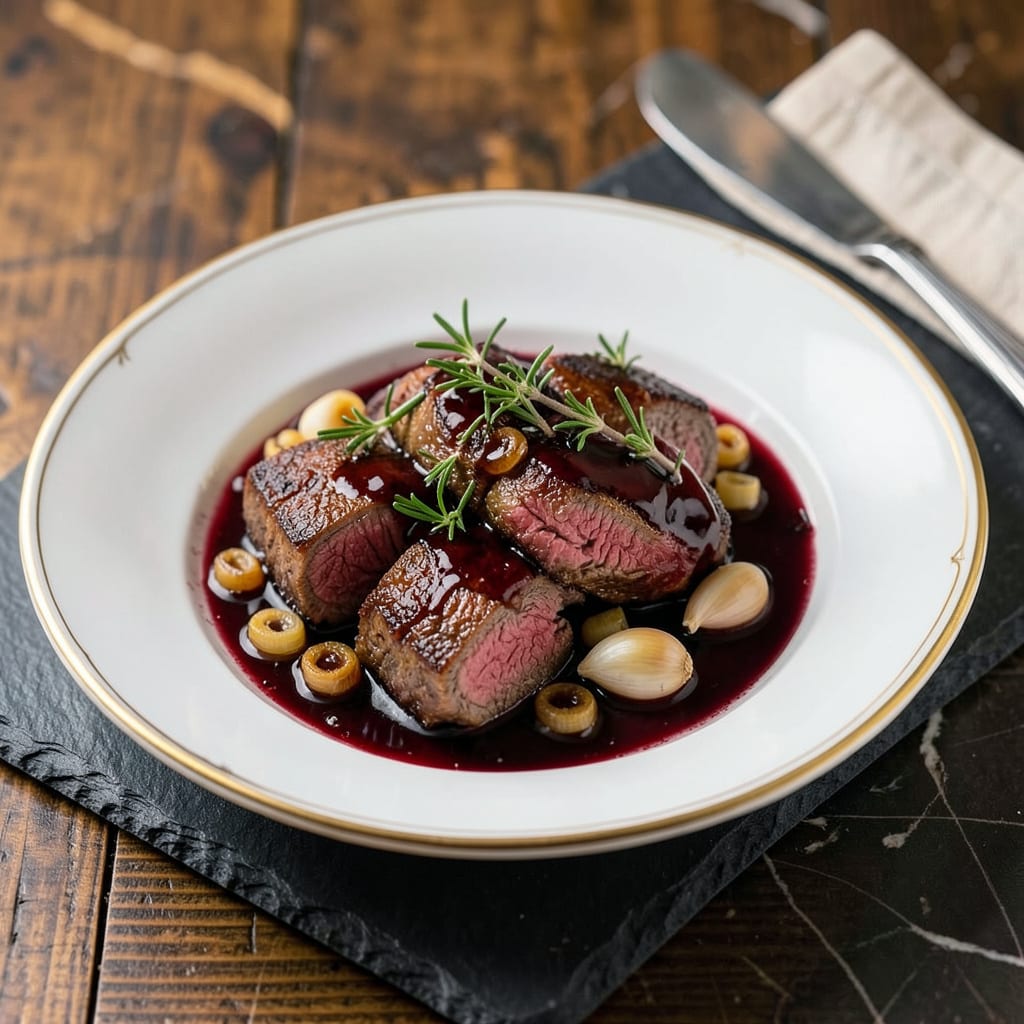
A rich, velvety sauce can transform good beef tenderloin into an extraordinary dining experience. This professional-grade recipe delivers the smooth, luxurious finish you expect from high-end steakhouses, using classic techniques that home cooks can master. The foundation of red wine, aromatic shallots, and fresh herbs creates depth that complements—never overpowers—the natural flavor of premium beef.
What sets this sauce apart is the precise reduction process and final butter emulsification, which yields a glossy, restaurant-quality consistency. Perfect for elevating seared tenderloin or filet mignon, it keeps beautifully in the fridge for up to 5 days. The balanced acidity from a touch of Dijon ensures each bite remains vibrant and memorable.
Ingredients for Beef Tenderloin Sauce
These professional-grade ingredients create a velvety, restaurant-quality sauce that elevates premium beef to extraordinary heights.
| Ingredient | Amount | Notes |
|---|---|---|
| Dry Red Wine 🍷 | 1 ½ cups | Full-bodied like Cabernet Sauvignon |
| Beef Stock 🍲 | 2 cups | Low-sodium preferred for control |
| Shallots 🧅 | 2 whole | Finely minced for even distribution |
| Garlic Cloves 🧄 | 3 cloves | Crushed for maximum aromatic release |
| Fresh Thyme 🌿 | 3 sprigs | Stems removed, leaves only |
| Fresh Rosemary 🌿 | 1 sprig | Finely chopped for balanced infusion |
| Unsalted Butter 🧈 | ½ cup | Cold, cubed for emulsification |
| Dijon Mustard 🥄 | 1 tbsp | Smooth, high-quality brand |
| Worcestershire Sauce 💧 | 1 tsp | Lea & Perrins recommended |
| Kosher Salt 🧂 | ¾ tsp | Diamond Crystal preferred |
| Freshly Ground Black Pepper 🌶️ | ½ tsp | Coarse grind for texture |
[recipeingredientscaler]
The wine and stock form the sauce’s foundation—opt for a dry, full-bodied red wine like Cabernet Sauvignon or Merlot, and use homemade or high-quality low-sodium beef stock for depth without overpowering saltiness. Shallots and garlic provide aromatic complexity; fresh thyme and rosemary are non-negotiable for authentic flavor. For the butter, European-style unsalted butter (like Plugrá) yields superior emulsification due to its higher fat content. These ingredients are readily available at Whole Foods or specialty grocers with well-curated wine and stock selections.
In a pinch, yellow onion can replace shallots (use half the quantity), and dried thyme at one-third the amount works if fresh isn’t available. For alcohol-free preparation, substitute the wine with equal parts beef stock plus 1 tbsp red wine vinegar. The Dijon mustard balances richness—whole-grain mustard adds texture but may require straining. Worcestershire sauce is essential; vegan alternatives (like Annie’s) lack depth but suffice for dietary needs. Precision matters: measure liquids in glass for accuracy, and use a microplane for garlic to avoid bitterness.
The sauce holds 5 days refrigerated in an airtight container, with flavors deepening over time. For longer storage, freeze in ice cube trays for up to 3 months—reheat gently to preserve emulsification. Butter may separate when cold; re-whisk over low heat to restore silky texture. Avoid aluminum pans during reduction, as they can impart metallic notes. Professional tip: strain through a fine-mesh sieve before final butter incorporation for ultra-smooth results.
Why You’ll Love This Recipe
- One-Pot Magic: I love that this sauce comes together in a single skillet—just sauté the shallots and garlic, deglaze with wine, then let the beef stock and thyme do their thing. No fancy techniques, no mountain of dishes.
- Restaurant-Worthy Depth: That first sip after reducing the wine and stock? Honestly, it’s the kind of rich, velvety flavor I’d expect from a steakhouse. The shallots caramelize just enough to balance the bold red wine, while the thyme adds this subtle earthy warmth.
- Steak Night’s Best Friend: Between us, I’ve drizzled this over everything—seared tenderloin, mashed potatoes, even roasted mushrooms when I’m feeling lazy. It’s my secret weapon for making weeknight dinners feel like a special occasion (yes, even on a Tuesday night).
- Makes Extra (Thankfully): The sauce actually tastes better the next day after the flavors meld, so I always double the batch. Freezes beautifully too—just thaw and reheat for a last-minute upgrade to any protein. Saved me more than once when unexpected guests showed up.
Step-by-Step Instructions for Beef Tenderloin Sauce
Master this professional technique for creating a luxurious sauce that elevates any steak to restaurant quality.
Step 1: Sauté Aromatics to Build Flavor Foundation
Begin by finely mincing the 2 whole shallots until they’re nearly translucent. In a heavy-bottomed saucepan, melt 2 tablespoons of the unsalted butter over medium heat. Add the minced shallots and cook for 4-5 minutes, stirring frequently, until they develop a light caramel color without burning.
Add the 3 crushed garlic cloves, fresh thyme leaves, and finely chopped rosemary. Sauté for an additional 1-2 minutes until the garlic releases its aroma and the herbs become fragrant. This aromatic base creates the complex flavor profile that distinguishes a professional sauce from an ordinary one.
Step 2: Deglaze and Reduce the Wine
Pour in the 1.5 cups dry red wine and increase heat to medium-high. Using a wooden spoon, scrape the bottom of the pan to incorporate any browned bits from the aromatics. Bring the mixture to a gentle boil and maintain this for 8-10 minutes, allowing the wine to reduce by approximately two-thirds.
The reduction is complete when the liquid transforms from a deep red to a syrupy consistency and the alcohol aroma has dissipated. This concentrated wine base provides the acidity and depth that balances the richness of the final sauce. Watch carefully during this stage, as the reduction happens quickly once it begins.
Step 3: Incorporate Stock and Reduce Further
Add the 2 cups beef stock to the reduced wine mixture. Return to a simmer and reduce heat to medium-low. Allow the sauce to gently reduce for 15-20 minutes, or until the volume decreases by about one-third. The sauce should coat the back of a spoon with a velvety texture.
During this reduction, stir occasionally to prevent any ingredients from sticking to the bottom. The sauce will develop a glossy sheen and deepen in color as the flavors concentrate. This patient reduction is what creates the luxurious mouthfeel characteristic of professional steakhouse sauces.
Step 4: Mount with Butter and Finish
Reduce heat to low and whisk in the remaining unsalted butter, one cube at a time, allowing each to fully incorporate before adding the next. This mounting technique creates a silky emulsion that gives the sauce its signature velvety texture.
Once all butter is incorporated, whisk in the 1 tbsp Dijon mustard, 1 tsp Worcestershire sauce, 0.75 tsp kosher salt, and 0.5 tsp freshly ground black pepper. Simmer for an additional 2-3 minutes, then strain through a fine-mesh sieve for a perfectly smooth consistency. The sauce should now have a rich, mahogany color and nappe consistency.
Step 5: Hold and Serve
Keep the sauce warm in a heatproof container placed in a 140°F water bath until ready to serve. The sauce will maintain its ideal consistency for up to 1 hour when held this way. Stir occasionally to prevent a skin from forming on the surface.
For serving, spoon approximately ¼ cup of sauce over each portion of beef tenderloin. The sauce should cascade smoothly over the meat, creating an elegant presentation. Any remaining sauce can be served tableside for guests to add according to their preference.
Flavor Customization for This beef tenderloin sauce
Herb-Forward Variation
For a brighter, more aromatic profile, double the fresh thyme to 6 sprigs and add 1 sprig tarragon during the aromatic sauté. The tarragon’s anise-like notes pair beautifully with beef. I often finish with 1 tbsp chopped parsley stirred in off-heat for freshness. 🌿
Mushroom Umami Boost
Add ½ cup finely diced cremini mushrooms when sautéing the shallots. Their earthy depth complements the wine reduction. For extra luxury, use 1 tbsp dried porcini powder dissolved in the beef stock. The mushrooms should cook until all moisture evaporates before deglazing.
Cognac Infusion
After reducing the wine but before adding stock, flambé with ¼ cup cognac (I prefer Hennessy VS). Tilt the pan carefully to ignite, then let flames subside before proceeding. This adds caramelized complexity. The alcohol burns off completely, leaving only rich, nutty undertones.
Truffle Luxe Upgrade
For special occasions, stir in 1 tsp white truffle oil after removing from heat. Alternatively, shave fresh black truffle (about 5g) over the finished sauce. The truffle’s earthy aroma elevates the sauce to fine-dining status. Use sparingly—truffle flavors intensify over time. ✨
Spicy Kick
Add ½ tsp cayenne pepper with the Dijon mustard for subtle heat, or include 1 finely diced jalapeño with the shallots. For smoky warmth, substitute ½ tsp smoked paprika for the black pepper. The heat should complement, not overpower, the sauce’s richness.
Creamy Variation
Whisk in ¼ cup heavy cream during the final butter mounting stage. This creates a luscious, pale pink sauce reminiscent of classic sauce au poivre. Reduce the butter slightly to 6 tbsp to maintain balance. The cream softens the wine’s acidity beautifully.
Nutrition Facts
Frequently Asked Questions
What’s the best wine to use for this sauce?
Choose a dry, full-bodied red wine like Cabernet Sauvignon or Merlot. These varieties reduce beautifully without adding excessive sweetness. Avoid “cooking wine”—it contains additives that create harsh flavors.
Can I make this sauce ahead of time?
The sauce keeps 5 days refrigerated in an airtight container. Flavors actually deepen over time. Reheat gently over low heat, whisking constantly to restore the silky texture.
Why did my sauce turn out greasy instead of velvety?
This usually happens if the butter is added too quickly or the sauce is too hot. The ideal temperature for mounting butter is 140-160°F. Add butter one cube at a time, whisking until fully emulsified before adding more.
What’s the easiest way to fix a sauce that’s too thin?
Create a quick slurry with 1 tsp cornstarch and 1 tbsp cold water. Whisk it into the simmering sauce and cook for 1-2 minutes until thickened. For richer results, reduce the sauce further over medium-low heat.

- 6 Egg Cake Recipe with Oil: Light as Air With Buttery Moisture - October 4, 2026
- 4 Bean Casserole Recipe: One-Pan Heartiness With Smoky Paprika Depth - October 4, 2026
- 3-Ingredient Keto Mug Cake Recipe: Microwave Magic in 2 Minutes - October 4, 2026