
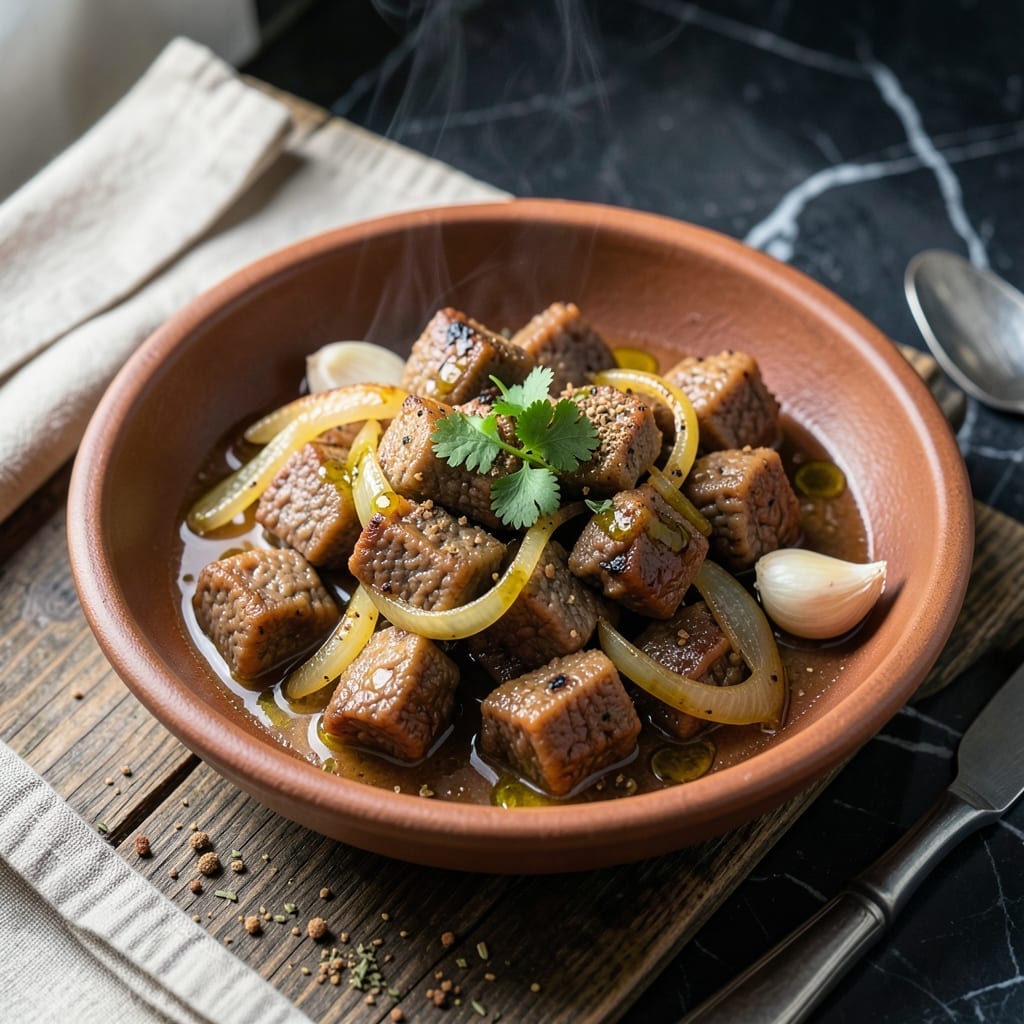
There’s a reason beef tripe endures in kitchens around the world—its tender transformation under slow, patient cooking is nothing short of remarkable. This method turns tough, honeycombed muscle into melt-in-your-mouth perfection.
I’ve refined a technique that balances bold spices with a gentle simmer, ensuring the tripe absorbs every layer of flavor without becoming chewy. The key is low heat and time, allowing the collagen to break down into rich, velvety texture.
The result is a dish that’s hearty and deeply satisfying, with aromas that fill the kitchen long before it’s ready. Each bite delivers the payoff of that slow process—tender meat infused with warm, complex spices.
Serve it as a centerpiece for a comforting meal that respects tradition while feeling entirely fresh. This is how to make tripe unforgettable.
Ingredients for Beef Tripe
Transform tough tripe into tender perfection with these bold, aromatic ingredients for a deeply satisfying dish.
| Ingredient | Amount | Notes |
|---|---|---|
| Beef Tripe 🥩 | 2 lb | Honeycomb variety, cleaned and trimmed |
| Olive Oil 🫒 | 2 tbsp | Divided for searing and sautéing |
| Yellow Onion 🧅 | 1 whole | Large, finely diced |
| Garlic Cloves 🧄 | 6 cloves | Minced for depth of flavor |
| Ground Cumin 🌿 | 2 tsp | Toasted briefly for aroma |
| Ground Coriander 🌿 | 1 tsp | Complements the cumin |
| Smoked Paprika 🌶️ | 1 tsp | Adds warm smoky depth |
| Cayenne Pepper 🔥 | ½ tsp | Adjust to heat preference |
| Canned Diced Tomatoes 🍅 | 1 can | 28 oz can, with juices |
| Beef Broth 🥣 | 4 cups | Low-sodium preferred |
| Bay Leaves 🍃 | 2 pieces | Dried, whole leaves |
| Fresh Cilantro 🌿 | ½ cup | Chopped, for garnish |
| Salt 🧂 | 1 ½ tsp | Divided, to taste |
| Black Pepper 🌶️ | 1 tsp | Freshly ground, to taste |
| Lemon Juice 🍋 | 2 tbsp | Freshly squeezed, for brightness |
The tripe quality is non-negotiable. Honeycomb tripe (also called plain or blank tripe) is ideal—it’s the most tender variety after slow cooking. Look for pre-cleaned tripe at Latin markets or specialty butchers, but most Whole Foods locations carry it too. If you’re cleaning it yourself, scrub thoroughly under cold water and remove any remaining fat or membrane. The spices should be fresh—Penzeys or a bulk bin at a natural foods store ensures potency.
No honeycomb tripe? Plain tripe works in a pinch, but it may need extra cooking time. Short on broth? Water plus bouillon cubes (beef or vegetable) can substitute, though the flavor depth won’t be as rich. For heat-sensitive diners, omit the cayenne or replace it with a pinch of mild chili powder. The cilantro can be swapped for flat-leaf parsley if preferred, but the citrusy note of cilantro really complements the dish.
Tripe can be prepped a day ahead—store it cleaned and trimmed in the fridge in a sealed container with cold water. The finished dish tastes even better the next day. Leftovers keep for 4-5 days refrigerated or can be frozen for up to 3 months.
Why You’ll Love This Recipe
- One Pot Wonder: I love how the tripe simmers with onion, garlic, and cumin in one pot—minimal cleanup, maximum flavor.
- Deep, Earthy Taste: The cumin and garlic transform the tripe into something rich and satisfying, with that warm, aromatic punch.
- Meal Prep Hero: Honestly, this tastes even better the next day, so I make a big batch for lunches all week.
- Pocket-Friendly Feast: Beef tripe is so affordable, and it stretches far—feeding my family without breaking the bank.
Step-by-Step Instructions for Beef Tripe
This slow-cooking method transforms tough tripe into melt-in-your-mouth tenderness with rich, spiced depth.
Step 1: Prep the Tripe and Aromatics
Rinse the 2 lb Beef Tripe thoroughly under cold water to remove any residual impurities. Pat it dry with paper towels, then cut it into 1-inch pieces for even cooking. This size ensures each bite absorbs the maximum amount of flavor from the braising liquid.
Finely dice the 1 whole Yellow Onion and mince the 6 cloves Garlic Cloves. I keep the onion pieces small so they practically dissolve into the sauce, creating a rich, velvety base. The garlic, when minced, releases its full aromatic potential during the long simmer.
Step 2: Sear and Toast the Spices
Heat 1 tbsp of the 2 tbsp Olive Oil in a large, heavy pot over medium-high heat. Add the beef tripe in batches, searing until lightly browned on all sides. This step takes about 5-7 minutes per batch and develops the deep, caramelized flavors that define the dish.
Push the tripe to one side, then add the remaining 1 tbsp Olive Oil, diced onion, and minced garlic to the pot. Sauté for 3-4 minutes until the onion softens and turns translucent. Stir in the 2 tsp Ground Cumin, 1 tsp Ground Coriander, 1 tsp Smoked Paprika, and 0.5 tsp Cayenne Pepper, toasting for 30 seconds until the spices become fragrant. This quick toasting amplifies their natural oils and aromas.
Step 3: Build the Braising Liquid
Pour in the 1 can Canned Diced Tomatoes with their juices, stirring to scrape up any browned bits from the bottom of the pot. Add the 4 cups Beef Broth, 2 pieces Bay Leaves, 1.5 tsp Salt, and 1 tsp Black Pepper. The tomatoes add acidity and sweetness, balancing the richness of the broth.
Stir well to combine all the ingredients, then bring the mixture to a gentle boil. Once boiling, reduce the heat to low, cover the pot, and let it simmer for 2 to 2.5 hours. The tripe is done when it’s fork-tender and easily pierces with a knife. Check occasionally and add a splash of water if the liquid reduces too much.
Step 4: Finish and Serve
Once the tripe is tender, remove the pot from the heat. Discard the bay leaves, then stir in the 2 tbsp Lemon Juice. This final addition brightens the dish, cutting through the richness and adding a layer of freshness. Taste and adjust the seasoning with additional salt if needed.
Ladle the tripe and its sauce into bowls and garnish with the 0.5 cup Fresh Cilantro. The cilantro adds a pop of color and a citrusy note that complements the warm spices. Serve immediately, while the tripe is still hot and the flavors are at their peak. This dish is best enjoyed fresh but also reheats beautifully the next day.
Pro Tips For Making Beef Tripe
- Parboil First: Always parboil beef tripe for 10-15 minutes before cooking to remove the strong odor and excess fat—this step is non-negotiable for a cleaner flavor.
- Slice Thinly: Cut the tripe into thin, even strips so it tenderizes faster and absorbs the cumin, garlic, and onion flavors more effectively.
- Skip Rushed Cooking: I learned this the hard way—tripe needs low and slow heat (at least 1.5-2 hours) to become tender; cranking up the temperature just makes it tough.
- Bloom the Cumin: Toast the ground cumin in olive oil for 30 seconds before adding onions to wake up its aroma and deepen the dish’s flavor.
Essential Equipment for Perfect Results
Heavy-Duty Dutch Oven
I swear by my Le Creuset 7.25-quart for this recipe. The heavy enameled cast iron distributes heat evenly and retains it perfectly for the 2-2.5 hour simmer. A Dutch oven is non-negotiable for consistent, gentle cooking. 💪
Sharp Chef’s Knife
A 8-inch Wüsthof or Victorinox makes quick work of trimming and cutting the 2 lb tripe into consistent 1-inch pieces. A dull knife slips on the slick surface, so keep it razor-sharp for safety and precision.
Wooden Spoon
Use a long-handled wooden spoon to stir without scratching your pot. The flat surface helps scrape up those flavorful browned bits when deglazing with tomatoes. I keep one dedicated just for braising dishes like this.
Instant-Read Thermometer
While not strictly necessary, a ThermoWorks ThermaPen ensures your simmer stays between 180-200°F. Tripe breaks down best at this temperature range. It’s a small investment that prevents overcooking.
Tongs
Opt for 12-inch locking tongs to easily turn the tripe pieces while searing. The long handles keep your hands safe from splatters, and the locking feature makes storage a breeze.
Glass Measuring Cups
For the 4 cups beef broth, I prefer Pyrex glass with clear markings. You can measure directly in the cup and pour without transferring, reducing prep dishes.
Nutrition Facts
Frequently Asked Questions
How do I clean tripe before cooking?
Rinse thoroughly under cold water to remove impurities. Scrub with salt and vinegar, then soak in milk for 1 hour to remove any lingering odors. Repeat rinsing until water runs clear.
Can I use a slow cooker instead of a Dutch oven?
Yes! Cook on low heat for 6-8 hours or high heat for 4-5 hours. The texture will be just as tender, though browning the tripe first adds more depth.
Why is my tripe still chewy after cooking?
It likely needs more time. Tripe requires slow, gentle cooking to break down collagen. Ensure it simmers at 180-200°F for at least 2 hours.
What can I serve with beef tripe?
Warm crusty bread, steamed rice, or mashed potatoes pair perfectly. A fresh green salad balances the richness.

- 6 Egg Cake Recipe with Oil: Light as Air With Buttery Moisture - October 4, 2026
- 4 Bean Casserole Recipe: One-Pan Heartiness With Smoky Paprika Depth - October 4, 2026
- 3-Ingredient Keto Mug Cake Recipe: Microwave Magic in 2 Minutes - October 4, 2026