
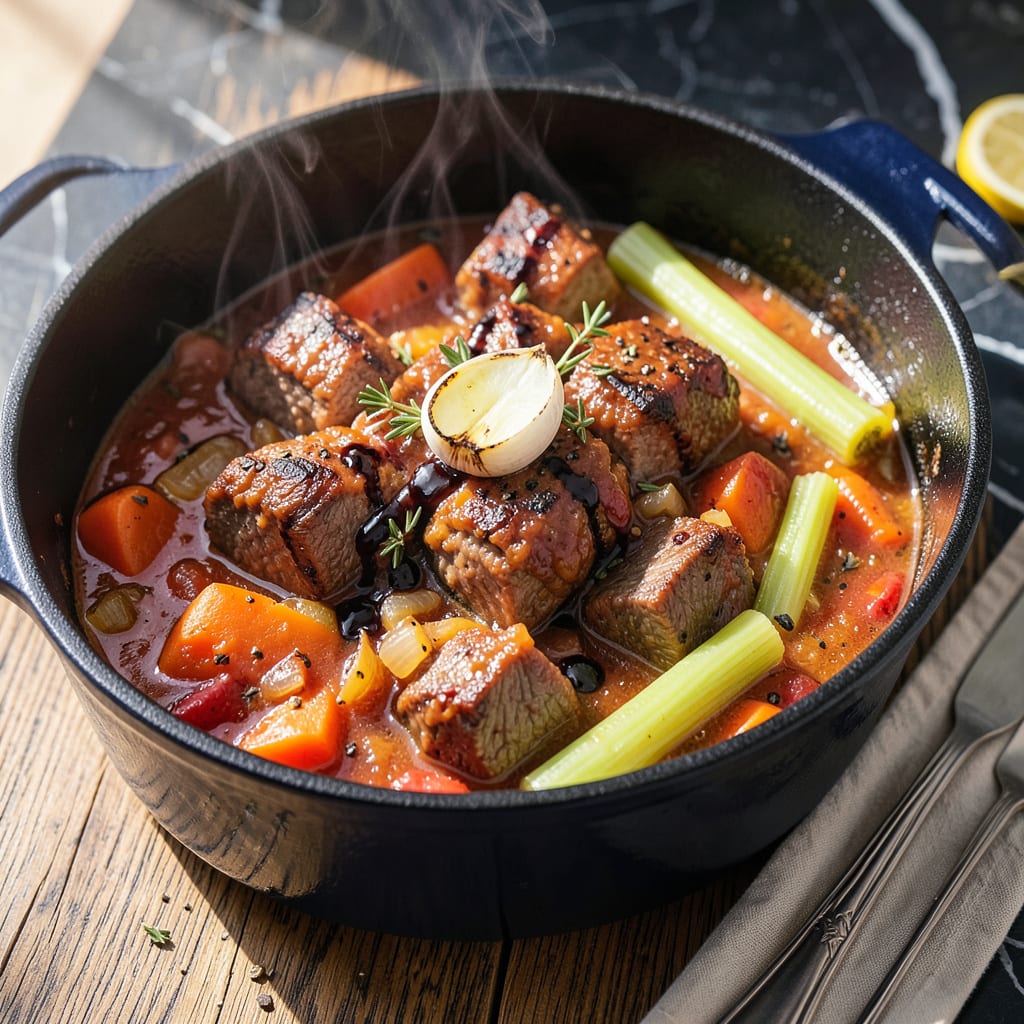
This tomato-braised beef transforms simple ingredients into a deeply comforting meal that simmers to perfection. The slow cooking process allows tough cuts of beef to become fork-tender while the tomatoes reduce into a rich, velvety sauce. It’s the kind of dish that fills your kitchen with irresistible aromas and delivers restaurant-quality results at home.
The beauty of this recipe lies in its versatility. Whether served over creamy polenta, paired with crusty bread, or alongside roasted vegetables, it adapts to any dinner occasion. With just 15 minutes of prep and a hands-off cooking method, you’ll achieve a hearty, flavorful meal that tastes like it took hours of effort.
Ingredients for Beefamato
Quality beef and ripe tomatoes form the foundation of this deeply flavorful braise that simmers to fork-tender perfection.
| Ingredient | Amount | Notes |
|---|---|---|
| Beef Chuck Roast 🥩 | 2 lb | Cut into 2-inch cubes |
| Canned San Marzano Tomatoes 🍅 | 28 oz | Crushed by hand, with juices |
| Yellow Onion 🧅 | 1 whole | Finely diced for even cooking |
| Carrots 🥕 | 2 whole | Peeled, sliced into rounds |
| Celery Stalks 🌿 | 2 whole | Diced small for flavor base |
| Garlic Cloves 🧄 | 6 cloves | Minced for aromatic depth |
| Dry Red Wine 🍷 | 1 cup | Bold variety like Cabernet Sauvignon |
| Beef Stock 🥩 | 2 cups | Low-sodium preferred for control |
| Tomato Paste 🍅 | 2 tbsp | For concentrated tomato flavor |
| Dried Oregano 🌿 | 1 tsp | Mediterranean variety preferred |
| Dried Thyme 🌿 | 1 tsp | Rubbed between palms to release oils |
| Bay Leaves 🌿 | 2 whole | Removed before serving |
| Kosher Salt 🧂 | 1 ½ tsp | Diamond Crystal brand recommended |
| Freshly Ground Black Pepper 🌶️ | 1 tsp | Coarse grind for texture |
| Extra-Virgin Olive Oil 🫒 | 3 tbsp | For searing and depth |
The beef selection is critical for optimal texture. Chuck roast from the shoulder offers the ideal balance of fat and connective tissue that breaks down beautifully during the long simmer. Optimal quality requires well-marbled pieces—Whole Foods or local butchers typically provide superior cuts compared to standard supermarket offerings. The San Marzano tomatoes are non-negotiable for their sweet, low-acid profile; Century or La Valle brands deliver consistent quality. Freshness matters most with the garlic and herbs—select firm, plump cloves and vibrant green oregano/thyme for maximum aromatic impact.
Substitutions must maintain the dish’s fundamental character. Dry white wine can replace red in a pinch, though it will alter the depth of flavor. For alcohol-free preparation, beef stock plus 1 tbsp balsamic vinegar provides comparable complexity. Fresh tomatoes require 6-8 ripe Roma tomatoes, peeled and seeded, to approximate canned San Marzanos’ texture. The dried herbs may be replaced with fresh at triple the quantity, added in the final 30 minutes of cooking. Vegetable stock works for beef stock, though the final sauce will be less unctuous.
Storage requires careful handling of components. The cooked beef keeps for 5 days refrigerated in its braising liquid, with flavors intensifying over time. Freeze portions for up to 3 months in airtight containers, leaving headspace for expansion. Reheat gently on the stovetop to prevent the meat from drying out. The olive oil should be stored in a cool, dark place to maintain its quality between uses. Fresh herbs can be wrapped in damp paper towels and refrigerated for 1 week maximum.
Why You’ll Love This Recipe
- One-Pot Magic: I love that this beefamato comes together in a single Dutch oven—no extra pans, no fuss. Just brown the chuck roast, toss in the San Marzano tomatoes with the veggies, and let the oven do the work while you ignore it for hours.
- Rich, Slow-Built Flavor: The beef practically melts into the tomatoes after braising, and those carrots and celery? They sweeten the sauce in a way that’s ridiculously good. Honestly, the first time I made this, I caught myself licking the spoon before it even hit the table.
- Sunday Supper or Tuesday Leftovers: This is my go-to for feeding a crowd or just prepping ahead—it reheats like a dream. I’ll be real: it tastes even better the next day, when the flavors get cozy in the fridge overnight.
- Budget-Friendly Luxury: Chuck roast is one of the cheapest cuts, but braised with San Marzanos? It tastes like a $20 entree. Between us, I’ve served this to guests who swore I’d spent all day slaving over it. (The secret’s safe with me.)
Step-by-Step Instructions for Beefamato
The secret to this dish lies in building flavors layer by layer through proper browning and slow simmering.
Step 1: Sear the Beef Chuck Roast
Pat the 2 lb Beef Chuck Roast cubes completely dry with paper towels. This ensures proper browning rather than steaming. Heat 3 tbsp Extra-Virgin Olive Oil in a heavy pot or Dutch oven over medium-high heat until it shimmers but doesn’t smoke.
Add the beef in a single layer without crowding. You’ll need to work in batches if necessary. Sear undisturbed for 3-4 minutes per side until you achieve a deep, rich brown crust. This crust develops the fundamental flavor base through the Maillard reaction. Transfer the browned beef to a plate and set aside.
Step 2: Build the Aromatic Foundation
In the same pot, add the finely diced Yellow Onion, sliced Carrots, and diced Celery Stalks. Cook over medium heat for 8-10 minutes, stirring occasionally, until the vegetables soften and begin to caramelize around the edges. This sweetness balances the acidity of the tomatoes.
Add the minced Garlic Cloves and cook for 1 minute until fragrant. Stir in the 2 tbsp Tomato Paste and cook for 2 minutes, allowing it to darken slightly. This step intensifies the tomato flavor and creates a rich base for the braising liquid.
Step 3: Deglaze and Combine Ingredients
Pour in the 1 cup Dry Red Wine and scrape up all the browned bits from the bottom of the pot. These fond particles contain concentrated flavor that will enrich your sauce. Simmer for 3-4 minutes until the liquid reduces by about half.
Return the seared beef to the pot along with any accumulated juices. Add the 28 oz Canned San Marzano Tomatoes (crushed by hand), 2 cups Beef Stock, 1 tsp Dried Oregano, 1 tsp Dried Thyme, 2 whole Bay Leaves, 1.5 tsp Kosher Salt, and 1 tsp Freshly Ground Black Pepper. Stir to combine all ingredients thoroughly.
Step 4: Braise to Tender Perfection
Bring the mixture to a gentle simmer, then reduce the heat to low. Cover the pot and let it braise for 2-2.5 hours, stirring occasionally, until the beef becomes fork-tender. The low, slow cooking breaks down the collagen in the chuck roast, transforming it into rich, unctuous meat.
You’ll know it’s ready when the beef easily pulls apart with a fork and the sauce has thickened slightly. The tomatoes should have melted into the braising liquid, creating a velvety sauce that coats the back of a spoon. Remove and discard the bay leaves before serving.
Step 5: Rest and Serve
Allow the beefamato to rest for 10 minutes off the heat before serving. This brief rest lets the flavors meld completely and allows the meat to reabsorb some of the juices. The sauce will continue to thicken slightly as it cools.
Taste and adjust the seasoning if needed, though you likely won’t need additional salt. Serve this comforting dish over polenta, mashed potatoes, or crusty bread to soak up the rich tomato-wine sauce. The beef should be meltingly tender with a sauce that’s both bright from the tomatoes and deep from the red wine reduction.
Troubleshooting Perfect Results
Sauce Too Thin
If your beefamato sauce hasn’t thickened enough after braising, don’t worry—this is easily fixable. Remove the beef with a slotted spoon and simmer the sauce uncovered over medium heat for 10-15 minutes. For faster results, mix 1 tbsp cornstarch with 2 tbsp cold water and stir it into the simmering sauce. I find this method works better than flour, which can make the sauce taste pasty. 🔥
Beef Still Tough
When the beef isn’t tender after the recommended cooking time, it usually needs more time to break down. Return it to the pot, add ½ cup hot water or beef stock, cover, and continue simmering on low heat for another 30-45 minutes. Check every 15 minutes to avoid overcooking. The beef should pull apart easily with a fork when done.
Sauce Too Acidic
Tomatoes can sometimes make the sauce taste too sharp. Balance the acidity by stirring in 1 tsp brown sugar or ½ tsp baking soda (just a pinch at a time). I prefer sugar for a more natural sweetness. Another trick is adding a splash of heavy cream or butter at the end—this rounds out the flavors beautifully while keeping the sauce rich.
Bitter Wine Flavor
If the red wine leaves a harsh, bitter taste, it likely reduced too quickly during deglazing. Next time, simmer it for only 2-3 minutes instead of longer. To fix it now, add 1 tbsp honey or 1 carrot (grated) to the pot and simmer for 10 minutes. The natural sweetness will counterbalance the bitterness without overpowering the dish.
Tomatoes Too Chunky
For a smoother sauce, use an immersion blender to pulse the tomatoes directly in the pot. Alternatively, remove about 1 cup of the sauce, blend it until smooth, then stir it back in. If you prefer texture, simply crush the tomatoes more thoroughly by hand before adding them. I like to leave some chunks for rustic appeal, but it’s all about your preference.
Sauce Too Greasy
A fatty layer on top is common with chuck roast. Skim it off with a spoon, or chill the beefamato for 30 minutes—the fat will solidify and lift right off. For prevention next time, trim excess fat from the beef before searing. If you’re short on time, blot the surface with paper towels to absorb the grease without losing flavor. ✨
Nutrition Facts

- 6 Egg Cake Recipe with Oil: Light as Air With Buttery Moisture - October 4, 2026
- 4 Bean Casserole Recipe: One-Pan Heartiness With Smoky Paprika Depth - October 4, 2026
- 3-Ingredient Keto Mug Cake Recipe: Microwave Magic in 2 Minutes - October 4, 2026