
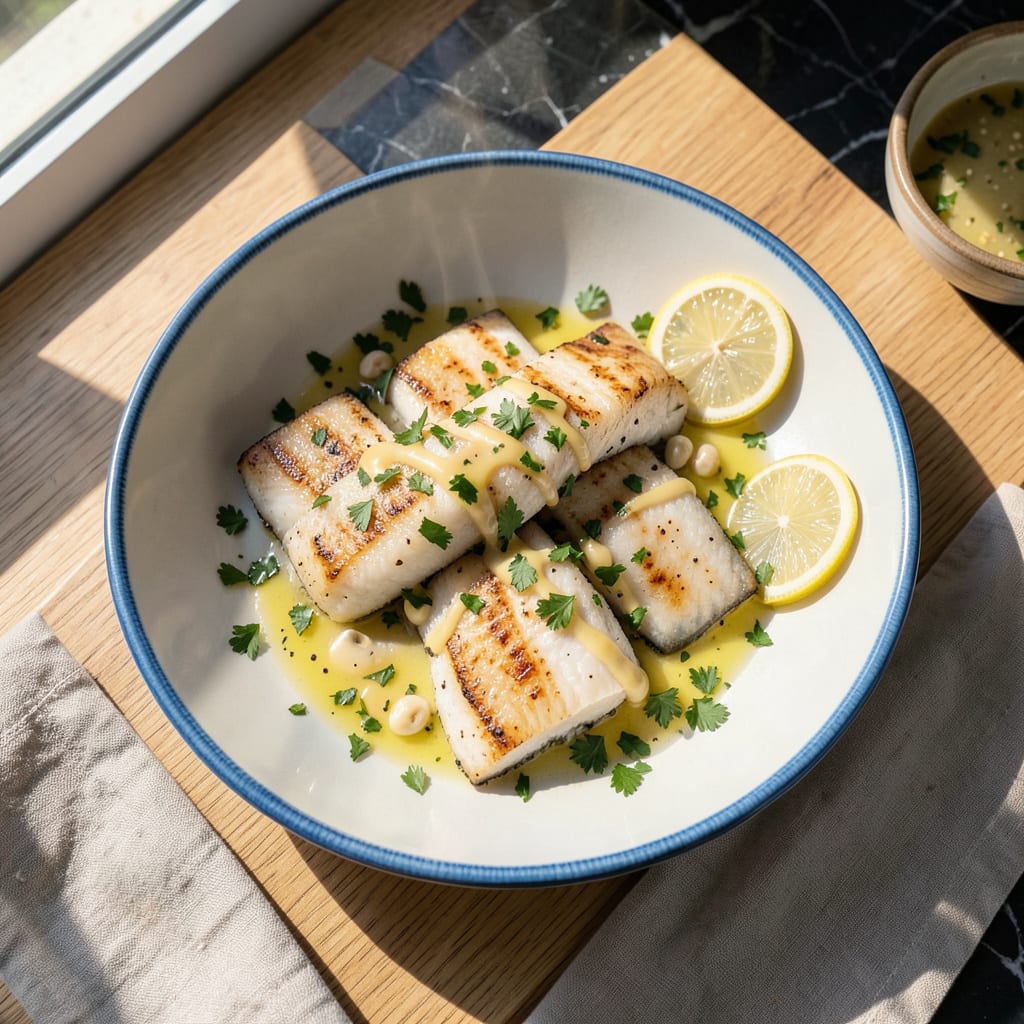
When you need a restaurant-quality seafood dinner in under 15 minutes, broiled flounder delivers perfect results every time. This method transforms delicate fillets into tender, flaky fish with a buttery lemon-garlic finish that highlights the natural sweetness of fresh flounder. The high heat of broiling creates a light caramelization without drying out the fish.
The secret lies in precise timing and preparation. A quick marinade with lemon, garlic, and herbs infuses flavor while the broiler works its magic. At 450°F for just 6-8 minutes, you’ll achieve perfectly cooked flounder—opaque throughout with a golden surface. Serve with roasted vegetables or crusty bread to complete the meal.
Ingredients for Best Broiled Flounder
These twelve premium ingredients transform delicate flounder into restaurant-quality perfection with minimal effort.
| Ingredient | Amount | Notes |
|---|---|---|
| Fresh flounder fillets 🐟 | 1 ½ lb | Skinless, 1/2-inch thick preferred |
| Unsalted butter 🧈 | 6 tbsp | Melted, divided for marinade and finishing |
| Extra-virgin olive oil 🫒 | 2 tbsp | Cold-pressed for marinade |
| Fresh lemon juice 🍋 | 3 tbsp | From 1 large lemon, freshly squeezed |
| Garlic cloves 🧄 | 4 cloves | Minced to fine consistency |
| Fresh parsley 🌿 | ¼ cup | Finely chopped, flat-leaf variety |
| Dry white wine 🍷 | 2 tbsp | Sauvignon Blanc or Pinot Grigio recommended |
| Dijon mustard 🥄 | 1 tsp | Smooth variety, not grainy |
| Kosher salt 🧂 | 1 tsp | Diamond Crystal preferred for precision |
| Freshly ground black pepper 🌶️ | ½ tsp | Medium-coarse grind optimal |
| Lemon zest 🍋 | 1 tsp | From 1 lemon, finely grated |
| Capers 🌿 | 1 tbsp | Drained, non-pareil variety preferred |
| Shallot 🧅 | 1 whole | Finely minced, about 2 tbsp |
| Fresh dill 🌿 | 1 tbsp | Chopped, for finishing garnish |
The flounder quality determines final texture. Wild-caught fillets from reputable seafood markets (or the fresh seafood counter at Whole Foods) yield superior results compared to previously frozen product. Optimal thickness is 1/2-inch—thinner fillets risk overcooking under broiler intensity. For the butter, European-style (like Plugrá) offers higher fat content that resists burning during broiling. The lemon juice must be freshly squeezed—bottled lacks the necessary acidity to balance the dish’s richness.
Dry white wine substitutes include vermouth (use dry variety) or additional lemon juice with 1/4 tsp salt. Shallots can be replaced with 2 tbsp finely minced red onion, though flavor will be slightly sharper. For herb variations, tarragon (1 tsp chopped) complements the lemon beautifully, while chives offer milder onion notes. The capers provide essential briny contrast—chopped green olives work in emergencies. Always use freshly ground pepper—pre-ground loses volatility within 24 hours of grinding.
Prepare the marinade up to 4 hours ahead; store refrigerated in glass container. Flounder fillets should be broiled immediately after marinating—never refrigerate marinated fish. Leftover cooked flounder keeps 2 days refrigerated in airtight container, though texture is best consumed immediately. The compound butter (melted butter + herbs) can be made 3 days ahead and reheated gently before serving.
Why You’ll Love This Recipe
- 5-Minute Prep: I’m not kidding—just whisk melted butter with olive oil, lemon, and minced garlic, brush it on the fillets, and broil. No marinating, no complicated steps, just straight to that golden-brown finish.
- That Garlic-Lemon Magic: The butter and garlic caramelize under the broiler while the lemon cuts through with brightness. It’s the kind of flavor that makes you pause mid-bite because damn, it’s spot-on.
- Date Night or Tuesday: Honestly, I’ve served this to guests with a fancy salad and crusty bread, but also scarfed it straight from the pan on a random weeknight. The flounder feels elegant, but the effort? Pure weeknight-friendly.
- Leftovers? Rarely Happens: Between us, this recipe’s so reliable for leftovers—if there are any—that I’ll intentionally make extra. Cold flounder on a salad the next day? Still ridiculously good. (Though my husband might argue there’s never enough for seconds.)
Step-by-Step Instructions for Broiled Flounder
This method delivers perfectly cooked flounder with crisp edges and tender flesh in just minutes.
Step 1: Prepare the Lemon-Garlic Marinade
In a small bowl, whisk together the 2 tbsp extra-virgin olive oil, 3 tbsp fresh lemon juice, 4 cloves minced garlic, 1 tsp Dijon mustard, 1 tsp kosher salt, and 0.5 tsp freshly ground black pepper. The acidity from the lemon juice will help tenderize the flounder while the garlic and mustard create a flavorful base. I prefer using freshly squeezed lemon juice rather than bottled for brighter, more vibrant flavor.
Add 1 tsp lemon zest to the mixture and whisk again. The lemon zest contains essential oils that will intensify the citrus flavor throughout the dish. Set aside 10 minutes to allow the flavors to meld together while you prepare the flounder fillets.
Step 2: Marinate and Position the Flounder
Pat the 1.5 lb fresh flounder fillets completely dry with paper towels. This step is crucial for achieving proper browning during broiling. Place the fillets on a broiler-safe baking sheet lined with parchment paper for easy cleanup. Brush both sides of each fillet generously with the prepared marinade, using about half of the mixture.
Arrange the fillets in a single layer with at least 1 inch of space between them to ensure even cooking. The marinade should coat the surface without pooling. Let the fillets sit at room temperature for 5 minutes while you preheat the broiler. This brief marination time allows the flavors to penetrate without over-softening the delicate fish.
Step 3: Broil to Golden Perfection
Position an oven rack 4-6 inches from the broiler element and preheat the broiler to high. Once hot, place the baking sheet with flounder in the oven. Broil for 4-5 minutes until the edges begin to turn light golden brown and the surface appears slightly crisp. The high heat will caramelize the marinade while keeping the interior moist.
Carefully remove the baking sheet and flip each fillet using a thin spatula. Brush the second side with the remaining marinade. Return to the broiler for an additional 3-4 minutes until the fish is opaque throughout and flakes easily with a fork. The total cooking time should not exceed 9 minutes to prevent overcooking.
Step 4: Create the Finishing Sauce
While the flounder broils, melt 4 tbsp of the unsalted butter in a small saucepan over medium-low heat. Add the finely minced shallot and cook for 2-3 minutes until translucent but not browned. Stir in the 2 tbsp dry white wine and 1 tbsp capers, simmering for 1 minute to allow the alcohol to cook off and the flavors to concentrate.
Remove from heat and whisk in the remaining 2 tbsp unsalted butter until fully incorporated and emulsified. Stir in the 0.25 cup finely chopped fresh parsley. This butter sauce will add richness and complement the bright flavors from the marinade without overpowering the delicate flounder.
Step 5: Plate and Garnish
Transfer the broiled flounder fillets to serving plates using a spatula. Spoon the warm butter sauce evenly over each fillet, allowing it to pool slightly around the edges. The residual heat from the fish will gently warm the sauce as it’s served.
Garnish each portion with a sprinkle of the 1 tbsp fresh dill for a final burst of freshness. The dill’s anise-like flavor pairs exceptionally well with the lemon and butter. Serve immediately while the fish is at its peak texture – crisp at the edges with a tender, flaky interior.
Pro Cooking Tips for This Recipe
Broiler Positioning Matters
I can’t stress enough how crucial rack placement is for perfect broiling. Position your oven rack 4-6 inches from the broiler element—any closer risks burning, while farther away prevents proper browning. I use the second-highest position in my oven, which gives me consistent results every time. 🔥
Temperature Control Secrets
Preheat your broiler on high for at least 10 minutes before cooking. The intense, consistent heat is what creates that beautiful golden crust while keeping the interior moist. I check with an oven thermometer to ensure it reaches 500°F+—most home broilers cycle between 450-550°F.
Marinade Timing Trick
Don’t let the flounder marinate longer than 5 minutes at room temperature. The lemon juice will start “cooking” the fish if left too long, resulting in a mushy texture. I set a timer the moment I brush on the marinade—this precision makes all the difference with delicate flounder fillets.
The Flip Technique
Use a thin, flexible fish spatula (I love the Mercer Culinary version) to flip the fillets. Slide it under the fish at a 45° angle and lift in one smooth motion. This prevents the delicate flesh from breaking apart. Always flip away from you to avoid splattering that hot marinade.
Butter Sauce Emulsion
When making the finishing sauce, whisk the butter in 1 tbsp at a time over low heat. This creates a stable emulsion that won’t separate. I remove the pan from heat completely when adding the final butter—residual heat is enough to melt it without breaking the sauce.
Doneness Test
The flounder is perfect when it reaches 145°F internal temperature and the flesh turns opaque white. I use an instant-read thermometer in the thickest part, but you can also test by gently pressing with a fork—the fish should flake easily but still feel slightly firm. Overcooked flounder becomes rubbery in seconds! ⏰
Nutrition Facts

- 6 Egg Cake Recipe with Oil: Light as Air With Buttery Moisture - October 4, 2026
- 4 Bean Casserole Recipe: One-Pan Heartiness With Smoky Paprika Depth - October 4, 2026
- 3-Ingredient Keto Mug Cake Recipe: Microwave Magic in 2 Minutes - October 4, 2026