
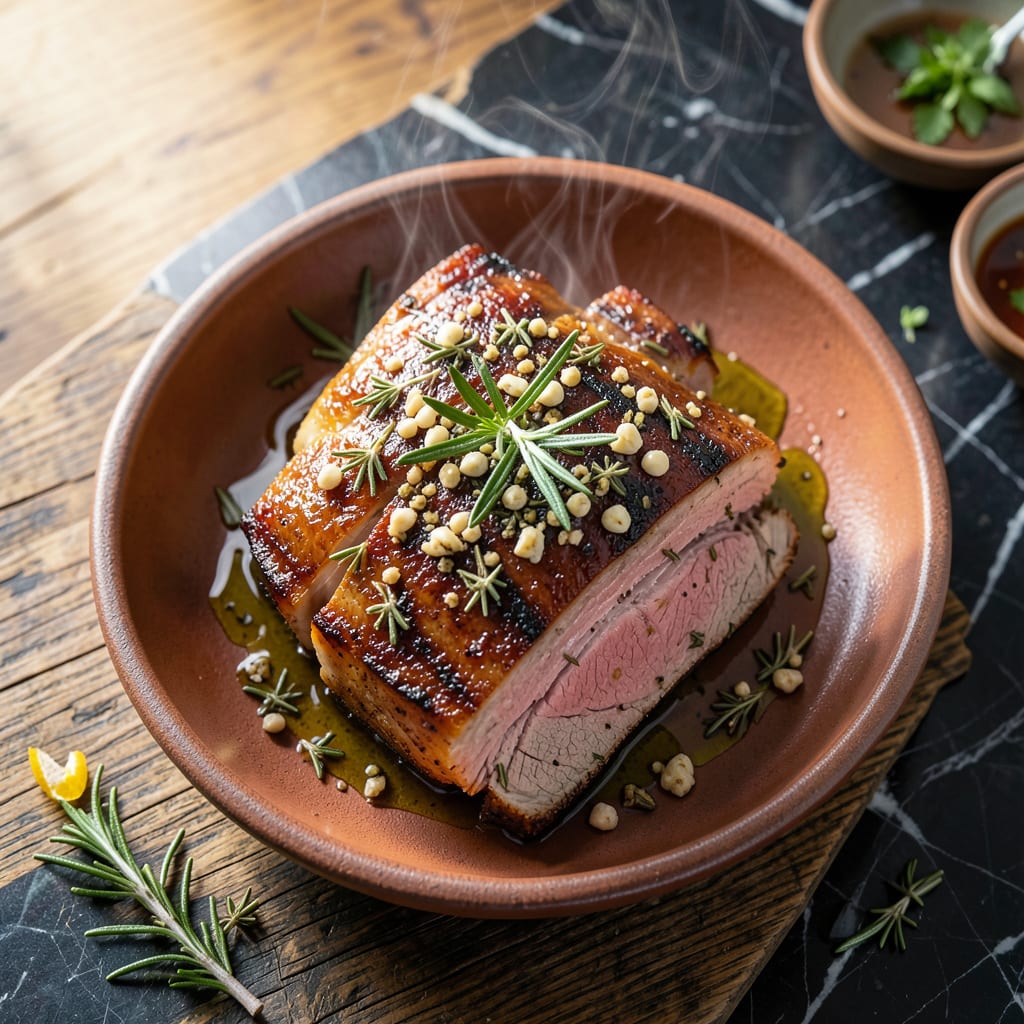
This pork loin recipe delivers juicy centers every time with a garlic-herb crust that forms a flavorful seal. I’ve perfected the timing and temperature to ensure tender, succulent meat without drying it out.
The secret is a hot sear followed by a controlled roast, allowing the best flavor development while keeping the pork moist. Simple ingredients, professional results.
Ingredients for Best Damn Pork Loin
Twelve ingredients for professional results with juicy centers every time.
| Ingredient | Amount | Notes |
|---|---|---|
| Pork Loin 🥩 | 2 ½ lb | Boneless center-cut preferred |
| Olive Oil 🫒 | 2 tbsp | Extra-virgin for searing |
| Garlic Cloves 🧄 | 6 cloves | Minced for crust |
| Fresh Rosemary 🌿 | 2 tbsp | Finely chopped |
| Fresh Thyme 🍃 | 2 tbsp | Leaves stripped from stems |
| Kosher Salt 🧂 | 2 tsp | Diamond Crystal preferred |
| Black Pepper 🌶️ | 1 tsp | Freshly ground for crust |
| Dijon Mustard 🟡 | 2 tbsp | For binding herb mixture |
| Dry White Wine 🍷 | ½ cup | For deglazing pan |
| Chicken Stock 🥣 | ½ cup | Low-sodium preferred |
| Unsalted Butter 🧈 | 2 tbsp | For basting |
| Shallot 🧅 | 1 whole | Finely minced |
| Fresh Parsley 🌿 | ¼ cup | Chopped for garnish |
The pork loin quality is paramount. Center-cut, boneless ensures even cooking and that crucial juicy texture. Source from Whole Foods or a trusted butcher—look for vibrant pink color and good marbling. The herbs should be fresh; organic rosemary and thyme from the refrigerated section outperforms dried. For the wine, any dry white like Sauvignon Blanc works perfectly.
No fresh herbs? Dried at one-third the amount—but fresh truly elevates. Out of white wine? Apple cider vinegar plus chicken broth mimics the acidity. Grey Poupon can replace Dijon in a pinch. For the stock, Better Than Bouillon paste dissolved in water is a great pantry staple. The shallot adds subtle sweetness; red onion works if that’s what you have.
Pork loin keeps 3-4 days in the fridge before cooking, or freeze for 6 months. The herb mixture can be prepped a day ahead—store covered in the fridge. Leftovers reheat beautifully, though the crust softens slightly. Always rest the meat before slicing for optimal juiciness.
Why You’ll Love This Recipe
- 5-Minute Prep: I just rub the pork loin with olive oil, garlic, rosemary, and thyme—no marinating, no fuss.
- Herb-Crusted Heaven: That crispy garlic-herb crust forms in the oven while the inside stays juicy and tender.
- Sunday or Tuesday: Honestly, it’s impressive enough for company but simple enough for a weeknight dinner.
- Lunch Tomorrow: One loin feeds us for two meals, and the leftovers make killer sandwiches the next day.
Step-by-Step Instructions for Garlic-Herb Crusted Pork Loin
This method ensures a perfectly seared crust with tender, juicy meat every time.
Step 1: Prepare the Herb Crust and Season the Pork
Pat the 2.5 lb pork loin completely dry with paper towels—this ensures a proper sear. In a small bowl, combine the 6 cloves minced garlic cloves, 2 tbsp fresh rosemary, 2 tbsp fresh thyme, 2 tsp kosher salt, 1 tsp black pepper, and 2 tbsp Dijon mustard. The mustard acts as a binder for the herb mixture.
Rub this mixture evenly over the entire surface of the pork loin, pressing it into the meat so it adheres. The crust should cover every inch, creating a flavorful barrier that locks in moisture during cooking.
Step 2: Sear the Pork Loin for Maximum Flavor
Heat 2 tbsp olive oil in a large oven-safe skillet over medium-high heat until it shimmers. Add the pork loin and sear on all sides for 2-3 minutes per side until the crust turns deep golden brown. You’ll hear a satisfying sizzle—this is the sound of the Maillard reaction developing flavor.
Resist the urge to move the pork too soon. Let it develop a crust before turning, or you’ll risk tearing the herb coating. Once all sides are seared, transfer the skillet to a preheated 375°F oven.
Step 3: Roast to Juicy Perfection
Roast the pork loin for 25-35 minutes, or until an instant-read thermometer inserted into the thickest part reads 145°F. Baste the pork with 2 tbsp unsalted butter halfway through roasting to enhance the crust’s richness and color.
The internal temperature will continue to rise 5-10°F during resting, so remove it from the oven just as it hits 145°F. This ensures the pork stays juicy without overcooking. The crust should be deeply browned and aromatic, filling your kitchen with the scent of garlic and herbs.
Step 4: Deglaze and Create the Pan Sauce
Transfer the pork loin to a cutting board and tent loosely with foil. Place the skillet back on the stovetop over medium heat. Add the 1 whole finely minced shallot and cook for 1-2 minutes until softened and translucent.
Pour in 0.5 cup dry white wine and scrape up all the browned bits from the bottom of the pan with a wooden spoon. Let the wine reduce by half, then add 0.5 cup chicken stock. Simmer for 3-4 minutes until the sauce thickens slightly and coats the back of a spoon.
Step 5: Rest, Slice, and Serve
Let the pork loin rest for 10-15 minutes before slicing. This allows the juices to redistribute, ensuring every slice is moist and flavorful. Slice the pork into ½-inch thick medallions and arrange on a serving platter.
Drizzle the pan sauce over the sliced pork and garnish with 0.25 cup chopped fresh parsley. The sauce should be rich and glossy, complementing the herb crust perfectly. Serve immediately while warm for the best texture and flavor.
Pro Tips For Making Best Damn Pork Loin
- Sear It Hard: Crank the heat to medium-high for the initial sear—about 2 minutes per side in olive oil until golden. I learned this the hard way: a weak sear means bland crust and dry meat.
- Pound the Loin: Use a meat mallet to gently pound the pork loin to an even 1.5-inch thickness before seasoning. Sounds weird, but it works: guarantees even cooking so the ends don’t dry out while the middle finishes.
- Skip Cold Garlic: Let minced garlic sit at room temp for 10 minutes before adding to the pan. My grandmother swore by this, and she was right: raw garlic burns fast and turns bitter in hot oil.
- Rest Under Foil: Tent the cooked loin with foil and let it rest for 10 full minutes—yes, even if you’re hungry. After burning three batches, I finally figured out skipping this makes all the juices run onto the cutting board instead of staying in the meat.
Dietary Considerations for This Dish
Gluten-Free Friendly
This dish is naturally gluten-free as written, making it perfect for anyone avoiding wheat. The herb crust uses Dijon mustard as a binder instead of flour, and all ingredients are inherently safe. Just double-check your chicken stock and Dijon mustard labels for hidden gluten. 💪
Dairy-Free Option
To make this dairy-free, simply swap the 2 tbsp unsalted butter for olive oil when basting. The pan sauce will still develop rich flavor from the pork drippings and wine. I’ve made it both ways and the olive oil version still tastes fantastic.
Low-Carb/Keto Perfect
This recipe fits beautifully into low-carb or keto diets with just 4g net carbs per serving. The only carbs come from the wine and shallot in the pan sauce. For strict keto, you could skip the sauce or use 1 tbsp apple cider vinegar instead of wine.
Allergen Notes
The primary allergens to watch are mustard in the crust and sulfites in the wine. For mustard allergies, replace the Dijon with 1 tbsp olive oil plus 1 tsp lemon juice for binding. For sulfite sensitivity, use a wine labeled sulfite-free.
Sodium Considerations
The recipe uses 2 tsp kosher salt for the entire 2.5 lb loin, which is reasonable for most diets. To reduce sodium, cut salt in half and use low-sodium chicken stock. I find the herbs provide so much flavor that you won’t miss the extra salt.
Paleo Adaptation
This is nearly paleo-friendly already. Just ensure your Dijon mustard has no added sugar and use ghee instead of butter for basting. The result is just as delicious and fully compliant with paleo guidelines. ✨
Nutrition Facts
Frequently Asked Questions
What temperature should I cook pork loin to?
Remove from oven when internal temperature reaches 145°F. It will rise to 150-155°F while resting. This ensures juicy meat without overcooking.
Can I use dried herbs instead of fresh?
Yes, use 1/3 the amount of dried herbs. Fresh provides brighter flavor, but dried works in a pinch. Rehydrate them in 1 tsp olive oil before mixing.
How long should I let it rest before slicing?
Rest for 10-15 minutes after cooking. This allows juices to redistribute, preventing dry meat when sliced. Skipping this step risks losing moisture.

- 6 Egg Cake Recipe with Oil: Light as Air With Buttery Moisture - October 4, 2026
- 4 Bean Casserole Recipe: One-Pan Heartiness With Smoky Paprika Depth - October 4, 2026
- 3-Ingredient Keto Mug Cake Recipe: Microwave Magic in 2 Minutes - October 4, 2026