
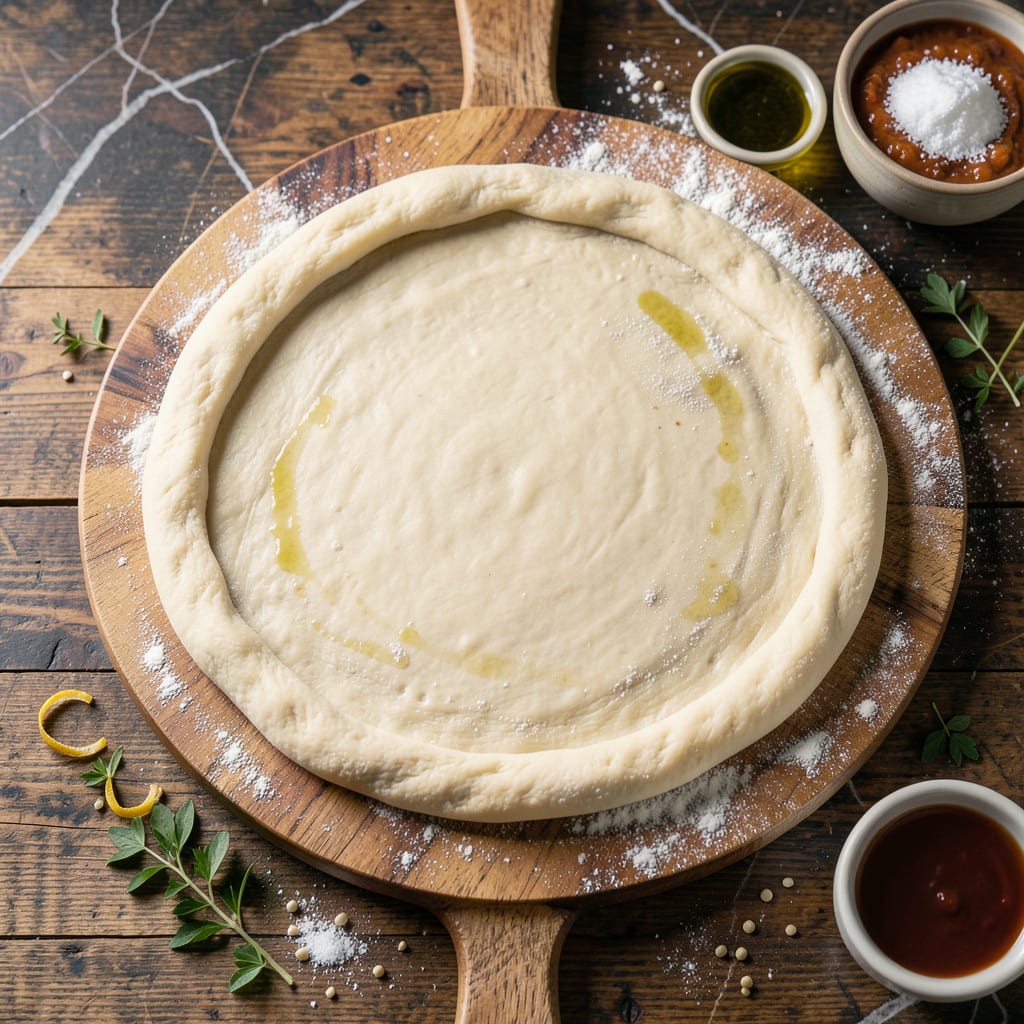
This homemade pizza dough delivers restaurant-quality results with minimal effort. The simple ingredients come together quickly, requiring only a short rise time before baking.
You’ll achieve a crispy yet chewy crust that serves as the perfect base for all your favorite toppings. The method is straightforward and reliable for consistent results every time.
Ingredients for Winco Pizza Dough
Flour, yeast, and a few pantry essentials create this foolproof crust from scratch.
| Ingredient | Amount | Notes |
|---|---|---|
| Bread Flour 🌾 | 3 ½ cups | All-purpose works in a pinch |
| Active Dry Yeast 🍞 | 2 ¼ tsp | One packet, proofed in warm water |
| Granulated Sugar 🍚 | 1 tsp | Feeds the yeast for activation |
| Kosher Salt 🧂 | 2 tsp | Diamond Crystal preferred for texture |
| Extra-Virgin Olive Oil 🫒 | 2 tbsp | For richness and elasticity |
| Warm Water 💧 | 1 ½ cups | 110-115°F for optimal yeast activation |
| Cornmeal 🌽 | ¼ cup | For dusting baking surface |
| Semolina Flour 🌾 | ¼ cup | Optional for extra crispiness |
| Honey 🍯 | 1 tbsp | Optional for subtle sweetness |
| Garlic Powder 🧄 | 1 tsp | Optional for flavor boost |
| Dried Oregano 🍃 | 1 tsp | Optional for Italian flair |
The flour makes all the difference here. Bread flour gives you that chewy texture—King Arthur or Bob’s Red Mill are solid choices. Yeast from Winco’s bulk section is fresh and affordable. If you’re using instant yeast (the kind that doesn’t need proofing), you can skip the sugar and warm water step entirely. Just mix it straight into the dry ingredients.
No bread flour? All-purpose at a 1:1 ratio works, though the crust will be slightly less chewy. Out of cornmeal? Semolina or extra flour for dusting gets the job done. The honey can be swapped for sugar or maple syrup—just adjust the liquid slightly. For a more flavorful crust, add 1/2 tsp of garlic powder or dried herbs to the dough.
This dough keeps beautifully. Wrap tightly in plastic and refrigerate for up to 3 days, or freeze for 1 month (thaw overnight in the fridge). For same-day use, let it rise on the counter—1-2 hours usually does the trick (worth the extra minute).
Why You’ll Love This Recipe
- No-Knead Magic: I just mix, let it rise, and the bread flour does all the work—no standing at the counter for me.
- Craving-Worthy Crust: The olive oil and sugar create this golden, slightly crisp outside with a soft, chewy inside that’s honestly addictive.
- Weeknight Hero: I’ve used this dough for pizza, calzones, even garlic knots—my kids don’t realize it’s the same base.
- Budget Stretch: Five simple ingredients I always have on hand, and it makes enough for two large pizzas. Here’s what sold me—it costs pennies compared to delivery.
Step-by-Step Instructions for Homemade Pizza Dough
Here’s the method I use to make a perfectly crisp and chewy crust every time.
Step 1: Activate the Yeast and Mix Wet Ingredients
In a large mixing bowl, combine the 1.5 cups Warm Water, 2.25 tsp Active Dry Yeast, and 1 tsp Granulated Sugar. Let this sit for 5-10 minutes until the mixture becomes foamy and bubbly. This is your visual cue that the yeast is alive and active.
Once the yeast is activated, stir in the 2 tbsp Extra-Virgin Olive Oil, 1 tbsp Honey, 1 tsp Garlic Powder, and 1 tsp Dried Oregano. The honey adds a touch of sweetness that balances the savory notes, while the garlic and oregano infuse the dough with classic Italian flavor. The mixture should look slightly cloudy with tiny bubbles throughout.
Step 2: Incorporate Dry Ingredients and Knead
Add the 3.5 cups Bread Flour and 2 tsp Kosher Salt to the wet mixture. Using a wooden spoon or dough whisk, stir until a shaggy dough forms. It’ll look rough at first, but that’s normal—don’t worry about lumps at this stage.
Turn the dough out onto a lightly floured surface and knead for 8-10 minutes by hand. The dough should become smooth, elastic, and slightly tacky. If it sticks to your hands, add a sprinkle of flour, but avoid over-flouring, as this can make the crust dense. You’ll know it’s ready when it springs back slowly after poking it with your finger.
Step 3: First Rise for Maximum Flavor
Lightly coat a clean bowl with olive oil and place the kneaded dough inside. Cover the bowl with a damp kitchen towel or plastic wrap and let it rise in a warm, draft-free spot for 1-2 hours, or until it has doubled in size.
I like to place mine near a sunny window or on top of the refrigerator where it’s slightly warmer. The dough should puff up significantly and leave an indent when gently pressed. This rise develops the gluten structure and enhances the flavor, so don’t rush it.
Step 4: Shape and Second Rise for Perfect Texture
Punch down the risen dough to release excess air, then turn it out onto a surface dusted with 0.25 cup Cornmeal and 0.25 cup Semolina Flour. These add a subtle crunch and prevent sticking. Divide the dough into 4 equal portions for individual pizzas, or leave it whole for a large pie.
Shape each portion into a smooth ball, then flatten and stretch into your desired thickness. Place the shaped dough on a parchment-lined baking sheet, cover lightly, and let it rest for another 30 minutes. This second rise relaxes the gluten, making it easier to stretch and ensuring a light, airy crust.
Step 5: Pre-Bake for a Crisp Base
Preheat your oven to 475°F with a pizza stone or inverted baking sheet inside. This mimics a professional pizza oven. Once hot, transfer the stretched dough onto the preheated surface and bake for 5-7 minutes until it’s just set but not browned.
This pre-bake step prevents a soggy crust when you add toppings later. The dough should look slightly puffed and dry to the touch. Remove it from the oven, add your sauce and toppings, then return it to finish baking until the crust is golden brown and crisp.
Pro Tips For Making Winco Pizza Dough
- Activate the yeast: Bloom your active dry yeast in warm water (about 110°F) with the sugar for 5-10 minutes until foamy—I learned this the hard way after killing three batches with water that was too hot.
- Use bread flour: Skip the all-purpose and stick with bread flour for that chewy, elastic texture; the higher protein content makes a real difference in the final crust.
- Don’t rush the rise: Give the dough a full 1-2 hours to double in size in a warm spot, or the pizza will taste dense and underproofed.
- Oil the bowl: Coat your rising bowl with about 1 tablespoon of that extra-virgin olive oil to prevent sticking and add a subtle richness to the dough.
Make-Ahead Tips for This Dish
Overnight Cold Rise
For deeper flavor development, I often prepare the dough the night before. After kneading, place it in an oiled bowl, cover tightly with plastic wrap, and refrigerate for up to 24 hours. The cold, slow rise enhances the yeast’s work. 💡
Freezing Unbaked Dough
Divide risen dough into portions, wrap each tightly in plastic wrap, then place in a freezer bag with all air pressed out. Freeze for up to 3 months. Thaw overnight in the fridge before using.
Pre-Shaped Freezer Method
Shape dough into balls before freezing on a cornmeal-dusted tray. Once frozen solid, transfer to bags. This saves time later—just thaw and stretch. I love this for weeknight pizzas.
Par-Baked Crusts
Pre-bake multiple crusts at 475°F for 5 minutes, then cool completely. Store in airtight containers with parchment between layers for up to 3 days in the fridge.
Same-Day Time Saver
Let dough rise at room temperature for 1 hour, then refrigerate for 2-4 hours to develop flavor without overnight wait. Punch down and shape when ready to bake.
Reviving Refrigerated Dough
If dough has been refrigerated for 24+ hours, let it sit at room temperature for 30-60 minutes before shaping. This makes stretching easier and improves texture. ✨
Nutrition Facts
Frequently Asked Questions
Can I use all-purpose flour instead of bread flour?
Yes, but the texture will differ. Bread flour’s higher protein creates a chewier crust, while all-purpose yields a slightly softer result.
Why does my dough not rise?
Check your yeast’s expiration date and water temperature. Yeast needs 110-115°F water to activate. Old yeast or water that’s too hot/cold can prevent rising.
How thin should I roll the dough?
For a crispy crust, aim for 1/4-inch thickness. Thicker dough yields a softer, bread-like base. Use cornmeal to prevent sticking.
Can I skip the pre-bake step?
Skipping pre-baking risks a soggy center. Pre-baking for 5-7 minutes at 475°F ensures a firm base before adding toppings.

- 6 Egg Cake Recipe with Oil: Light as Air With Buttery Moisture - October 4, 2026
- 4 Bean Casserole Recipe: One-Pan Heartiness With Smoky Paprika Depth - October 4, 2026
- 3-Ingredient Keto Mug Cake Recipe: Microwave Magic in 2 Minutes - October 4, 2026