
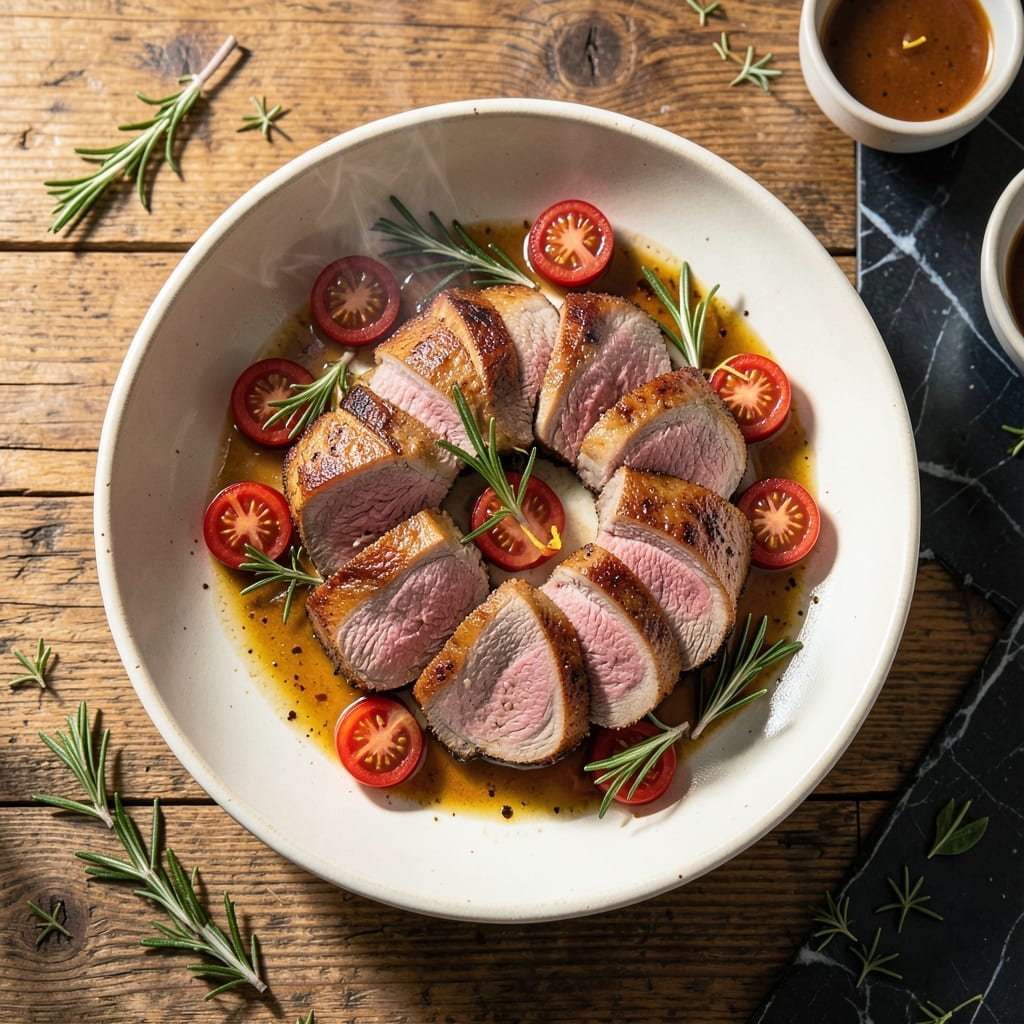
This herb-crusted pork tenderloin delivers tender, juicy meat with a golden, flavorful crust every time. I developed this method after years of testing to create what truly deserves the title of best.
The secret lies in searing the seasoned pork at high heat to lock in moisture, then finishing in the oven. A simple herb rub and garlic butter baste elevate the flavor without overwhelming the natural taste of the meat.
What results is perfectly cooked pork with a crisp exterior and incredibly tender interior. The garlic butter adds a rich, aromatic finish that takes this dish to the next level.
Ready in under an hour, this recipe proves that extraordinary results don’t require complicated techniques or hard-to-find ingredients.
Ingredients for Best Damn Pork Tenderloin
Simple ingredients yield extraordinary results with this herb-crusted, garlic-butter finished pork.
| Ingredient | Amount | Notes |
|---|---|---|
| Pork Tenderloin 🥩 | 1 ½ lb | Trimmed of silver skin |
| Kosher Salt 🧂 | 1 ½ tsp | Diamond Crystal preferred |
| Black Pepper 🌶️ | 1 tsp | Freshly cracked preferred |
| Dried Rosemary 🌿 | 1 tbsp | Crushed between fingers |
| Dried Thyme 🍃 | 1 tbsp | Rubbed to release oils |
| Garlic Powder 🧄 | 1 tsp | Not garlic salt |
| Onion Powder 🧅 | 1 tsp | Fine grind preferred |
| Unsalted Butter 🧈 | 4 tbsp | For garlic butter baste |
| Garlic Cloves 🧄 | 4 cloves | Minced for butter |
| Fresh Parsley 🌿 | ¼ cup | Finely chopped, for garnish |
| Olive Oil 🫒 | 2 tbsp | High smoke point, for searing |
| Dijon Mustard 🟡 | 1 tbsp | For herb crust binding |
The pork tenderloin must be fresh and uniformly sized for even cooking. Whole Foods and Costco consistently carry high-quality options with good marbling. Look for pieces around 1.5 lb—any larger and you risk uneven doneness. Herbs lose potency quickly, so Penzeys or bulk bins at natural food stores are ideal for freshness. The Diamond Crystal kosher salt makes a noticeable difference in texture and flavor distribution.
Out of dried rosemary or thyme? Fresh herbs at triple the amount work beautifully—just finely chop them. No Dijon? Regular mustard plus half a teaspoon of vinegar mimics the tang. For the butter baste, ghee works in a pinch but lacks the aromatic depth. If avoiding dairy entirely, olive oil with extra garlic substitutes adequately, though the flavor profile shifts slightly.
Store raw pork in its original packaging in the coldest part of your fridge for up to 3 days. The herb rub can be pre-mixed and kept in an airtight container for 2 weeks. Cooked tenderloin reheats surprisingly well—slice and gently warm in a skillet with a splash of water to maintain moisture.
Why You’ll Love This Recipe
- I’ll be real: one tenderloin stretches for dinner, then lunch the next day with zero extra work.
- 5-Minute Prep: Honestly, just rub the pork with salt, pepper, rosemary and thyme—no marinating, no fuss.
- Herb-Crusted Bliss: That crust from the rosemary and thyme? Ridiculously good with every juicy bite.
- Feeds a Crowd: I’ll be real: one tenderloin stretches for dinner, then lunch the next day with zero extra work.
Step-by-Step Instructions for Herb-Crusted Pork Tenderloin
Master this technique for perfectly tender pork with a flavorful herb crust and rich garlic butter finish.
Step 1: Prepare the Herb Crust and Season the Tenderloin
Combine the 1 tbsp dried rosemary, 1 tbsp dried thyme, 1.5 tsp kosher salt, 1 tsp black pepper, 1 tsp garlic powder, and 1 tsp onion powder in a small bowl. Crush the herbs between your fingers to release their aromatic oils.
Pat the 1.5 lb pork tenderloin completely dry with paper towels. Brush the surface evenly with the 1 tbsp Dijon mustard, then press the herb mixture all over, coating it thoroughly. This creates a flavorful crust that locks in moisture during cooking.
Step 2: Sear the Pork Tenderloin to Develop a Crust
Heat the 2 tbsp olive oil in a large oven-safe skillet over medium-high heat until it shimmers. Add the seasoned pork tenderloin and sear for 3-4 minutes per side, turning occasionally, until the herb crust is deep golden brown and crisp.
Watch for the crust to form a deep color—this indicates the Maillard reaction has occurred, creating complex flavors. The tenderloin should release easily from the pan when properly seared. Don’t rush this step; a good sear is essential for both flavor and texture.
Step 3: Finish in the Oven Until Perfectly Tender
Transfer the skillet to a preheated 400°F oven. Roast for 15-20 minutes or until the internal temperature reaches 145°F in the thickest part. The pork will continue cooking as it rests, so remove it just as it hits temperature.
You’ll know it’s done when the juices run clear when pierced with a knife and the meat feels firm but springs back when pressed. The herb crust will be deeply caramelized and fragrant, filling your kitchen with an incredible aroma.
Step 4: Baste with Garlic Butter and Rest
While the pork roasts, melt the 4 tbsp unsalted butter in a small saucepan over low heat. Add the 4 cloves minced garlic cloves and cook for 1-2 minutes until fragrant but not browned. This infuses the butter with garlic flavor without bitterness.
Remove the pork from the oven and immediately brush it with half of the garlic butter. Tent loosely with foil and let it rest for 10 minutes—this allows the juices to redistribute for maximum tenderness. Slice the pork against the grain and drizzle with the remaining garlic butter.
Garnish with the 0.25 cup finely chopped fresh parsley for a pop of color and freshness. Serve the slices with any accumulated juices from the resting period spooned over the top for an extra burst of flavor.
Pro Tips For Making Best Damn Pork Tenderloin
- Dry the Meat First: Pat the tenderloin completely dry with paper towels before seasoning—this guarantees a better sear and helps the salt and herbs stick where they belong.
- Use Room-Temp Pork: Let the tenderloin sit out for 20-30 minutes before cooking; cold meat seizes up and cooks unevenly, and I learned this the hard way with dry, tough slices.
- Don’t Overcook It: Pull it off the heat at 140°F internal temp—it’ll coast to 145°F while resting, and anything higher turns that beautiful pork into shoe leather.
- Bloom Your Herbs: Toast the dried rosemary and thyme in the pan for 10 seconds before adding the pork; it wakes up the flavors and makes the kitchen smell like you actually know what you’re doing.
Pro Cooking Tips for best damn pork tenderloin
Perfect Searing Technique
Use a heavy-bottomed skillet like Lodge cast iron for even heat distribution. Preheat it over medium-high heat until the 2 tbsp olive oil shimmers. This ensures a proper sear without hot spots. 🔥
Temperature Precision
Invest in a ThermoWorks instant-read thermometer for accuracy. Pull the pork at exactly 145°F internal temperature—overcooking by even 5°F can dry out the tenderloin. The carryover heat will bring it to perfect doneness.
Resting Matters
Always rest the pork for a full 10 minutes after cooking. This allows juices to redistribute, preventing them from spilling onto the cutting board. Tent loosely with foil to keep it warm.
Herb Crush Method
Rub the dried rosemary and thyme between your fingers to release their oils. This small step significantly boosts flavor. I learned this trick from a chef friend—it makes a noticeable difference. ✨
Butter Baste Timing
Start the garlic butter during the final 5 minutes of roasting. Cook the 4 minced garlic cloves in 4 tbsp butter over low heat to avoid burning. Burnt garlic tastes bitter and ruins the finish.
Uniform Slicing
Slice against the grain into 1-inch thick pieces for consistent texture. Use a sharp knife—Wüsthof works well—and wipe the blade between cuts for clean slices. This presentation trick makes it look restaurant-quality.
Nutrition Facts
Frequently Asked Questions
What internal temperature should I aim for?
Pull the pork at exactly 145°F internal temperature. Overcooking by even 5°F can dry it out. The meat will continue cooking as it rests.
Can I use fresh herbs instead of dried?
Use triple the amount of fresh herbs. Finely chop 3 tbsp rosemary and 3 tbsp thyme to release their oils. The flavor will be brighter and more aromatic.
How long should I let it rest before slicing?
Rest for a full 10 minutes after cooking. This allows juices to redistribute, preventing dry meat. Tent loosely with foil to keep it warm.
What’s the best pan for searing?
A heavy-bottomed skillet like Lodge cast iron works best. It distributes heat evenly and creates a perfect sear without hot spots.

- 6 Egg Cake Recipe with Oil: Light as Air With Buttery Moisture - October 4, 2026
- 4 Bean Casserole Recipe: One-Pan Heartiness With Smoky Paprika Depth - October 4, 2026
- 3-Ingredient Keto Mug Cake Recipe: Microwave Magic in 2 Minutes - October 4, 2026