
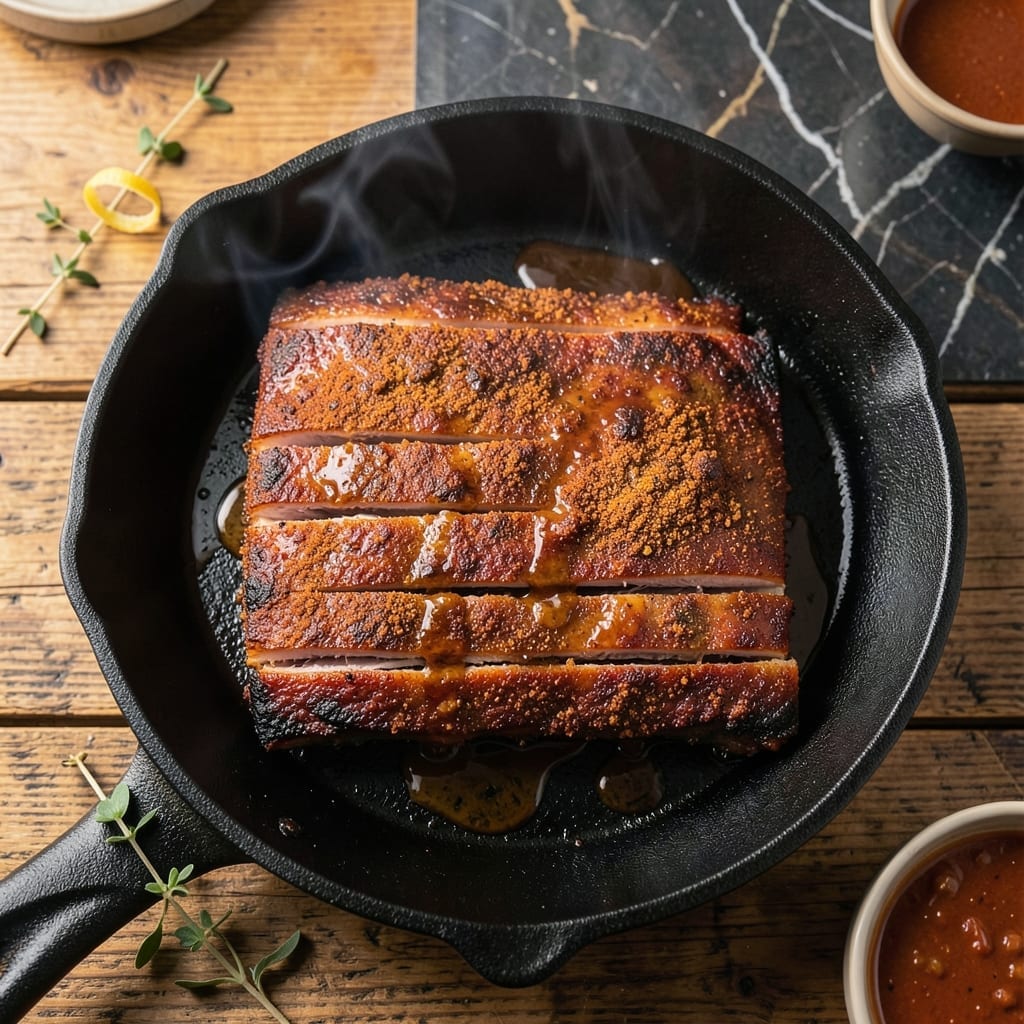
Achieving fall-off-the-bone tenderness with St. Louis ribs doesn’t require a smoker or grill. This oven method delivers professional results with minimal effort.
The secret lies in a low-and-slow approach that transforms tough cuts into tender, flavorful perfection. A well-balanced dry rub and proper preparation ensure every bite is packed with taste.
After hours of gentle cooking, the meat pulls away effortlessly while maintaining its rich, smoky character. The ribs emerge juicy, with a caramelized crust that seals in all the savory goodness.
This technique proves that restaurant-quality ribs are possible right in your own kitchen. No special equipment needed.
Ingredients for St Louis Ribs Oven
These carefully selected ingredients transform tough ribs into tender, smoky perfection in your oven.
| Ingredient | Amount | Notes |
|---|---|---|
| St. Louis Style Pork Ribs 🥩 | 2 ½ lb | Trimmed of membrane and excess fat |
| Brown Sugar 🍚 | ½ cup | Light or dark variety acceptable |
| Sweet Paprika 🌶️ | 2 tbsp | For smoky depth in rub |
| Garlic Powder 🧄 | 1 tbsp | Fine grain preferred |
| Onion Powder 🧅 | 1 tbsp | Enhances savory profile |
| Kosher Salt 🧂 | 1 ½ tbsp | Diamond Crystal brand recommended |
| Ground Black Pepper 🌶️ | 1 tbsp | Freshly ground for best results |
| Chili Powder 🌶️ | 1 tbsp | Adjust heat level to preference |
| Dried Oregano 🍃 | 1 tsp | Mediterranean variety ideal |
| Apple Cider Vinegar 🍏 | ¼ cup | Balances sweetness in rub |
| Olive Oil 🫒 | 2 tbsp | For binding dry rub |
| Barbecue Sauce 🍯 | 1 ½ cups | Quality brand like Stubb's |
| Yellow Mustard 🟡 | 2 tbsp | Helps rub adhere to meat |
The ribs are the foundation—St. Louis style for uniform cooking. Look for racks with good marbling at Costco or your local butcher. The membrane must be removed (a butter knife and paper towel make this easy). Diamond Crystal kosher salt is the professional standard for seasoning blends, available at most supermarkets. Brown sugar adds caramelization; don’t substitute white sugar here.
Out of apple cider vinegar? White vinegar in a pinch, though the flavor will be sharper. No paprika? Smoked paprika at half the amount intensifies the smokiness. For the barbecue sauce, Stubb’s or Sweet Baby Ray’s deliver consistent quality. The mustard is just a binder—Dijon works too but may add more tang. Skip the vinegar if you’re sensitive to acidity.
Rub can be mixed 24 hours ahead—store in an airtight container. Ribs should be cooked the same day they’re seasoned. Leftovers keep 4-5 days refrigerated or freeze for 3 months. Reheat gently to maintain that fall-off-the-bone texture you worked so hard to achieve.
Why You’ll Love This Recipe
- Set and Forget: I toss the ribs with brown sugar and spices, pop them in the oven, and walk away—no babysitting required.
- Sweet and Smoky: The brown sugar caramelizes with the paprika, garlic, and onion powder for that sticky, finger-licking crust.
- Feeds a Hungry Crowd: One rack of St. Louis ribs serves my whole family, with enough left for sandwiches the next day.
- Budget-Friendly Feast: Pork ribs in the oven stretch a modest grocery budget into a meal that feels like a restaurant splurge.
Step-by-Step Instructions for St Louis Ribs in the Oven
Master the technique for restaurant-quality results with this proven oven-baking method.
Step 1: Prepare the Dry Rub and Season the Ribs
In a bowl, combine the 0.5 cup Brown Sugar, 2 tbsp Sweet Paprika, 1 tbsp Garlic Powder, 1 tbsp Onion Powder, 1.5 tbsp Kosher Salt, 1 tbsp Ground Black Pepper, 1 tbsp Chili Powder, and 1 tsp Dried Oregano. Stir until fully blended—this creates a balanced sweet and smoky profile.
Pat the 2.5 lb St. Louis Style Pork Ribs dry with paper towels, then remove the membrane from the bone side by sliding your finger underneath and pulling it off in one piece. Brush both sides of the ribs with the 2 tbsp Yellow Mustard—this helps the rub adhere better than oil alone. Apply the dry rub generously to all surfaces, pressing it into the meat so it forms a crust.
Step 2: Wrap and Refrigerate for Flavor Penetration
Drizzle the 0.25 cup Apple Cider Vinegar and 2 tbsp Olive Oil over the seasoned ribs, then rub it in to create a paste-like coating. This step enhances tenderness and adds a subtle tang to balance the sweetness of the rub.
Wrap the ribs tightly in plastic wrap or aluminum foil and refrigerate for at least 4 hours, or preferably overnight. This resting period allows the salt to penetrate the meat, breaking down proteins for maximum tenderness while the flavors meld. The longer you marinate, the more pronounced the seasoning will be.
Step 3: Bake Low and Slow for Ideal Texture
Preheat your oven to 275°F. Place the ribs meat-side down on a rimmed baking sheet lined with aluminum foil. Cover the ribs completely with another sheet of foil, sealing the edges tightly to trap steam. This creates a moist environment that prevents drying out.
Bake for 2.5 hours, then carefully flip the ribs meat-side up. The meat should be pulling away slightly from the bones. Recover with foil and bake for another 1 hour, or until the internal temperature reaches 195-203°F and the ribs bend easily when lifted with tongs.
Step 4: Finish with Barbecue Sauce and Broil
Increase the oven temperature to 400°F. Uncover the ribs and brush both sides generously with 1.5 cups Barbecue Sauce. The sauce should cling to the surface and begin to caramelize during the final cooking stage.
Return the ribs to the oven, uncovered, and bake for 10-15 minutes until the sauce sets and becomes slightly sticky. For a charred finish, switch the oven to broil and cook for an additional 3-5 minutes, watching closely to prevent burning. The edges should be dark golden brown with visible caramelization.
Step 5: Rest and Serve
Transfer the ribs to a cutting board and let them rest for 10 minutes. This allows the juices to redistribute throughout the meat, ensuring every bite is moist and flavorful. Cover loosely with foil to keep warm if needed.
Slice between the bones into individual ribs and serve immediately. The meat should pull away cleanly from the bone with minimal resistance, delivering the promised fall-off-the-bone tenderness. Any remaining barbecue sauce can be served on the side for dipping.
Pro Tips For Making St Louis Ribs Oven
- Preheat the Oven: Set it to 275°F and let it stabilize for 15 minutes—low and slow is the only way to get those ribs fall-off-the-bone tender without drying them out.
- Pat Ribs Dry: Blot the ribs with paper towels before seasoning; the dry rub sticks better, and you’ll get a proper bark instead of a soggy mess.
- Skip the Foil Too Soon: I learned this the hard way—wrap the ribs in foil for the first 2 hours to trap moisture, then uncover for the last 30 minutes to let the brown sugar caramelize.
- Double the Rub: Sounds like overkill, but a heavy coat of that brown sugar, paprika, garlic, and onion mix actually forms a better crust and deeper flavor.
Best Sauces and Condiments for This Recipe
Classic BBQ Sauce
For that traditional finish, I love Stubb’s Original—its tangy tomato base with molasses and vinegar complements the smoky rub perfectly. Brush it on during the final 15 minutes of cooking for a sticky, caramelized glaze that clings to every bite. 🔥
Sweet and Spicy
Try Sweet Baby Ray’s Honey Chipotle for a sweet-heat twist. The honey adds glossy sweetness while chipotle peppers bring subtle smokiness. I drizzle extra on the side for dipping—about 2 tbsp per serving gives the right kick.
Vinegar-Based Tang
A Carolina-style vinegar sauce cuts through the richness beautifully. Mix 1 cup apple cider vinegar, ¼ cup brown sugar, and 1 tbsp red pepper flakes for a bright, tangy contrast. Serve it chilled in small bowls for guests to add as desired.
Mustard-Based Option
For a Southern twist, I recommend Yellow Mustard BBQ Sauce. It’s particularly good with the paprika in your rub. 2 parts mustard to 1 part honey with a splash of vinegar creates a balanced, creamy sauce that’s surprisingly addictive.
Homemade Finishing Glaze
Simmer 1 cup barbecue sauce with 2 tbsp brown sugar and 1 tbsp butter for 5 minutes. This creates a luxurious glaze that takes your ribs to the next level. Brush it on thickly just before serving.
Dipping Sauces
Offer ranch dressing and blue cheese dressing on the side for cooling contrast. I also like pickled jalapeños for those who want extra heat. These pairings let everyone customize their perfect bite. ✨
Nutrition Facts
Frequently Asked Questions
Do I need to remove the membrane before cooking?
Leaving the membrane on prevents the rub from penetrating and makes the ribs tough. Slide a butter knife under it, lift, and pull it off in one piece.
Can I skip the marinating time?
You can, but the flavor won’t be as deep. For best results, let the ribs marinate for at least 4 hours or overnight. This step ensures the meat stays tender and absorbs all the spices.
How do I know when the ribs are done?
They’re ready when the internal temperature reaches 195-203°F and the meat easily pulls away from the bone. Another test: lift with tongs—they should bend slightly.
Can I use a different type of ribs?
Yes, but St. Louis-style ribs are ideal for this method. Baby back ribs will cook faster (2-2.5 hours total), while spare ribs may need 30 minutes more. Adjust times accordingly.

- 6 Egg Cake Recipe with Oil: Light as Air With Buttery Moisture - October 4, 2026
- 4 Bean Casserole Recipe: One-Pan Heartiness With Smoky Paprika Depth - October 4, 2026
- 3-Ingredient Keto Mug Cake Recipe: Microwave Magic in 2 Minutes - October 4, 2026