
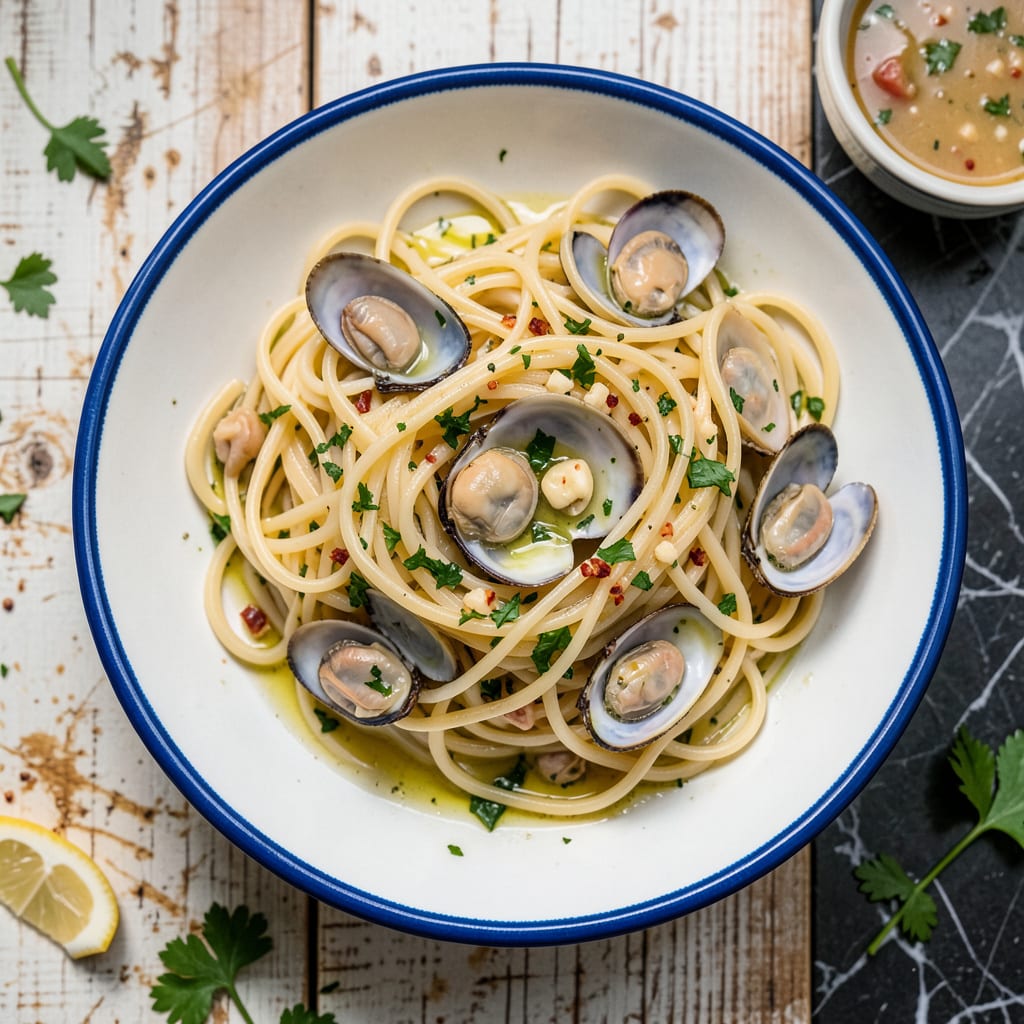
This linguine with clams delivers the perfect balance of briny seafood, aromatic garlic, and al dente pasta in just 25 minutes. The secret lies in using fresh clams that steam open in white wine, creating a delicate broth that infuses every strand of pasta with oceanic flavor.
The sauce comes together through precise timing—sautéing garlic and chili flakes until fragrant, then emulsifying the clam broth with pasta water for a silky consistency. What results is a dish where each bite offers tender clams, perfectly cooked linguine, and a sauce that clings to every noodle without overwhelming the natural sweetness of the seafood.
Ingredients for Best Linguine with Clams
Fresh clams, quality pasta, and aromatic ingredients create this restaurant-worthy seafood dish in under 30 minutes.
| Ingredient | Amount | Notes |
|---|---|---|
| Linguine Pasta 🍝 | 12 oz | Dried, high-quality preferred |
| Fresh Littleneck Clams 🐚 | 2 lb | Scrubbed clean, discard any open ones |
| Extra-Virgin Olive Oil 🫒 | ⅓ cup | High-quality for best flavor |
| Garlic Cloves 🧄 | 6 cloves | Thinly sliced for even cooking |
| Dry White Wine 🍷 | ¾ cup | Sauvignon Blanc or Pinot Grigio |
| Red Pepper Flakes 🌶️ | ½ tsp | Adjust for heat preference |
| Unsalted Butter 🧈 | 4 tbsp | Cold, cubed for finishing |
| Fresh Parsley 🌿 | ¼ cup | Finely chopped for garnish |
| Kosher Salt 🧂 | 1 tsp | Diamond Crystal preferred |
| Freshly Ground Black Pepper 🌶️ | ½ tsp | Coarse grind recommended |
| Lemon Zest 🍋 | 1 tsp | From 1 medium lemon |
| Pasta Water 💧 | ½ cup | Reserved from cooking pasta |
The clams are non-negotiable for authentic flavor. Littleneck or Manila clams work best—they’re sweet, tender, and open uniformly. Purchase from reputable seafood markets or Whole Foods seafood counters. Look for clams that are tightly closed (or close when tapped) with minimal odor. The pasta matters too—De Cecco or Barilla linguine holds sauce beautifully without becoming mushy. For the wine, any crisp dry white works, but avoid anything oaky or overly sweet.
No white wine? Dry vermouth or additional clam juice (about half the amount) can substitute. Fresh clams unavailable? Frozen clam meat works in a pinch, but fresh yields superior broth. The butter finish is crucial—European-style unsalted (like Plugrá) emulsifies best. For heat-sensitive palates, reduce or omit the red pepper flakes. The lemon zest brightens the dish—Meyer lemons offer a sweeter profile if available.
Clams must be cooked immediately after purchase—store in refrigerator covered with damp towel for no more than 24 hours. Unopened clams can be frozen in their shells for up to 3 months, but freshness impacts flavor. The cooked dish keeps 2 days refrigerated (reheat gently to avoid overcooking clams). Pasta absorbs liquid over time, so store sauce separately if prepping ahead. Always reserve extra pasta water for reheating—it revives the sauce perfectly.
Why You’ll Love This Recipe
- One-Pot Magic: Honestly, I love that this comes together in a single skillet. The clams steam right in the wine and garlic while the linguine cooks—no extra pots, no fuss, just flavor.
- That Briny Garlic Kick: The moment those littlenecks open up in the hot oil with garlic? Pure gold. The wine mellows it all into this silky, salty-sweet sauce that clings to every strand of pasta.
- Date Night or Tuesday: I’ve served this for anniversaries and also scarfed it straight from the pan after work. The clams feel fancy, but the effort? Weeknight-friendly.
- Leftovers? Still Winning: Here’s what sold me—the pasta soaks up even more flavor overnight. Toss it with a splash of olive oil, and suddenly lunch tastes better than last night’s dinner.
Step-by-Step Instructions for Linguine With Clams
This method delivers perfectly balanced flavors with tender clams and al dente pasta every time.
Step 1: Prepare the Clams and Start the Pasta
Begin by thoroughly scrubbing the 2 lb Fresh Littleneck Clams under cold running water to remove any grit or sand. Discard any clams that remain open after tapping them lightly—they won’t be safe to eat. Place the cleaned clams in a bowl of cold water while you start the pasta.
Bring a large pot of salted water to a rolling boil and add the 12 oz Linguine Pasta. Cook according to package directions for al dente, but start checking 1 minute before the suggested time. You want the pasta slightly underdone as it will finish cooking in the sauce later. Reserve 0.5 cup Pasta Water before draining.
Step 2: Build the Aromatic Base
While the pasta cooks, heat the 0.33 cup Extra-Virgin Olive Oil in a large, deep skillet over medium heat. Add the 6 cloves Garlic Cloves (thinly sliced) and 0.5 tsp Red Pepper Flakes, cooking for 1-2 minutes until the garlic turns light golden but doesn’t brown. The oil should be fragrant but not smoking.
Add the 0.75 cup Dry White Wine and bring to a gentle simmer. Let it reduce by half, about 3-4 minutes. This step concentrates the wine’s acidity and removes any harsh alcohol flavor, creating a balanced foundation for the clams.
Step 3: Cook the Clams to Perfection
Increase heat to medium-high and add the drained clams to the skillet in a single layer. Cover immediately with a tight-fitting lid and steam for 5-7 minutes until all clams have opened. Discard any clams that remain closed after cooking—they’re unsafe to eat.
Using tongs, transfer the opened clams to a bowl, leaving the cooking liquid in the pan. This briny liquid is packed with flavor and will become the base of your sauce. If you notice any sand in the bottom of the skillet, carefully pour the liquid through a fine-mesh strainer before proceeding.
Step 4: Finish the Sauce and Combine
Return the skillet to medium heat and add the 4 tbsp Unsalted Butter, one cube at a time, whisking constantly until fully incorporated. This creates a rich, emulsified sauce. Add the drained pasta to the skillet along with the 1 tsp Kosher Salt, 0.5 tsp Freshly Ground Black Pepper, and 1 tsp Lemon Zest.
Toss everything together for 1-2 minutes, adding reserved pasta water as needed to achieve a silky consistency that coats the pasta evenly. The sauce should cling to the linguine without pooling at the bottom of the skillet.
Step 5: Add Clams and Garnish
Return the cooked clams to the skillet and gently toss to warm them through, about 30 seconds. Be careful not to overmix, as you want to keep the clams intact. The residual heat will be enough to warm them without overcooking.
Transfer to serving bowls and sprinkle with the 0.25 cup Fresh Parsley. The parsley adds a fresh, bright contrast to the rich, briny flavors. Serve immediately with crusty bread to soak up every bit of the delicious sauce.
Health Benefits of This best linguine with clams
Rich in Lean Protein
This dish delivers a substantial 20-25 grams of protein per serving from the clams, making it an excellent option for muscle maintenance and repair. Clams are particularly rich in complete proteins, containing all nine essential amino acids your body needs. I love that you get this protein boost without the saturated fat found in many meat-based dishes. 💪
Omega-3 Powerhouse
Clams are one of the best seafood sources of omega-3 fatty acids, with about 250mg per ounce. These healthy fats support heart health, reduce inflammation, and may even improve cognitive function. The extra-virgin olive oil in this recipe adds another layer of heart-healthy monounsaturated fats to the meal.
Vitamin B12 Boost
A single serving provides over 1,600% of your daily vitamin B12 needs—clams are one of nature’s most concentrated sources. This vitamin is crucial for nerve function, red blood cell production, and DNA synthesis. I notice I feel more energized when I include clams in my diet regularly, which makes sense given B12’s role in energy metabolism.
Iron-Rich Meal
You’ll get about 24mg of iron per serving from the clams, which is more than your entire daily requirement. This heme iron (the most easily absorbed form) helps prevent anemia and supports oxygen transport in your blood. The vitamin C from the lemon zest actually enhances iron absorption by up to 300%. 🍋
Low-Calorie Nutrition
Despite its rich flavor, this dish clocks in at only about 450-500 calories per serving. The combination of lean protein from clams and complex carbs from the linguine pasta provides sustained energy without the heavy feeling you get from cream-based pasta dishes. It’s satisfying without being overly indulgent.
Mineral Treasure Trove
Clams are packed with essential minerals like selenium, zinc, and copper. A serving provides over 100% of your daily selenium needs, which acts as a powerful antioxidant. The garlic in this recipe adds additional immune-boosting properties, making this dish as nourishing as it is delicious. ✨
Nutrition Facts
Frequently Asked Questions
What’s the best way to clean clams before cooking?
Soak clams in cold salted water (1/4 cup salt per gallon) for 20-30 minutes. This helps them expel any sand or grit. Scrub shells under running water with a stiff brush right before cooking. Discard any that remain open after tapping.
Can I use frozen clams instead of fresh?
Frozen clams work in a pinch, but fresh delivers superior flavor. If using frozen, thaw overnight in the fridge and drain well. Add 1/2 cup clam juice to compensate for lost briny liquid. Avoid previously shucked clams—they lack the natural juices needed for the sauce.
Why did my sauce turn out watery?
This usually happens from not reducing the wine enough or skipping the butter emulsification. Simmer the wine until reduced by half (3-4 minutes). Add butter gradually while whisking vigorously. The starch from pasta water helps thicken—use 1/4 cup at a time until silky.
What’s a good wine pairing for this dish?
Crisp, acidic whites complement the briny flavors best. Try a Pinot Grigio or Vermentino from Italy. For red lovers, a light Chianti works. Avoid oaky Chardonnays—they overpower the delicate seafood notes.

- 6 Egg Cake Recipe with Oil: Light as Air With Buttery Moisture - October 4, 2026
- 4 Bean Casserole Recipe: One-Pan Heartiness With Smoky Paprika Depth - October 4, 2026
- 3-Ingredient Keto Mug Cake Recipe: Microwave Magic in 2 Minutes - October 4, 2026