
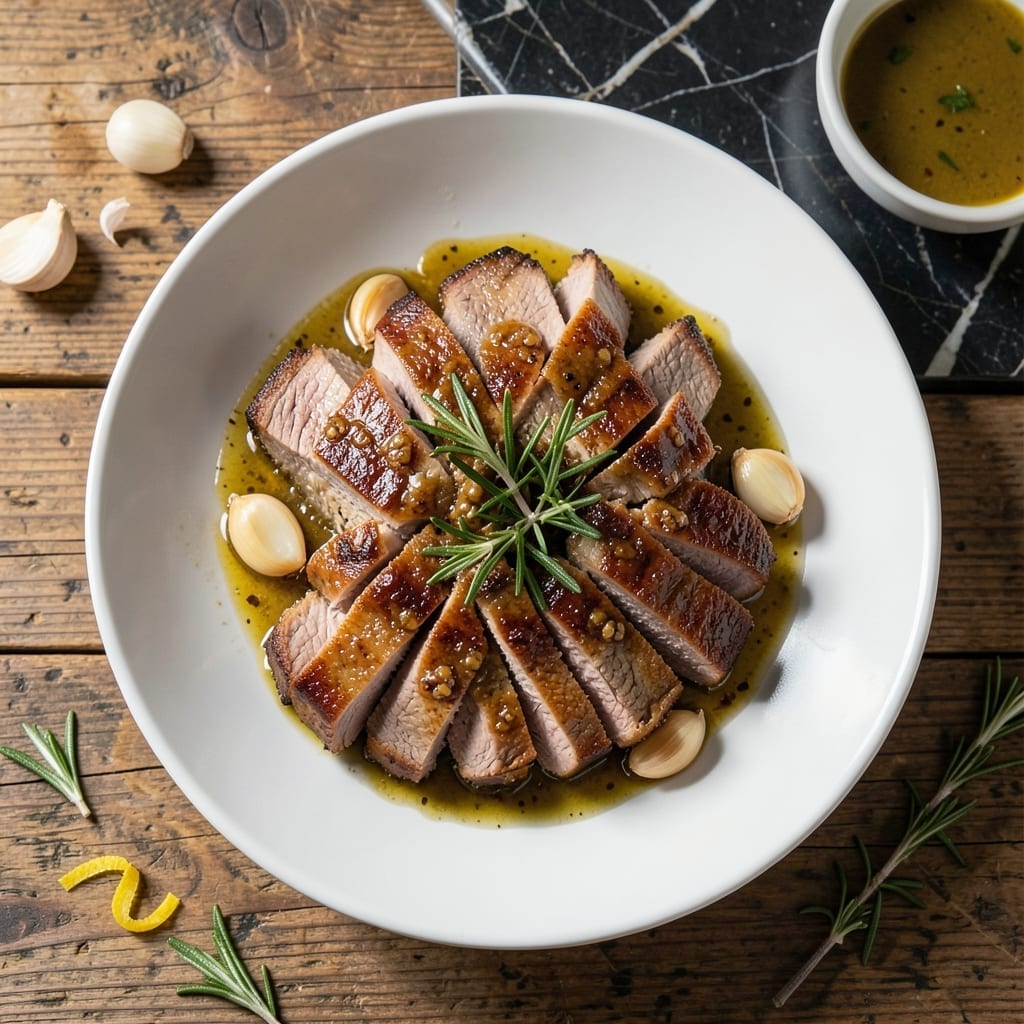
This pork tenderloin recipe delivers tender, juicy results with minimum effort and maximum flavor. The secret lies in a simple garlic-rosemary marinade that infuses every bite.
With just a handful of ingredients and about 30 minutes of cooking time, you’ll achieve restaurant-quality meat that’s moist and aromatic. The herb blend enhances the pork’s natural sweetness.
Roasting at high heat ensures a golden crust while keeping the inside perfectly tender. The garlic-rosemary combination adds depth without overpowering the dish.
Serve with roasted vegetables or mashed potatoes for a complete, impressive meal. This method guarantees consistent, delicious results every time.
Ingredients for Best Pork Tenderloin
Quality pork, aromatic herbs, and a handful of pantry staples create this succulent dish with ease.
| Ingredient | Amount | Notes |
|---|---|---|
| Pork Tenderloin 🥩 | 1 ½ lb | Trimmed of excess fat |
| Fresh Rosemary 🌿 | 2 tbsp | Finely chopped, stems discarded |
| Garlic Cloves 🧄 | 6 cloves | Minced to fine paste |
| Extra-Virgin Olive Oil 🫒 | ¼ cup | High-quality, fruity |
| Dijon Mustard 🟡 | 2 tbsp | Smooth, not whole grain |
| Kosher Salt 🧂 | 1 ½ tsp | Diamond Crystal preferred |
| Freshly Ground Black Pepper 🌶️ | 1 tsp | Coarse grind for texture |
| Red Wine Vinegar 💧 | 1 tbsp | Balances marinade acidity |
| Brown Sugar 🟤 | 1 tbsp | Light or dark variety |
| Fresh Thyme Leaves 🍃 | 1 tbsp | Optional but recommended |
| Shallot 🧅 | 1 whole | Finely minced for depth |
| Dry White Wine 🍷 | ¼ cup | For deglazing pan |
The pork tenderloin should be uniformly thick for even cooking—Whole Foods and Costco consistently stock well-trimmed options. Select rosemary with vibrant green needles (avoid woody stems). For the garlic, fresh heads from the produce section outperform pre-peeled cloves in both flavor and texture. The olive oil is foundational; California Olive Ranch offers excellent quality at grocery stores.
Substitute dried rosemary at one-third the amount if fresh isn’t available (soak briefly in warm water to rehydrate). Apple cider vinegar works in place of red wine vinegar with minimal difference. For the wine, chicken stock with lemon juice provides a non-alcoholic alternative. The brown sugar can be replaced with maple syrup, though it may slightly alter the marinade consistency.
Marinate the pork for at least 2 hours or overnight for maximum flavor penetration. Cooked tenderloin keeps 3-4 days refrigerated or freezes well for 3 months. Always bring meat to room temperature before roasting for even cooking.
Why You’ll Love This Recipe
- One Pan Wonder: I sear the tenderloin, toss in the rosemary and garlic, and let the oven do the rest.
- Garlic-Rosemary Magic: That combo with Dijon mustard creates a crust so good I skip the gravy.
- Feeds a Crowd: One pork tenderloin stretches to four servings, and leftovers make killer sandwiches.
- Under 40 Minutes: From counter to table faster than delivery, and honestly way more impressive.
Step-by-Step Instructions for Garlic-Rosemary Pork Tenderloin
Master these precise techniques to deliver restaurant-quality tenderness and flavor every single time.
Step 1: Prepare the Herb Marinade
In a medium bowl, whisk together the 0.25 cup extra-virgin olive oil, 2 tbsp Dijon mustard, 1 tbsp red wine vinegar, 1 tbsp brown sugar, 1.5 tsp kosher salt, and 1 tsp freshly ground black pepper until fully emulsified. The sugar should dissolve completely into the acidulated oil base.
Add the finely chopped 2 tbsp fresh rosemary, minced 6 cloves garlic cloves, 1 tbsp fresh thyme leaves, and finely minced 1 whole shallot. Stir to combine, ensuring the herbs and aromatics are evenly distributed throughout the marinade. This aromatic base will penetrate the pork deeply during its rest.
Step 2: Marinate the Pork Tenderloin
Pat the 1.5 lb pork tenderloin completely dry with paper towels to ensure maximum marinade adhesion. Place it in a resealable plastic bag or shallow dish and pour the prepared marinade over it, turning to coat all surfaces evenly.
Seal and refrigerate for at least 4 hours, or preferably overnight. The extended marinating time allows the acid in the vinegar to tenderize the meat while the garlic and herbs infuse it with complex flavor. For best results, flip the pork halfway through marinating.
Step 3: Sear and Roast to Perfection
Preheat your oven to 400°F. Remove the pork from the marinade (reserve the marinade) and let it come to room temperature for 30 minutes before cooking. This ensures even cooking throughout the tenderloin.
Heat an oven-safe skillet over medium-high heat until very hot. Sear the pork on all sides for 2-3 minutes per side until deeply browned. The fond that develops will contribute to the pan sauce later.
Step 4: Finish in the Oven and Rest
Transfer the skillet to the preheated oven and roast for 15-20 minutes, or until the internal temperature reaches 145°F. The pork should feel firm but still yield slightly when pressed. Avoid overcooking—pork tenderloin dries out quickly beyond this temperature.
Remove from the oven, transfer the pork to a cutting board, and tent loosely with foil. Let it rest for 10 minutes before slicing. This crucial resting period allows the juices to redistribute, ensuring each slice remains moist and tender.
Step 5: Create the Pan Sauce
Place the skillet over medium heat and add the reserved marinade. Pour in the 0.25 cup dry white wine and deglaze the pan, scraping up all browned bits with a wooden spoon. Simmer for 3-4 minutes until reduced by half and slightly thickened.
Strain the sauce through a fine-mesh sieve into a small bowl to remove the herb solids. The resulting sauce should be glossy and intensely flavorful. Serve the sliced pork drizzled with this sauce for maximum impact.
Pro Tips For Making Best Pork Tenderloin
- Sear it hot: Get your pan screaming hot before adding the tenderloin—this gives you that deep golden crust on the outside while keeping the inside juicy. I learned this the hard way after too many pale, sad-looking roasts.
- Trim the silver skin: That tough, silvery membrane on the tenderloin doesn’t soften when cooked, so take 2 minutes to trim it off with a sharp knife. My first few attempts were chewy until I started doing this religiously.
- Rest before slicing: Let the pork rest under foil for at least 5 minutes after cooking—it keeps all the juices from flooding your cutting board. Sounds simple, but I used to skip it and wound up with dry meat every time.
- Crush the garlic: Smash the garlic cloves with the side of your knife before mincing—they’ll release more flavor into the rosemary and olive oil rub. I was skeptical until I tried it, but now it’s non-negotiable.
Common Mistakes When Making best pork tenderloin
Overcooking the Meat
Pork tenderloin dries out fast when cooked past 145°F. Use an instant-read thermometer and pull it from the oven at 140°F—it’ll rise to perfect doneness while resting. I ruined my first three attempts by guessing. 🌡️
Skipping the Rest
Cutting too soon causes juices to spill out, leaving dry meat. Always rest for 10 minutes under foil. This step is non-negotiable for moisture retention.
Uneven Searing
Pat the meat completely dry before searing, or it’ll steam instead of brown. Heat your skillet until it’s smoking hot—this creates a flavorful crust.
Cold Starting
Let the pork sit at room temperature for 30 minutes before cooking. Cold meat cooks unevenly, resulting in dry edges and undercooked centers.
Ignoring the Marinade
Marinate for at least 4 hours—overnight is ideal. The acid in red wine vinegar tenderizes, while garlic and rosemary infuse flavor deeply. Skipping this shortcuts the dish’s potential.
Poor Slicing Technique
Slice against the grain into ½-inch thick pieces. Cutting with the grain makes it chewy. Use a sharp knife for clean cuts that hold juices in.
Nutrition Facts
Frequently Asked Questions
How long should I marinate the pork?
Marinate for at least 4 hours, but overnight yields the best flavor. The acid in the marinade tenderizes the meat while herbs infuse deeply.
Can I use dried herbs instead of fresh?
Yes, use 1/3 the amount of dried herbs. Soak briefly in warm water to rehydrate before mixing into the marinade.
What internal temperature is safe for pork?
Cook until it reaches 145°F internally. Remove at 140°F—it’ll rise to perfect doneness while resting.
How do I keep the pork from drying out?
Don’t overcook it! Let it rest for 10 minutes after roasting to redistribute juices. Always use a meat thermometer.

- 6 Egg Cake Recipe with Oil: Light as Air With Buttery Moisture - October 4, 2026
- 4 Bean Casserole Recipe: One-Pan Heartiness With Smoky Paprika Depth - October 4, 2026
- 3-Ingredient Keto Mug Cake Recipe: Microwave Magic in 2 Minutes - October 4, 2026