
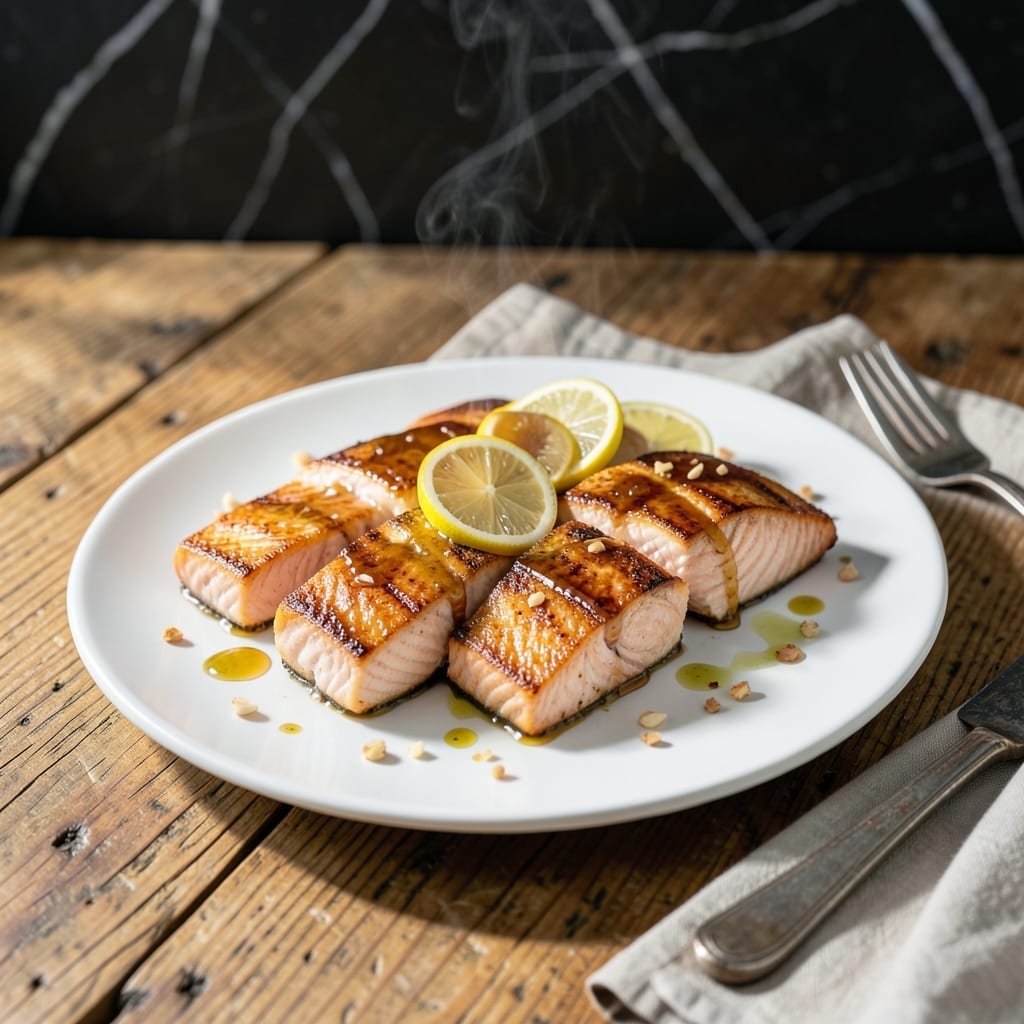
This professional method delivers the best salmon with perfectly crisp skin and tender, flaky flesh every time.
Honey-glazed fillets cook quickly at high heat, creating a caramelized exterior while keeping the inside moist and flavorful.
Ingredients for Best Recipe for Salmon Fish
These professional-grade ingredients create restaurant-quality honey-glazed salmon with crisp skin and tender flesh.
| Ingredient | Amount | Notes |
|---|---|---|
| Salmon Fillets 🐟 | 4 whole | Skin-on, about 6 oz each |
| Honey 🍯 | 3 tbsp | Pure, unprocessed preferred |
| Soy Sauce 🫒 | 2 tbsp | Low-sodium for balance |
| Fresh Garlic Cloves 🧄 | 3 cloves | Minced finely for even distribution |
| Fresh Ginger 🌿 | 1 tbsp | Grated, peeled first |
| Lemon 🍋 | 1 whole | Zested and juiced |
| Olive Oil 🫒 | 2 tbsp | Extra-virgin for high-heat stability |
| Salt 🧂 | 1 tsp | Diamond Crystal kosher preferred |
| Black Pepper 🌶️ | ½ tsp | Freshly ground for peak flavor |
| Dijon Mustard 🟡 | 1 tsp | Smooth, not whole grain |
| Unsalted Butter 🧈 | 2 tbsp | For basting fillets |
| Fresh Dill 🌿 | 2 tbsp | Chopped, for garnish |
The salmon itself demands attention. Wild-caught sockeye or king deliver the best texture and flavor, while Atlantic farm-raised offers consistent quality year-round. Source from Whole Foods or Trader Joe’s for reliable freshness. Ensure the skin is intact and the flesh has a vibrant pink-orange hue (no browning or dullness). For the honey, opt for local, raw varieties—their complexity elevates the glaze beyond supermarket brands.
No honey on hand? Maple syrup at a 1:1 ratio works, though the flavor profile shifts slightly. Out of fresh ginger? Ground ginger at one-quarter the amount provides warmth, but fresh is non-negotiable for that bright, zesty kick. The soy sauce can be swapped for tamari for gluten-free, but reduce by a quarter—it’s saltier. If using frozen salmon, thaw overnight in the fridge (never at room temperature).
Prep the glaze up to 2 days ahead—it keeps beautifully in the fridge. Cooked salmon stays fresh for 3 days in an airtight container, though it’s best eaten immediately. For longer storage, freeze uncooked fillets (without glaze) for up to 3 months. Always pat the salmon dry before cooking to achieve that signature crisp skin.
Why You’ll Love This Recipe
- One Pan Wonder: I toss everything on a single sheet pan—salmon, honey, soy, garlic, ginger—and let the oven do the work.
- Sweet-Savory Magic: The honey caramelizes while the soy and garlic add depth, creating that sticky, umami-rich glaze I crave.
- Weeknight Hero: Honestly, it’s my go-to for busy evenings when I need something fancy but fast.
- Leftovers Win: Cold salmon flakes perfectly over salad or rice the next day—no waste, just another great meal.
Step-by-Step Instructions for Honey-Glazed Salmon Fillets
Master the technique for perfectly cooked fillets with crisp skin and a glossy, sweet-savory glaze.
Step 1: Prepare the Salmon and Marinade
Pat the 4 whole Salmon Fillets completely dry with paper towels, focusing on the skin side—moisture prevents crisping. Season both sides evenly with the 1 tsp Salt and 0.5 tsp Black Pepper, pressing gently to adhere.
In a small bowl, whisk together the 3 tbsp Honey, 2 tbsp Soy Sauce, minced 3 cloves Fresh Garlic Cloves, 1 tbsp Fresh Ginger, the zest and juice of the 1 whole Lemon, and the 1 tsp Dijon Mustard until smooth. This marinade balances sweetness with acidity and umami.
Step 2: Sear the Skin to Crisp Perfection
Heat the 2 tbsp Olive Oil in a large, heavy skillet over medium-high heat until shimmering. Place the fillets skin-side down in the pan, pressing gently with a fish spatula for 10 seconds to prevent curling. Sear undisturbed for 4-5 minutes until the skin is deep golden brown and crisp.
Watch for the edges of the fillets to become opaque and rise slightly from the skin—this indicates the skin has released its natural gelatin and is ready to flip. Avoid moving the fillets prematurely, or the skin will tear.
Step 3: Glaze and Finish in the Pan
Flip the fillets carefully and reduce heat to medium. Pour the marinade evenly over the fillets. Add the 2 tbsp Unsalted Butter to the pan, tilting to baste the fillets continuously with the foaming butter and marinade for 3-4 minutes.
The glaze should thicken slightly and turn a deep amber color. Spoon it over the fillets repeatedly to ensure full coverage. The salmon is done when it flakes easily with a fork and reaches an internal temperature of 145°F.
Step 4: Rest and Garnish for Service
Transfer the fillets to a plate, skin-side up, and let rest for 3-5 minutes. This allows the juices to redistribute, ensuring moist, tender flesh. Spoon any remaining pan glaze over the top.
Garnish with the 2 tbsp Fresh Dill, dividing it evenly among the fillets. The dill’s bright, grassy notes complement the rich, caramelized glaze. Serve immediately while the skin remains crisp.
Pro Tips For Making Best Recipe For Salmon Fish
- Pat the Salmon Dry: I learned this the hard way—skip this and your glaze won’t stick properly. Use paper towels to remove all moisture from the fillets before adding the honey-soy mixture.
- Prep Ginger and Garlic Fine: After burning a few batches, I finally figured out that mincing the ginger and garlic (instead of slicing) prevents bitter, charred bits in the sauce.
- Skin Side Down First: Start the salmon skin-side down in the pan for 4-5 minutes before flipping. This guarantees crispy skin and even cooking without overpowering the honey-soy glaze.
- Rest Before Serving: Sounds weird, but it works: let the salmon rest 3-4 minutes after cooking. The juices redistribute, so the first bite isn’t a dry disappointment.
Storing and Reheating This best recipe for salmon fish
🍳 Refrigerator Storage
To keep your cooked salmon fresh, store it in an airtight container or wrap it tightly in aluminum foil or plastic wrap. Place it in the fridge within two hours of cooking. Properly stored, your best recipe for salmon fish will stay fresh for 3-4 days. This method preserves moisture and prevents the fish from absorbing other odors in the fridge.
❄️ Freezer Storage
For longer storage, freeze your salmon. Wrap each portion tightly in plastic wrap, then place it in a freezer-safe bag or container. Squeeze out excess air to prevent freezer burn. When stored this way, your salmon will maintain its quality for 2-3 months. Label the container with the date to keep track of freshness.
🔥 Reheating Methods
Reheat salmon gently to avoid drying it out. In the oven, preheat to 300°F (150°C) and warm the fish for 10-15 minutes, covered with foil. For the microwave, use a damp paper towel over the salmon and heat in 30-second intervals on medium power. If using a smoker, keep the temperature low at 200°F (93°C) and smoke for 20-25 minutes.
💡 Quality Preservation
To retain moisture, avoid overcooking during reheating. Thaw frozen salmon in the fridge overnight for even heating. Adding a splash of water or broth to the container before reheating can also help keep the fish tender. Always check the internal temperature reaches 145°F (63°C) before serving to ensure safety and deliciousness.
Nutrition Facts

- 6 Egg Cake Recipe with Oil: Light as Air With Buttery Moisture - October 4, 2026
- 4 Bean Casserole Recipe: One-Pan Heartiness With Smoky Paprika Depth - October 4, 2026
- 3-Ingredient Keto Mug Cake Recipe: Microwave Magic in 2 Minutes - October 4, 2026