
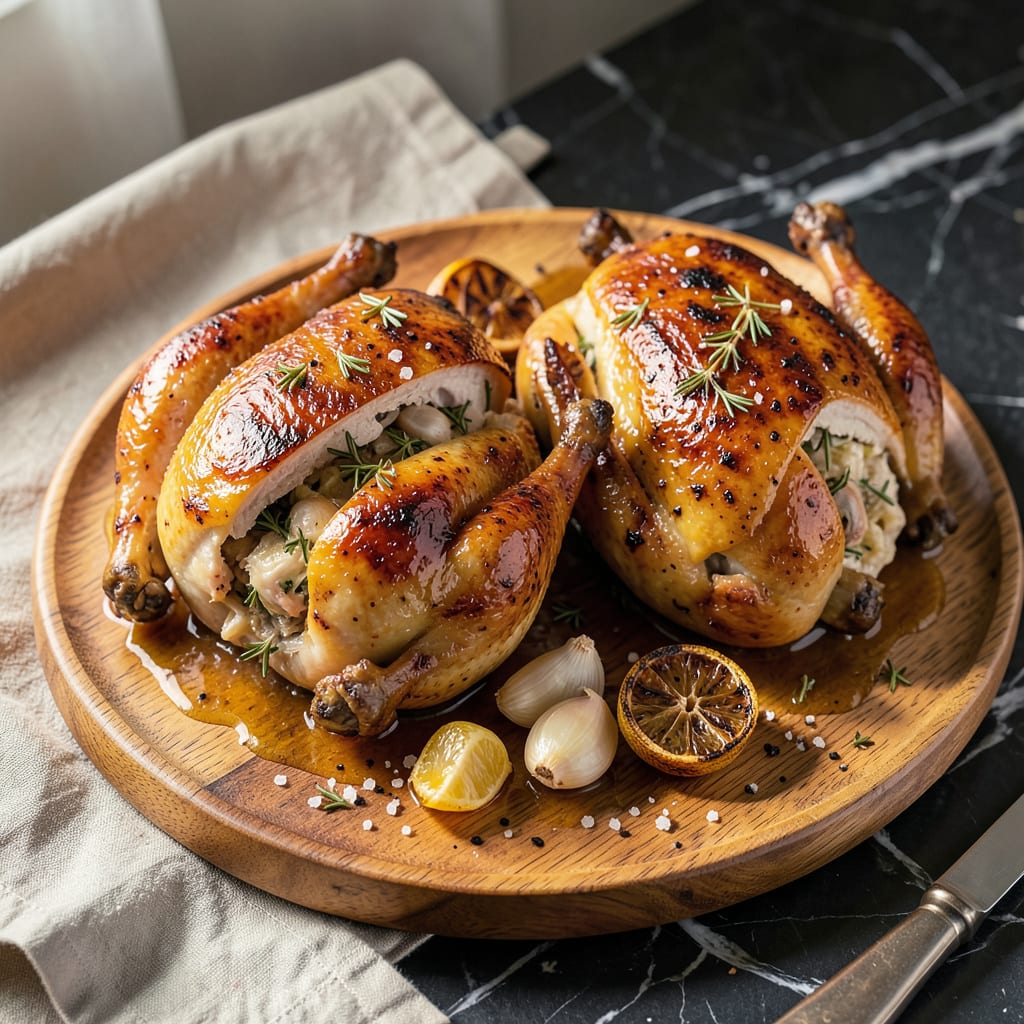
Achieving perfectly roasted Cornish hen with juicy meat and golden crispy skin requires precise technique, not luck. This method delivers restaurant-quality results through careful temperature control and strategic seasoning placement. The key lies in balancing high initial heat for crisping with gentle finishing heat to maintain moisture.
By mastering the timing—typically 50-60 minutes at 375°F with periodic basting—you’ll create hens with skin that shatters at first bite and meat that remains tender throughout. The technique ensures even cooking while preventing the dryness that plagues many home-roasted poultry dishes. Serve with simple sides to let the bird’s flavor shine.
Ingredients for Best Roasted Cornish Hen
Twelve precision ingredients transform Cornish hens into restaurant-quality centerpieces with shatteringly crisp skin and succulent meat.
| Ingredient | Amount | Notes |
|---|---|---|
| Cornish Game Hens 🍗 | 2 whole | 1-1.25 lbs each, thawed if frozen |
| Unsalted Butter 🧈 | 6 tbsp | Melted, divided for basting |
| Diamond Crystal Kosher Salt 🧂 | 1 ½ tsp | For even seasoning distribution |
| Freshly Ground Black Pepper 🌶️ | 1 tsp | Coarse grind preferred |
| Garlic Cloves 🧄 | 4 cloves | Minced to fine paste |
| Fresh Thyme Sprigs 🌿 | 6 sprigs | Divided for cavity and basting |
| Fresh Rosemary Sprigs 🌿 | 2 sprigs | 6-inch lengths, halved |
| Lemon 🍋 | 1 whole | Zested, then quartered for cavity |
| Yellow Onion 🧅 | 1 whole | Quartered for roasting base |
| Dry White Wine 🍷 | ½ cup | Sauvignon Blanc or Pinot Grigio |
| Low-Sodium Chicken Stock 💧 | ½ cup | For deglazing and moisture |
| Extra-Virgin Olive Oil 🫒 | 1 tbsp | For initial searing |
[recipeingredientscaler]
The hens are paramount—1-1.25 lb each ensures even cooking. Whole Foods or local butchers typically offer superior quality over standard grocery chains. For the butter, European-style (82% fat) provides better basting results than conventional. Diamond Crystal kosher salt is specified for its clean flavor and precise measurement; table salt would require halving quantities. Fresh herbs must be vibrant green with no wilting—supermarket herb packs often contain sufficient quantities for this preparation.
Substitutions require careful consideration. Dried thyme/rosemary at one-third volume may be used, though fresh delivers superior aroma. For alcohol-free preparation, substitute additional chicken stock plus 1 tbsp apple cider vinegar for the wine. Garlic powder (1 tsp) can replace fresh in emergencies, but lacks the aromatic complexity. The lemon may be omitted if unavailable, though its acidity balances the richness—consider adding 1 tsp white wine vinegar to the basting liquid as compensation.
Preparation timing is critical. Hens may be seasoned and refrigerated uncovered up to 12 hours prior to roasting (enhances skin crisping). Store fresh herbs wrapped in damp paper towels for 3-5 days. Leftover roasted hens keep 3 days refrigerated or 3 months frozen—carve before freezing for easier portioning. The rendered pan juices (after fat separation) freeze exceptionally well for 6 months as a flavor base.
Why You’ll Love This Recipe
- One Pan Magic: I love that this entire recipe happens on a single sheet pan—no juggling pots, no mountain of dishes. Just pat the hens dry, rub them with butter and crushed garlic, and let the oven do the work while you pour yourself a glass of wine.
- Butter-Garlic Goodness: The combo of melted butter, Diamond Crystal salt, and roasted garlic cloves makes the skin so crispy it crackles, while the meat stays juicy. Honestly, I’ve made this three times this month just for that first bite.
- Date Night or Tuesday: These little hens look fancy enough for a special occasion (hello, Valentine’s Day), but they’re unfussy enough for a weeknight when I’m craving something better than chicken breasts. My kids fight over the legs—yes, even on a Tuesday.
- Leftovers Worth Fighting For: Between us, I sometimes make an extra hen just for the next-day sandwiches. Shred the meat, slap it on crusty bread with a smear of mayo and arugula, and suddenly lunch feels like a luxury. (Also, two hens cost less than a rotisserie chicken at my grocery store.)
Step-by-Step Instructions for Roasted Cornish Hen
This method delivers perfectly crisp skin and tender meat through precise temperature control and strategic basting.
Step 1: Prepare the Hens for Even Cooking
Pat the Cornish game hens completely dry with paper towels, paying special attention to the cavity and under the wings. This critical step removes surface moisture that would otherwise steam the skin instead of allowing it to crisp. Season the cavity of each hen with ½ teaspoon Diamond Crystal kosher salt and ¼ teaspoon freshly ground black pepper, then stuff with 2 lemon quarters, 2 thyme sprigs, and half a rosemary sprig.
Truss the legs together with kitchen twine to maintain an even shape during roasting. This compact form promotes uniform cooking and prevents the delicate breast meat from drying out. Place the prepared hens on a wire rack set over a rimmed baking sheet to allow air circulation on all sides.
Step 2: Create the Aromatic Roasting Base
Quarter the yellow onion and arrange the pieces in the center of a roasting pan. Place the wire rack with hens over the onions, which will serve as both a flavor base and elevation to prevent steaming. Drizzle each hen with ½ tablespoon extra-virgin olive oil, rubbing it evenly over the skin to promote browning.
Zest the remaining lemon half and combine with the minced garlic, remaining 1 teaspoon kosher salt, and remaining ½ teaspoon black pepper. Gently loosen the skin over the breasts and rub this citrus-garlic paste directly onto the meat. This direct application ensures maximum flavor penetration while keeping the skin dry for optimal crisping.
Step 3: Roast Using the Reverse Sear Method
Position an oven rack in the lower third of the oven and preheat to 375°F. Roast the hens for 25 minutes, then carefully remove the pan and increase oven temperature to 425°F. Brush the hens with 2 tablespoons melted unsalted butter and return to the oven for an additional 20-25 minutes, basting every 8 minutes with the remaining butter.
The hens are done when an instant-read thermometer inserted into the thickest part of the thigh (avoiding bone) registers 165°F and the skin is deep golden brown and crisp to the touch. The juices should run clear when the thigh is pierced with a knife. Transfer the hens to a cutting board, leaving the onions and accumulated drippings in the pan.
Step 4: Develop the Pan Sauce
Place the roasting pan over medium heat on the stovetop. Add the dry white wine and deglaze the pan, scraping up all browned bits with a wooden spoon. Simmer for 2-3 minutes until the liquid reduces by half. Add the low-sodium chicken stock and remaining 2 thyme sprigs, then simmer for another 3-4 minutes until slightly thickened.
Strain the sauce through a fine-mesh sieve into a small bowl, pressing on the onions to extract maximum flavor. Discard the solids. The finished sauce should coat the back of a spoon lightly. Keep warm while the hens rest.
Step 5: Rest and Serve for Optimal Texture
Let the hens rest for 10 minutes before carving. This brief rest allows the juices to redistribute throughout the meat, ensuring each bite remains moist. The internal temperature will rise to 170°F during this time (carryover cooking), perfect for tender yet fully cooked meat.
To serve, remove the trussing and carve each hen in half lengthwise using poultry shears or a sharp chef’s knife. Arrange on warmed plates, spoon the pan sauce around (not over) to preserve the crisp skin, and garnish with any remaining lemon zest. The contrast between the crackling skin and succulent meat defines this preparation.
Best Sauces and Condiments for These Flavors
Classic Lemon-Herb Butter
The natural pairing for these hens is a lemon-herb butter that amplifies the existing flavors. Melt 4 tablespoons unsalted butter with 1 tablespoon lemon juice, 1 teaspoon lemon zest, and 1 tablespoon chopped fresh thyme. Drizzle this over carved hens just before serving—the acidity cuts through the richness beautifully. 💛
Garlic White Wine Sauce
For a more sophisticated option, reduce ½ cup dry white wine with 2 minced garlic cloves and ¼ cup chicken stock until syrupy. Whisk in 2 tablespoons cold butter off heat for a velvety finish. This sauce complements the hens’ crisp skin without overwhelming their delicate flavor.
Spicy Honey Glaze
If you love sweet-heat contrasts, warm 3 tablespoons honey with 1 teaspoon sriracha and ½ teaspoon smoked paprika. Brush lightly over the hens during the final 5 minutes of roasting. The glaze caramelizes beautifully while adding a subtle kick that balances the richness. 🔥
Creamy Dijon Pan Sauce
After removing the hens, deglaze the pan with ¼ cup white wine, then stir in 1 tablespoon Dijon mustard and 2 tablespoons heavy cream. Simmer until slightly thickened. This tangy sauce cuts through the fat while adding depth—perfect for those who prefer bolder flavors.
Fresh Herb Gremolata
For a bright, no-cook option, combine ¼ cup chopped parsley, 1 minced garlic clove, and 1 teaspoon lemon zest. Sprinkle this vibrant mix over carved hens just before serving. The freshness contrasts wonderfully with the rich, crispy skin.
Balsamic Reduction Drizzle
Simmer ½ cup balsamic vinegar with 1 teaspoon brown sugar until reduced by half and syrupy. Drizzle sparingly over plated hens—the acidity and sweetness create a sophisticated finish that elevates the entire dish. ✨
Nutrition Facts

- 6 Egg Cake Recipe with Oil: Light as Air With Buttery Moisture - October 4, 2026
- 4 Bean Casserole Recipe: One-Pan Heartiness With Smoky Paprika Depth - October 4, 2026
- 3-Ingredient Keto Mug Cake Recipe: Microwave Magic in 2 Minutes - October 4, 2026