
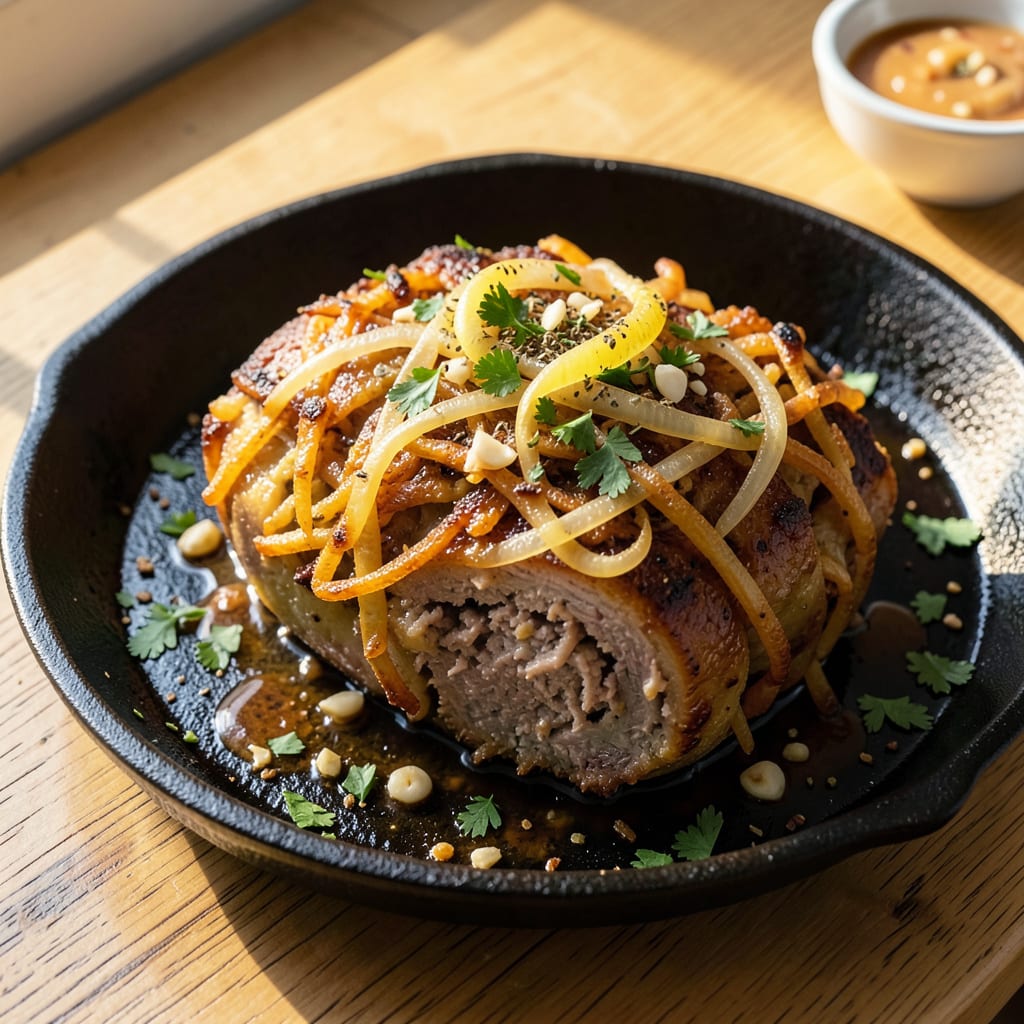
This Minnesota potato sausage delivers the kind of hearty comfort that defines Midwestern home cooking. Developed from German-American traditions, it combines simple ingredients—ground pork, potatoes, and warming spices—into a dish that’s become a staple at church suppers and family gatherings across the state.
The secret lies in the balance of textures and flavors: creamy potatoes contrast with savory pork, while onions and spices add depth. Whether pan-fried until golden or baked for convenience, these sausages offer satisfying, stick-to-your-ribs goodness that’s perfect for cold-weather meals. The result is a dish that tastes like home, no matter where you’re from.
Ingredients for Minnesota Potato Sausage
Pork, potatoes, and pantry spices—this is Midwestern comfort in its simplest, heartiest form.
| Ingredient | Amount | Notes |
|---|---|---|
| Ground Pork 🥩 | 2 lb | 80/20 fat ratio preferred |
| Russet Potatoes 🥔 | 2 lb | Peeled and finely shredded |
| Yellow Onion 🧅 | 1 whole | Finely diced for even distribution |
| Garlic Cloves 🧄 | 4 cloves | Minced for maximum flavor |
| Fresh Parsley 🌿 | ¼ cup | Chopped, for bright finish |
| Dried Marjoram 🌿 | 1 tsp | Key German-American spice |
| Ground Nutmeg 🌰 | ½ tsp | Freshly grated for warmth |
| Salt 🧂 | 1 ½ tsp | Diamond Crystal kosher salt |
| Black Pepper 🌶️ | 1 tsp | Freshly cracked for boldness |
| Large Eggs 🥚 | 2 whole | For binding the mixture |
| All-Purpose Flour 🌾 | ½ cup | For light texture |
| Whole Milk 🥛 | ¼ cup | Cold, for moisture balance |
| Unsalted Butter 🧈 | 2 tbsp | For pan-frying golden crust |
| Neutral Oil 🫒 | 2 tbsp | Vegetable or canola for baking |
[recipeingredientscaler]
The pork is everything here. 80/20 ground pork gives you that perfect juicy texture without being greasy. I grab mine from local butchers when possible—ask for coarse grind if you’re having them do it fresh. Russet potatoes are non-negotiable (their starch holds everything together), and shred them yourself—pre-shredded gets gummy. For the marjoram, Penzeys has the freshest I’ve found, but any decent grocery store brand works in a pinch. The nutmeg should be fresh-grated; that pre-ground stuff tastes like dust.
No marjoram? Dried thyme at half the amount gets you close. Out of fresh parsley? Dried works at one-third the quantity, though it won’t have that bright finish. If you’re avoiding pork, ground turkey thigh (not breast) is the best sub—just add an extra tablespoon of oil to compensate. The eggs are mostly for binding, so flax eggs (1 tbsp ground flax + 3 tbsp water per egg) work if you need that swap. For the milk, any dairy or unsweetened plant milk does the job.
This mixture keeps beautifully. Shape into patties, wrap individually in parchment, then freeze for up to 3 months. Cooked sausages reheat well—5 days in the fridge, just warm them gently in a skillet to crisp the edges again. The raw mixture can sit overnight before cooking (actually improves the flavor). For church supper quantities, double the batch—these disappear fast.
Why You’ll Love This Recipe
- One-Pan Magic: I love that everything—browned pork, tender potatoes, caramelized onions—cooks together in a single skillet. No extra bowls, no fuss, just dump-and-stir simplicity with minimal cleanup.
- That Garlicky Crisp: Here’s what sold me—the way the garlic and parsley toast in the pork fat while the potatoes get golden edges. It’s the kind of bite that makes you pause mid-meal and think, “Yep, nailed it.”
- Breakfast or Dinner? Yes.: This is my go-to for weekend brunches (with eggs) or rushed weeknight dinners (over toast). Honestly, it’s the only recipe I make for both that doesn’t feel like a compromise.
- Stretches Like a Dream: A pound of pork and a few potatoes feed my family of four with leftovers for lunch. Between us, it’s the rare dish that’s both budget-friendly and actually filling—no sad, skimpy portions here.
Step-by-Step Instructions for Minnesota Potato Sausage
Here’s how to transform simple ingredients into that hearty, comforting sausage your family will crave.
Step 1: Prepare the Potato Base
Start by peeling and finely shredding the 2 lb Russet Potatoes using the large holes of a box grater. I like to work quickly here—potatoes oxidize fast. Immediately transfer them to a clean kitchen towel and squeeze out all excess moisture. This step is crucial for preventing soggy sausage.
In a large skillet, heat the 2 tbsp Neutral Oil over medium heat. Add the shredded potatoes and cook for 8-10 minutes, stirring occasionally, until they’re light golden brown and tender. You’re looking for that perfect balance where they’re cooked through but still hold their shape. Transfer to a large mixing bowl to cool slightly.
Step 2: Build the Flavor Foundation
While the potatoes cool, finely dice the 1 whole Yellow Onion and mince the 4 cloves Garlic Cloves. In the same skillet (no need to clean it—those browned bits add flavor), melt the 2 tbsp Unsalted Butter over medium-low heat. Add the onion and cook for 5-6 minutes until translucent and sweet-smelling.
Add the minced garlic and cook for just 30 seconds until fragrant—don’t let it brown. Stir in the 1 tsp Dried Marjoram and 0.5 tsp Ground Nutmeg, toasting them for 15 seconds to wake up their flavors. Scrape this aromatic mixture into the bowl with the potatoes.
Step 3: Combine and Bind the Mixture
To the potato-onion mixture, add the 2 lb Ground Pork, 1.5 tsp Salt, and 1 tsp Black Pepper. Use your hands to gently but thoroughly mix everything together. The pork should be evenly distributed throughout the potato mixture. Now make a well in the center and add the 2 whole Large Eggs, 0.5 cup All-Purpose Flour, and 0.25 cup Whole Milk.
Mix again until just combined—you want everything cohesive but don’t overwork it. The mixture should hold together when pressed but still feel slightly loose. I like to test this by forming a small patty—if it holds its shape when gently pressed, you’re good to go. Fold in the 0.25 cup Fresh Parsley at the very end to preserve its bright color.
Step 4: Form and Cook the Sausage Patties
Divide the mixture into 12 equal portions (about ½ cup each) and shape them into 3-inch patties, about ¾-inch thick. Don’t compact them too tightly—you want some texture. Heat a large skillet over medium heat and add just enough of the remaining neutral oil to lightly coat the bottom.
Cook the patties in batches for 4-5 minutes per side until they’re deep golden brown and the internal temperature reaches 160°F. You’ll know they’re ready when they’re crispy on the outside but still juicy inside. Transfer to a paper towel-lined plate to drain briefly before serving. The aroma alone will have everyone gathering at the table.
Troubleshooting This Recipe
Mixture Too Wet
If your sausage mixture feels overly sticky or won’t hold shape, you likely need to adjust the moisture. First, try squeezing out more liquid from the shredded potatoes using a clean kitchen towel—this is the most common culprit. If that doesn’t help, add 1-2 tbsp more all-purpose flour and mix gently. I’ve found that instant potato flakes work in a pinch too—just ¼ cup should do it. 💡
Patties Falling Apart
When patties crumble during cooking, it’s usually an egg issue. Make sure you’re using large eggs (not jumbo or small) for proper binding. If you’re still having trouble, chill the formed patties for 30 minutes before cooking—this helps them firm up. Another trick: press a dry breadcrumb coating onto each side before frying for extra structure.
Uneven Browning
For that perfect golden crust, your pan needs to be at the right temperature. Heat your skillet over medium heat for 2 full minutes before adding oil, then wait another 30 seconds before placing patties. If your first batch browns unevenly, don’t move them around—let them develop a crust for 3 full minutes before checking. A cast iron skillet gives the most even heat distribution.
Dry or Dense Texture
Overmixing is the usual suspect here. Once you add the pork and wet ingredients, mix just until combined—about 15-20 gentle folds with your hands. If your cooked sausages still feel dry, try adding 2 tbsp more milk to the raw mixture next time. For existing patties, serve with a simple pan gravy: deglaze your skillet with ½ cup beef broth and reduce by half. ✨
Potatoes Turn Gray
This oxidation happens fast with raw potatoes. Work quickly after shredding, or place them in a bowl of cold water with 1 tbsp lemon juice while prepping other ingredients. If you’re making large batches, shred the potatoes last and keep them covered with a damp towel. The acid in the lemon won’t affect flavor but preserves that clean white color we all want in our finished sausages.
Undercooked Centers
If your patties brown beautifully but stay raw inside, they’re likely too thick. Aim for ¾-inch thickness maximum. For thicker patties, finish them in a 350°F oven for 8-10 minutes after browning. Always use a meat thermometer—160°F internal temperature is your target. I keep a ThermoWorks Thermapen handy for instant, accurate reads every time.
Nutrition Facts

- 6 Egg Cake Recipe with Oil: Light as Air With Buttery Moisture - October 4, 2026
- 4 Bean Casserole Recipe: One-Pan Heartiness With Smoky Paprika Depth - October 4, 2026
- 3-Ingredient Keto Mug Cake Recipe: Microwave Magic in 2 Minutes - October 4, 2026