
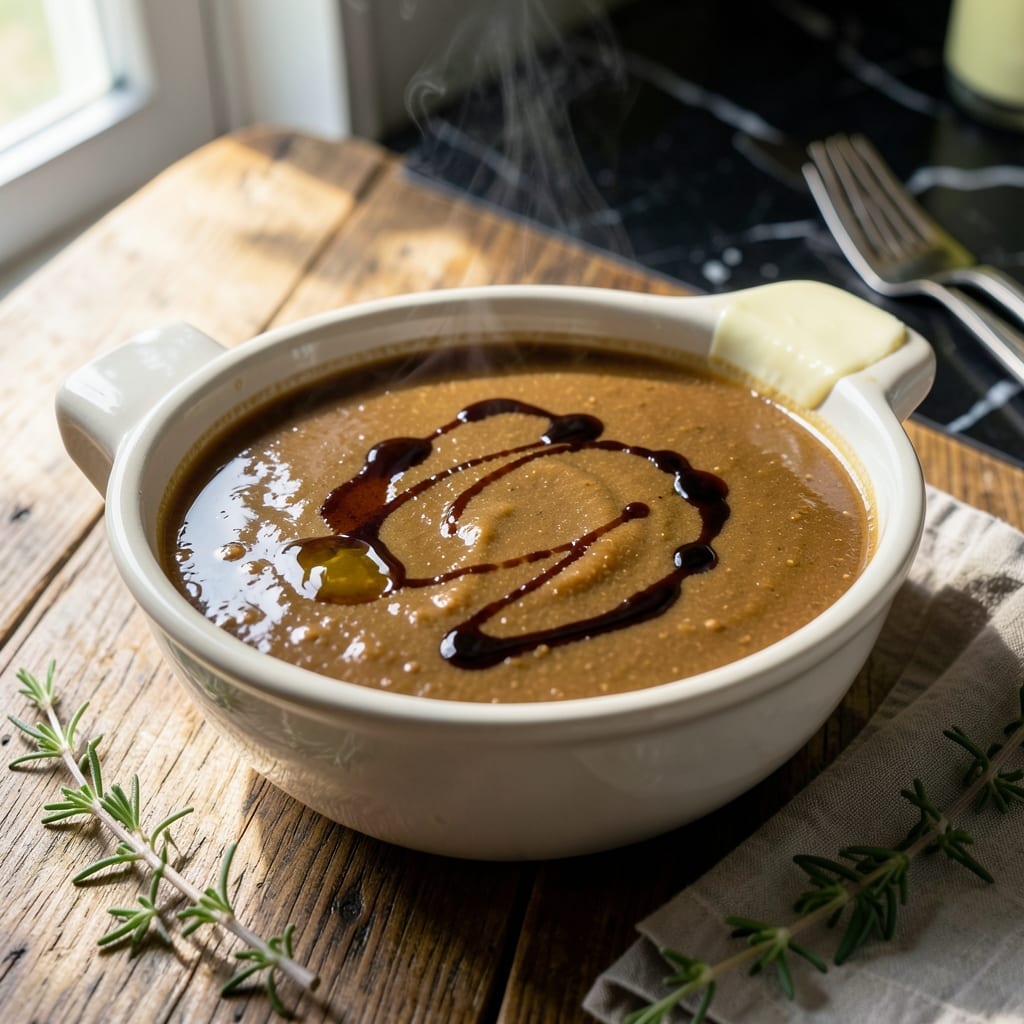
This gravy delivers restaurant-quality depth with minimal effort, using Better Than Bouillon as the flavor foundation. The concentrated base eliminates the need for long simmering while still producing a rich, savory result.
By whisking the bouillon paste into hot liquid and thickening with a simple roux, you create a velvety sauce that clings perfectly to mashed potatoes or roasted meats. The process takes less than 10 minutes from start to finish.
What sets this apart is its balanced umami character—neither too salty nor one-dimensional. The gravy maintains a smooth consistency that reheats beautifully, making it ideal for meal prep.
Store leftovers in an airtight container in the refrigerator for up to 5 days, or freeze for longer storage. Reheat gently to preserve the silky texture.
Ingredients for Better Than Bouillon Beef Gravy
Ten simple ingredients for rich, velvety gravy in under ten minutes flat.
| Ingredient | Amount | Notes |
|---|---|---|
| Better Than Bouillon Beef Base 🥩 | 2 tbsp | Concentrated paste, not powder |
| Beef Broth 🍲 | 2 cups | Low-sodium preferred for control |
| Unsalted Butter 🧈 | 3 tbsp | For roux base |
| All-Purpose Flour 🌾 | 3 tbsp | Thickening agent for roux |
| Worcestershire Sauce 💧 | 1 tsp | Adds depth to umami profile |
| Soy Sauce 🫒 | ½ tsp | Enhances savory complexity |
| Garlic Powder 🧄 | ½ tsp | Fine grind for even distribution |
| Onion Powder 🧅 | ½ tsp | Balances flavor foundation |
| Black Pepper 🌶️ | ½ tsp | Freshly ground preferred |
| Dried Thyme 🌿 | ¼ tsp | Earthy note for depth |
The bouillon base is non-negotiable here—Better Than Bouillon has the depth that powdered versions lack. Grab the beef flavor (the jar, not the little tubs). Most grocery stores carry it near the broth section. The butter needs to be unsalted so you control the seasoning. For the broth, low-sodium is key—you’re building layers, not just saltiness.
Out of Worcestershire? Fish sauce at half the amount works, or just skip it—the bouillon carries the umami. No thyme? Dried rosemary at the same quantity gives a different but still good earthy note. The flour can be swapped for cornstarch (use 1 tbsp less), but the roux gives a richer texture. For gluten-free, rice flour works in a pinch.
Gravy thickens as it cools, so don’t panic if it seems thin. Stores 5 days in the fridge, 3 months frozen. Reheat on low with a splash of broth to bring it back to life—high heat breaks the sauce.
Why You’ll Love This Recipe
- One Pot Wonder: I just melt butter, whisk in flour, and let the Better Than Bouillon and Worcestershire do the heavy lifting.
- Deep Umami: That beef base plus Worcestershire gives it a rich, savory punch my old gravy never had.
- Sunday Roast Rescue: Drizzle over mashed potatoes, meatloaf, or even a humble grilled cheese and suddenly it’s a meal.
- Pantry Staples: I always have these ingredients on hand, so I can make it whenever a gravy craving hits.
Step-by-Step Instructions for Better Than Bouillon Beef Gravy
Master the roux technique and you’ll have silky, rich gravy with layers of savory depth.
Step 1: Create the Roux Base
Melt all 3 tbsp Unsalted Butter in a heavy saucepan over medium heat. The butter should foam but not brown—this is the perfect temperature for building your roux.
Once melted, add all 3 tbsp All-Purpose Flour at once. Whisk constantly for 2-3 minutes until the mixture turns a light golden color and smells slightly nutty. This cooking process removes the raw flour taste and creates the foundation for your gravy.
Watch carefully—if it browns too quickly, reduce heat. The roux should look like wet sand and bubble gently. This step is crucial for achieving that velvety texture.
Step 2: Gradually Add the Liquid
Slowly pour in all 2 cups Beef Broth, whisking continuously to prevent lumps. I add it in a thin stream while keeping the whisk moving in a circular motion. The mixture will thicken immediately.
Now whisk in the 2 tbsp Better Than Bouillon Beef Base until completely dissolved. The concentrated paste will deepen the color and enhance the beef flavor exponentially. Keep the heat at medium—you want a gentle simmer, not a boil.
Cook for 3-4 minutes until the gravy begins to thicken and coats the back of a spoon. You’ll notice it transforming from a thin liquid to a luscious, silky consistency.
Step 3: Build Flavor Complexity
Stir in the 1 tsp Worcestershire Sauce and 0.5 tsp Soy Sauce. These umami powerhouses add depth that plain beef broth alone can’t achieve. The gravy will darken slightly as the sauces incorporate.
Add the 0.5 tsp Garlic Powder, 0.5 tsp Onion Powder, 0.5 tsp Black Pepper, and 0.25 tsp Dried Thyme. Whisk well to distribute the spices evenly. Each addition should be fully incorporated before adding the next.
Simmer for another 2-3 minutes to allow the flavors to meld together. You’ll smell the aromatic spices blooming—this is when you know the gravy is developing its full character.
Step 4: Achieve Perfect Consistency
Reduce heat to low and let the gravy simmer for 5 minutes. Stir occasionally to prevent a skin from forming on the surface. The gravy should be thick enough to coat the back of a spoon but still pourable.
If it’s too thick, whisk in a splash of warm water, 1 tbsp at a time, until it reaches your desired consistency. If it’s too thin, simmer for another 2-3 minutes to reduce further. The perfect gravy should ripple when poured.
Taste and adjust seasoning if needed, though the Better Than Bouillon Beef Base typically provides enough salt. The flavor should be rich, savory, and well-balanced with no raw flour taste.
Pro Tips For Making Better Than Bouillon Beef Gravy
- Whisk the Roux: Cook the butter and flour over medium heat for a full 2-3 minutes until golden—this builds the base flavor that makes the gravy taste rich, not raw.
- Dissolve the Base First: Mix the Better Than Bouillon with the beef broth before adding it to the roux, or you’ll end up with clumps that never fully dissolve.
- Simmer, Don’t Boil: Once the gravy thickens, keep it at a gentle simmer—boiling hard breaks the emulsion and turns it thin and greasy.
- Add Worcestershire Last: Stir in the Worcestershire at the end so its tangy depth shines through without overpowering the beefy base.
Common Mistakes When Making Great better than bouillon beef gravy
Over-Salting the Gravy
Better Than Bouillon is already quite salty, so I always use low-sodium beef broth as my base. If you use regular broth, taste carefully before adding any extra salt. You can always add more, but you can’t take it out once it’s in there. 💡
Lumpy Roux Problems
When adding flour to melted butter, whisk immediately and constantly for 2-3 minutes. If you see lumps forming, don’t panic—just keep whisking vigorously. The key is adding the flour all at once, not gradually, to prevent clumping.
Boiling the Gravy
Never let your gravy reach a full boil after adding the liquid. Keep it at a gentle simmer over medium heat to prevent breaking the sauce. High heat can cause the proteins to separate, giving you a thin, greasy gravy instead of a velvety one.
Skipping the Cook Time
Even though the roux thickens quickly, give it 5 minutes of simmering time after adding all ingredients. This allows the raw flour taste to cook out completely and lets the flavors meld together properly.
Inconsistent Whisking
Whisk continuously while adding the broth to prevent lumps. I use a flat whisk for better contact with the pan bottom. If lumps do form, strain the gravy through a fine-mesh sieve before serving. ✨
Over-Thickening Too Soon
Gravy continues to thicken as it cools. If it seems too thick while hot, it will likely be perfect once it reaches serving temperature. Only adjust consistency at the very end of cooking.
Nutrition Facts
Frequently Asked Questions
Can I use chicken bouillon instead?
Yes, but the flavor will be milder and less beefy. For best results, stick with beef base. If using chicken, add an extra 0.5 tsp soy sauce to boost umami.
How do I fix gravy that’s too thin?
Mix 1 tbsp flour with 1 tbsp cold water to make a slurry, then whisk into simmering gravy. Cook for 2-3 minutes until thickened.
Can this gravy be made gluten-free?
Easily! Replace all-purpose flour with rice flour or cornstarch. Use the same amount, but whisk extra carefully to prevent clumping.
Why does my gravy taste floury?
It likely didn’t cook long enough. Ensure your roux reaches a light golden color and simmer the gravy for a full 5 minutes to cook out the raw flour taste.

- 6 Egg Cake Recipe with Oil: Light as Air With Buttery Moisture - October 4, 2026
- 4 Bean Casserole Recipe: One-Pan Heartiness With Smoky Paprika Depth - October 4, 2026
- 3-Ingredient Keto Mug Cake Recipe: Microwave Magic in 2 Minutes - October 4, 2026