
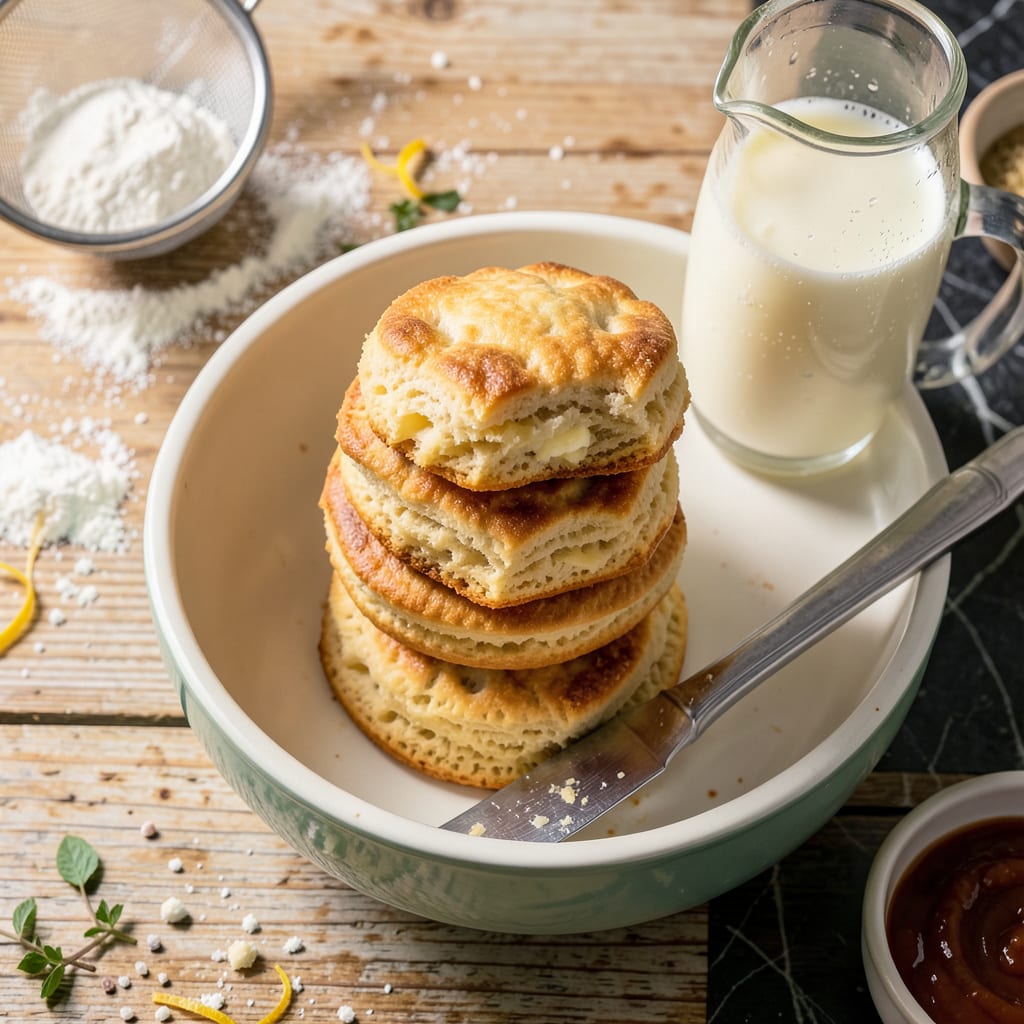
Since 1966, Biscuitville has perfected the art of Southern biscuits—tall, golden, and impossibly flaky with layers that peel apart at the slightest touch. This recipe replicates their signature technique, focusing on cold ingredients and minimal handling to preserve that delicate texture. The secret lies in the balance of buttermilk for tang and high-fat butter for richness, creating a biscuit that’s both tender and sturdy enough for gravy or fried chicken.
What sets these apart is the method: cutting frozen butter into flour ensures pockets of steam that lift the dough, while folding creates those iconic layers. Baked at high heat, they rise dramatically and develop a golden crust that gives way to a soft, buttery interior. Serve warm with honey or as the foundation for a hearty breakfast sandwich—this is Southern comfort at its finest.
Ingredients for Biscuitville Biscuit
Seven essential ingredients create these legendary flaky, buttery Southern biscuits with signature layered texture.
| Ingredient | Amount | Notes |
|---|---|---|
| All-Purpose Flour 🌾 | 2 ½ cups | Plus extra for dusting |
| Baking Powder 🧂 | 1 tbsp | Aluminum-free preferred |
| Baking Soda 🧂 | ½ tsp | Ensures proper rise |
| Salt 🧂 | 1 tsp | Fine sea salt recommended |
| Unsalted Butter 🧈 | ½ cup | Frozen, cut into cubes |
| Buttermilk 🥛 | 1 cup | Cold, full-fat preferred |
| Honey 🍯 | 1 tbsp | Optional, for brushing |
The butter quality is paramount for authentic Biscuitville texture. European-style unsalted butter (like Plugrá or Kerrygold) delivers superior fat content for flakiness. Freeze it overnight and cut into precise 1/4-inch cubes—this ensures even distribution during the folding process. The buttermilk must be full-fat (2% won’t yield the same tenderness). For professional results, measure flour by weight (300g for 2.5 cups) to avoid density variations that affect rise.
No buttermilk? Combine 1 cup whole milk with 1 tbsp lemon juice, let sit 10 minutes. For butter substitutes, vegetable shortening works but sacrifices flavor complexity. The baking powder must be fresh—test by dropping 1 tsp in hot water; if it fizzes vigorously, it’s active. Honey can be replaced with melted butter for brushing, though it won’t provide the same subtle sweetness. All ingredients should be ice-cold to prevent premature butter melting during handling.
Prepare ingredients immediately before mixing—cut butter last to maintain its frozen state. Dough keeps 24 hours refrigerated (wrap tightly) or 3 months frozen (portion first). Baked biscuits are best consumed within 2 days but reheat beautifully at 350°F for 5-7 minutes. For make-ahead convenience, freeze unbaked biscuits on a tray before transferring to bags; bake directly from frozen adding 2-3 minutes.
Why You’ll Love This Recipe
- One-Bowl Wonder: I swear by this recipe on hectic mornings—just dump, stir, and cut. No fancy tools, no extra bowls, and the butter melts right into the flour like it’s supposed to. Honestly, cleanup is faster than the biscuits disappear.
- That Buttery Crunch: The cold butter folded into the flour creates these little pockets of crispy, flaky layers. First bite? Warm, salty, and so rich you’ll forget store-bought exists. My kid skips the jam and eats them plain—that’s how good they are.
- Breakfast or Dinner: I’ve served these with sausage gravy at 7 AM and alongside fried chicken at 7 PM. They’re just as happy soaking up eggs as they are holding a slice of ham. Between us, they’re the reason my meal prep feels like a win every time.
- Freezer-Friendly Lifesaver: Double the batch, freeze the extras, and thank yourself later. Pop them straight from the freezer into the oven—they rise just as high, taste just as fresh. Saved me more times than I’ll admit when unexpected guests showed up.
Step-by-Step Instructions for Biscuitville Biscuits
Mastering these biscuits requires precision in technique and attention to detail at each stage.
Step 1: Prepare the Dry Ingredients
In a large mixing bowl, whisk together the 2.5 cups All-Purpose Flour, 1 tbsp Baking Powder, 0.5 tsp Baking Soda, and 1 tsp Salt until thoroughly combined. I use a fine-mesh sieve to ensure there are no lumps in the flour mixture, which guarantees even distribution of leavening agents throughout the dough.
The key to achieving those signature flaky layers starts here—properly aerated dry ingredients create the foundation for a light, airy texture. Make sure your baking powder is fresh; old baking powder loses its potency and won’t give you the proper rise. I always check the expiration date before beginning.
Step 2: Incorporate the Cold Butter
Add the 0.5 cup Unsalted Butter (frozen and cut into small cubes) to the dry ingredients. Using a pastry cutter or your fingertips, work the butter into the flour mixture until it resembles coarse crumbs with pea-sized butter pieces visible. This step is critical—you want to maintain small butter pockets that will create steam during baking, resulting in those coveted flaky layers.
Be careful not to overwork the mixture or let the butter warm up. The butter should remain cold and solid; if it starts to soften or melt, place the bowl in the refrigerator for 10 minutes before proceeding. I find that working quickly and using the tips of my fingers (rather than palms) helps maintain the butter’s temperature.
Step 3: Form and Cut the Dough
Create a well in the center of your flour-butter mixture and pour in the 1 cup Buttermilk. Using a wooden spoon or silicone spatula, gently fold the ingredients together just until the dough comes together. The mixture will be shaggy and slightly sticky—that’s exactly what you want. Overmixing develops gluten, which leads to tough biscuits rather than tender ones.
Turn the dough onto a lightly floured surface and gently pat it into a 1-inch thick rectangle. Avoid using a rolling pin, as this compresses the layers. Instead, use your hands to shape the dough, folding it over itself once or twice to create additional layers. Cut the biscuits using a 2.5-inch round cutter, pressing straight down without twisting—twisting seals the edges and prevents proper rising.
Step 4: Bake to Golden Perfection
Arrange the biscuits on a parchment-lined baking sheet so they’re just touching each other—this helps them rise upward rather than spreading outward. Place the baking sheet in a preheated 425°F oven and bake for 12-15 minutes, or until the biscuits are golden brown on top and the layers are clearly visible.
Resist the temptation to open the oven during baking. The initial burst of heat is crucial for creating that dramatic rise. You’ll know they’re done when the tops are golden and the internal temperature reaches 200°F. For an extra touch of sweetness and shine, I brush the warm biscuits with the 1 tbsp Honey diluted in 1 teaspoon of warm water immediately after removing them from the oven.
Wine and Beer Pairings for These Flavors
Classic Sweet Tea
There’s nothing more Southern than pairing these buttery biscuits with a glass of iced sweet tea. The tea’s crisp, slightly tannic bite cuts through the richness while its sweetness complements the honey glaze. I brew mine strong with Luzianne tea bags and sweeten with 1 cup sugar per gallon—just like my grandmother taught me. 🍹
Craft Beer Pairings
A malty amber ale or brown ale makes an excellent match, with caramel notes that echo the biscuit’s buttery layers. My go-to is SweetWater Georgia Brown from Atlanta—its toasty malt profile and subtle hop bitterness balance the richness perfectly. For a local touch, try Biscuitville’s own brew if available in your area.
Light Lager Options
When you want something crisp and refreshing, a pilsner or Helles lager works beautifully. The clean, slightly bitter finish cleanses your palate between bites. I particularly enjoy Victory Prima Pils with its herbal hop character that doesn’t overpower the delicate biscuit flavors. Serve it ice-cold in a frosted mug for the full experience.
Fruit-Forward Wines
For wine lovers, a semi-dry Riesling from the Finger Lakes region offers bright acidity and stone fruit notes that pair surprisingly well. The wine’s natural sweetness mirrors the honey glaze while its acidity cuts through the butter. Dr. Konstantin Frank Riesling is my top pick—its peach and apricot flavors make each bite taste even better.
Coffee Complements
A strong black coffee or cold brew makes an excellent non-alcoholic pairing, especially for breakfast. The coffee’s bitterness contrasts beautifully with the biscuit’s richness. I recommend Counter Culture Coffee‘s Hologram blend—its chocolatey notes and bright acidity create a perfect balance. Add a splash of cream if you prefer a milder profile.
Chocolate Milk Twist
For a nostalgic treat, serve these biscuits with a glass of chocolate milk. The combination reminds me of childhood breakfasts at my grandmother’s house. Use whole milk and 2 tbsp cocoa powder per cup, sweetened to taste. The chocolate enhances the buttery notes while the milk’s creaminess makes each bite even more indulgent. 🥛
Nutrition Facts
Frequently Asked Questions
Why is cold butter so important for flaky layers?
Cold butter creates steam pockets during baking, which separate the dough into distinct layers. When butter melts too early, it absorbs into the flour instead of forming those signature flakes. Keep everything ice-cold until the biscuits hit the oven for maximum rise.
Can I substitute regular milk for buttermilk?
Buttermilk’s acidity is key for tender texture and tangy flavor. In a pinch, mix 1 cup whole milk with 1 tbsp lemon juice or vinegar, then let sit 10 minutes before using. The reaction mimics buttermilk’s properties.
Why do my biscuits spread instead of rising tall?
Overhandling the dough or using warm ingredients causes spreading. Pat the dough to 1-inch thickness and cut with a sharp cutter—don’t twist! Arrange biscuits so they just touch on the baking sheet to encourage upward rise.
How do I reheat leftovers without drying them out?
Wrap biscuits in foil and warm at 350°F for 5-7 minutes. For extra moisture, place a damp paper towel inside the foil. Avoid microwaving—it makes them rubbery. Freshly reheated biscuits taste almost as good as day-one!
What’s the secret to that golden crust?
Brush tops with melted butter or honey wash before baking, then broil 1-2 minutes at the end. The high heat caramelizes sugars for that perfect golden sheen. Watch closely to avoid burning!

- 6 Egg Cake Recipe with Oil: Light as Air With Buttery Moisture - October 4, 2026
- 4 Bean Casserole Recipe: One-Pan Heartiness With Smoky Paprika Depth - October 4, 2026
- 3-Ingredient Keto Mug Cake Recipe: Microwave Magic in 2 Minutes - October 4, 2026