
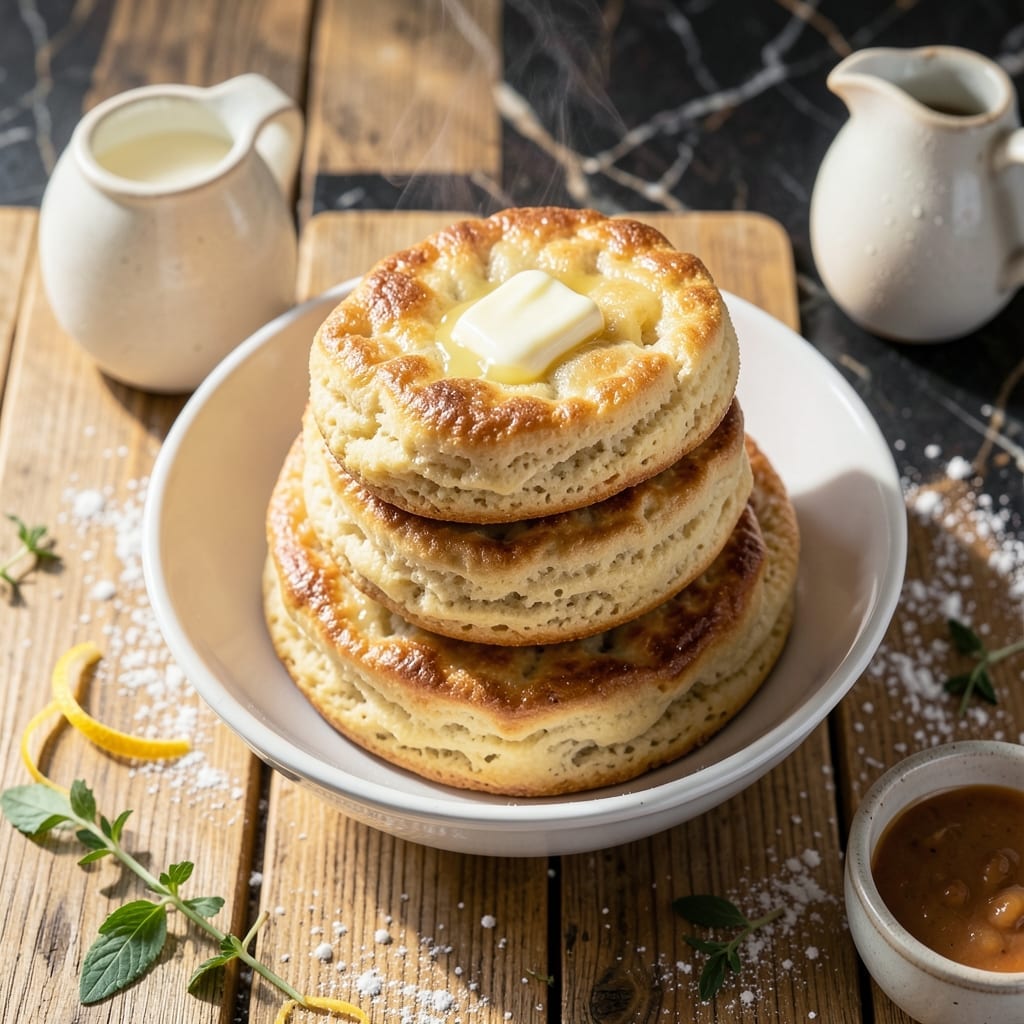
I’ve spent years chasing that perfect Southern biscuit—tall, flaky, and buttery enough to make you weak in the knees. This recipe finally nails it without fancy techniques or hard-to-find ingredients.
The secret is cold butter and a gentle touch. Overworking the dough kills those layers, so I keep it light and let the butter do the magic. A hot oven finish ensures they rise just right.
What comes out are golden biscuits with a crisp top and tender, flaky insides that split open like a dream. They’re the kind that disappear faster than you can butter them.
Perfect for breakfast, dinner, or just because. Here’s how to make them at home.
Ingredients for Biscuitville
Pantry staples plus cold butter and buttermilk make these dreamy layers happen.
| Ingredient | Amount | Notes |
|---|---|---|
| All-Purpose Flour 🌾 | 2 cups | Sifted for lightness |
| Baking Powder 🧂 | 1 tbsp | Fresh for best rise |
| Granulated Sugar 🍚 | 1 tbsp | Balances the flavors |
| Salt 🧂 | 1 tsp | Fine sea salt preferred |
| Unsalted Butter 🧈 | ½ cup | Ice cold, cubed |
| Buttermilk 🥛 | ¾ cup | Cold, full-fat for richness |
| Baking Soda 🧂 | ½ tsp | Helps with lift |
| Shortening 🧈 | 2 tbsp | For extra flakiness |
The butter needs to stay cold—cube it and chill the bowl too. I use Land O’Lakes for unsalted butter, but any good brand works. King Arthur Flour is my go-to for all-purpose, but store brands are fine. The buttermilk should be thick and tangy; if yours is thin, add a splash of lemon juice to wake it up (yes, that’s a real trick).
No buttermilk? Plain yogurt thinned with milk works in a pinch. Shortening can be swapped for more butter if you prefer (use an extra 2 tbsp). Self-rising flour can replace all-purpose if you skip the baking powder and salt—just use 2 cups and reduce buttermilk to 2/3 cup. The sugar can be omitted, but it really balances the richness.
Biscuits are best the day they’re made, but they’ll keep 2-3 days in an airtight container. Reheat in a 350°F oven for 10 minutes to revive the flakiness. Freeze unbaked biscuits on a tray, then transfer to a bag—they’ll bake straight from frozen, just add 5 minutes.
Why You’ll Love This Recipe
- Minimal Effort: I mix the dry ingredients, cut in the butter, and they’re in the oven before the coffee brews.
- Buttery Layers: The unsalted butter creates flaky, melt-in-your-mouth layers with just the right hint of sweetness.
- Breakfast to Dinner: Honestly, these biscuits work with sausage gravy at dawn or as a side to fried chicken at night.
- Pantry Staples: All-purpose flour and baking powder mean I can make these anytime without a special grocery trip.
Step-by-Step Instructions for Flaky Southern Biscuits
Here’s my method for achieving those perfect layers everyone loves.
Step 1: Combine Dry Ingredients
In a large bowl, whisk together the 2 cups All-Purpose Flour, 1 tbsp Baking Powder, 1 tbsp Granulated Sugar, 1 tsp Salt, and 0.5 tsp Baking Soda. I like to sift the flour first for extra lightness, but whisking well works too.
Make sure there are no lumps in the flour mixture. The baking powder and baking soda need to be evenly distributed to ensure a consistent rise. This dry mix is your foundation for flaky layers.
Step 2: Cut in Cold Fats
Add the 0.5 cup Unsalted Butter (cubed and ice cold) and 2 tbsp Shortening to the dry ingredients. Using a pastry cutter or two forks, work the fats into the flour until the mixture resembles coarse crumbs with pea-sized pieces of butter visible.
Here’s the thing—the butter and shortening must stay cold. If they melt, you’ll lose the flakiness. I pop my bowl in the freezer for 2 minutes between cuts if my kitchen is warm.
Step 3: Add Buttermilk and Mix Gently
Create a well in the center of the flour mixture and pour in the 0.75 cup Buttermilk. Using a wooden spoon or silicone spatula, stir just until the dough comes together. It will look shaggy—that’s perfect.
Don’t overwork it. Overmixing develops gluten, which makes biscuits tough instead of tender. I count my strokes—about 10-12 should do it. The dough should be sticky but manageable.
Step 4: Fold and Turn for Layers
Turn the dough onto a lightly floured surface and pat it into a 1-inch thick rectangle. Fold the dough in half like a book, then turn it 90 degrees and fold again. Repeat this process 3 times total.
This folding creates layers in your biscuits. Each fold and turn builds another flaky stratum. If the dough gets too warm during this process, chill it for 5 minutes between folds.
Step 5: Cut and Bake to Golden Perfection
Pat the dough to ¾-inch thickness and cut with a 2.5-inch biscuit cutter. Press straight down—don’t twist, as this seals the edges and prevents rising. Place the biscuits on a baking sheet so they’re touching (this helps them rise up, not out).
Bake at 450°F for 12-15 minutes until the tops are golden brown. Rotate the pan halfway through for even browning. The biscuits should be tall with distinct layers when you pull them apart.
Pro Tips For Making Biscuitville
- Chill the Butter: Cut your unsalted butter into small cubes and refrigerate for 20 minutes before mixing—I learned this the hard way after my first few batches spread flat in the oven.
- Measure Flour Right: Spoon your all-purpose flour into the measuring cup and level it off, never pack it down. My grandmother swore by this, and her biscuits were always light as air.
- Skip Overmixing: Stir the dough just until it comes together, even if it looks shaggy. After tough, dense biscuits three times in a row, I finally realized I was overworking the gluten.
- Use Cold Oven: Sounds weird, but it works: put your biscuits in the oven as it preheats. This gives them a gradual rise and prevents that sad, flat bottom I used to get.
Serving Suggestions for This Recipe
Classic Breakfast Pairing
Split these warm biscuits open and tuck in scrambled eggs with sharp cheddar cheese. Add a slice of crispy bacon or country ham for that authentic Southern touch. I drizzle with hot honey for a sweet-spicy kick. 💛
Gravy Essentials
You can’t go wrong with sausage gravy—brown ½ lb breakfast sausage, sprinkle with 2 tbsp flour, then whisk in 2 cups whole milk. Pour generously over split biscuits. The gravy soaks into those flaky layers beautifully.
Sweet Indulgences
For a treat, serve with strawberry jam and whipped butter. I also love a biscuit sandwich with fried apples—sauté thin slices with 2 tbsp brown sugar and 1 tsp cinnamon until tender.
Savory Supper Option
Use these as the base for biscuit sliders—pile with pulled pork, coleslaw, and a drizzle of BBQ sauce. The buttery layers hold up to hearty fillings without falling apart.
Simple Sides
A fresh garden salad with buttermilk ranch balances the richness. Or keep it traditional with smoky collard greens. I always serve with extra butter on the side—because you can never have too much. 🔥
Nutrition Facts
Frequently Asked Questions
Why is cold butter so important?
Cold butter creates flaky layers by melting during baking, releasing steam that lifts the dough. If it softens first, the biscuits will be dense instead of light and airy.
Can I use milk instead of buttermilk?
Yes, but add 1 tbsp lemon juice or vinegar to 1 cup milk and let it sit for 5 minutes to mimic buttermilk’s tang. Full-fat buttermilk is ideal for richness though.
How do I prevent tough biscuits?
Mix the dough just until it comes together—overworking develops gluten. Also, avoid twisting the cutter when shaping, as this seals the edges and blocks rising.
Can I make these ahead of time?
Shape and freeze unbaked biscuits on a tray, then transfer to a bag. Bake straight from frozen, adding 2-3 minutes to the baking time.

- 6 Egg Cake Recipe with Oil: Light as Air With Buttery Moisture - October 4, 2026
- 4 Bean Casserole Recipe: One-Pan Heartiness With Smoky Paprika Depth - October 4, 2026
- 3-Ingredient Keto Mug Cake Recipe: Microwave Magic in 2 Minutes - October 4, 2026