
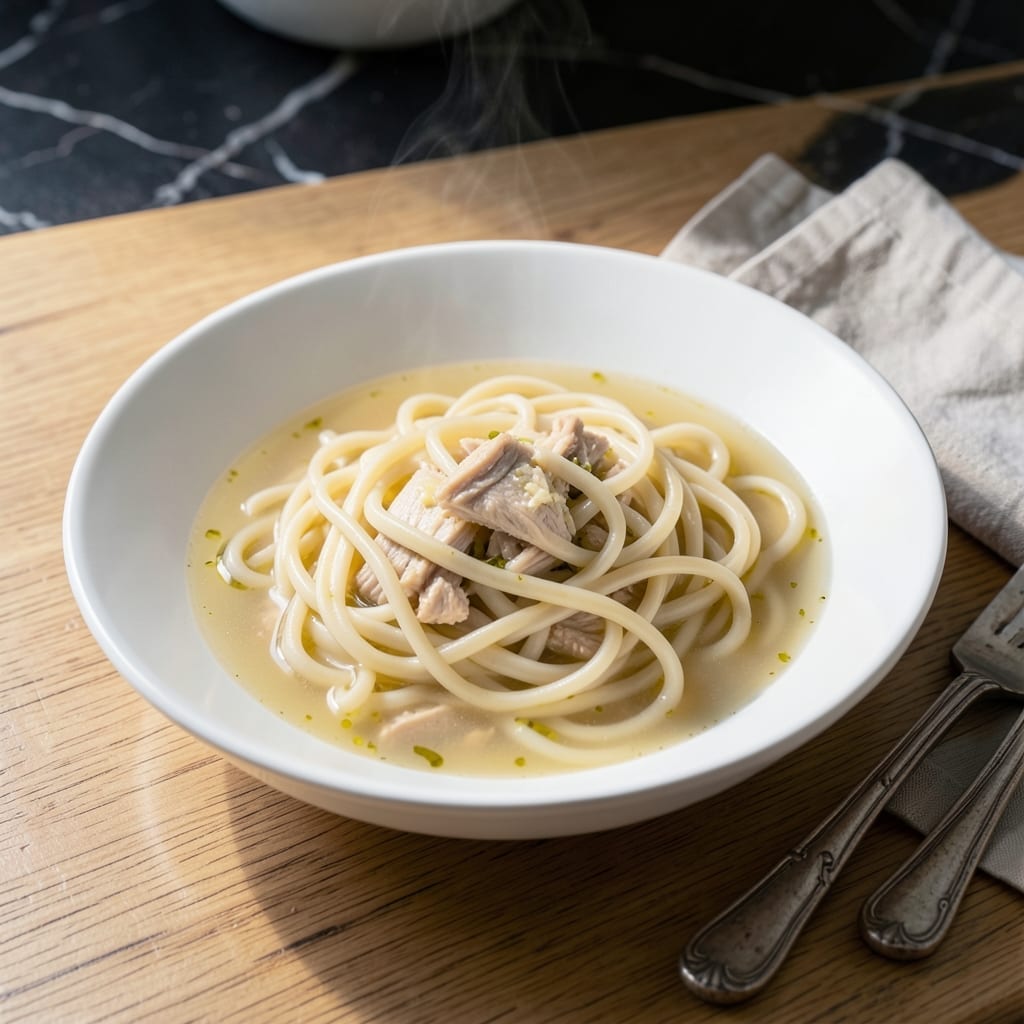
When your stomach needs a break, this simple pasta dish offers the perfect solution. The gentle combination of plain noodles and mild broth provides easy-to-digest comfort without irritation.
I developed this recipe specifically for sensitive digestion, using only the most soothing ingredients. Cooking the pasta in a light chicken or vegetable broth adds subtle flavor without heaviness, making it ideal for recovery.
You’ll have a warm, nourishing meal ready in 15 minutes. The soft texture and bland profile help settle your system while giving you the energy to heal.
Perfect for all ages, this dish is as kind to your stomach as it is simple to prepare.
Ingredients for Bland Pasta Recipe for Upset Stomach
Gentle ingredients for sensitive stomachs. Simple, soothing, and quick to prepare.
| Ingredient | Amount | Notes |
|---|---|---|
| Plain Pasta Noodles 🍝 | 8 oz | White flour or egg noodles |
| Chicken Broth 🍲 | 4 cups | Low-sodium preferred for sensitive stomachs |
| Vegetable Broth 🥕 | 4 cups | Alternative to chicken broth |
| Salt 🧂 | ½ tsp | Optional, to taste if tolerated |
| Olive Oil 🫒 | 1 tbsp | Light or mild for minimal flavor |
| Unsalted Butter 🧈 | 1 tbsp | Optional for richness if tolerated |
| White Rice 🍚 | ½ cup | Optional thickener for broth |
| Carrots 🥕 | 2 whole | Peeled and diced, optional |
| Celery Stalks 🌿 | 2 whole | Diced, optional for mild flavor |
| Fresh Parsley 🌿 | 2 tbsp | Chopped, optional garnish |
The broth is key here—low-sodium chicken or vegetable keeps it mild. I grab Swanson or College Inn from the grocery store; they’re widely available and consistent. Plain pasta is a must: stick with white flour or egg noodles (the good stuff, not the whole wheat kind for this). If you’re adding veggies, carrots and celery are the gentlest options—peel them well to avoid any bitterness.
No chicken broth? Vegetable broth works just as well. Skip the salt entirely if your stomach’s extra sensitive. Butter can be swapped for olive oil if dairy’s an issue, or left out completely. The rice is just for thickening—instant or white rice breaks down fastest. Fresh parsley is purely for color, so skip it if you’re not up for chopping.
Leftovers keep in the fridge for 3-4 days. Reheat gently with a splash of broth to keep it moist. This dish doesn’t freeze well—the pasta gets mushy. Best made fresh when you need that quick, soothing relief.
Why You’ll Love This Recipe
- 5-Minute Meal: I can have this on the table faster than it takes to argue with my toddler about eating something. Boil noodles, warm broth, done.
- Gentle Comfort: The mild chicken and vegetable broth soothes without overwhelming—exactly what my stomach begs for when it’s revolt mode.
- Feeds the Whole Crew: Between us, this is my secret for picky eaters, sick days, and those nights when no one can agree on dinner.
- Pennywise Dinner: A pound of pasta and some broth stretch further than my last paycheck. Honestly, it’s the most budget-friendly meal I make.
Step-by-Step Instructions for Bland Pasta for Upset Stomach
This gentle approach delivers comforting carbs with minimal effort or strain on your system.
Step 1: Cook the Pasta Until Tender
Bring a large pot of water to a rolling boil. Add the 8 oz plain pasta noodles and stir immediately to prevent sticking. Cook according to package directions until al dente, usually 8-10 minutes.
Drain the pasta thoroughly in a colander, shaking out any excess water. I always rinse briefly with hot water to remove any surface starch, which can be harder to digest. Return the pasta to the pot and cover to keep warm while you prepare the broth.
Step 2: Simmer the Broth with Optional Additions
In a separate saucepan, combine the 4 cups chicken broth and 4 cups vegetable broth. Bring to a gentle simmer over medium heat. If using, stir in the 0.5 cup white rice—this thickens the broth slightly for a more comforting texture.
For extra mild flavor, add the 2 whole carrots and 2 whole celery stalks, both diced. Simmer for 10-12 minutes until the rice is tender and the vegetables soften. The goal is a soothing, lightly flavored liquid that won’t irritate your stomach.
Step 3: Finish with Optional Enrichments
Once the broth is ready, stir in the 1 tbsp olive oil and 1 tbsp unsalted butter if using. These add just enough richness to make the dish satisfying without being heavy. Taste carefully, then add the 0.5 tsp salt only if tolerated.
I find that a tiny pinch of salt enhances the natural flavors without overpowering the gentle profile. If your stomach is particularly sensitive, skip it entirely—the broths provide enough seasoning on their own.
Step 4: Combine and Serve Warm
Pour the warm broth over the cooked pasta in the pot. Stir gently to combine, adding just enough liquid to coat the noodles without making it soupy. The pasta should be moist but not swimming.
Ladle into shallow bowls and garnish with the 2 tbsp fresh parsley if desired. The parsley adds a touch of freshness without introducing strong flavors. Serve immediately while warm—the heat can be soothing, but let it cool slightly if your stomach is extra sensitive.
Pro Tips For Making Bland Pasta Recipe For Upset Stomach
- Use Low Heat: Simmer the broth gently—boiling it too hard can make the pasta tough and the liquid reduce too fast, leaving you with a gluey mess.
- Salt the Broth: I learned this the hard way—taste as you go, because even a bland dish needs some salt to avoid tasting like plain hot water.
- Skip the Rinse: Resist the urge to rinse the pasta after cooking—it washes away the light starch that helps the broth cling just enough for flavor.
- Finish in Broth: Cook the pasta 1-2 minutes shy of done, then let it finish in the warm broth—this soaks up just enough gentle flavor without overpowering.
Serving Suggestions for This Recipe
Gentle Presentation
Serve this dish in shallow bowls to allow the steam to rise gently. The warmth helps soothe while the mild aroma comforts. I prefer white or light-colored bowls to make the meal look as gentle as it is.
Temperature Matters
Let it cool for 2-3 minutes before eating if your stomach is particularly sensitive. The ideal serving temperature is warm, not piping hot, to avoid any additional irritation. 💛
Portion Control
Start with smaller portions, about ½ cup pasta with broth, to test your tolerance. You can always have more if it sits well. This approach prevents overwhelming your system.
Garnish Lightly
If using parsley, sprinkle just ½ tsp per serving for a subtle pop of color. Avoid heavy garnishes that might introduce unwanted textures or flavors.
Pair with Hydration
Keep a glass of room-temperature water nearby. Sip between bites to stay hydrated, which aids digestion. Herbal teas like chamomile also complement this meal beautifully.
Comfort Setup
Eat while sitting upright at a table rather than on the couch. This posture helps digestion and makes the experience more intentional and soothing.
Nutrition Facts
Frequently Asked Questions
What pasta shape works best for sensitive stomachs?
Small shapes like angel hair or orzo digest easiest. Their compact size and soft texture are gentler on your system than larger noodles. Avoid dense varieties like penne that take longer to break down.
Why use broth instead of plain water?
Broth adds mild flavor and electrolytes without irritation. It also prevents the pasta from feeling dry or bland. Chicken or vegetable versions both work well for this purpose.
Can I add protein to this dish?
Yes, but stick to poached chicken breast or tofu. These are lean and easy to digest. Avoid red meat or fatty proteins that could upset your stomach further.
How long should I wait to eat after cooking?
Let it cool for 2-3 minutes to reach a warm, not hot, temperature. This prevents additional irritation while still providing soothing warmth.

- 6 Egg Cake Recipe with Oil: Light as Air With Buttery Moisture - October 4, 2026
- 4 Bean Casserole Recipe: One-Pan Heartiness With Smoky Paprika Depth - October 4, 2026
- 3-Ingredient Keto Mug Cake Recipe: Microwave Magic in 2 Minutes - October 4, 2026