
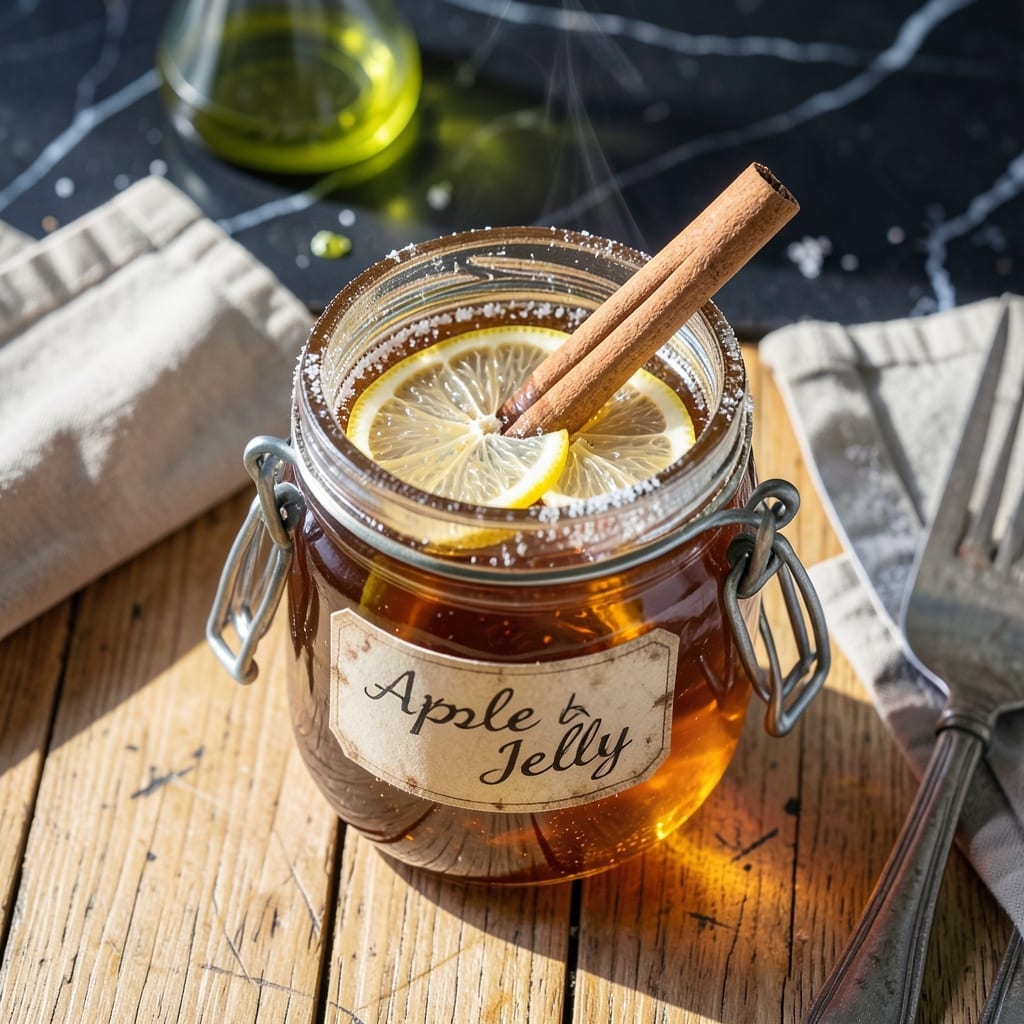
There’s something special about making jelly from scratch, and this version captures the pure essence of apples in every jar. The process transforms simple fruit into a glossy, spreadable delight that’s perfect for toast, biscuits, or charcuterie boards.
Using fresh apple juice as the base, this recipe relies on natural pectin to achieve the ideal consistency. The slow cooking process concentrates the flavors, creating a balance between sweetness and the bright tartness of the fruit.
You’ll end up with a beautiful, translucent jelly that preserves the taste of autumn all year long. It keeps beautifully in sealed jars, making it an excellent homemade gift or pantry staple.
This spread delivers restaurant-quality flavor with just a few simple ingredients. The result is a natural sweetness that’s far superior to store-bought versions.
Ingredients for Recipe for Apple Jelly
A handful of natural ingredients creates this glossy, spreadable apple jelly with pure fruit flavor.
| Ingredient | Amount | Notes |
|---|---|---|
| Fresh Apple Juice 🍎 | 4 cups | Unsweetened, no preservatives |
| Granulated Sugar 🍚 | 3 cups | Organic cane sugar preferred |
| Natural Apple Pectin 🍎 | 1 ½ oz | Liquid or powdered works |
| Lemon Juice 🍋 | 2 tbsp | Freshly squeezed for acidity |
| Lemon Zest 🍋 | 1 tsp | Finely grated for brightness |
| Cinnamon Stick 🌿 | 1 whole | Optional for warm spice |
| Star Anise Pod ✨ | 1 whole | Optional for depth of flavor |
The apple juice is non-negotiable—use 100% pure, unsweetened juice from a local orchard or Whole Foods for the cleanest flavor. Natural pectin (like Ball brand) ensures the perfect set without artificial additives. For sugar, organic cane sugar gives a cleaner taste than refined white, but either works. If you’re using powdered pectin, check the package for exact amounts (it’s more concentrated).
No fresh lemon? Bottled lemon juice at full amount works in a pinch, though fresh is brighter. Swap cinnamon for a pinch of ground cloves if that’s what you have. Want a spiced version? Add a vanilla bean while cooking. The sugar amount can be reduced by up to 25% if you prefer a less sweet jelly, but the texture may soften slightly.
Sealed jars keep at room temperature for 1 year. Once opened, refrigerate and use within 3 months. This jelly freezes beautifully for up to 12 months—portion into small containers for easy gifting or quick use.
Why You’ll Love This Recipe
- One-Pot Wonder: I love that this comes together in a single saucepan—no fancy equipment, just apple juice, sugar, and pectin simmering away.
- Bright & Zesty: The lemon zest and juice cut through the sweetness with a pop of freshness that makes it taste like autumn in a jar.
- Gift-Worthy spread: Between us, I always keep a few jars on hand for last-minute hostess gifts or breakfast with toast.
- Pantry Stable: Honestly, it keeps for months, so I can make a big batch and enjoy it long after apple season ends.
Step-by-Step Instructions for Apple Jelly
Master this technique for a perfectly set, glossy jelly with bright apple flavor.
Step 1: Prepare the Apple Juice Mixture
In a large, heavy-bottomed pot, combine the 4 cups Fresh Apple Juice, 2 tbsp Lemon Juice, and 1 tsp Lemon Zest. The acidity from the lemon is essential—it balances the sweetness and ensures proper gel formation.
Add the 1 whole Cinnamon Stick and 1 whole Star Anise Pod for depth. These whole spices infuse gently without overpowering. Bring the mixture to a gentle boil over medium-high heat, then reduce to medium and let it simmer for 5 minutes to meld flavors.
Step 2: Incorporate Pectin for Structure
After removing the spices, whisk in the 1.5 oz Natural Apple Pectin until fully dissolved. I use a fine-mesh strainer to dust the pectin evenly, preventing clumping. This step is critical—pectin must be fully integrated before the sugar goes in, or the jelly won’t set properly.
Return the mixture to a rolling boil, stirring constantly. You’ll notice it thicken slightly as the pectin activates. This is your cue that the foundation for gel formation is in place. Maintain the boil for 1 full minute to ensure the pectin is fully activated.
Step 3: Add Sugar and Achieve Full Gel
Gradually add the 3 cups Granulated Sugar, stirring continuously to dissolve completely. The sugar not only sweetens but also works with the pectin to create the jelly’s signature texture. Avoid adding it all at once—this can cause uneven distribution and potential scorching.
Once the sugar dissolves, bring the mixture back to a rolling boil. Boil hard for 1 minute, stirring steadily. The jelly should sheet off a spoon when it’s ready. If testing with a candy thermometer, aim for 220°F.
Step 4: Test, Jar, and Seal
To confirm the set, perform the cold plate test: place a small amount on a chilled plate. If it wrinkles when pushed with a finger after 30 seconds, it’s ready. If not, boil for another 1-2 minutes and retest. This step removes all guesswork.
Ladle the hot jelly into sterilized jars, leaving ¼-inch headspace. Seal with lids and process in a water bath for 10 minutes to ensure shelf stability. The jelly will continue to set as it cools, achieving that perfect, quiverable consistency.
Pro Tips For Making Recipe For Apple Jelly
- Test for Doneness: Use the cold plate test—place a spoonful of jelly on a chilled plate and push it with your finger; if it wrinkles, it’s ready. I learned this the hard way after pulling a batch too early.
- Strain the Juice: Press your fresh apple juice through a fine-mesh sieve or cheesecloth to remove pulp—this guarantees a crystal-clear jelly. Sounds tedious, but it’s worth the 10 minutes.
- Measure Pectin Precisely: Skip the eyeballing with natural apple pectin; even ¼ teaspoon too much or too little can throw off the set. My first three batches failed because I got lazy with the measuring spoons.
- Add Zest Early: Toss the lemon zest into the juice while it heats so the oils infuse fully—just remove it before adding sugar. After burning a pot of jelly by adding zest too late, I finally figured out the right order.
Dietary Considerations for This recipe for apple jelly
Vegan Friendly
This creation is naturally 100% plant-based, using only fruit juice, sugar, and natural pectin. No animal products or byproducts are involved, making it perfect for vegan diets. The natural pectin from apples ensures proper gel formation without gelatin.
Gluten-Free Safe
All ingredients—apple juice, sugar, pectin, and lemon juice—are inherently gluten-free. Just ensure your pectin brand (like Ball) is certified gluten-free to avoid cross-contamination concerns. 💪
Nut-Free Option
The base recipe contains no nuts, but always check labels on pectin and sugar for potential processing in facilities that handle tree nuts. For maximum safety, use brands with dedicated nut-free facilities.
Sugar Considerations
While this recipe uses 3 cups sugar, you can reduce it by up to 25% if desired. Be aware that sugar plays a key role in preservation and texture, so the jelly may be softer and have a shorter shelf life.
Allergen-Free
This is a top 8 allergen-free recipe when made with basic ingredients. It contains no dairy, eggs, soy, wheat, fish, shellfish, peanuts, or tree nuts. Always verify your specific ingredient brands for hidden allergens.
Low-Sodium Choice
With no added salt, this jelly is naturally low-sodium. The only sodium present comes from trace amounts in apple juice, making it ideal for those monitoring their sodium intake. ✨
Nutrition Facts
Frequently Asked Questions
Can I use store-bought apple juice?
Yes, but choose 100% pure, unsweetened juice without additives. Brands like Martinelli’s or Lakewood work well. Avoid juices with added sugar or preservatives for best results.
Why does it need so much sugar?
Sugar preserves the jelly and works with pectin for proper gel formation. Reducing it more than 25% may result in a softer texture or shorter shelf life.
How do I fix runny jelly?
Reheat it with 1-2 tsp additional pectin and boil for 2-3 minutes. Test again with the cold plate method. If still loose, process it as syrup instead.
Can I skip the lemon juice?
No, the acidity is essential for gel formation and flavor balance. If you must, use 1 tbsp vinegar as a substitute, but lemon is best.

- 6 Egg Cake Recipe with Oil: Light as Air With Buttery Moisture - October 4, 2026
- 4 Bean Casserole Recipe: One-Pan Heartiness With Smoky Paprika Depth - October 4, 2026
- 3-Ingredient Keto Mug Cake Recipe: Microwave Magic in 2 Minutes - October 4, 2026