
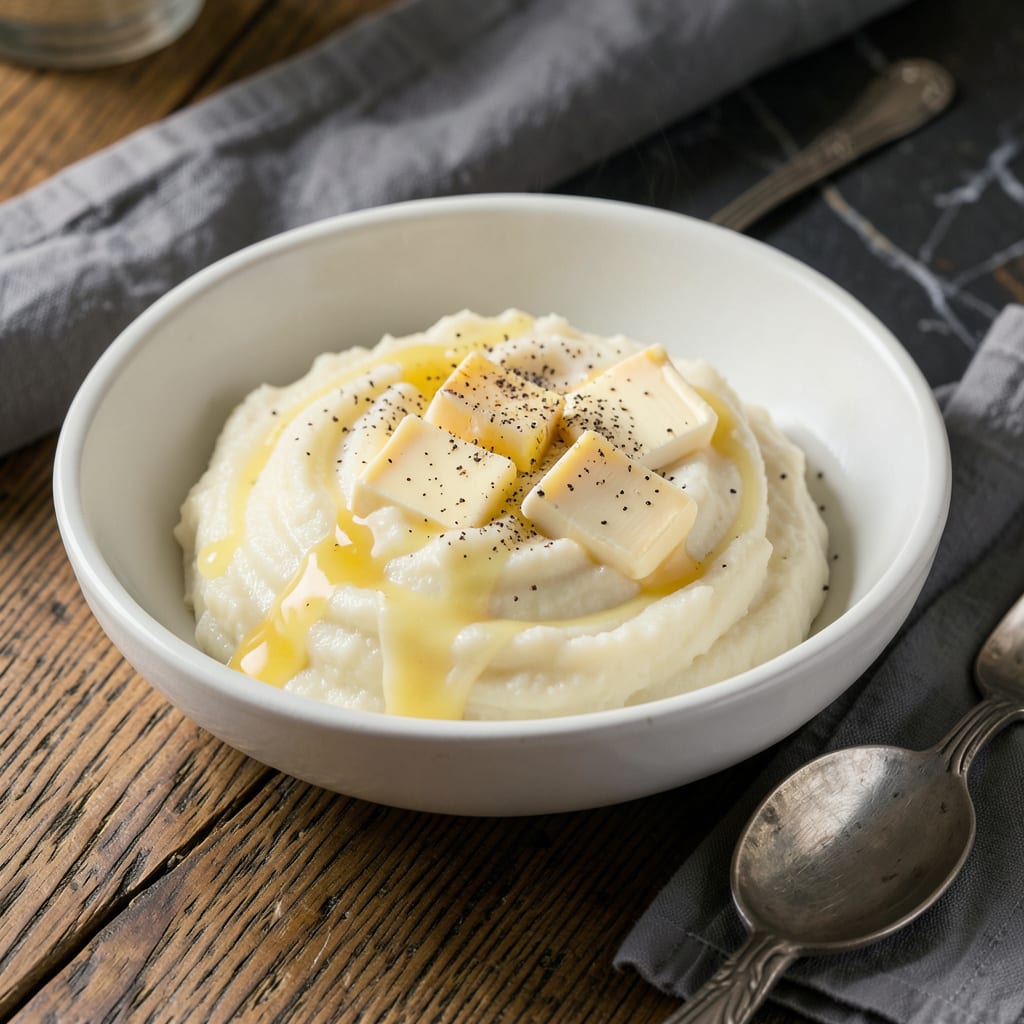
Recreating Bob Evans’ signature mashed potatoes at home is simpler than you might think. This recipe delivers that same creamy, buttery texture and homestyle comfort that made the restaurant version famous. The secret lies in using russet potatoes for their fluffy texture and warming the dairy before mixing—just like the pros do.
With just a few basic ingredients and careful attention to technique, you’ll achieve restaurant-quality results every time. The potatoes become incredibly light and smooth, while the butter and warm milk create a velvety consistency that’s impossible to resist. Perfect for holiday meals or weeknight dinners when you crave that familiar, satisfying taste.
Ingredients for Bob Evans Mashed Potatoes Copycat
These nine carefully selected ingredients replicate Bob Evans’ signature creamy texture and homestyle flavor profile with professional precision.
| Ingredient | Amount | Notes |
|---|---|---|
| Russet Potatoes 🥔 | 2 ½ lb | Peeled and cut into 1-inch cubes |
| Whole Milk 🥛 | 1 cup | Warmed to 110°F before mixing |
| Unsalted Butter 🧈 | ½ cup | Cut into 1-tbsp pieces, softened |
| Heavy Cream 🥛 | ¼ cup | Warm, for added richness |
| Kosher Salt 🧂 | 1 ½ tsp | Diamond Crystal preferred |
| Freshly Ground Black Pepper 🌶️ | ½ tsp | Medium-coarse grind |
| Garlic Powder 🧄 | ½ tsp | Not garlic salt |
| Onion Powder 🧅 | ¼ tsp | Optional, for depth |
| Sour Cream 🥛 | ¼ cup | Full-fat for creaminess |
| Whole Egg 🥚 | 1 whole | Optional, for binding |
[recipeingredientscaler]
The russet potatoes are non-negotiable for authentic texture—choose medium-sized potatoes (8-10 oz each) with minimal blemishes. Idaho russets from Costco or your local grocery’s bulk section offer the ideal starch-to-moisture ratio. Warm the dairy components to 110°F (use an instant-read thermometer) before incorporation to prevent gumminess. For the butter, Plugrá or Kerrygold unsalted deliver superior mouthfeel due to their higher fat content (82% minimum).
For dietary adaptations, substitute the whole milk with oat milk at equal volume—its natural creaminess most closely mimics dairy. Vegan butter alternatives like Miyoko’s work at a 1:1 ratio, though salt content may require adjustment. The egg can be omitted entirely without textural compromise, or replaced with 1 tbsp cornstarch slurry for binding. If avoiding garlic/onion powders, celery salt (¼ tsp) provides umami depth without alliums.
Prepared mashed potatoes hold at 150°F in a heatproof bowl over simmering water for up to 2 hours before serving. Refrigerate leftovers in an airtight container for 4-5 days—reheat gently with additional milk to restore creaminess. For make-ahead convenience, prepare through the ricer step, then refrigerate the potato base overnight. Warm dairy and final mixing should occur just before service. Freezing is not recommended due to texture degradation.
Why You’ll Love This Recipe
- One-Pot Magic: I swear by this for lazy dinners. Peel, boil, mash—all in the same pot. No colander, no extra bowls, just creamy potatoes with minimal cleanup.
- That Butter-Rich Bite: The combo of heavy cream and whole milk gives it that restaurant-quality richness. I’ll be real: I’ve caught my husband sneaking spoonfuls straight from the pot.
- Holiday or Tuesday: This is my Thanksgiving staple and my weeknight shortcut. Doubles as a side for roast chicken or a bed for meatloaf—no judgment here.
- Budget-Friendly Crowd-Pleaser: Russets are cheap, and a little butter/cream stretches a long way. Leftovers? Even better—just add broth and reheat for fluffy, never-gluey results.
Step-by-Step Instructions for Creamy Homestyle Mashed Potatoes
This professional method delivers the signature texture and flavor you expect from the restaurant classic.
Step 1: Prepare and Cook the Russet Potatoes
Begin by peeling the 2.5 lb Russet Potatoes and cutting them into uniform 1-inch cubes. This consistent size ensures even cooking throughout. Place the cubed potatoes in a large pot and cover with cold water by about 2 inches. The cold water start prevents uneven cooking that can occur when adding potatoes to already hot water.
Bring the water to a rolling boil over high heat, then reduce to medium heat to maintain a gentle boil. Cook for 15-18 minutes until the potatoes are fork-tender—they should slide off a fork easily when pierced, but not fall apart completely. Properly cooked potatoes are the foundation of smooth, lump-free mashed potatoes.
Drain the potatoes immediately in a colander and return them to the warm pot. Place the pot back on the stove over low heat for 1-2 minutes, shaking occasionally, to evaporate any remaining moisture. This step is crucial for preventing watery mashed potatoes.
Step 2: Warm the Dairy Components
While the potatoes cook, prepare your dairy ingredients. Warm the 1 cup Whole Milk and 0.25 cup Heavy Cream together in a small saucepan over low heat until they reach 110°F. Heating the dairy prevents it from cooling down the potatoes and creating a gummy texture when mixed.
Cut the 0.5 cup Unsalted Butter into 1-tablespoon pieces and allow it to soften at room temperature. The butter should be pliable but not melted—about 65°F. This temperature allows it to incorporate smoothly into the potatoes without creating a greasy texture.
In a separate small bowl, whisk together the 0.25 cup Sour Cream and 1 whole Whole Egg until completely smooth. This mixture will add richness and help bind the potatoes for that signature creamy consistency.
Step 3: Mash and Incorporate Ingredients
Using a potato ricer or food mill, process the dried potatoes back into the warm pot. If you don’t have these tools, a potato masher will work, though the texture won’t be quite as smooth. Work quickly while the potatoes are still hot to achieve the best absorption of dairy.
Immediately add the warmed milk mixture to the riced potatoes, followed by the softened butter pieces. Using a silicone spatula, fold the ingredients together gently until the butter is fully melted and incorporated. Avoid overmixing at this stage to prevent developing a gluey texture.
Add the 1.5 tsp Kosher Salt, 0.5 tsp Freshly Ground Black Pepper, 0.5 tsp Garlic Powder, and 0.25 tsp Onion Powder. Fold these seasonings in thoroughly to ensure even distribution throughout the potatoes. The mixture should be smooth but still slightly loose at this point.
Step 4: Finish with Egg Mixture and Adjust Consistency
Slowly drizzle the sour cream and egg mixture into the potatoes while gently folding with your spatula. The residual heat from the potatoes will gently cook the egg, creating a richer, more stable emulsion. Continue folding just until the mixture is fully incorporated and the potatoes reach your desired creaminess.
For the perfect Bob Evans-style texture, the mashed potatoes should be smooth but still hold their shape when scooped. If the mixture appears too thick, add additional warm milk 1 tablespoon at a time until reaching the ideal consistency. Conversely, if too loose, allow the potatoes to rest for 3-5 minutes off the heat—they’ll thicken slightly as they cool.
Taste and adjust the seasoning if needed, though be cautious with additional salt as the flavors will continue to develop. The final product should have a velvety texture with visible flecks of black pepper throughout, just like the restaurant version.
Pro Cooking Tips for This Dish
Potato Selection Secrets
I can’t stress enough how crucial the right potatoes are for that signature Bob Evans texture. Stick with Russet potatoes—their high starch content creates that light, fluffy base. I always choose medium-sized potatoes (8-10 oz each) from the bulk section at Costco for consistent quality. Avoid waxy varieties like red or Yukon Gold, as they’ll make your mash gluey instead of creamy. 🥔
Dairy Temperature Control
The game-changer in this recipe is warming your dairy to exactly 110°F before mixing. I use an instant-read thermometer to check the milk and cream—this prevents the cold dairy from shocking the hot potatoes and creating lumps. For the butter, let it soften to about 65°F so it incorporates smoothly without melting into a greasy pool.
Ricing for Restaurant Texture
A potato ricer is worth its weight in gold for achieving that ultra-smooth consistency. If you don’t have one, a food mill works well too. I press the cooked potatoes through in batches while they’re still steaming hot—this creates the perfect base for absorbing all that rich dairy. Avoid using a mixer or blender, as they’ll overwork the starches and make your potatoes gummy.
Seasoning Layering Technique
Don’t just dump all your seasonings in at once! I add the kosher salt and black pepper first, then fold in the garlic and onion powders separately. This layered approach ensures even distribution throughout the potatoes. Remember, Diamond Crystal kosher salt is less salty by volume than table salt, so don’t substitute without adjusting the amount.
Egg Mixture Timing
The egg and sour cream mixture needs careful handling. I whisk them together until completely smooth, then drizzle them into the potatoes while gently folding. The residual heat from the potatoes will gently cook the egg, creating that rich, velvety texture. Add this mixture last—it’s the final touch that makes these potatoes taste just like the restaurant version. 💛
Consistency Adjustment Tricks
If your potatoes seem too thick, add warm milk 1 tablespoon at a time until you reach the perfect scoopable consistency. Too loose? Let them rest off the heat for 3-5 minutes—they’ll thicken slightly as they cool. I always taste before serving and adjust with a pinch more salt if needed, as the flavors develop over time.
Nutrition Facts

- 6 Egg Cake Recipe with Oil: Light as Air With Buttery Moisture - October 4, 2026
- 4 Bean Casserole Recipe: One-Pan Heartiness With Smoky Paprika Depth - October 4, 2026
- 3-Ingredient Keto Mug Cake Recipe: Microwave Magic in 2 Minutes - October 4, 2026