
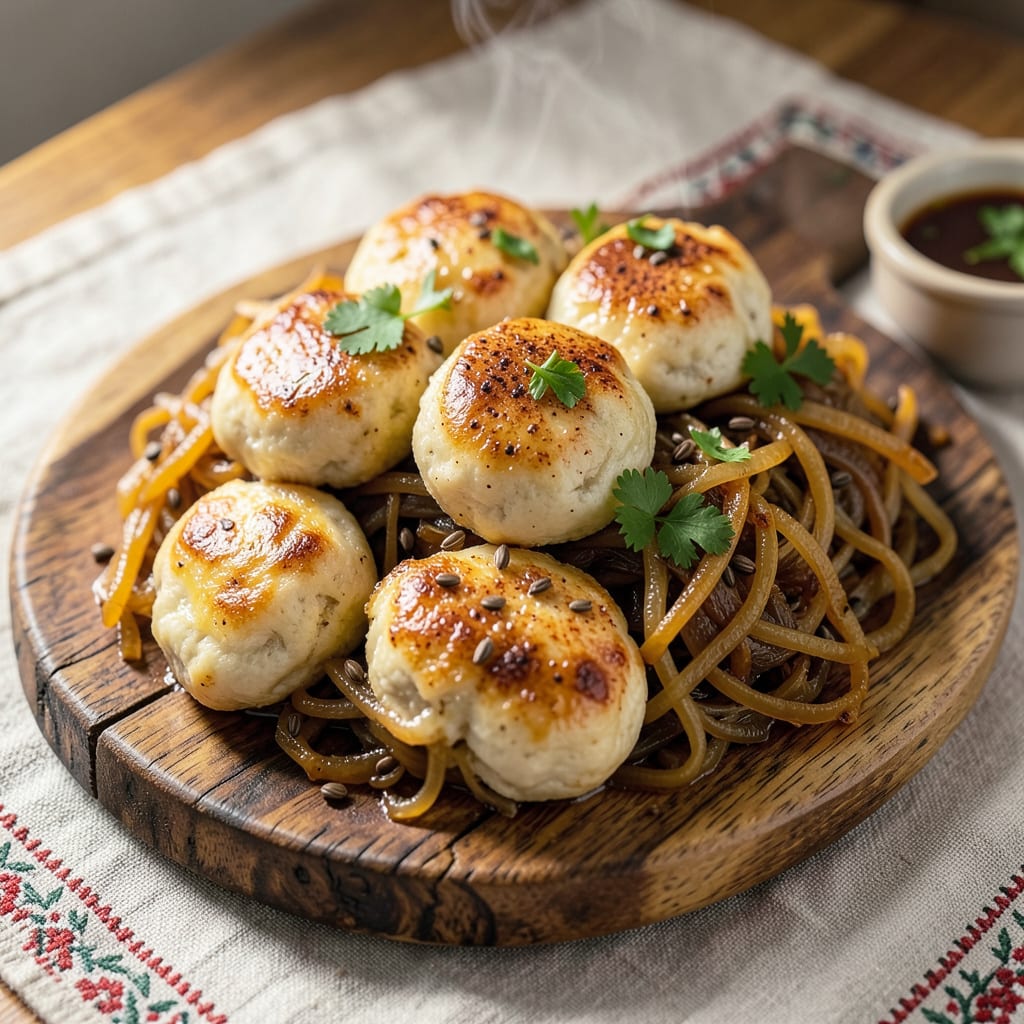
There’s something deeply comforting about bobalki, the pillowy Eastern European dumplings that transform simple ingredients into a hearty meal. This traditional dish pairs tender, yeast-raised dough with tangy sauerkraut for a balance of textures and flavors that feels like home in every bite.
The secret lies in the dough’s perfect rise and the sauerkraut’s preparation—whether using store-bought or homemade fermented cabbage. I’ve refined this method to ensure the bobalki stay light yet substantial, while the sauerkraut adds just the right amount of brightness to cut through the richness. It’s the kind of meal that warms you from the inside out.
Ingredients for Bobalki with Sauerkraut
Traditional Eastern European ingredients create these comforting, yeast-raised dumplings with tangy sauerkraut filling.
| Ingredient | Amount | Notes |
|---|---|---|
| All-Purpose Flour 🌾 | 3 ½ cups | Plus extra for dusting work surface |
| Active Dry Yeast 🍞 | 1 package | Equivalent to 2.25 tsp |
| Granulated Sugar 🍚 | 1 tbsp | For activating yeast and dough sweetness |
| Warm Whole Milk 🥛 | ¾ cup | Heated to 110°F for yeast activation |
| Unsalted Butter 🧈 | 4 tbsp | Melted and cooled to room temperature |
| Large Eggs 🥚 | 2 whole | Room temperature for even incorporation |
| Kosher Salt 🧂 | 1 tsp | Diamond Crystal preferred for consistency |
| Sauerkraut 🥬 | 2 cups | Drained and squeezed dry (store-bought or homemade) |
| Yellow Onion 🧅 | 1 whole | Finely diced for filling |
| Unsalted Butter 🧈 | 2 tbsp | For sautéing onions |
| Caraway Seeds 🌿 | 1 tsp | Lightly toasted for aromatic depth |
| Fresh Flat-Leaf Parsley 🌿 | ¼ cup | Finely chopped for garnish |
| Sour Cream 🥛 | ½ cup | Full-fat for serving (optional) |
[recipeingredientscaler]
The dough’s success hinges on proper yeast activation and flour quality. King Arthur All-Purpose Flour provides consistent protein content for optimal rise, while SAF Instant Yeast ensures reliable fermentation. Whole milk at precisely 110°F activates yeast without killing it—use an instant-read thermometer for accuracy. European-style unsalted butter (like Plugrá) yields superior flavor due to its higher fat content, though standard supermarket butter works adequately. For sauerkraut, seek refrigerated varieties without preservatives; brands like Bubbies or Wildbrine offer authentic fermentation profiles essential for balancing the dish’s richness.
Substitutions must preserve the dough’s delicate structure and filling’s tangy contrast. Bread flour may be used at a 1:1 ratio for chewier bobalki, though all-purpose remains ideal. Non-dairy milk (oat or soy) replaces whole milk at equal volume, while vegan butter (like Miyoko’s) substitutes effectively in both dough and filling. Caraway seeds are non-negotiable for authentic flavor, but fennel seeds at half quantity provide a milder alternative. Homemade sauerkraut requires 3-4 weeks fermentation; for expedited preparation, rinse store-bought kraut thoroughly to reduce acidity without sacrificing texture.
Dough components should be at room temperature before mixing to ensure even fermentation. Prepared bobalki freeze exceptionally well—arrange uncooked dumplings on parchment-lined trays, freeze solid, then transfer to airtight containers for up to 3 months. Cooked dumplings maintain quality refrigerated for 3-4 days; reheat gently in butter to restore tenderness. Sauerkraut filling benefits from preparation one day ahead, allowing flavors to meld and excess moisture to release, which prevents soggy dumplings during assembly.
Why You’ll Love This Recipe
- No-Knead Dough: Honestly, if you can stir flour into warm milk, you can make these. The yeast does all the heavy lifting while you’re doing something else—no fancy mixer or sore arms required.
- Tangy, Buttery Bite: That first bite where the soft, buttery dough hits the sharp sauerkraut? It’s the kind of contrast I crave. The sugar in the dough balances the sourness so well, you’ll catch yourself sneaking extras straight from the pan.
- Lunchbox Hero: I pack these for my husband’s work lunches, and they’re just as good cold as they are warm. They reheat in 10 seconds or hold up for days—no soggy disasters, just reliable, filling bites.
- Pantry Stretch: Between us, this recipe saved me last month when groceries were tight. Flour, milk, butter, and a jar of sauerkraut (that I always have) turned into three meals for four people. No last-minute store runs, no stress.
Step-by-Step Instructions for Bobalki With Sauerkraut
This traditional process transforms simple ingredients into tender, flavorful dumplings with perfect texture.
Step 1: Prepare the Yeast Dough
In a stand mixer fitted with the dough hook attachment, combine the warm whole milk, granulated sugar, and active dry yeast. Allow to sit for 5-7 minutes until the mixture becomes foamy and the yeast activates. This visual confirmation ensures your yeast is viable before proceeding.
Add the all-purpose flour, melted unsalted butter, large eggs, and kosher salt to the yeast mixture. Mix on low speed for 2 minutes until the dough begins to come together, then increase to medium speed and knead for 8-10 minutes until smooth and elastic. The dough should pull away from the bowl sides and feel slightly tacky but not sticky when touched.
Transfer the dough to a lightly oiled bowl, cover with a clean kitchen towel, and let rise in a warm, draft-free place for 1-1.5 hours or until doubled in volume. Proper rising is complete when the dough springs back slowly when gently pressed with a finger.
Step 2: Prepare the Sauerkraut Filling
While the dough rises, prepare the filling. Drain the sauerkraut thoroughly in a colander, then transfer to a clean kitchen towel and squeeze out all excess moisture. This step prevents soggy dumplings during cooking. Finely chop the drained sauerkraut and set aside.
In a medium skillet over medium heat, melt the unsalted butter. Add the finely diced yellow onion and cook for 5-6 minutes until translucent and just beginning to caramelize. Stir in the caraway seeds and cook for an additional 30 seconds until fragrant. Remove from heat and combine with the chopped sauerkraut. The filling should be moist but not wet, with visible onion pieces throughout.
Step 3: Shape and Fill the Dumplings
Once risen, turn the dough onto a lightly floured work surface and divide into 4 equal portions. Working with one portion at a time (keep others covered), roll the dough into a 1/8-inch thick rectangle. Use a 2.5-inch round cutter to cut circles, rerolling scraps as needed. You should yield approximately 32-36 circles total.
Place 1 teaspoon of the sauerkraut filling in the center of each dough circle. Fold the dough over the filling to create a half-moon shape, then pinch the edges tightly to seal. Bring the two corners together and pinch again to form the traditional bobalki shape. The sealed edges should be thin and uniform, with no filling exposed.
Step 4: Cook the Dumplings
Bring a large pot of salted water to a gentle boil over medium-high heat. Working in batches to avoid crowding, carefully add the shaped dumplings. Cook for 3-4 minutes after they float to the surface, or until they’re puffed and the dough appears translucent. Use a slotted spoon to transfer cooked dumplings to a clean kitchen towel to drain briefly.
For serving, arrange the dumplings on a warmed platter. The exterior should be tender with slight resistance when bitten, and the filling should be warm throughout. The dumplings will hold their shape when properly sealed but may develop slight cracks during cooking – this is normal and doesn’t affect quality.
Step 5: Serve with Traditional Accompaniments
Transfer the cooked bobalki to serving plates while still warm. Garnish with the finely chopped fresh flat-leaf parsley for a pop of color and freshness. Serve immediately with the sour cream on the side for dipping. The contrast between the tangy sauerkraut filling and rich sour cream creates the authentic flavor profile.
For best texture, serve within 15 minutes of cooking. The dumplings should maintain their shape on the plate, with the filling fully enclosed. Any remaining dumplings can be cooled completely and refrigerated for up to 2 days, though they’re best enjoyed fresh.
Serving Suggestions for This bobalki with sauerkraut
Traditional Plating Style
For an authentic presentation, arrange the bobalki in a circular pattern on a large wooden serving board. I love using my olive wood platter from Poland—it adds rustic charm. Place a small bowl of sour cream in the center and sprinkle everything with chopped parsley. The contrast of white dumplings against dark wood is stunning. 💛
Family-Style Serving
Bring the pot of cooked bobalki directly to the table in a cast iron skillet or ceramic Dutch oven. This keeps them warm while guests serve themselves. I always include a pair of wooden serving spoons—one for dumplings, one for sauerkraut. The communal experience makes it feel like a true Eastern European gathering.
Garnish Variations
Beyond parsley, try topping with crispy fried onions for crunch or poppy seeds for nutty flavor. A drizzle of brown butter adds richness. For color, add thinly sliced pickled red onions—their pink hue pops beautifully against the pale dumplings.
Dipping Sauces
While sour cream is classic, offer alternatives like garlic-infused yogurt or horseradish cream. I mix 2 tbsp prepared horseradish with ½ cup crème fraîche for a spicy kick. For kids, serve with applesauce—the sweetness balances the sauerkraut’s tang.
Beverage Pairings
A crisp Polish lager like Żywiec cuts through the richness perfectly. For non-alcoholic options, serve sparkling apple cider or black currant juice. I always include a pitcher of iced chamomile tea—its floral notes complement the caraway beautifully. 🍺
Make-Ahead Tips
Prepare the filling and dough separately up to 24 hours ahead. Store filling in an airtight container and refrigerate dough in an oiled bowl. Shape dumplings 4 hours before cooking and refrigerate on parchment-lined trays. This timing ensures the dough relaxes but doesn’t overproof.
Nutrition Facts
Frequently Asked Questions
Can I use store-bought sauerkraut instead of homemade?
Store-bought works perfectly—just choose refrigerated varieties without preservatives. Drain and squeeze out all moisture to prevent soggy dumplings. Brands like Bubbies or Wildbrine offer authentic flavor profiles closest to traditional homemade.
Why did my bobalki turn out dense instead of light?
This usually happens when the yeast isn’t fully activated or the dough overproofs. Check your milk temperature (110°F is ideal) and ensure the dough only rises until doubled. Over-kneading or using cold ingredients can also create dense results.
What’s the best way to seal the dumplings tightly?
Use a small amount of filling (1 tsp) and pinch edges firmly with slightly wet fingers. Fold into a half-moon first, then bring corners together for the classic shape. If edges won’t stick, brush lightly with water before sealing.
Can I make these ahead of time?
Yes! Prepare filling and dough separately up to 24 hours ahead. Shape dumplings 4 hours before cooking and refrigerate. Cooked bobalki freeze well too—reheat in butter for best texture.

- 6 Egg Cake Recipe with Oil: Light as Air With Buttery Moisture - October 4, 2026
- 4 Bean Casserole Recipe: One-Pan Heartiness With Smoky Paprika Depth - October 4, 2026
- 3-Ingredient Keto Mug Cake Recipe: Microwave Magic in 2 Minutes - October 4, 2026