
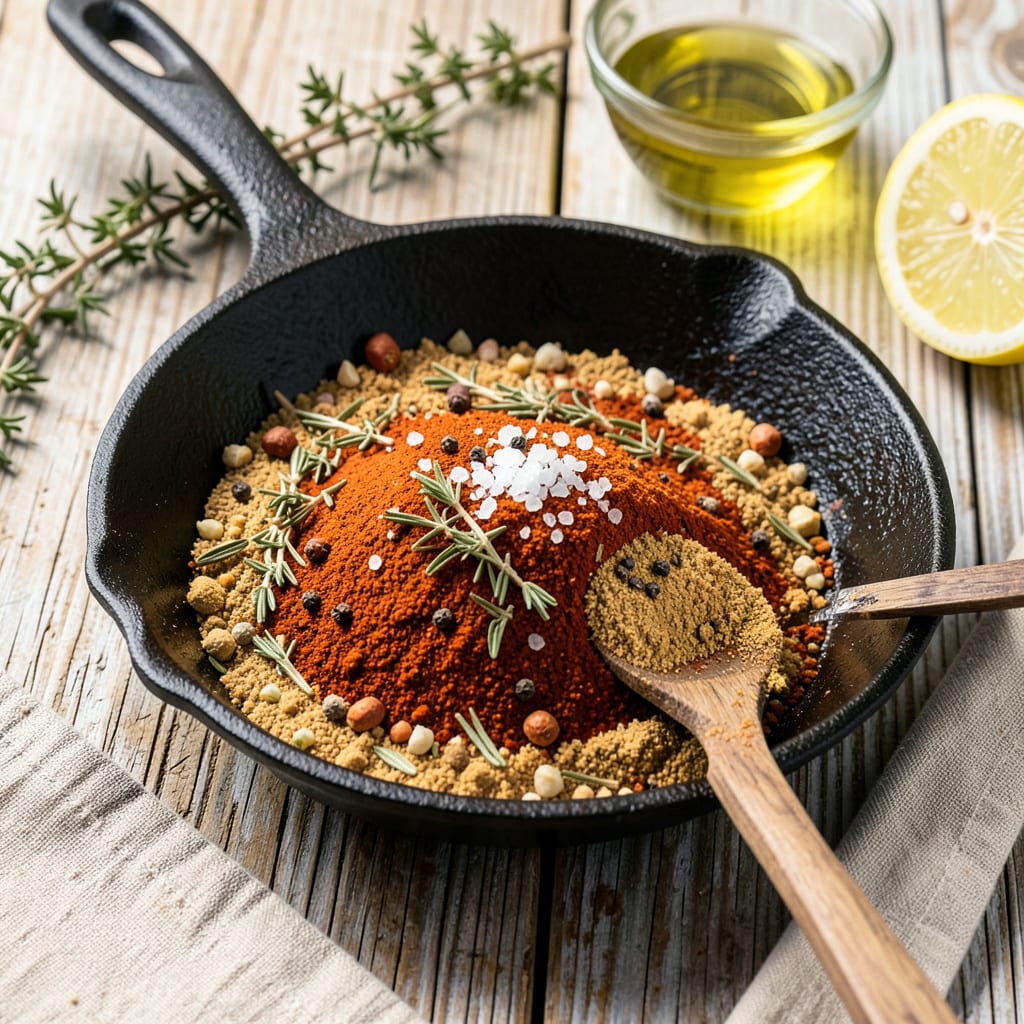
This Cajun marinade transforms ordinary proteins into bold, flavor-packed masterpieces. Developed through years of grilling experiments, the balanced blend of spices and wet ingredients creates a juicy, deeply seasoned result every time. The combination of smoky paprika, cayenne heat, and tangy vinegar ensures complex flavor penetration without overpowering.
Perfect for chicken, shrimp, or vegetables, this versatile marinade requires just minutes to prepare using pantry staples. The oil base helps distribute spices evenly while keeping meats moist during cooking. Store in an airtight container for up to five days, allowing flavors to intensify with time. Ready to elevate your grilling game?
Ingredients for Cajun Marinade
These nine carefully balanced ingredients create the bold, complex Cajun marinade foundation for juicy, flavor-packed results every time.
| Ingredient | Amount | Notes |
|---|---|---|
| Smoked Paprika 🌶️ | 2 tbsp | Sweet or hot variety |
| Garlic Powder 🧄 | 1 ½ tbsp | Freshly ground for potency |
| Onion Powder 🧅 | 1 ½ tbsp | Fine granulation preferred |
| Dried Thyme 🌿 | 1 tbsp | Rubbed between palms to release oils |
| Dried Oregano 🍃 | 1 tbsp | Mexican oregano for authenticity |
| Cayenne Pepper 🔥 | 1 tsp | Adjust for heat preference |
| Ground Black Pepper 🌶️ | 1 tsp | Freshly cracked for optimal flavor |
| Kosher Salt 🧂 | 1 tbsp | Diamond Crystal preferred for consistency |
| Apple Cider Vinegar 🍏 | ¼ cup | Unfiltered for tangy depth |
| Vegetable Oil 🫒 | ½ cup | Neutral flavor profile essential |
[recipeingredientscaler]
The spices form the backbone of this marinade, with smoked paprika and cayenne pepper delivering the signature Cajun profile. Optimal quality requires freshly opened containers—spices lose potency after six months. For professional results, source from Penzeys or specialty spice merchants where turnover ensures freshness. The Diamond Crystal kosher salt specification matters: its larger crystals dissolve evenly without over-salting. Vinegar selection impacts final acidity—Bragg’s unfiltered apple cider vinegar provides the ideal tangy base without harshness.
Substitutions must maintain the flavor equilibrium. Lemon juice at half the quantity can replace vinegar in a pinch, though the depth differs. For oil, avocado oil offers a neutral alternative with higher smoke point. Reduce cayenne to ½ teaspoon for mild heat, or add ½ teaspoon chipotle powder for smoky complexity. Dried basil can stand in for oregano, but Mexican oregano (available at Latin markets) delivers the authentic earthy notes. Always taste before marinating—spice intensity varies by brand.
This marinade keeps 5 days refrigerated in a sealed glass container, with flavors intensifying over time. For extended storage, freeze in ice cube trays (3-month shelf life) for precise portioning. Oil separation is natural—simply shake to recombine before use. Marinate proteins 4-12 hours for optimal penetration; vegetables require only 30-60 minutes to avoid over-softening. Discard used marinade—never reuse due to bacterial contamination risks.
Why You’ll Love This Recipe
- No Chopping Required: I just dump everything in a bowl—smoked paprika, garlic powder, all those dried herbs—and stir. Honestly, it’s the only marinade I can make while half-asleep in the morning.
- Smoky, Garlicky Punch: That first bite? The smoked paprika hits you with warmth, then the garlic and thyme linger like a good secret. I’ve caught my husband licking the bowl after marinating chicken.
- Works on Everything: I’ve slathered this on shrimp, tofu, even roasted potatoes. My go-to for meal prep—toss it on Sunday, and Tuesday’s dinner still tastes like a New Orleans backstreet kitchen.
- Pantry Staples Only: No last-minute grocery runs. Between us, I keep these spices stocked just for this marinade. A tablespoon of each, and boom—dinner costs less than takeout but tastes way better.
Step-by-Step Instructions for Cajun Marinade
This professional technique ensures maximum flavor penetration while maintaining ideal moisture balance for juicy results.
Step 1: Bloom the Spices for Maximum Potency
Begin by combining the 2 tbsp Smoked Paprika, 1.5 tbsp Garlic Powder, 1.5 tbsp Onion Powder, 1 tbsp Dried Thyme, 1 tbsp Dried Oregano, 1 tsp Cayenne Pepper, 1 tsp Ground Black Pepper, and 1 tbsp Kosher Salt in a dry skillet over medium-low heat. Toast the spices for 2-3 minutes, stirring constantly, until they become fragrant and slightly darkened in color.
This blooming process activates the essential oils in the spices, intensifying their flavors and creating a more complex aromatic profile. The smoked paprika should release its characteristic woody aroma, while the dried herbs will become more pungent. Remove from heat immediately after toasting to prevent burning, which would create bitter notes.
Step 2: Create the Acid-Oil Emulsion Base
In a medium mixing bowl, whisk together the 0.25 cup Apple Cider Vinegar and 0.5 cup Vegetable Oil vigorously for 1-2 minutes until the mixture begins to emulsify. You’ll notice the liquid transition from separated to a slightly thickened, opaque appearance as the oil disperses into tiny droplets throughout the vinegar.
The vinegar’s acidity serves multiple purposes: it tenderizes proteins in the meat while balancing the richness of the oil. This emulsion creates a stable base that will evenly distribute the toasted spices throughout the marinade. The vegetable oil’s neutral flavor profile ensures it won’t compete with the bold Cajun spices.
Step 3: Incorporate Spices and Develop Flavor
While the oil-vinegar mixture is still warm from whisking, gradually add the toasted spice blend. Whisk continuously for 3-4 minutes until the marinade transforms into a smooth, cohesive paste with no visible oil separation. The mixture should coat the back of a spoon and hold its shape briefly when a line is drawn through it with your finger.
As you whisk, the spices will rehydrate slightly from the residual heat, releasing their full flavor potential. The smoked paprika will deepen in color, while the garlic and onion powders will dissolve completely into the liquid. This step ensures uniform distribution of spices and prevents any grainy texture in the final marinade.
Step 4: Rest and Mature the Marinade
Transfer the completed marinade to a non-reactive container (glass or stainless steel) and let it rest at room temperature for 30 minutes. This resting period allows the flavors to meld and harmonize. You’ll observe the marinade darkening slightly and developing a more pronounced aroma as the spices fully infuse into the liquid base.
During this time, the cayenne pepper’s heat will mellow and distribute evenly, while the thyme and oregano will release their essential oils completely. The vinegar’s sharpness will soften, creating a balanced flavor profile that’s bold but not overpowering. For optimal results, use the marinade within 24 hours, as the flavors peak during this window.
Step 5: Application Technique for Maximum Juiciness
When ready to use, coat your protein thoroughly with the marinade, ensuring complete coverage. For 4 servings of meat, use approximately ¼ cup of marinade per pound. Massage the marinade into the meat’s surface for 2-3 minutes, working it into any crevices or natural separations in the protein structure.
Allow the protein to marinate for 4-12 hours in the refrigerator, turning occasionally to ensure even exposure. The vinegar’s acidity will begin breaking down surface proteins immediately, while the oil creates a protective barrier that prevents moisture loss during cooking. This dual-action approach guarantees juicy results with deep flavor penetration throughout the entire cut of meat.
Best Sauces and Condiments for This Recipe
Classic Remoulade Sauce
This creamy, tangy condiment is my absolute favorite pairing with Cajun-marinated seafood. Whisk together 1 cup mayonnaise, 2 tbsp Creole mustard, 1 tbsp prepared horseradish, and 1 tsp hot sauce (I swear by Crystal brand). The cool creaminess balances the marinade’s heat perfectly. 🌟
For extra depth, add 1 tbsp finely chopped cornichons and 1 tsp smoked paprika to echo the marinade’s flavors. This version stays fresh in the fridge for up to 5 days—if it lasts that long! The acidity cuts through the richness of grilled shrimp or chicken beautifully.
Spicy Comeback Sauce
This Mississippi Delta staple brings sweet heat that complements Cajun flavors wonderfully. Blend ½ cup mayonnaise, ¼ cup ketchup, 1 tbsp Worcestershire sauce, and 1 tsp cayenne pepper. The secret is letting it sit for 2 hours before serving.
I love adding 1 tsp garlic powder and 1 tbsp lemon juice for brightness. This sauce works magic on Cajun-marinated burgers or as a dip for crispy fries. The ketchup base gives it that familiar tang while the spices keep it exciting.
Garlic Butter Drizzle
For richer applications, melt 4 tbsp unsalted butter with 2 minced garlic cloves and 1 tsp Cajun seasoning. Simmer for 2 minutes until fragrant. This transforms grilled corn or steak into something extraordinary.
The butter’s richness mellows the marinade’s heat while amplifying its smoky notes. I always keep a small jar of this in my fridge—it solidifies but reheats beautifully. Drizzle over Cajun-marinated vegetables for an instant flavor boost.
Citrus Aioli
Brighten up your dish with this zesty aioli. Combine ½ cup mayonnaise, 1 tbsp lime juice, 1 tsp orange zest, and ½ tsp smoked salt. The citrus notes cut through the marinade’s richness while complementing its spice profile.
For extra flair, add 1 tsp honey to balance the acidity. This aioli is particularly stunning with Cajun-marinated fish tacos or as a dip for sweet potato fries. The orange zest adds a surprising complexity that keeps people guessing.
Smoky BBQ Glaze
When you want to double down on bold flavors, reduce ½ cup BBQ sauce with 1 tbsp apple cider vinegar and ½ tsp liquid smoke. Simmer for 5 minutes until thickened. This glaze caramelizes beautifully on grilled meats.
The vinegar echoes the marinade’s base while the liquid smoke enhances its smoky notes. I brush this on during the last 2 minutes of grilling for a sticky, flavorful crust. It’s especially amazing on Cajun-marinated ribs or chicken wings.
Cooling Ranch Dressing
For those who prefer milder pairings, mix ½ cup buttermilk, ¼ cup sour cream, 1 tbsp chopped dill, and ½ tsp garlic powder. The cool creaminess provides perfect contrast to the marinade’s heat.
Add 1 tsp lemon juice for brightness. This dressing works wonders as a dip for Cajun-marinated vegetable skewers or as a topping for spicy grilled chicken salads. The dill’s freshness cuts through the richness beautifully. 🥗
Nutrition Facts
Frequently Asked Questions
How long should I marinate proteins in this blend?
For optimal flavor penetration, marinate chicken or pork for 4-12 hours, while seafood only needs 30-60 minutes. Vegetables require just 20-30 minutes to avoid over-softening. Always refrigerate during marinating to prevent bacterial growth.
Can I reduce the heat level without losing flavor?
Cut the cayenne to ½ teaspoon and add 1 teaspoon smoked paprika for depth. The vinegar and garlic still deliver that signature Cajun tang. For extra mildness, remove seeds from any fresh peppers you might add.
What’s the best way to store leftover marinade?
Transfer to an airtight glass container and refrigerate for up to 5 days. For longer storage, freeze in ice cube trays for 3 months. Always shake before using as separation is natural. Never reuse marinade that’s touched raw meat.
Will this work for vegetarian dishes?
Perfectly! Try it on portobello mushrooms, cauliflower steaks, or tofu. Marinate vegetables for 20-30 minutes only—the acid can make them mushy. The smoky spices add incredible depth to grilled veggie skewers.

- 6 Egg Cake Recipe with Oil: Light as Air With Buttery Moisture - October 4, 2026
- 4 Bean Casserole Recipe: One-Pan Heartiness With Smoky Paprika Depth - October 4, 2026
- 3-Ingredient Keto Mug Cake Recipe: Microwave Magic in 2 Minutes - October 4, 2026