
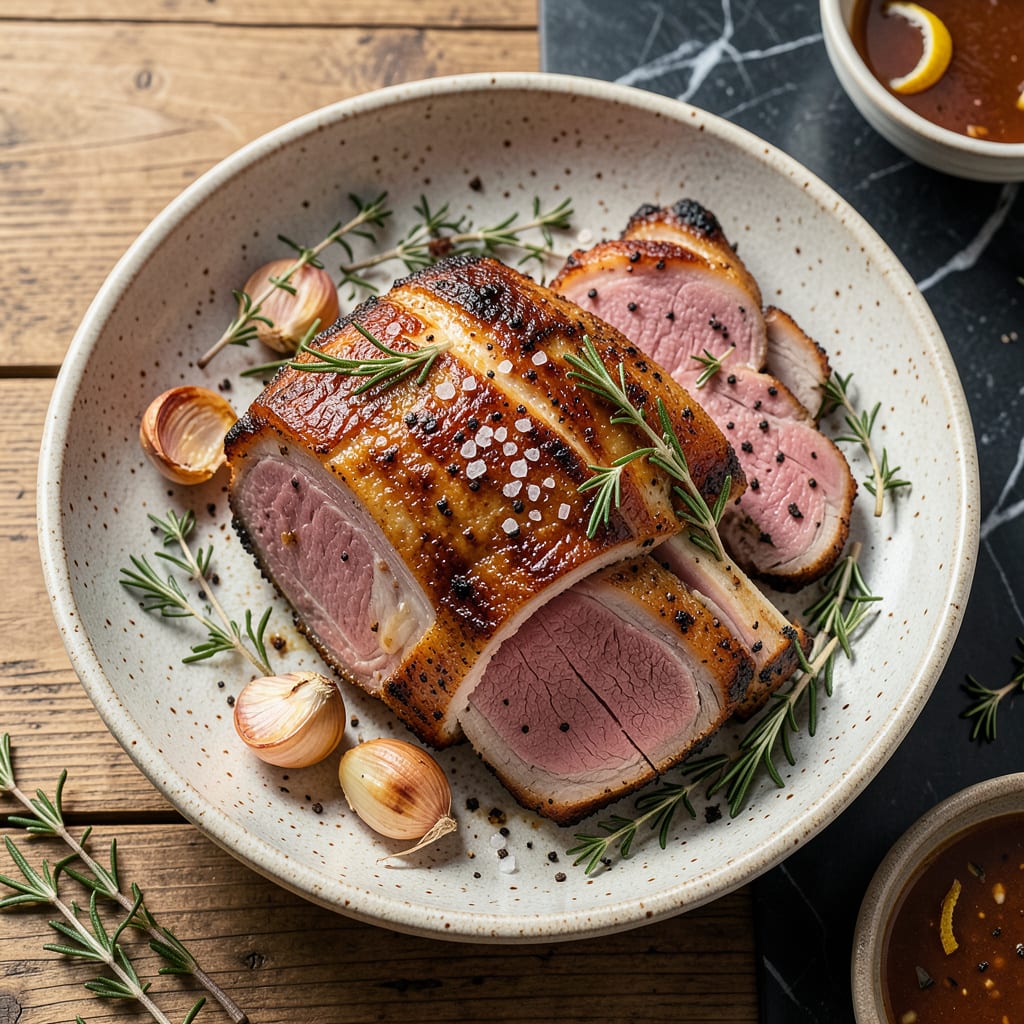
Achieving perfectly juicy bone-in pork at home is simpler than most cooks realize. The secret lies in proper preparation and precise cooking—no fancy equipment required. This method delivers fall-off-the-bone tenderness with a golden, flavorful crust every single time.
I’ve refined this technique through years of testing different cuts and cooking methods. Whether you’re working with pork shoulder, loin, or chops, the principles remain consistent: even seasoning, controlled heat, and patience. The result is meat so tender it nearly melts on contact, with rich flavor that speaks for itself.
Ingredients for Bone in Pork
These twelve ingredients transform bone-in pork into perfectly juicy, fall-off-the-bone perfection through precise preparation and cooking.
| Ingredient | Amount | Notes |
|---|---|---|
| Bone-in Pork Shoulder Roast 🍖 | 4 lb | Boston butt cut preferred |
| Diamond Crystal Kosher Salt 🧂 | 2 tbsp | For dry-brine and seasoning |
| Freshly Ground Black Pepper 🌶️ | 1 tbsp | Coarse grind recommended |
| Garlic Cloves 🧄 | 8 cloves | Smashed, not minced |
| Fresh Rosemary Sprigs 🌿 | 4 whole | 6-inch lengths preferred |
| Fresh Thyme Sprigs 🍃 | 6 whole | Stems intact for removal |
| Yellow Onion 🧅 | 1 whole | Quartered, skin removed |
| Dijon Mustard 🥄 | 2 tbsp | Grey Poupon recommended |
| Apple Cider Vinegar 🍏 | ¼ cup | Raw, unfiltered preferred |
| Extra-Virgin Olive Oil 🫒 | 2 tbsp | For searing and basting |
| Low-Sodium Chicken Stock 🥫 | 1 cup | Homemade or high-quality |
| Unsalted Butter 🧈 | 4 tbsp | For finishing baste |
| Light Brown Sugar 🍚 | 1 tbsp | For caramelization balance |
[recipeingredientscaler]
The pork shoulder selection is critical for optimal results. Bone-in Boston butt offers the ideal fat-to-meat ratio, ensuring self-basting during cooking. Source from reputable butchers or Whole Foods Market for consistent quality. The Diamond Crystal kosher salt provides superior seasoning penetration due to its flake structure—professional kitchens standardize on this brand for precision. Fresh herbs should exhibit vibrant color and firm stems; avoid wilted bunches as they impart bitter notes during prolonged cooking.
For the Dijon mustard, Grey Poupon delivers the necessary acidity balance without overpowering. Apple cider vinegar can be substituted with white wine vinegar at half the quantity, though the fruit undertones will be less pronounced. The chicken stock must be low-sodium to maintain seasoning control—Swanson’s or Kitchen Basics are reliable options. Unsalted butter is non-negotiable for the finishing baste; salted varieties will oversalt the crust. In emergencies, ghee can replace butter at a 1:1 ratio, though it lacks the milk solids that contribute to browning.
Store the pork shoulder refrigerated on a wire rack (uncovered) for 12-24 hours pre-cooking to ensure proper air circulation. Fresh herbs maintain integrity for 3-4 days when wrapped in damp paper towels and refrigerated in sealed containers. The prepared seasoning blend keeps for 1 month in an airtight container, though fresh garlic application is recommended. Post-cooking, pork maintains ideal texture when held at 140°F for up to 2 hours before serving.
Why You’ll Love This Recipe
- Five-Ingredient Magic: Honestly, that’s all you need—pork shoulder, salt, pepper, garlic, and rosemary. No fancy marinades or hard-to-find spices, just real food with serious payoff.
- Crispy, Juicy Contrast: The bone keeps the meat ridiculously tender while the skin gets crackly and golden. That first bite—where the rosemary-garlic crust gives way to fall-apart pork? I make extra just for leftovers.
- Weekend or Wednesday: I’ve served this at summer cookouts and slumped over it with a fork on a random Tuesday. It’s the kind of dish that feels special but doesn’t demand a special occasion.
- Meals for Days: One roast feeds my family for two dinners plus lunch sandwiches. Shred the leftovers for tacos, toss with eggs, or pile on crusty bread—it only gets better. (And at $3/lb on sale? My wallet’s happy too.)
Step-by-Step Instructions for Bone-In Pork Shoulder
This method delivers perfectly tender pork with crispy, caramelized exterior every time.
Step 1: Season and Prepare the Pork Shoulder
Pat the 4 lb bone-in pork shoulder roast completely dry with paper towels. This ensures maximum caramelization during cooking. Place the roast in a large bowl or on a baking sheet and rub it thoroughly with the 2 tbsp Diamond Crystal kosher salt and 1 tbsp freshly ground black pepper. The salt should adhere evenly to all surfaces, including the bone and fat cap.
Using a sharp knife, make small incisions about 1 inch deep all over the roast. Insert the 8 cloves garlic cloves (smashed) and 4 whole fresh rosemary sprigs into these slits, distributing them evenly. This technique infuses flavor directly into the meat as it cooks. Let the seasoned roast sit at room temperature for 30 minutes while you preheat the oven.
Step 2: Sear and Begin the Roasting Process
Preheat your oven to 325°F. In a large Dutch oven or oven-safe pot, heat the 2 tbsp extra-virgin olive oil over medium-high heat until shimmering. Add the 1 whole yellow onion (quartered) and sear for 2-3 minutes until lightly charred. Remove the onion and set aside.
Add the pork shoulder to the pot and sear on all sides for 3-4 minutes per side until deeply browned. You’re looking for a rich, mahogany crust to form. This initial sear creates the flavor foundation for your final dish. Return the charred onion to the pot along with the 6 whole fresh thyme sprigs, then transfer the entire pot to the preheated oven.
Step 3: Slow Roast with Aromatic Liquids
After the pork has roasted for 1 hour, remove it from the oven. The exterior should be beginning to caramelize. Add the 1 cup low-sodium chicken stock, 0.25 cup apple cider vinegar, and 2 tbsp Dijon mustard to the pot, stirring to combine with the pan drippings. The liquid should come about halfway up the pork.
Cover the pot and return it to the oven. Continue roasting for 2.5-3 hours, basting the pork with the pan juices every 45 minutes. The pork is ready when it reaches an internal temperature of 195°F and the meat pulls apart easily with a fork. The bone should separate cleanly when gently twisted.
Step 4: Finish with Glazing Baste
Remove the pork from the oven and transfer it to a cutting board. Strain the cooking liquids through a fine-mesh sieve into a saucepan, pressing on the solids to extract maximum flavor. Skim off excess fat from the surface, then whisk in the 4 tbsp unsalted butter and 1 tbsp light brown sugar over medium heat.
Simmer the glaze for 5-7 minutes until reduced by about half and slightly thickened. It should coat the back of a spoon. Brush this glaze generously over the rested pork, allowing it to soak in for 5 minutes before serving. The glaze adds a perfect balance of richness and subtle sweetness to complement the savory pork.
Step 5: Rest and Serve for Optimal Texture
Let the pork rest for 15-20 minutes before serving. This allows the juices to redistribute throughout the meat, ensuring every bite is moist and flavorful. The internal temperature will continue to rise slightly during this rest, reaching the ideal 200-203°F range for perfect tenderness.
To serve, pull the meat apart along natural seams using two forks, or slice against the grain for thicker portions. Arrange on a platter and spoon any remaining glaze over the top. The meat should be fall-apart tender with a glossy, caramelized exterior and aromatic herbs visible throughout.
Flavor Customization for This bone in pork
Sweet and Spicy
For those who love heat with sweetness, add 2 tbsp honey and 1 tbsp gochujang to the finishing glaze. The honey caramelizes beautifully while the Korean chili paste adds depth without overpowering. I like to sprinkle ½ tsp crushed red pepper over the pork before serving for extra kick. 🌶️
Herb-Crusted Variation
Create a vibrant herb crust by blending ¼ cup parsley, 2 tbsp sage, and 1 tbsp lemon zest with 2 tbsp olive oil. Pat this mixture onto the pork during the last 30 minutes of cooking. The citrus brightens the rich meat while the herbs form a fragrant crust.
Smoky BBQ Twist
Replace the Dijon mustard with 3 tbsp smoked paprika and add 1 tbsp molasses to the cooking liquid. For the finishing glaze, stir in 2 tbsp chipotle in adobo (minced) along with the butter. This gives the pork that classic low-and-slow barbecue flavor without needing a smoker.
Asian-Inspired Glaze
Swap the apple cider vinegar for ¼ cup rice vinegar and add 2 tbsp hoisin sauce to the cooking liquid. For the finishing baste, mix 1 tbsp grated ginger and 2 tbsp soy sauce with the butter. Garnish with thinly sliced scallions and sesame seeds for authentic flavor.
Coffee-Rubbed Depth
Before seasoning, coat the pork with a mix of 2 tbsp finely ground coffee, 1 tbsp cocoa powder, and 1 tsp cinnamon. The coffee enhances the meat’s natural richness while the cocoa adds subtle sweetness. This works particularly well with darker beers in the cooking liquid.
Mediterranean Brightness
Add ½ cup pitted kalamata olives and 2 tbsp capers to the cooking liquid. Finish with a glaze of zest from 1 lemon and 2 tbsp chopped oregano mixed into the butter. The briny elements cut through the fat beautifully, creating a balanced bite. 💛
Nutrition Facts
Frequently Asked Questions
Why does bone-in pork stay juicier than boneless?
The bone acts as an insulator, helping the meat cook more evenly while retaining moisture. It also contributes to richer flavor development during the slow-roasting process. For best results, always choose cuts with the bone intact when possible.
Can I use a different cut of pork for this method?
Yes, but adjust cooking times accordingly. Pork loin roasts cook faster (2-2.5 hours at 325°F), while ribs need 3-4 hours. Shoulder remains ideal for fall-apart texture. Always check internal temperature with a meat thermometer.
What’s the best way to reheat leftovers?
Gently warm in a 300°F oven with a splash of broth, covered, for 15-20 minutes. Avoid microwaving to prevent drying out. The meat should reach 145°F internally. Add extra glaze before serving for freshness.
How do I know when it’s perfectly done?
The bone should twist out cleanly with minimal effort, and the meat will pull apart easily with forks. For precision, use a thermometer—195°F for slicing, 203°F for pulled pork. The crust should be deep mahogany in color.

- 2 Chocolate Cupcake Recipe: Rich Cocoa Swirls and Velvety Frosting - October 4, 2026
- 6-Inch Angel Food Cake Recipe: Effortless Lightness Without a Trace of Fat - October 4, 2026
- 4 Loaf Banana Bread Recipe: Double-Batch Baking for Crowds - October 4, 2026