
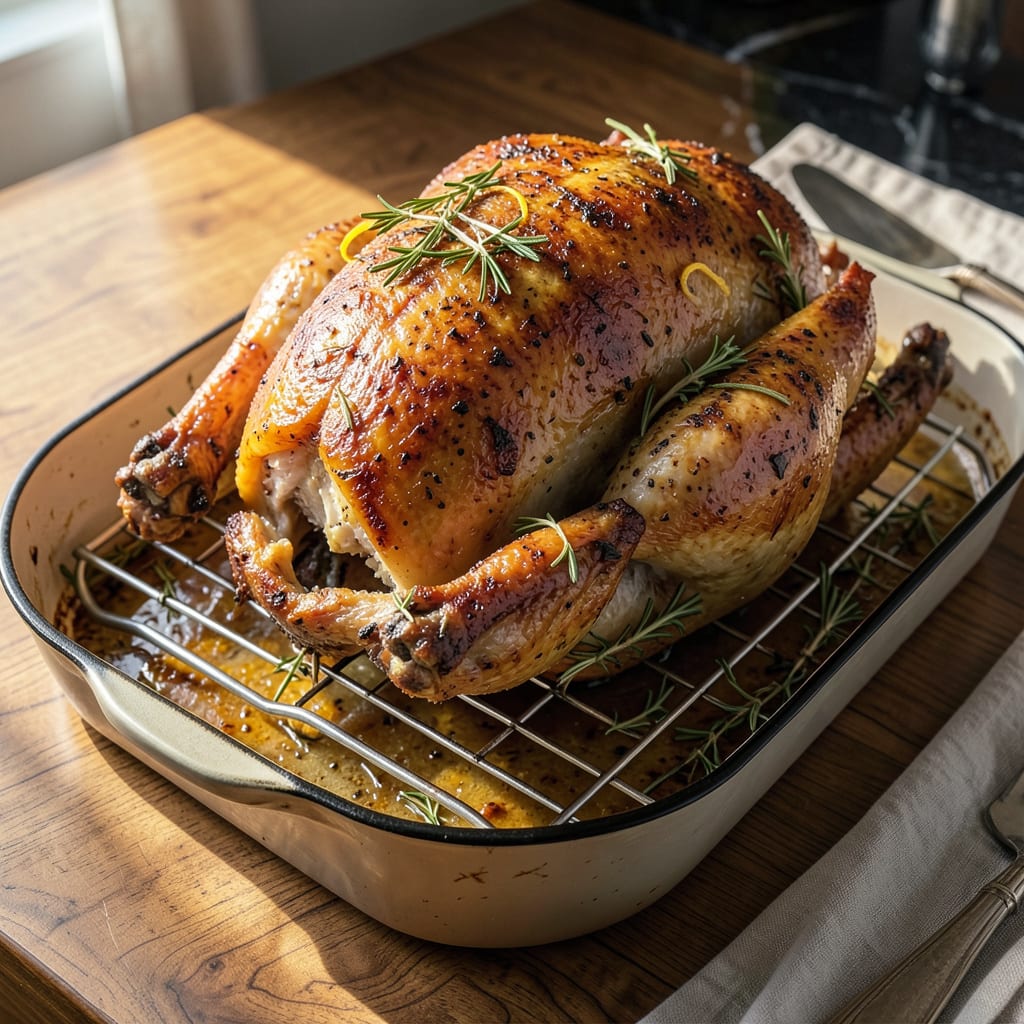
Achieving perfectly juicy oven-roasted turkey with golden-brown skin is simpler than most home cooks realize. The secret lies in proper preparation and precise temperature control—no fancy equipment required. After testing countless methods, I’ve refined this approach to deliver consistent results every time.
This method focuses on even cooking through strategic oven placement and timed basting. You’ll learn how to maintain moisture while developing that coveted crispy skin. The result is tender meat that pulls easily from the bone and a presentation worthy of any holiday table.
Ingredients for Turkey Recipe Oven
Optimal moisture retention and crisp skin require these carefully selected ingredients, each serving a precise culinary purpose in the roasting process.
| Ingredient | Amount | Notes |
|---|---|---|
| Whole Turkey 🦃 | 12 lb | Fresh or fully thawed, giblets removed |
| Kosher Salt 🧂 | 2 tbsp | Diamond Crystal preferred for even distribution |
| Freshly Ground Black Pepper 🌶️ | 1 tbsp | Coarse grind for texture |
| Unsalted Butter 🧈 | 1 cup | Softened for basting, European-style preferred |
| Fresh Rosemary 🌿 | 4 sprigs | Stems intact for aromatic infusion |
| Fresh Thyme 🍃 | 4 sprigs | Stems intact for aromatic infusion |
| Fresh Sage Leaves 🌿 | 8 whole | Lightly bruised to release oils |
| Garlic Cloves 🧄 | 6 cloves | Smashed but unpeeled for roasting |
| Yellow Onion 🧅 | 1 whole | Quartered, skin-on for depth |
| Dry White Wine 🍷 | 1 cup | Sauvignon Blanc or Pinot Grigio recommended |
| Low-Sodium Chicken Broth 🍲 | 2 cups | For moisture retention during roasting |
| All-Purpose Flour 🌾 | 2 tbsp | For optional gravy thickening |
| Lemon 🍋 | 1 whole | Halved for cavity and basting |
| Olive Oil 🫒 | 2 tbsp | For initial skin preparation |
[recipeingredientscaler]
The turkey quality is paramount. Fresh, never frozen yields superior texture, though properly thawed frozen works in a pinch. Heritage breeds (available at Whole Foods or specialty butchers) offer richer flavor but require longer roasting. For conventional birds, 12-14 lbs provides ideal meat-to-bone ratio. The kosher salt must be Diamond Crystal—its flake structure ensures even curing without over-salting. European-style butter contains less water, creating a more effective basting medium for crisp skin development.
Substitutions require careful consideration. Duck fat or ghee can replace butter for basting, though flavor profiles will shift. Vegetable broth works instead of chicken, but reduce quantity by 25% to avoid steam. Fresh herbs are non-negotiable—dried versions lack the aromatic potency required. The wine may be omitted, but replace with additional broth plus 1 tbsp apple cider vinegar to maintain acid balance. For alcohol-free preparation, verjus or white grape juice provides comparable brightness without fermentation notes.
Preparation timing is critical. The turkey may be salted 12-24 hours ahead (uncovered in fridge) for enhanced seasoning penetration. Herb stems and aromatics can be prepped 6 hours in advance and stored in sealed containers. Post-roasting, carcass and pan drippings keep 3 days refrigerated or 6 months frozen for stock. Never baste with raw meat juices—use the designated basting liquid only to prevent cross-contamination and ensure food safety.
Why You’ll Love This Recipe
- One bird, three meals: turkey tetrazzini, next-day tacos, and a pot of soup from the carcass. My wallet thanks me, and so does my future self when I’m not cooking from scratch midweek.
- Five-Ingredient Magic: Honestly, the ingredient list is shorter than my grocery receipt. Kosher salt, butter, rosemary—stuff I already have. No last-minute store runs for weird spices or marinades that take hours.
- Butter-Basted Bliss: Here’s what sold me—that rosemary-infused butter melted under the skin. It crisps up the turkey while keeping the meat so juicy you’ll skip the gravy. (Okay, maybe not. But you’ll want to.)
- Holiday or Tuesday: I’ve made this for Thanksgiving and a random Sunday when I needed leftovers for sandwiches. Same method, same incredible results—just swap the fancy platter for a cutting board.
Step-by-Step Instructions for Turkey Recipe in Oven
This method ensures perfectly juicy meat and crisp golden skin through precise temperature control and strategic basting.
Step 1: Prepare the Turkey for Even Cooking
Remove the whole turkey from refrigeration and pat it completely dry with paper towels, inside and out. This critical step eliminates surface moisture that would otherwise steam the skin instead of allowing it to crisp. Place the turkey on a roasting rack set inside a roasting pan, which promotes air circulation for uniform browning.
Rub the cavity with the 2 tablespoons olive oil, then season generously inside and out with the 2 tablespoons kosher salt and 1 tablespoon freshly ground black pepper. The coarse salt crystals will penetrate the skin while the pepper adds subtle texture. Let the seasoned turkey rest at room temperature for 1 hour before roasting—this ensures even cooking throughout.
Step 2: Create the Aromatic Cavity and Basting Mixture
Place the halved lemon, quartered yellow onion, 4 sprigs fresh rosemary, 4 sprigs fresh thyme, 8 whole fresh sage leaves, and 6 cloves garlic cloves into the turkey cavity. These aromatics will infuse the meat with subtle herbal notes during roasting. The lemon’s acidity helps tenderize while the onion skin adds depth to the pan drippings.
In a small saucepan, melt the 1 cup unsalted butter over low heat. This will serve as your basting liquid, creating a rich, golden crust. Keep the melted butter warm but not hot—you’ll use it to baste the turkey every 45 minutes during cooking. The European-style butter’s higher fat content ensures better browning and flavor transfer.
Step 3: Roast Using the Two-Stage Temperature Method
Preheat your oven to 450°F. Place the turkey in the oven and roast uncovered for 30 minutes at this high temperature. This initial blast of heat jumpstarts the browning process and helps render fat from the skin. After 30 minutes, reduce the oven temperature to 325°F for the remaining cooking time.
Baste the turkey with the melted butter every 45 minutes throughout cooking. Use a bulb baster to draw up the pan juices along with the melted butter, then distribute evenly over the skin. This technique creates multiple layers of flavor while promoting even browning. The turkey is done when the thickest part of the thigh reaches 165°F on an instant-read thermometer, typically after 3 to 3.5 hours total cooking time for a 12-pound bird.
Step 4: Rest and Prepare the Pan Gravy
Transfer the roasted turkey to a cutting board and tent loosely with foil. Let it rest for 45 minutes before carving—this allows the juices to redistribute throughout the meat, ensuring moist, tender slices. While the turkey rests, place the roasting pan across two burners over medium heat.
Add the 1 cup dry white wine to the pan and deglaze, scraping up all the browned bits from the bottom. Let the wine reduce by half, then whisk in the 2 cups low-sodium chicken broth. For thicker gravy, create a slurry with the 2 tablespoons all-purpose flour and a bit of cold broth, then whisk into the pan. Simmer for 5-7 minutes until the gravy reaches your desired consistency. Strain through a fine-mesh sieve before serving to remove herb stems and garlic skins.
Creative Variations of These Flavors
Citrus-Herb Glazed
For a brighter flavor profile, mix ½ cup orange marmalade with 2 tbsp Dijon mustard and 1 tbsp apple cider vinegar. During the last 45 minutes of roasting, brush this glaze over the turkey every 15 minutes. The citrus notes complement the rosemary and thyme beautifully while creating a glossy, caramelized finish. 🍊
Smoky Spice Rub
Combine 1 tbsp smoked paprika, 1 tsp ground cumin, and ½ tsp cayenne pepper with the salt and pepper before seasoning. This adds a subtle Southwestern flair that pairs wonderfully with cornbread stuffing. The smokiness enhances the natural turkey flavor without overpowering it.
Brown Butter Sage
Brown the 1 cup unsalted butter with 12 extra sage leaves until nutty and fragrant before basting. This creates an incredibly aromatic crust with deep, toasted notes. I love how the crisp sage leaves become edible garnishes for the finished dish.
Maple-Bourbon Infusion
Replace the white wine with ½ cup bourbon and add ¼ cup pure maple syrup to the basting butter. The combination creates a rich, slightly sweet glaze with caramelized depth. Just be sure to let the alcohol cook off during deglazing for family-friendly serving. 🥃
Mediterranean Herb Crust
Add 1 tbsp dried oregano and 1 tsp ground coriander to the salt-pepper mix. Stuff the cavity with preserved lemons instead of fresh for intense citrus notes. This variation transports your turkey to the Greek islands with minimal effort.
Spicy Harissa Version
Mix 2 tbsp harissa paste into the melted butter for basting. The North African chili blend adds warmth and complexity that cuts through the richness. Serve with couscous and roasted vegetables for a complete global-inspired meal. The heat level is approachable but noticeable. 🌶️
Nutrition Facts
Frequently Asked Questions
How long should the turkey rest before carving?
Let the turkey rest for 45 minutes after removing it from the oven. This crucial step allows juices to redistribute throughout the meat, preventing dryness when sliced. Skipping this can cause up to 30% moisture loss during carving.
Can I use a frozen turkey for this recipe?
Yes, but it must be fully thawed first. Allow 24 hours of refrigerator thawing per 4-5 pounds of turkey. Never thaw at room temperature—this promotes bacterial growth. A 12-pound bird typically needs 3 full days to thaw safely.
What’s the best way to prevent dry breast meat?
Two key techniques: Start with the breast side down for the first 90 minutes, then flip. Also, baste every 45 minutes with melted butter. The initial upside-down position lets juices flow into the breast, while basting creates a protective fat barrier.
Do I need to brine the turkey beforehand?
This recipe doesn’t require brining since the generous salting and butter basting provide ample moisture. However, for extra insurance, a 12-hour dry brine (salt only) enhances flavor without adding liquid. Wet brines can make the skin harder to crisp.

- 6 Egg Cake Recipe with Oil: Light as Air With Buttery Moisture - October 4, 2026
- 4 Bean Casserole Recipe: One-Pan Heartiness With Smoky Paprika Depth - October 4, 2026
- 3-Ingredient Keto Mug Cake Recipe: Microwave Magic in 2 Minutes - October 4, 2026