
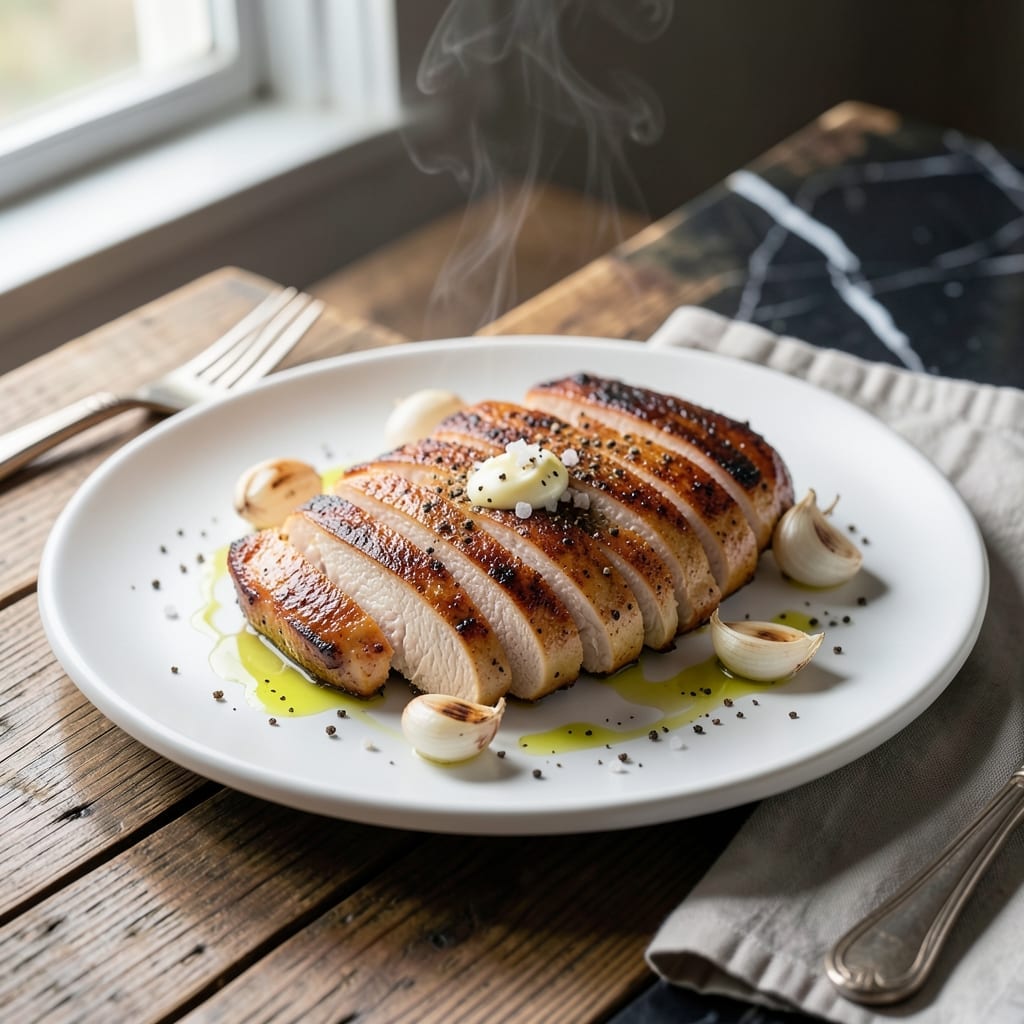
This professional technique guarantees juicy chicken every time, without complicated steps or special equipment. I developed this method after years of testing to eliminate dry, rubbery results that plague home cooks. The secret lies in precise timing and temperature control.
The approach focuses on even cooking through proper heat management and resting. You’ll use basic ingredients and standard kitchen tools to achieve results that rival restaurant quality. No brining required, though that option remains available for those who prefer it.
What emerges is perfectly cooked chicken with a tender interior and golden exterior. The method works consistently whether you’re cooking for two or a crowd. The results speak for themselves with each foolproof batch.
Follow these steps for reliable, delicious chicken that never disappoints. The process is straightforward enough for weeknight dinners yet impressive enough for company.
Ingredients for Boneless Chicken Breast Recipe Easy
Basic ingredients and standard tools yield restaurant-quality chicken with foolproof juicy results.
| Ingredient | Amount | Notes |
|---|---|---|
| Boneless Chicken Breast 🍗 | 1 ½ lb | Skinless, pounded to even thickness |
| Kosher Salt 🧂 | 1 ½ tsp | Diamond Crystal preferred for texture |
| Freshly Ground Black Pepper 🌶️ | ½ tsp | Coarse grind for better flavor |
| Olive Oil 🫒 | 2 tbsp | Divided for cooking and finishing |
| Unsalted Butter 🧈 | 2 tbsp | For basting during cooking |
| Garlic Cloves 🧄 | 3 cloves | Minced for aromatic base |
| Fresh Rosemary Sprigs 🌿 | 2 whole | Or 1 tsp dried rosemary |
| Fresh Thyme Sprigs 🍃 | 3 whole | Or 1 tsp dried thyme |
| Lemon 🍋 | 1 whole | Zested and juiced for brightness |
| Chicken Broth 💧 | ¼ cup | Low-sodium preferred for control |
The chicken quality is paramount. Boneless, skinless breasts from Whole Foods or Costco offer consistent thickness and freshness. Pounding to an even 1-inch thickness ensures uniform cooking—use a meat mallet or rolling pin. Diamond Crystal kosher salt is ideal for its clean flavor and easy distribution. For the herbs, fresh rosemary and thyme from the produce section provide superior aroma compared to dried.
No fresh herbs? Dried at one-third the amount works in a pinch. Substitute vegetable broth for chicken broth if needed. The butter can be omitted, but it adds richness to the basting liquid. For extra flavor, add a splash of white wine to the pan. If you prefer a crispier exterior, increase the olive oil by 1 tbsp and sear the chicken longer on each side.
Cooked chicken keeps in the fridge for 3-4 days or can be frozen for 3 months. Store in airtight containers with a paper towel to absorb moisture. Reheat gently in a skillet with a splash of broth to maintain juiciness. Always bring chicken to room temperature before cooking for even results.
Why You’ll Love This Recipe
- One Pan Meal: I just season, sear, and serve—no complicated steps, just a hot pan and 15 minutes of my time.
- Buttery Richness: The olive oil and butter combo gives it this golden crust that’s crispy outside, juicy inside.
- Weeknight Hero: Honestly, it’s my Tuesday lifesaver—pairs with rice, salad, or pasta without a second thought.
- Budget Stretcher: A pound of chicken breasts feeds my family for two meals, and the ingredients are already in my pantry.
Step-by-Step Instructions for Boneless Chicken Breast
Achieve perfect juiciness with this straightforward method that guarantees tender, flavorful chicken every time.
Step 1: Prep and Season the Chicken
Begin by patting the 1.5 lb boneless chicken breast completely dry with paper towels. Even moisture prevents proper browning, so be thorough. Pound the chicken to an even thickness—this ensures uniform cooking and prevents dry, overdone edges.
Season both sides generously with the 1.5 tsp kosher salt and 0.5 tsp freshly ground black pepper. I press the seasoning into the meat lightly to ensure it adheres. Let it sit at room temperature for 10-15 minutes while you prepare the remaining components.
Step 2: Sear for Maximum Flavor
Heat 1 tbsp olive oil in a large, heavy skillet over medium-high heat until it shimmers. Add the chicken and cook undisturbed for 4-5 minutes until the underside develops a deep golden-brown crust. Resist the urge to move it—this contact builds flavor.
Flip the chicken and add the remaining 1 tbsp olive oil, 2 tbsp unsalted butter, 3 cloves minced garlic cloves, 2 whole fresh rosemary sprigs, and 3 whole fresh thyme sprigs to the pan. Baste the chicken continuously with the foaming butter for 3-4 minutes, spooning the aromatic liquid over the surface.
Step 3: Finish with Brightness and Moisture
Reduce heat to medium and add the zest of 1 whole lemon and 0.25 cup chicken broth to the skillet. Cover and cook for 2-3 minutes until the chicken reaches an internal temperature of 165°F. The steam from the broth keeps the meat juicy while infusing it with herb and citrus notes.
Transfer the chicken to a cutting board and let it rest for 5 minutes. This allows the juices to redistribute, ensuring every bite stays moist. The residual liquid in the pan will have reduced slightly into a light, flavorful sauce.
Step 4: Serve with Pan Sauce
Squeeze the juice of 1 whole lemon into the skillet with any accumulated chicken juices. Simmer for 1-2 minutes until the sauce thickens slightly. Pour this bright, herbed pan sauce over the chicken just before serving.
Slice the chicken against the grain into ½-inch thick pieces. The meat should be uniformly white with no pink, and the sauce should cling lightly to each slice. Serve immediately to enjoy the chicken at its juiciest.
Pro Tips For Making Boneless Chicken Breast Recipe Easy
- Pound to Even Thickness: Use a rolling pin or meat mallet to pound the chicken breasts to about ¾-inch thickness—this guarantees even cooking so you’re not stuck with dry edges and raw centers.
- Dry the Meat Well: Pat the chicken breasts completely dry with paper towels before seasoning; water is the enemy of a good sear and causes steaming instead of browning.
- Start Hot, Finish Low: Sear the chicken in a screaming-hot pan with olive oil for 2–3 minutes per side, then reduce to medium-low to cook through without burning the butter.
- Add Butter Last: Swirl in the unsalted butter during the last 2 minutes of cooking and baste the chicken—it adds rich flavor without risking burnt butter from the start.
Creative Variations of This Dish
Herb-Crusted Variation
Mix ½ cup panko breadcrumbs with 1 tbsp chopped rosemary and 1 tbsp chopped thyme. Press this onto the seasoned chicken before searing. The crust adds texture while keeping the meat juicy. I love the extra crunch this brings to each bite.
Spicy Cajun Style
Replace the salt and pepper with 2 tbsp Cajun seasoning (I use Tony Chachere’s). Add ½ tsp cayenne pepper to the basting butter for extra heat. The bold spices create a flavorful blackened effect that pairs perfectly with the lemon sauce. 🌶️
Lemon-Garlic Butter
Increase the garlic to 5 cloves and add 1 tbsp lemon zest to the basting butter. This creates a brighter, more aromatic sauce that infuses the chicken with zesty flavor. The lemon cuts through the richness beautifully.
Balsamic Glaze
After removing the chicken, deglaze the pan with ¼ cup balsamic vinegar instead of broth. Reduce until syrupy, then drizzle over the sliced chicken. The tangy glaze adds a gourmet touch to this simple dish.
Creamy Mushroom
Sauté 8 oz sliced mushrooms in the pan before adding the chicken. After cooking, stir ¼ cup heavy cream into the pan sauce for a creamy, earthy variation. This turns the dish into a comforting one-pan meal.
Honey-Mustard Twist
Whisk 2 tbsp Dijon mustard and 1 tbsp honey into the chicken broth before adding to the pan. The sweet and tangy glaze caramelizes slightly, creating a sticky, flavorful coating. 💛
Nutrition Facts
Frequently Asked Questions
Why pound the chicken to even thickness?
Pounding ensures uniform cooking so thinner parts don’t dry out while thicker parts finish. Aim for 1-inch thickness throughout for best results.
Can I use frozen chicken?
Thaw completely in the fridge overnight first. Cooking from frozen leads to uneven doneness and dry meat. Never thaw at room temperature.
What if my chicken is done before the sauce reduces?
Remove chicken to rest on a plate, then finish the sauce separately. Return chicken to the pan just before serving to coat evenly.
How do I know when it’s perfectly cooked?
Use a meat thermometer—165°F in the thickest part is ideal. The juices should run clear, not pink, when pierced.

- 6 Egg Cake Recipe with Oil: Light as Air With Buttery Moisture - October 4, 2026
- 4 Bean Casserole Recipe: One-Pan Heartiness With Smoky Paprika Depth - October 4, 2026
- 3-Ingredient Keto Mug Cake Recipe: Microwave Magic in 2 Minutes - October 4, 2026