
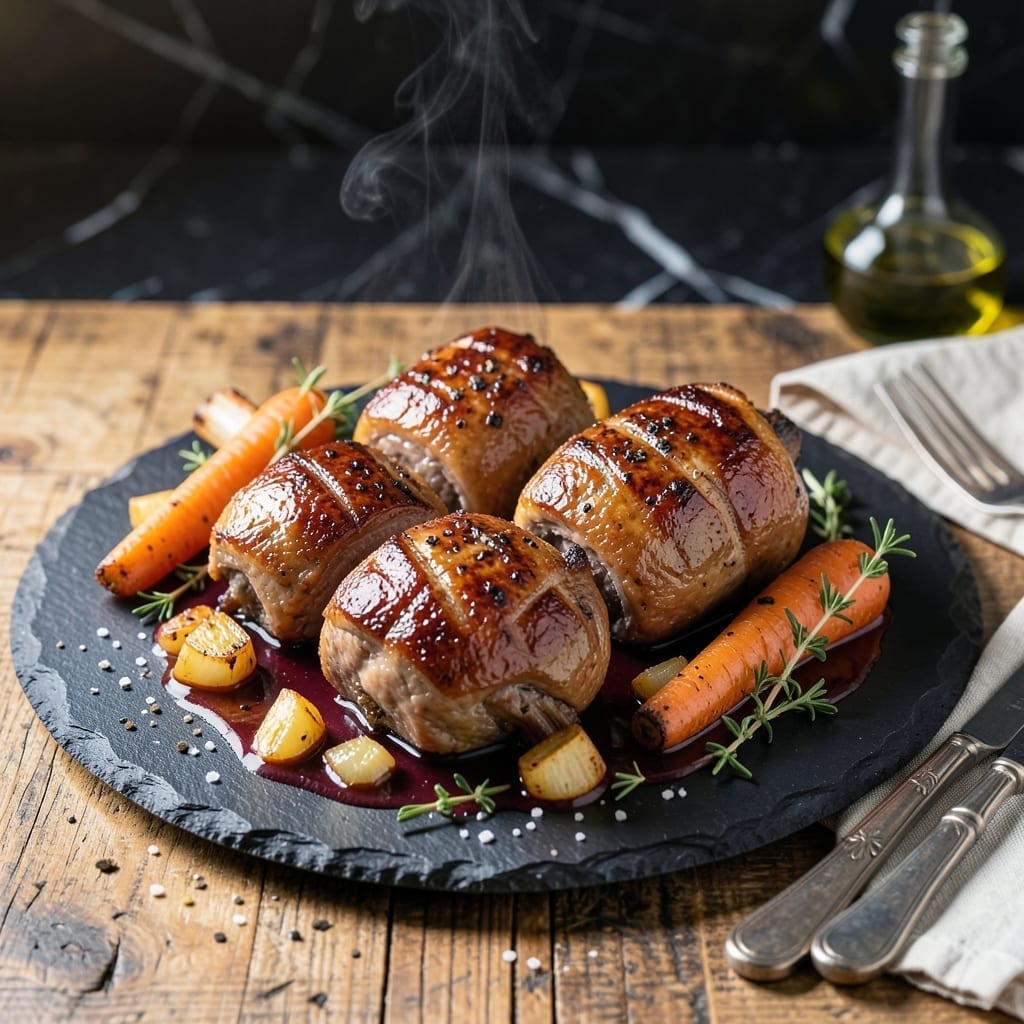
Braising pork shanks transforms tough cuts into tender, fall-off-the-bone perfection. This method coaxes out rich collagen, creating a velvety texture that melts with each bite.
The slow cooking process in a flavorful liquid breaks down connective tissue, infusing the meat with deep, savory notes. Aromatic vegetables and herbs build layers of complexity without overpowering.
By the end, the meat will be so tender it nearly collapses at the touch of a fork, while the sauce reduces into a glossy, umami-packed glaze. Every element works in harmony.
Serve with creamy polenta or crusty bread to soak up every drop. The results speak for themselves.
Ingredients for Recipe for Pork Shanks
Transform tough pork shanks with aromatic vegetables, bold wine, and slow braising into melt-in-your-mouth perfection.
| Ingredient | Amount | Notes |
|---|---|---|
| Pork Shanks 🍖 | 4 whole | Bone-in, skin-on preferred |
| Kosher Salt 🧂 | 2 tsp | Diamond Crystal preferred |
| Black Pepper 🌶️ | 1 tsp | Freshly ground |
| Olive Oil 🫒 | 2 tbsp | Extra-virgin for searing |
| Yellow Onion 🧅 | 1 whole | Large, diced |
| Carrots 🥕 | 2 whole | Medium, sliced into rounds |
| Celery Stalks 🌿 | 2 whole | Sliced, leaves included |
| Garlic Cloves 🧄 | 6 cloves | Smashed, peeled |
| Fresh Rosemary 🌿 | 2 tbsp | Chopped, stems discarded |
| Fresh Thyme 🍃 | 2 tbsp | Leaves stripped from stems |
| Bay Leaves 🌿 | 2 whole | Dried, whole |
| Dry Red Wine 🍷 | 1 ½ cups | Bold and dry variety |
| Low-Sodium Chicken Stock 🥣 | 2 cups | Homemade or high-quality |
| Tomato Paste 🍅 | 2 tbsp | Double-concentrated preferred |
| Balsamic Vinegar 🍯 | 1 tbsp | Aged, for depth |
The pork shanks are the foundation here. Bone-in, skin-on shanks deliver the best collagen release and flavor depth. Source from Whole Foods or a trusted butcher for consistent quality—look for even marbling and a rich pink hue. Avoid pre-cut shanks if possible; whole shanks allow you to control the size. The Diamond Crystal kosher salt is non-negotiable for precise seasoning control.
No red wine? Substitute beef stock with an extra tablespoon of balsamic vinegar for similar acidity and depth. Fresh herbs can be replaced with dried at one-third the amount, though fresh rosemary and thyme are ideal. If tomato paste is unavailable, crushed tomatoes reduced by half works in a pinch. The chicken stock can be swapped for vegetable stock if preferred, but adjust seasoning accordingly.
Braised pork shanks actually improve overnight. Store in an airtight container with the braising liquid for up to 4 days in the fridge, or freeze for 3 months. Reheat gently on the stove to preserve the velvety texture. The rendered fat can be skimmed and saved for cooking—it’s liquid gold.
Why You’ll Love This Recipe
- One Pan Wonder: I just season the shanks with salt, pepper, and a drizzle of olive oil, then let the oven do the work.
- Rich and Tender: The slow cooking turns the pork into fall-off-the-bone perfection with the onion adding sweet depth.
- Feeds a Crowd: I make a big batch for Sunday supper and everyone leaves satisfied.
- Budget Friendly: Pork shanks are an affordable cut that turns into something extraordinary with minimal effort.
Step-by-Step Instructions for Braised Pork Shanks
Master the technique that transforms tough cuts into fall-off-the-bone perfection with rich, velvety sauce.
Step 1: Sear the Pork Shanks to Develop Deep Flavor
Pat the 4 whole Pork Shanks dry with paper towels and season generously with the 2 tsp Kosher Salt and 1 tsp Black Pepper. Heat the 2 tbsp Olive Oil in a large Dutch oven over medium-high heat until shimmering but not smoking.
Add the pork shanks in a single layer, working in batches if necessary to avoid crowding. Sear undisturbed for 4-5 minutes per side until deeply browned. You want a rich mahogany crust—this is where the complex flavor foundation is built. The meat will release easily from the pot when properly seared.
Step 2: Build the Aromatic Base for Braising
Reduce heat to medium and add the diced 1 whole Yellow Onion, sliced 2 whole Carrots, and sliced 2 whole Celery Stalks. Cook for 5-6 minutes, stirring occasionally, until the vegetables soften and begin to caramelize at the edges.
Add the 6 cloves Garlic Cloves, 2 tbsp Fresh Rosemary, and 2 tbsp Fresh Thyme, cooking for 1 minute until fragrant. Stir in the 2 tbsp Tomato Paste and cook for 2 minutes, allowing it to deepen in color—this step intensifies the umami backbone of your braise.
Step 3: Deglaze and Begin the Braising Process
Pour in the 1.5 cups Dry Red Wine and 1 tbsp Balsamic Vinegar, scraping up all the browned bits from the bottom of the pot with a wooden spoon. Bring to a simmer and cook for 3-4 minutes until the liquid reduces by about half.
Add the 2 cups Low-Sodium Chicken Stock and 2 whole Bay Leaves. Return the seared pork shanks to the pot, along with any accumulated juices. The liquid should come about two-thirds up the sides of the meat—add a splash more stock if needed.
Step 4: Slow-Braise to Collagen-Rich Tenderness
Bring the liquid to a gentle simmer, then reduce heat to low. Cover the pot and maintain a very gentle simmer—just a occasional bubble breaking the surface. Cook for 2.5 to 3 hours, turning the shanks every 45 minutes to ensure even cooking.
The pork is done when it’s fork-tender and the meat easily pulls away from the bone. The collagen in the connective tissue will have melted into gelatin, creating that signature silky texture. The braising liquid should have reduced to a rich, sauce-like consistency.
Step 5: Rest and Serve with the Reduced Sauce
Carefully transfer the pork shanks to a serving platter. Skim any excess fat from the surface of the braising liquid, then simmer it over medium heat for 5-7 minutes until it thickens slightly and coats the back of a spoon.
Spoon the reduced sauce over the pork shanks and garnish with fresh herbs if desired. The sauce should be glossy and rich, with the depth of the wine and the sweetness of the vegetables perfectly balanced. Serve immediately while hot.
Pro Tips For Making Recipe For Pork Shanks
- Brown the Shanks: Sear them in olive oil over medium-high heat until deeply browned on all sides—about 4-5 minutes per side. I learned this the hard way: skipping this step leaves the meat bland and the sauce thin.
- Salt Generously: Use more kosher salt than you think, especially on the pork shanks before browning. Sounds weird, but it works: the salt draws out moisture for a better crust.
- Skip the Rush: After browning, let the shanks rest for 5-10 minutes before braising. My grandmother swore by this, and she was right: it keeps the juices inside where they belong.
- Use the Onion Scraps: Toss the onion trimmings into the braising liquid along with the sliced onion. I was skeptical until I tried it—adds depth without extra effort.
Make-Ahead Tips for This Recipe
Overnight Refrigeration
Let the braised pork shanks cool completely in their liquid, then refrigerate in the Dutch oven or transfer to an airtight container. The flavors meld beautifully overnight—I notice the meat becomes even more tender. Store for up to 4 days at 40°F or below. ❄️
Freezing for Later
Portion the shanks with their braising liquid into freezer-safe containers, leaving 1 inch headspace for expansion. They freeze well for up to 3 months without quality loss. I use quart-sized freezer bags for space efficiency.
Label with the date and freeze flat for easy stacking.
Thawing Properly
Transfer from freezer to fridge 24 hours before reheating. For faster thawing, submerge sealed bags in cold water, changing water every 30 minutes. Never thaw at room temperature.
Stovetop Reheating
Place shanks and sauce in a pot and warm over medium-low heat for 10-15 minutes. Add ¼ cup water or stock if the sauce thickens too much. Stir gently to avoid breaking the meat.
Oven Reheating
Cover with foil and bake at 325°F for 20-25 minutes until heated through. This method preserves the meat’s texture best. I recommend checking internal temperature reaches 165°F. 💡
Nutrition Facts
Frequently Asked Questions
How long does it take to braise pork shanks?
Plan for 2.5 to 3 hours of gentle simmering. This slow cooking time is crucial for breaking down the collagen into that signature silky texture. Turn the shanks every 45 minutes for even cooking.
Can I substitute white wine for red?
White wine lacks the boldness needed here. Instead, use beef stock with an extra tablespoon of balsamic vinegar for similar depth. The acidity helps tenderize while adding complexity.
Why is my braising liquid too thin?
Uncover and simmer for 5-7 minutes to reduce. If still thin, mix 1 tsp cornstarch with water and stir in. The sauce should coat the back of a spoon when ready.
What’s the best way to reheat leftovers?
Gently warm in a pot over medium-low heat for 10-15 minutes. Add splash of stock if needed. Avoid microwaving, as it can make the meat tough.

- 6 Egg Cake Recipe with Oil: Light as Air With Buttery Moisture - October 4, 2026
- 4 Bean Casserole Recipe: One-Pan Heartiness With Smoky Paprika Depth - October 4, 2026
- 3-Ingredient Keto Mug Cake Recipe: Microwave Magic in 2 Minutes - October 4, 2026