
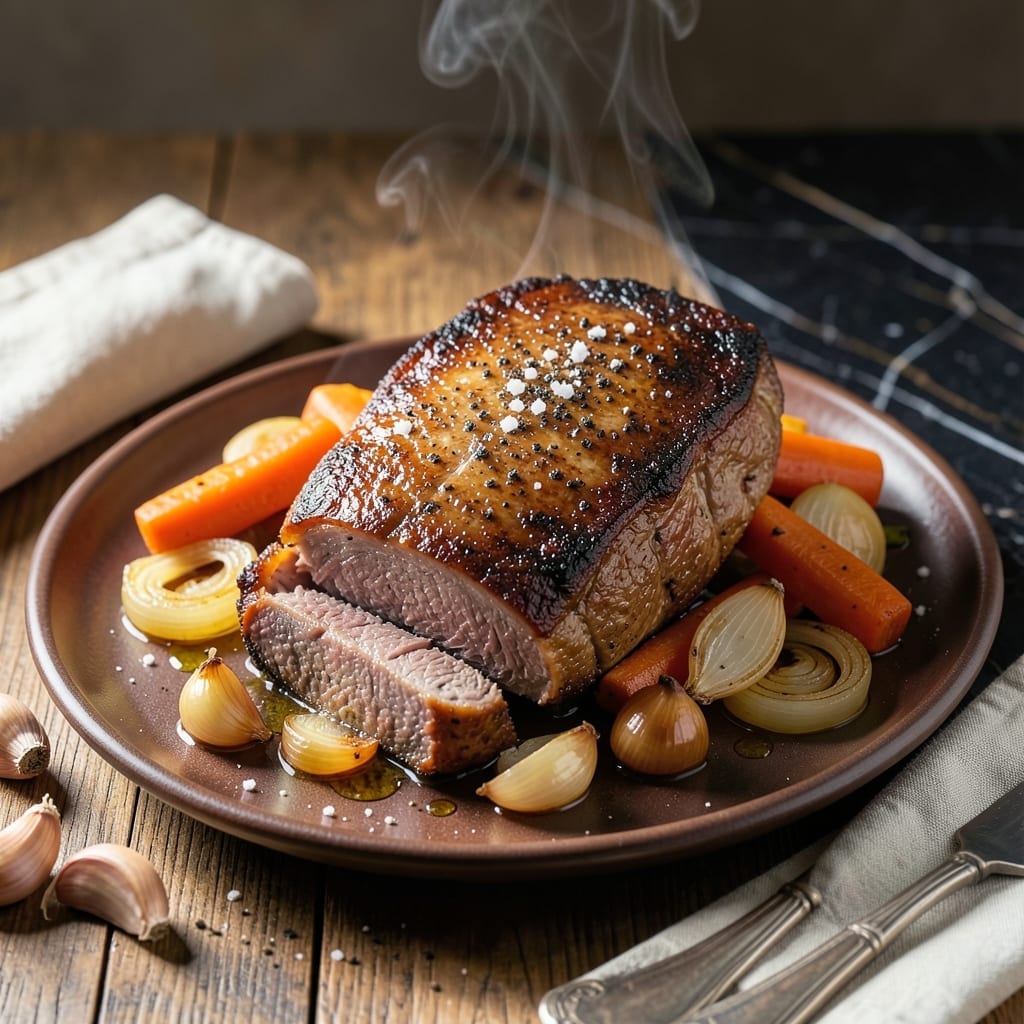
This boneless chuck roast recipe delivers the tender results you crave with minimal effort. Slow-roasting transforms tough cuts into melt-in-your-mouth perfection, making it ideal for Sunday dinners or special occasions.
The secret lies in the low-and-slow cooking method, allowing connective tissues to break down gradually. With just a few simple ingredients and a bit of patience, you’ll achieve a dish that rivals any restaurant offering.
Expect a rich, flavorful roast with a caramelized crust and juicy interior. The meat will pull apart effortlessly, soaking up every bit of the savory cooking juices.
Pair it with roasted vegetables or creamy mashed potatoes for a complete meal. This method ensures consistent, tender results every time.
Ingredients for Boneless Chuck Roast
A well-marbled chuck roast and pantry staples transform into slow-roasted perfection with minimal effort.
| Ingredient | Amount | Notes |
|---|---|---|
| Boneless Chuck Roast 🥩 | 3 lb | Well-marbled, trimmed of excess fat |
| Kosher Salt 🧂 | 2 tsp | Diamond Crystal preferred for even seasoning |
| Freshly Ground Black Pepper 🌶️ | 1 ½ tsp | Coarsely ground for texture |
| Garlic Cloves 🧄 | 6 cloves | Peeled and smashed |
| Yellow Onion 🧅 | 1 whole | Large, quartered through the root |
| Carrots 🥕 | 3 whole | Peeled and cut into 2-inch pieces |
| Celery Stalks 🌿 | 3 whole | Cut into 2-inch pieces |
| Dried Thyme 🍃 | 1 tsp | Rubbed between fingers to release oils |
| Dried Rosemary 🌿 | 1 tsp | Crushed lightly before adding |
| Bay Leaves 🍃 | 2 whole | Dried, whole leaves |
| Beef Broth 💧 | 2 cups | Low-sodium preferred for control |
| Red Wine 🍷 | 1 cup | Dry variety like Cabernet Sauvignon |
| Olive Oil 🫒 | 2 tbsp | Extra-virgin for searing |
| Tomato Paste 🍅 | 2 tbsp | Concentrated for depth of flavor |
The chuck roast is non-negotiable here. Look for abundant marbling—this fat renders down during the long cook, basting the meat from within. Costco or Whole Foods typically carry well-marbled cuts. Avoid pre-cut stew meat; a whole roast ensures even cooking and better texture. If buying from a butcher, request a chuck roll rather than shoulder for more consistent results.
No red wine? Substitute with additional beef broth plus 1 tbsp balsamic vinegar for acidity. Fresh rosemary or thyme can replace dried at triple the amount. Low-sodium broth is ideal, but regular works—just reduce added salt. The tomato paste can be omitted in a pinch, though the dish will lack some depth. For a richer sauce, add 1 tbsp Worcestershire sauce (contains anchovies, so omit for strict vegetarians).
The roast can be refrigerated in its juices for up to 4 days—flavor intensifies as it rests. Freezes beautifully for 3 months; portion before freezing for easy reheating. Always bring to room temperature before reheating to maintain that coveted pull-apart tenderness (the hallmark of this method).
Why You’ll Love This Recipe
- Set It and Forget: I season the roast with salt, pepper, and garlic, then let the oven do all the work for hours.
- Feeds the Family: One roast makes enough for Sunday dinner plus leftovers for sandwiches all week.
- Budget Hero: Chuck roast is affordable, and with just onion, garlic, and basic seasonings, it feels like a splurge.
Step-by-Step Instructions for Boneless Chuck Roast
Master the technique that transforms tough cuts into fork-tender perfection every time.
Step 1: Season and Sear the Roast
Pat the 3 lb Boneless Chuck Roast completely dry with paper towels. This ensures a proper sear rather than steaming. Season all sides aggressively with the 2 tsp Kosher Salt and 1.5 tsp Freshly Ground Black Pepper, pressing the seasoning into the meat so it adheres.
Heat the 2 tbsp Olive Oil in a heavy Dutch oven over medium-high heat until shimmering. Sear the roast on all sides for 4-5 minutes per side until deeply browned. You’re building a flavor foundation here—don’t rush. The meat should release easily when properly browned.
Step 2: Build the Aromatic Base
Remove the seared roast and set aside. In the same pot, add the 1 whole Yellow Onion, 3 whole Carrots, and 3 whole Celery Stalks. Sauté for 5-6 minutes until the vegetables begin to soften and develop color around the edges.
Add the 6 cloves Garlic Cloves, 1 tsp Dried Thyme, 1 tsp Dried Rosemary, and 2 whole Bay Leaves. Cook for 1 minute until fragrant. Stir in the 2 tbsp Tomato Paste and cook for another 1-2 minutes to deepen its flavor.
Step 3: Deglaze and Begin Braising
Pour in the 1 cup Red Wine, scraping the browned bits from the bottom of the pot with a wooden spoon. This deglazing step captures all the concentrated flavors from searing. Let the wine reduce by half, about 3-4 minutes.
Return the roast to the pot and add the 2 cups Beef Broth. The liquid should come about two-thirds up the side of the meat. Bring to a gentle simmer, then reduce heat to low to maintain a slow, steady bubble.
Step 4: Slow-Roast to Pull-Apart Tenderness
Cover the pot tightly and transfer to a preheated 325°F oven. Braise for 3 to 3.5 hours, turning the roast halfway through. You’ll know it’s ready when a fork slides in with no resistance and the meat easily pulls apart into shreds.
Check occasionally to ensure the liquid hasn’t reduced too much—add a splash of water if needed. The low, consistent heat is key to breaking down the collagen into gelatin, which creates that luxurious, tender texture.
Once tender, remove the roast and let it rest for 15 minutes before shredding or slicing. Skim excess fat from the braising liquid if desired, then serve the meat with the rich, flavorful juices spooned over the top.
Pro Tips For Making Boneless Chuck Roast
- Sear the Roast: I learned this the hard way—skipping the sear leaves your chuck roast bland. Use high heat and about 2 tablespoons of oil to get a deep brown crust on all sides before slow cooking.
- Season Overnight: Rub the roast with kosher salt and black pepper the night before. Sounds weird, but it works: the salt penetrates deep, making every bite more flavorful.
- Don’t Rush the Cook: After burning three batches, I finally figured out low and slow is non-negotiable. Keep the temperature at 275°F and give it at least 3-4 hours for fall-apart tenderness.
- Use Fresh Garlic: My grandmother swore by this, and she was right: fresh garlic cloves crushed just before cooking pack way more punch than the pre-minced stuff in a jar.
Make-Ahead Tips for This boneless chuck roast
Prep Ahead Strategy
You can season and sear the 3 lb roast up to 24 hours before cooking. Store it uncovered in the fridge to let the surface dry slightly, which enhances the sear. I often do this the night before for an easier cooking day. 💡
Vegetable Prep
Chop all your onion, carrots, and celery the day before and store in airtight containers. This mirepoix base keeps well for 2-3 days in the fridge. Having everything ready makes the cooking process seamless.
Braising Liquid
Mix your red wine and beef broth in advance. I like to use a Cabernet Sauvignon for depth. This can sit in your fridge overnight, allowing flavors to meld slightly before cooking.
Slow cooker option
For true set-it-and-forget-it convenience, transfer everything to a slow cooker after searing. Cook on low for 8-10 hours or high for 5-6 hours. The results are just as tender.
Make-Ahead Cooking
Cook the entire dish 1-2 days ahead. The flavors deepen as it rests in the fridge. Reheat gently in a 300°F oven for 20-30 minutes before serving. ❄️
Freezing Tips
Portion cooked roast with juices in freezer bags. It freezes beautifully for 3 months. Thaw overnight in the fridge, then reheat on the stovetop with a splash of water.
Nutrition Facts
Frequently Asked Questions
Can I use a bone-in chuck roast instead?
Yes, but cooking time may increase by 30-60 minutes. The bone adds flavor but can slow heat penetration. For best results, stick to 325°F and check tenderness with a fork.
Why is my roast tough after cooking?
It likely didn’t cook long enough. Collagen needs 3-4 hours at low heat to break down. If it shreds easily, it’s done; if not, return it to the oven for another 30-60 minutes.
Can I make this in a slow cooker?
Sear the meat first, then cook on low for 8-10 hours or high for 5-6 hours. The texture will be just as tender.
How do I store leftovers?
Keep the roast in its juices in an airtight container for up to 4 days in the fridge. For longer storage, freeze for up to 3 months.

- 6 Egg Cake Recipe with Oil: Light as Air With Buttery Moisture - October 4, 2026
- 4 Bean Casserole Recipe: One-Pan Heartiness With Smoky Paprika Depth - October 4, 2026
- 3-Ingredient Keto Mug Cake Recipe: Microwave Magic in 2 Minutes - October 4, 2026