
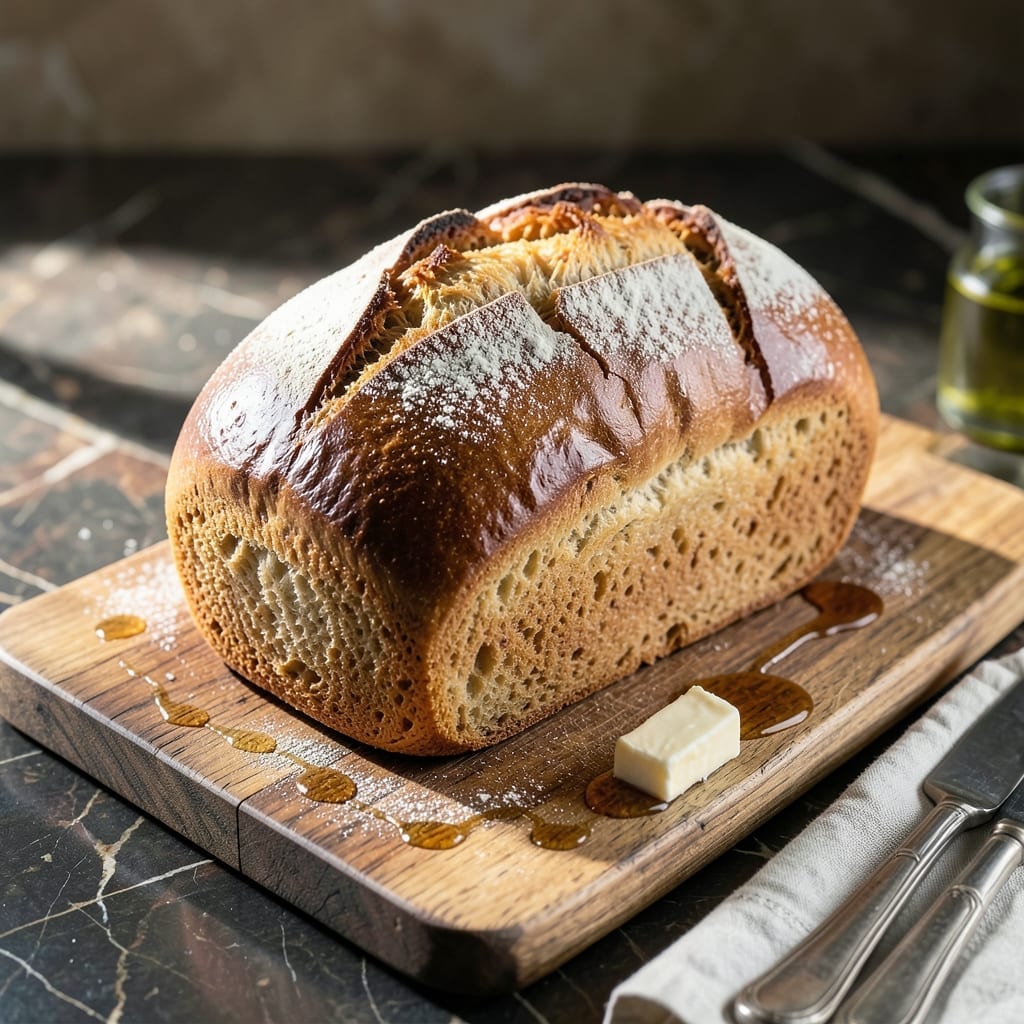
There’s nothing quite like the aroma of fresh bread filling your kitchen, especially when it requires almost no effort from you. This hands-free method delivers a perfect artisan loaf with minimal work and maximum reward.
I’ve refined this recipe over time to ensure consistent results, regardless of your bread machine model. The key is precise ingredient order and proper settings to achieve that golden crust and tender crumb.
What you’ll get is a warm, freshly baked loaf with a crisp exterior and soft, fluffy interior—just like from a bakery. The process is straightforward, with no kneading or shaping required.
Let the machine do the work while you enjoy the process and the delicious outcome.
Ingredients for Bread Recipe for Bread Machine
A few pantry basics plus your bread machine equals bakery-style results at home.
| Ingredient | Amount | Notes |
|---|---|---|
| Bread Flour 🌾 | 4 cups | All-purpose works in a pinch |
| Warm Water 💧 | 1 ¼ cups | 110°F, not hotter |
| Active Dry Yeast 🍞 | 2 ¼ tsp | One packet, check expiration |
| Granulated Sugar 🍚 | 2 tbsp | Feeds the yeast |
| Salt 🧂 | 1 ½ tsp | Kosher or table |
| Unsalted Butter 🧈 | 2 tbsp | Softened, or vegetable oil |
| Powdered Milk 🥛 | ¼ cup | Non-fat, for tenderness |
| Honey 🍯 | 2 tbsp | Or maple syrup |
| Olive Oil 🫒 | 1 tbsp | For greasing pan |
| Large Egg 🥚 | 1 whole | Room temperature, optional |
| Vital Wheat Gluten 🌾 | 1 tbsp | For chewier texture |
The flour is your foundation here. King Arthur Bread Flour is my go-to for its consistent protein content, but Gold Medal works too. Yeast is the magic ingredient—check the expiration date (old yeast won’t rise, and that’s a sad loaf). I buy mine in bulk from Costco and store it in the freezer. Warm water should feel like bathwater, not boiling. Too hot kills the yeast, too cold won’t activate it.
No bread flour? All-purpose plus an extra tbsp of vital wheat gluten per cup gets you close. Out of honey? Maple syrup or sugar swaps in 1:1. For a dairy-free version, skip the powdered milk or use a plant-based version. The egg adds richness but isn’t mandatory—omit it if you prefer. Butter can be vegetable oil or coconut oil (melted) for a softer crust.
Store dry ingredients in airtight containers at room temp for 6-12 months. Yeast keeps 1 year unopened, 3-6 months once opened in the freezer. Baked loaves stay fresh 2-3 days in a paper bag, or freeze slices for 3 months.
Why You’ll Love This Recipe
- Set and Forget: I toss in the flour, yeast, sugar, and salt, add warm water, press start, and walk away—no kneading, no watching, no stress.
- Warm, Sweet Comfort: The sugar caramelizes just enough to give that golden crust a subtle sweetness, while the yeast makes the house smell like a bakery.
- Meal Prep Hero: I bake a loaf on Sunday, and it’s sandwiches for lunches, toast for breakfast, and garlic bread for dinner all week.
- Penny-Wise Loaf: A pound of bread flour costs less than a single store-bought loaf, and honestly, it tastes twice as good.
Step-by-Step Instructions for Bread Machine Bread
Here’s the method. Straightforward, tested, works every time.
Step 1: Layer Wet Ingredients in the Pan
First, add the 1.25 cups Warm Water to your bread machine pan. Then pour in the 2 tbsp Honey—it’ll dissolve completely during mixing. I like to use a spatula to make sure it’s fully incorporated into the water.
Next, add the 1 whole Large Egg and 2 tbsp Unsalted Butter. The egg adds richness and structure, while the butter ensures a tender crumb. If your butter isn’t softened, cut it into small pieces so it disperses evenly.
Finally, drizzle in the 1 tbsp Olive Oil. This helps prevent sticking and adds a subtle richness to the loaf.
Step 2: Add Dry Ingredients and Yeast
Now, add the dry ingredients in this order: 4 cups Bread Flour, 0.25 cup Powdered Milk, 1 tbsp Vital Wheat Gluten, 2 tbsp Granulated Sugar, and 1.5 tsp Salt. The gluten strengthens the dough, while the powdered milk adds tenderness and a slightly sweeter flavor.
Use a spoon to level off the flour in the measuring cup—packing it down can lead to a dense loaf. Make a small well in the center of the flour mixture and add the 2.25 tsp Active Dry Yeast. This keeps the yeast separate from the wet ingredients until the machine starts kneading.
Step 3: Select the Right Cycle and Start
Place the pan into the bread machine and secure it properly. Select the basic or white bread cycle—this recipe works perfectly with a standard 3-4 hour cycle. If your machine has a crust setting, I recommend medium for the best balance of soft interior and golden crust.
Press start and let the machine do the work. You’ll hear the kneading begin within a few minutes. Resist the urge to open the lid—keeping the environment stable ensures even rising and baking.
Step 4: Check and Cool the Finished Loaf
Once the cycle completes, carefully remove the pan from the machine using oven mitts—it will be hot! Let the bread sit in the pan for 5-10 minutes before transferring it to a wire rack. This prevents the loaf from collapsing as it cools.
Allow the bread to cool for at least 1 hour before slicing. I know it’s tempting to dig in right away, but cooling ensures the crumb sets properly and the flavors fully develop. The loaf should have a golden-brown crust and a soft, slightly chewy interior.
If the top looks too pale, you can return the pan to the machine for an additional 10-15 minutes on the bake-only setting.
Pro Tips For Making Bread Recipe For Bread Machine
- Check Yeast Freshness: I learned this the hard way—test your active dry yeast in 1/4 cup warm water with a pinch of sugar first. If it doesn’t bubble within 5-10 minutes, your bread won’t rise.
- Weigh Your Flour: After a few dense loaves, I finally started using a scale—220g of bread flour per cup is more accurate than scooping. It actually changes the outcome.
- Skip the Tap Water: Sounds weird, but it works: use filtered or bottled warm water (about 110°F) to avoid chlorine or minerals that can kill the yeast.
- Let It Cool: Resist the urge to slice right away—give the bread a solid 20-30 minutes in the pan after baking. This prevents that gummy texture that ruins the first few slices.
Wine and Beer Pairings for These Flavors
Light Beer Pairings
Crisp, light lagers like Bud Light or Coors Banquet complement the buttery richness of fresh bread without competing with its mild flavor. Serve chilled at 40°F for maximum refreshment. The carbonation cleanses your palate between bites. 🍺
Wheat Beer Harmony
Try a German hefeweizen such as Paulaner or Weihenstephaner. The banana and clove notes in these unfiltered wheat beers pair beautifully with the honey-sweetened loaf. Serve in a tall, curved glass to enhance the aroma.
Wine Selections
For wine lovers, a light Pinot Grigio from Italy offers citrusy brightness that cuts through the bread’s richness. Alternatively, a dry Sauvignon Blanc with its herbal notes provides a refreshing contrast. Serve at 45-50°F. 🍷
Non-Alcoholic Options
Sparkling apple cider or a ginger beer like Bundaberg offers the same palate-cleansing effect as alcohol. The effervescence and subtle sweetness complement the bread’s honey notes perfectly.
Tea Pairings
Hot or iced Earl Grey tea with its bergamot citrus notes makes an elegant non-alcoholic pairing. For herbal lovers, peppermint tea provides a cooling contrast to the warm, yeasty flavors of your fresh loaf.
Nutrition Facts
Frequently Asked Questions
Do I need to use bread flour?
Bread flour gives the best texture, but all-purpose works in a pinch. For a chewier result with all-purpose, add 1 tbsp vital wheat gluten per cup of flour. This boosts the protein content for better structure.
Can I add mix-ins like nuts or seeds?
Add up to 1/2 cup of nuts, seeds, or dried fruit when the machine beeps during the kneading cycle. Avoid adding them at the start to prevent uneven distribution.
Why did my loaf collapse after baking?
This usually happens if the dough overproofs or the yeast is old. Check your yeast’s expiration date and ensure your water is 110°F. Also, let the loaf cool in the pan for 5-10 minutes before transferring.
How do I clean my bread machine pan?
Let it cool completely, then soak in warm, soapy water. Avoid abrasive scrubbers—use a silicone spatula or soft brush. Never immerse the machine itself, only the removable pan and paddle.

- 6 Egg Cake Recipe with Oil: Light as Air With Buttery Moisture - October 4, 2026
- 4 Bean Casserole Recipe: One-Pan Heartiness With Smoky Paprika Depth - October 4, 2026
- 3-Ingredient Keto Mug Cake Recipe: Microwave Magic in 2 Minutes - October 4, 2026