
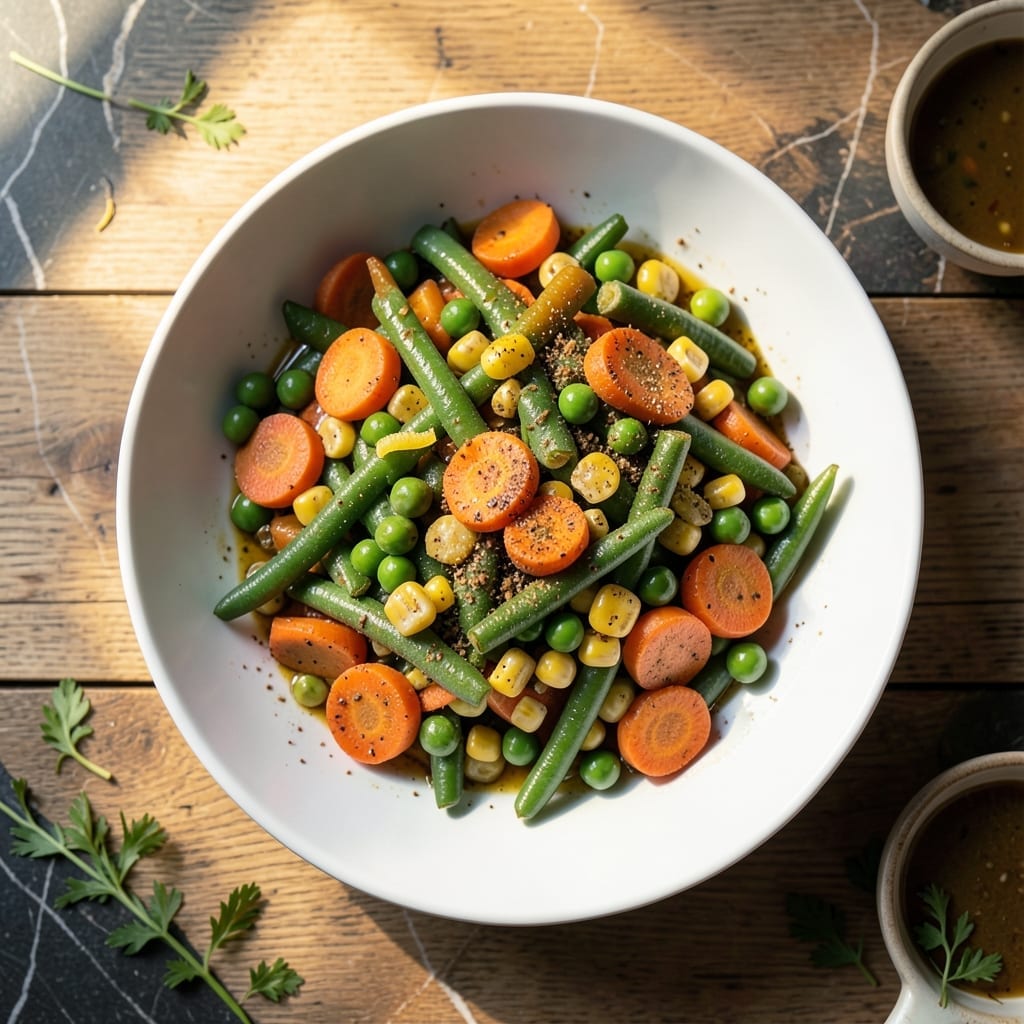
Transforming frozen mixed vegetables into a vibrant side dish takes just 10 minutes and minimal effort. This method preserves their natural color, texture, and nutrients while adding bold flavor.
The key is high heat and a simple seasoning blend. A splash of soy sauce or garlic powder elevates the mix without overpowering. No thawing required—straight from freezer to pan.
You’ll end up with tender-crisp vegetables that taste fresh, not mushy. The quick sauté enhances their natural sweetness while keeping them bright and appealing.
Perfect alongside proteins or as a light meal. This technique works with any frozen vegetable blend you have on hand.
Ingredients for Recipe for Frozen Mixed Vegetables
Ten simple ingredients create a vibrant, flavorful side dish ready in minutes.
| Ingredient | Amount | Notes |
|---|---|---|
| Frozen Mixed Vegetables 🥦 | 16 oz | Any variety, no need to thaw |
| Olive Oil 🫒 | 2 tbsp | Extra-virgin for best flavor |
| Garlic Powder 🧄 | 1 tsp | Or 2 fresh cloves minced |
| Soy Sauce 🥢 | 1 tbsp | Low-sodium if preferred |
| Onion Powder 🧅 | ½ tsp | Balances the seasoning blend |
| Dried Oregano 🌿 | ½ tsp | Or use fresh at triple amount |
| Black Pepper 🌶️ | ½ tsp | Freshly ground preferred |
| Salt 🧂 | ½ tsp | Adjust to taste after cooking |
| Red Pepper Flakes 🔥 | ¼ tsp | Optional for heat |
| Lemon Juice 🍋 | 1 tbsp | Freshly squeezed for brightness |
| Fresh Parsley 🌿 | 2 tbsp | Chopped, for garnish |
The frozen vegetables are the foundation—look for organic blends if possible, as they tend to retain texture better. Any variety works, but mixes with carrots, peas, and green beans hold up especially well to high heat. Trader Joe’s and Whole Foods carry excellent options. The olive oil should be high quality; extra-virgin adds depth that refined lacks.
No soy sauce? Tamari or coconut aminos work perfectly (gluten-free if needed). Fresh garlic can replace the powder—use 2 cloves. Dried herbs are fine, but cut the amount by half since they’re more concentrated. Want more brightness? Add a pinch of lemon zest alongside the juice. The parsley garnish is optional but recommended for freshness.
This reheats well but is best served immediately for optimal texture. Leftovers keep in the fridge for 3-4 days. Freezing isn’t recommended—vegetables will turn mushy. For meal prep, cook the base mix and add garnishes fresh when serving.
Why You’ll Love This Recipe
- One Pan Wonder: I just dump the frozen veggies in with olive oil and spices—no thawing, no fuss.
- Savory Kick: The soy sauce and garlic powder turn plain veggies into something I actually crave.
- Meal Prep Hero: I make a big batch on Sunday and toss it into lunches all week.
- Budget Stretch: A bag of frozen mixed veggies costs pennies and feeds us twice.
Step-by-Step Instructions for Sautéed Frozen Mixed Vegetables
This streamlined method delivers tender-crisp vegetables with bold flavor in minimal time.
Step 1: Prepare the Vegetables and Seasoning Blend
In a small bowl, combine the garlic powder, onion powder, dried oregano, black pepper, salt, and red pepper flakes. This dry blend ensures even distribution of flavors and prevents hot spots in your seasoning.
Leave the 16 oz Frozen Mixed Vegetables in their frozen state—no thawing required. Thawing releases excess moisture, which would steam the vegetables instead of allowing them to develop the desired slight caramelization in the pan.
Step 2: Sauté the Vegetables Until Tender-Crisp
Heat the 2 tbsp Olive Oil in a large skillet over medium-high heat until it shimmers but doesn’t smoke. Add the frozen vegetables in a single layer, spreading them evenly across the pan. This initial high heat is crucial for achieving a light sear rather than steaming.
Cook undisturbed for 3-4 minutes until the edges of the vegetables begin to brown. You’ll hear a sizzling sound that quiets as the ice crystals melt. Stir the vegetables and continue cooking for another 4-5 minutes, stirring occasionally, until they’re tender-crisp and most of the moisture has evaporated.
Step 3: Finish with Soy Sauce and Lemon Juice
Once the vegetables are nearly done, reduce the heat to medium. Sprinkle the prepared seasoning blend evenly over the vegetables and stir to coat. Pour in the 1 tbsp Soy Sauce and toss to distribute, allowing it to glaze the vegetables as it reduces slightly for about 1 minute.
Remove the skillet from heat and drizzle the 1 tbsp Lemon Juice over the top. The acidity brightens the flavors and cuts through any richness from the oil. Stir once more to combine, ensuring every piece is evenly coated with the glossy, savory sauce.
Step 4: Garnish and Serve Immediately
Transfer the vegetables to a serving dish and sprinkle with the 2 tbsp Fresh Parsley. The parsley adds a pop of color and a fresh, herbal note that complements the savory depth of the soy sauce and spices.
Serve while hot, as the vegetables are best when the textures are at their peak—still slightly crisp with a glossy, flavorful coating. This dish pairs well with grilled proteins or as a quick, nutritious side for weeknight meals.
Pro Tips For Making Recipe For Frozen Mixed Vegetables
- Skip the Thaw: Toss the frozen veggies straight into the hot pan—I learned this the hard way after ending up with mushy, waterlogged vegetables every time I tried to defrost them first.
- Crank the Heat: Use medium-high heat and don’t stir for the first 2 minutes to get some color on the vegetables; this actually changes the outcome from steamed to slightly caramelized.
- Season Twice: Add half the garlic and onion powder at the start, then the rest at the end with the soy sauce—this layers the flavor instead of leaving it flat.
- Drain the Excess: After cooking, let the veggies sit in a colander for 30 seconds to shed any extra water from the frozen package; it keeps the dish from turning into a soggy mess.
Health Benefits of recipe for frozen mixed vegetables
Nutrient Retention
Frozen mixed vegetables lock in nutrients at peak ripeness, often retaining more vitamins than “fresh” produce that sits in transit. A 16 oz serving provides significant vitamin A (from carrots) and vitamin C (from peas and beans), supporting immunity and skin health. 💪
Fiber Boost
This dish delivers about 8-10 grams of fiber per serving, aiding digestion and promoting gut health. The variety of vegetables ensures a mix of soluble and insoluble fiber, keeping you full longer. I notice better digestion on days I include dishes like this.
Low-Calorie Density
At roughly 80-100 calories per serving (without added oil), this is a nutrient-dense, low-calorie option. The fiber and water content help with satiety, making it perfect for weight management. The 2 tbsp olive oil adds healthy fats without excessive calories.
Antioxidant Rich
Colorful vegetables like carrots and green beans are packed with antioxidants like beta-carotene and lutein, which combat oxidative stress. The 1 tbsp soy sauce adds umami without compromising the dish’s health benefits.
Heart-Healthy
This recipe is naturally cholesterol-free and low in sodium (especially with low-sodium soy sauce). The olive oil provides heart-healthy monounsaturated fats, while the vegetables contribute potassium, which helps regulate blood pressure.
Quick Nutrition
Ready in 10 minutes, this dish proves healthy eating doesn’t require hours. The lemon juice adds vitamin C, boosting iron absorption from the vegetables. Perfect for busy weeknights when nutrition can’t take a backseat.
Nutrition Facts
Frequently Asked Questions
Do I need to thaw the vegetables first?
No, cooking from frozen is best. Thawing releases moisture that steams rather than sautés.
Can I use a different oil?
Yes, avocado or vegetable oil work well. Avoid butter as it burns at medium-high heat.
How do I prevent soggy vegetables?
Use a large skillet and don’t overcrowd. Cook in batches if needed for 10 minutes total.
What if I don’t have soy sauce?
Substitute with 1 tbsp tamari or coconut aminos. Both add similar umami depth.

- 6 Egg Cake Recipe with Oil: Light as Air With Buttery Moisture - October 4, 2026
- 4 Bean Casserole Recipe: One-Pan Heartiness With Smoky Paprika Depth - October 4, 2026
- 3-Ingredient Keto Mug Cake Recipe: Microwave Magic in 2 Minutes - October 4, 2026