
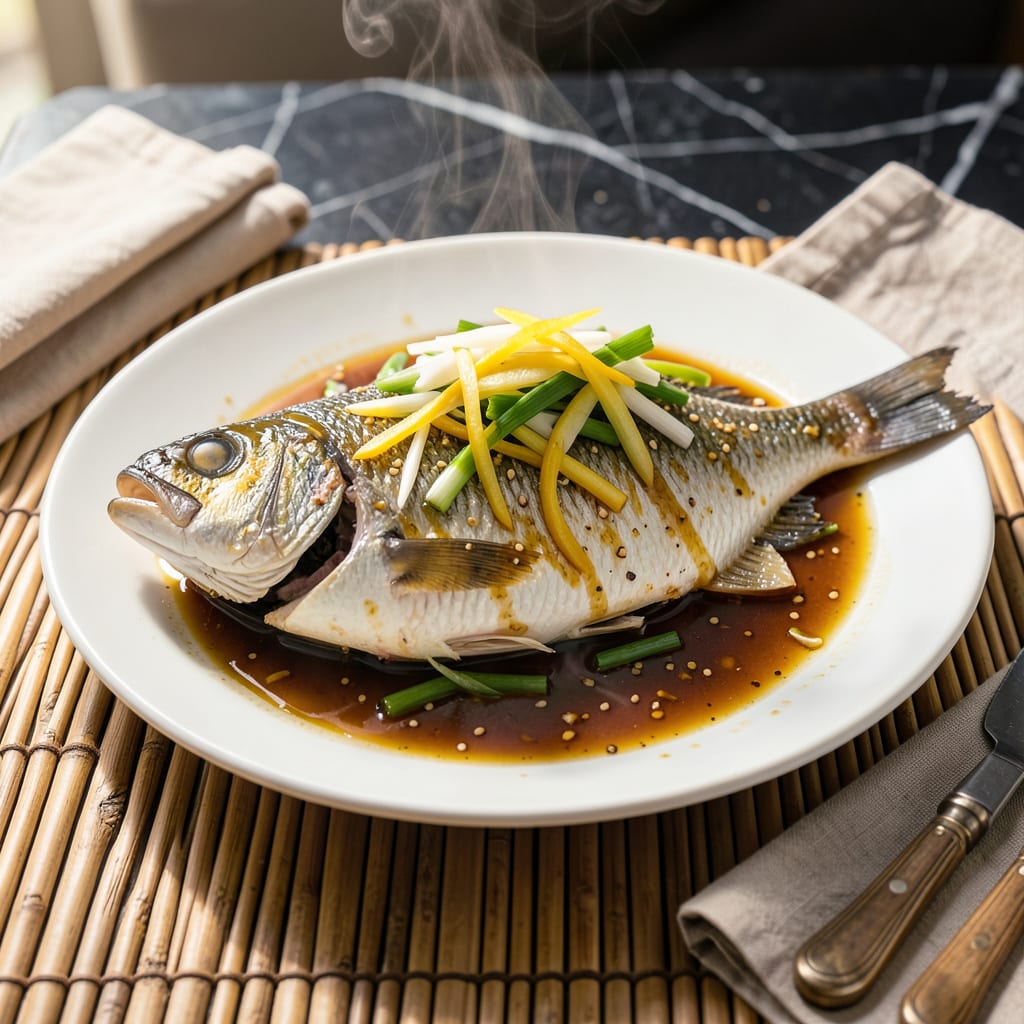
This Cantonese sauce transforms any steamed fish into a restaurant-quality dish with its perfect balance of savory, sweet, and aromatic flavors. The combination of soy sauce, ginger, and scallions creates an umami-rich drizzle that enhances without overpowering.
It takes just minutes to prepare this sauce, which is traditionally spooned over hot fish just before serving. The heat from the fish releases the fragrance of the ginger and scallions, creating an irresistible aroma that completes the dish.
Ingredients for Cantonese Steamed Fish Sauce
A perfectly balanced Cantonese sauce requires just nine simple ingredients from your pantry.
| Ingredient | Amount | Notes |
|---|---|---|
| Light Soy Sauce 🫒 | ½ cup | Low-sodium preferred for balance |
| Shaoxing Wine 🍶 | 3 tbsp | Chinese rice wine essential |
| Fresh Ginger 🌿 | 1 whole | 2-inch piece, julienned |
| Scallions 🧅 | 4 whole | White parts only, thinly sliced |
| Granulated Sugar 🍚 | 2 tsp | Balances saltiness of soy |
| Sesame Oil 🫒 | 1 tsp | Toasted variety for aroma |
| Vegetable Oil 🫒 | 2 tbsp | Neutral flavor for cooking |
| Water 💧 | 2 tbsp | To adjust consistency |
| White Pepper 🌶️ | ¼ tsp | Freshly ground preferred |
The soy sauce is the foundation—Pearl River Bridge or Lee Kum Kee are professional choices. Shaoxing wine is non-negotiable for authenticity; find it at Asian markets or well-stocked Whole Foods locations. Look for ginger with smooth, taut skin (a sign of freshness) and scallions with crisp white stalks. The sugar may seem minor, but it’s essential for rounding out the umami depth.
No Shaoxing wine? Dry sherry works in a pinch, though the flavor profile shifts slightly. Out of white pepper? Black pepper at half the amount is acceptable, but it lacks the traditional aroma. For a deeper color, dark soy sauce can replace up to one-quarter of the light soy. The sesame oil should be added last—heat destroys its delicate fragrance.
This sauce keeps for 1 week refrigerated in an airtight container. The flavors meld and intensify over time, so making it a day ahead is ideal. Do not freeze—it separates and loses its silky texture.
Why You’ll Love This Recipe
- 5-Minute Sauce: I can mix the soy sauce, wine, and sugar while the fish steams—no extra pans, no fuss.
- Umami Bomb: The ginger and scallions infuse the light soy and Shaoxing wine with that restaurant-quality depth.
- Weeknight Hero: Honestly, it’s my go-to for last-minute dinners when I need something elegant but fast.
- Stretches Far: A little sauce goes a long way—drizzle it over rice or veggies the next day.
Step-by-Step Instructions for Cantonese Steamed Fish Sauce
Here is the professional method for creating this umami-rich accompaniment with precision.
Step 1: Infuse the Aromatics in Hot Oil
Heat the 2 tablespoons vegetable oil in a small saucepan over medium heat until shimmering. Add the julienned fresh ginger and thinly sliced scallions (white parts only). Stir constantly for 1-2 minutes until the aromatics turn fragrant and lightly golden.
This initial step extracts the essential oils from the ginger and scallions, creating a flavorful base for the sauce. Be careful not to burn the aromatics—if they darken too quickly, reduce the heat slightly. The oil should sizzle gently around the ingredients, not smoke aggressively.
Step 2: Deglaze with Shaoxing Wine and Soy Sauce
Pour in the 3 tablespoons Shaoxing wine and 0.5 cup light soy sauce. The liquid should bubble vigorously as it hits the hot pan. Stir to combine and let the mixture simmer for 2-3 minutes until the raw alcohol smell dissipates.
This step balances the sharpness of the wine with the saltiness of the soy sauce, creating a harmonious base. The soy sauce should darken slightly as it reduces. If the mixture appears too salty at this stage, don’t worry—the next ingredients will balance it perfectly.
Step 3: Sweeten and Season the Sauce
Add the 2 teaspoons granulated sugar, 0.25 teaspoon white pepper, and 2 tablespoons water. Stir until the sugar fully dissolves and the mixture returns to a gentle simmer. Taste and adjust the sweetness if needed, though the sugar should mellow the saltiness without making the sauce sweet.
The white pepper adds a subtle, earthy heat that complements the seafood beautifully. The water helps adjust the consistency, ensuring the sauce isn’t too thick to drizzle. Simmer for another 1-2 minutes to allow the flavors to meld completely.
Step 4: Finish with Sesame Oil
Remove the saucepan from the heat and stir in the 1 teaspoon sesame oil. The toasted aroma should be immediately apparent. Let the sauce sit for 1 minute to allow the sesame oil to infuse without losing its delicate flavor to excessive heat.
This final addition provides depth and a nutty complexity that elevates the sauce from good to exceptional. The sesame oil should glisten on the surface, indicating it’s been properly incorporated without separating.
Step 5: Strain and Serve
Pour the sauce through a fine-mesh strainer into a serving bowl to remove the ginger and scallion solids. The resulting liquid should be smooth, glossy, and deeply aromatic, with a balance of salty, sweet, and umami notes.
Serve warm or at room temperature over steamed fish or seafood. For best results, prepare this sauce just before serving to preserve its vibrant flavors and aromatic qualities.
Pro Tips For Making Cantonese Steamed Fish Sauce
- Bloom the Aromatics: Sauté the ginger and scallion whites in hot oil for 30 seconds before adding liquids—this wakes up their flavors and makes the sauce taste far more complex than just raw ingredients.
- Balance the Sauce: Taste and adjust the ratio of sugar to soy sauce; a 1:2 ratio (sugar to soy) usually hits the sweet-salty balance, but I learned the hard way that some soy sauces are saltier than others.
- Skip the Overcooking: Simmer the sauce for no more than 2-3 minutes after combining all ingredients—any longer and the Shaoxing wine loses its bright, aromatic edge.
- Use Hot Oil: Pour the finished sauce over the fish while it’s sizzling hot—this helps the flavors penetrate and creates that classic glossy finish everyone expects.
Wine and Beer Pairings for These Flavors
Chinese White Wines
For an authentic pairing, try Great Wall Dry White from China. Its crisp acidity and subtle floral notes complement the soy sauce’s umami without overpowering the delicate ginger and scallion aromatics. Serve chilled at 45-50°F for best results. 🍷
Light Bodied Whites
A Pinot Grigio from Italy works beautifully, offering citrus and green apple notes that cut through the sauce’s richness. Look for bottles from Alto Adige—they have the minerality to stand up to the soy sauce’s saltiness.
Asian Beer Options
Sapporo Premium Beer or Asahi Super Dry are excellent choices. Their clean, crisp profiles with a hint of sweetness balance the sauce’s savory depth. The effervescence also helps cleanse your palate between bites. 🍺
Sparkling Alternatives
For a non-alcoholic option, try San Pellegrino Aranciata. The orange citrus notes and bubbles provide a refreshing contrast to the sauce’s umami. Serve over ice with a thin orange slice for presentation.
Rosé Considerations
A dry Provence rosé with its strawberry and melon notes can be surprisingly good. The wine’s acidity matches the sauce’s brightness while its fruitiness complements the scallion’s freshness.
Nutrition Facts
Frequently Asked Questions
Can I use regular soy sauce instead of light?
Light soy sauce is preferred for its milder saltiness and cleaner flavor. Regular soy sauce will work but may make the sauce too dark and overpowering. If using regular, reduce the amount by 25% and add a splash of water to balance.
How long can I store the sauce?
The sauce keeps well in an airtight container in the fridge for up to 1 week. The flavors deepen over time, so making it a day ahead can enhance its taste. Avoid freezing as it can alter the texture.
What can I substitute for Shaoxing wine?
Dry sherry is the best alternative, though the flavor will differ slightly. In a pinch, use mirin with a splash of rice vinegar for acidity. Avoid cooking wine—it contains added salt and preservatives.
Should I strain the ginger and scallions?
Straining is recommended for a smooth, elegant presentation. However, if you prefer texture, leave the aromatics in. Just ensure they’re finely julienned for a pleasant mouthfeel.

- 6 Egg Cake Recipe with Oil: Light as Air With Buttery Moisture - October 4, 2026
- 4 Bean Casserole Recipe: One-Pan Heartiness With Smoky Paprika Depth - October 4, 2026
- 3-Ingredient Keto Mug Cake Recipe: Microwave Magic in 2 Minutes - October 4, 2026