
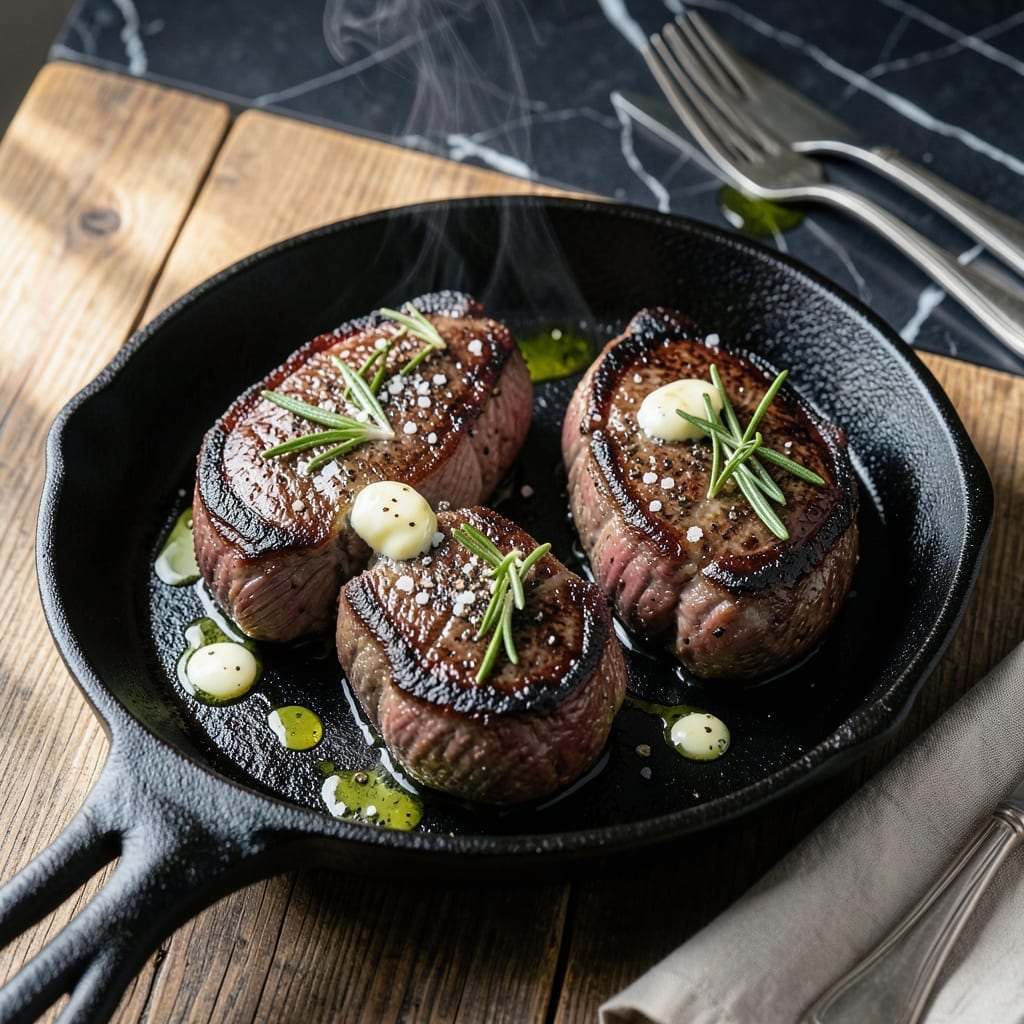
There’s a reason cast iron is every steak lover’s secret weapon for achieving perfectly seared results. This method delivers a rib eye with a deep, caramelized crust and tender, juicy interior every time.
The key lies in patience—starting with a screaming hot pan, properly seasoned meat, and a precise timing sequence that ensures even cooking. A simple herb butter baste in the final minutes adds layers of aromatic depth to each bite.
You’ll end up with a steak that rivals any steakhouse: crispy edges, a rosy center, and rich, buttery flavor throughout. The cast iron creates an unmatched sear while the butter enhances the natural beefiness of the rib eye.
Master this technique, and you’ll never settle for less than restaurant-quality steak at home again.
Ingredients for Cast Iron Rib Eye Steak
Quality ingredients create that restaurant-perfect sear with buttery richness in every bite.
| Ingredient | Amount | Notes |
|---|---|---|
| Rib Eye Steaks 🥩 | 2 whole | 1.5 inches thick, bone-in preferred |
| Kosher Salt 🧂 | 2 tbsp | Diamond Crystal preferred for even seasoning |
| Freshly Ground Black Pepper 🌶️ | 1 tbsp | Coarse grind for texture |
| Unsalted Butter 🧈 | 4 tbsp | Divided for basting and finishing |
| Garlic Cloves 🧄 | 4 cloves | Lightly crushed, peeled |
| Fresh Rosemary Sprigs 🌿 | 2 whole | For aromatic basting |
| Fresh Thyme Sprigs 🍃 | 4 whole | Optional for additional herb depth |
| Neutral-High Smoke Point Oil 🫒 | 2 tbsp | Avocado or grapeseed recommended |
| Shallot 🧅 | 1 whole | Minced for herb butter |
| Fresh Parsley 🌿 | ¼ cup | Chopped, for garnish |
| Lemon 🍋 | ½ whole | Zest only for brightness |
The rib eye selection is critical. Bone-in versions from Whole Foods or local butchers offer superior marbling and flavor compared to pre-cut steaks. Look for USDA Prime or Choice grades with abundant fat cap—this renders down during cooking, basting the meat naturally. The thickness (1.5 inches minimum) ensures a proper crust without overcooking the interior. Dry-aged rib eyes elevate the dish further if available (the aging process intensifies the beefy flavor).
No rib eye? New York strip works as a substitute (leaner but still flavorful). For herb variations, swap rosemary for fresh sage or add a sprig of tarragon. The butter can be replaced with ghee for higher smoke point, though the milk solids in regular butter add depth. Out of shallots? Red onion at half the quantity provides similar sweetness. Always bring steaks to room temperature before cooking for even doneness.
Store uncooked steaks on a rack in the coldest part of your fridge for up to 3-4 days. For longer storage, vacuum-seal and freeze for 6-12 months. Herb butter can be made ahead and refrigerated for 1 week or frozen for 3 months. Leftovers (if any) reheat best in a low oven to preserve moisture.
Why You’ll Love This Recipe
- I’ll be real: cold rib eye slices on a sandwich the next day are almost better than the original meal.
- One Pan Magic: I sear the rib eye in cast iron, then baste it in garlic butter—dinner’s done in one pan with barely any cleanup.
- Buttery Garlic Crust: The combo of melted butter and crushed garlic forms this ridiculous crust that makes every bite unforgettable.
- Date Night Ready: Honestly, it feels fancy enough for a special occasion but takes less time than ordering takeout.
Step-by-Step Instructions for Cast Iron Rib Eye Steak
Master the technique for an exceptional sear and restaurant-quality results with this method.
Step 1: Season and Temper the Rib Eye Steaks
Pat the 2 whole Rib Eye Steaks completely dry with paper towels—moisture prevents proper browning. Season aggressively on all sides with the 2 tbsp Kosher Salt and 1 tbsp Freshly Ground Black Pepper, ensuring the salt adheres to the meat’s surface.
Let the steaks sit at room temperature for 45-60 minutes. This step ensures even cooking throughout the thick cut. Meanwhile, gather the 4 cloves Garlic Cloves, 2 whole Fresh Rosemary Sprigs, and 4 whole Fresh Thyme Sprigs for basting later.
Step 2: Preheat the Cast Iron and Sear the Steaks
Place a heavy cast iron skillet over medium-high heat for 5 minutes until very hot. Add the 2 tbsp Neutral-High Smoke Point Oil and swirl to coat the pan. The oil should shimmer but not smoke excessively.
Carefully lay the rib eye steaks in the pan. Sear undisturbed for 3-4 minutes per side until a deep, dark brown crust forms. Use tongs to flip—never pierce the meat, as this releases valuable juices.
Step 3: Baste with Herb-Infused Butter
Reduce heat to medium and add 2 tbsp Unsalted Butter, the 4 cloves Garlic Cloves, 2 whole Fresh Rosemary Sprigs, and 4 whole Fresh Thyme Sprigs to the pan. Tilt the skillet slightly and spoon the melted butter continuously over the steaks for 1-2 minutes.
This basting process infuses the meat with aromatic flavors and enhances the crust. For additional depth, add the minced 1 whole Shallot to the butter during the last 30 seconds of basting.
Step 4: Rest and Finish with Fresh Herbs
Transfer the steaks to a cutting board and tent loosely with foil. Let them rest for 10 minutes—this allows the juices to redistribute for maximum tenderness. While resting, melt the remaining 2 tbsp Unsalted Butter and stir in the zest of the 0.5 whole Lemon.
Slice the steaks against the grain and drizzle with the lemon butter. Garnish with the 0.25 cup Fresh Parsley, chopped finely. The parsley adds a fresh contrast to the rich, buttery depth of the dish.
Pro Tips For Making Cast Iron Rib Eye Steak
- Dry the Steak: Pat the rib eye completely dry with paper towels before seasoning—I learned this the hard way after my first few steaks steamed instead of seared.
- Sear on Ripping Hot: Let that cast iron scream hot, at least 5 minutes on high heat, or you won’t get that deep brown crust.
- Rest Before Slicing: Give it a solid 5-10 minutes under foil after cooking, or all those juices you worked for will end up on the cutting board.
- Baste with Butter: Tilt the pan and spoon that foaming garlic butter over the steak for the last 2 minutes—sounds extra, but it actually changes the outcome.
Common Mistakes When Making Great cast iron rib eye steak
Skipping the Rest
I can’t stress this enough—slicing into your steak right after cooking ruins all your hard work. Those precious juices need 10 minutes to redistribute. I learned this the hard way when my first rib eye left a bloody puddle on the cutting board. 💪
Cold Steak Mistake
Never cook straight from the fridge. A 45-60 minute temper at room temperature ensures even cooking from edge to center. Cold steaks sear unevenly, leaving you with a sad gray band just under the crust.
Overcrowded Pan
Your cast iron needs space for proper heat circulation. Cooking both steaks at once in a 12-inch pan lowers the temperature too much. If necessary, use two pans or cook sequentially to maintain that screaming hot surface.
Constant Flipping
Resist the urge to check every 30 seconds. The steak needs 3-4 minutes undisturbed per side to develop that perfect crust. Trust the process and let the Maillard reaction work its magic.
Wrong Oil Choice
Butter burns at high heat, so start with avocado or grapeseed oil for searing. I add butter only during the basting phase when the heat is lower. Using butter from the start creates bitter, burnt flavors.
Piercing the Meat
Always use tongs, never a fork. Piercing releases those flavorful juices you worked so hard to preserve. I keep a pair of long-handled tongs dedicated just for steak night to avoid this common error.
Nutrition Facts
Frequently Asked Questions
Why use cast iron for rib eye?
Cast iron retains and distributes heat exceptionally well, creating a perfect sear. Its heavy base ensures even cooking and develops a deep, flavorful crust on the meat.
How do I know when the steak is done?
Use a meat thermometer: 125°F for rare, 130-135°F for medium-rare, and 140°F for medium. The steak will continue cooking while resting, so pull it off the heat slightly below your target temp.
Should I cover the pan while cooking?
No, covering the pan traps steam, which can soften the crust. Keep the pan uncovered to maintain the perfect sear and allow moisture to escape.
Can I use a different type of steak?
Yes! While rib eye is ideal, this method works beautifully with New York strip or filet mignon. Thickness is more important than cut—aim for 1.5 inches for best results.

- 6 Egg Cake Recipe with Oil: Light as Air With Buttery Moisture - October 4, 2026
- 4 Bean Casserole Recipe: One-Pan Heartiness With Smoky Paprika Depth - October 4, 2026
- 3-Ingredient Keto Mug Cake Recipe: Microwave Magic in 2 Minutes - October 4, 2026