
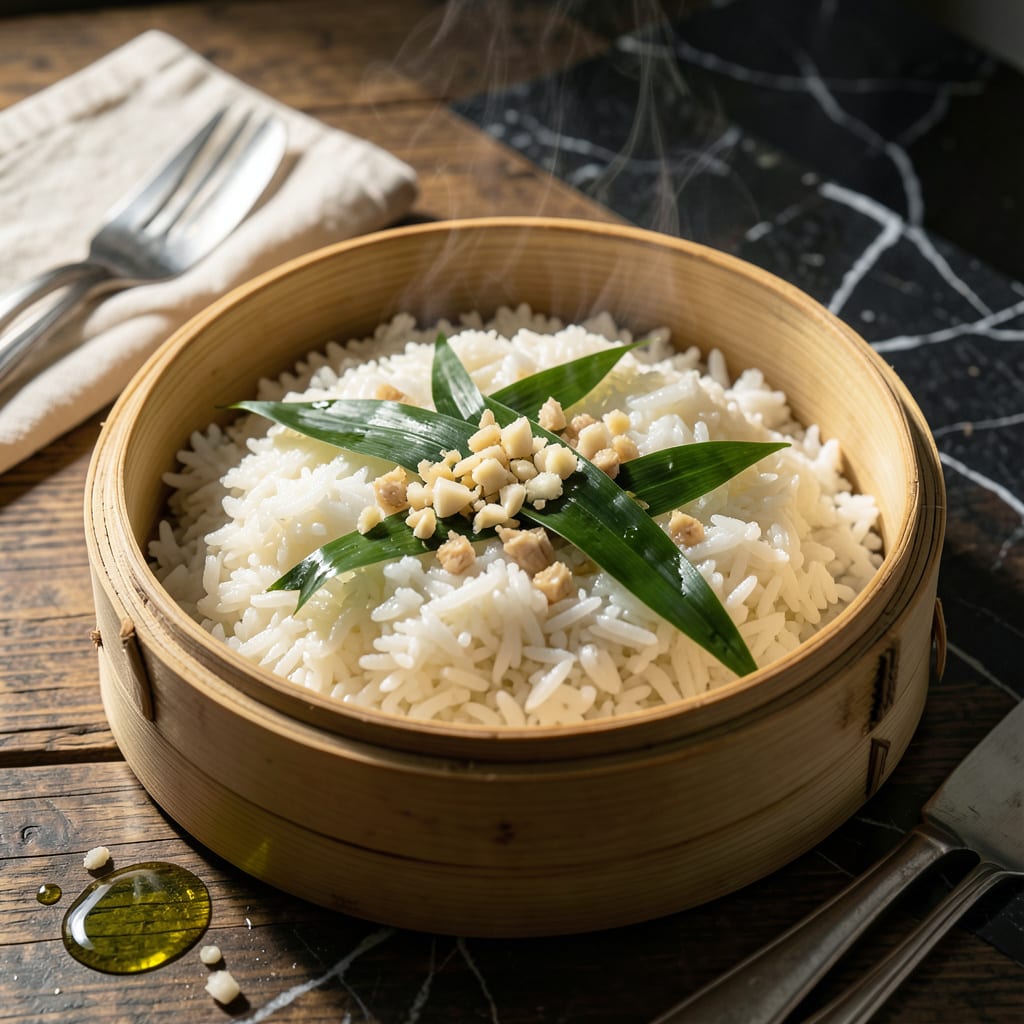
This Cebu-style steamed rice delivers the perfect balance of fragrance and sticky texture that defines Filipino comfort food. The method is simple yet precise, ensuring consistent results every time.
What makes this version special is the slight sweetness and aroma that come from using quality jasmine rice and the traditional steaming technique. The grains stay separate yet cling together just enough for that authentic bite.
Ingredients for Cebu Steamed Rice
Simple ingredients create fragrant, sticky rice with authentic Filipino character and subtle sweetness.
| Ingredient | Amount | Notes |
|---|---|---|
| Jasmine Rice 🌾 | 2 cups | Long-grain, rinsed thoroughly |
| Water 💧 | 2 ½ cups | Filtered for best results |
| Coconut Milk 🥥 | ½ cup | Full-fat for richness |
| Pandan Leaves 🌿 | 2 whole | Fresh or frozen, knotted |
| Garlic Cloves 🧄 | 4 cloves | Peeled and lightly crushed |
| Ginger Root 🌿 | 1 whole | 2-inch piece, sliced thin |
| Salt 🧂 | ½ tsp | Fine sea salt preferred |
| Sugar 🍚 | ½ tsp | White granulated or coconut |
| Bay Leaf 🍃 | 1 whole | Dried or fresh |
| Scallions 🧅 | 2 whole | Thinly sliced for garnish |
The rice is non-negotiable here. Jasmine rice delivers the signature fragrance and stickiness—short-grain varieties won’t work. Asian markets carry the best quality, but most supermarkets stock decent options. Look for Thai Hom Mali or Dinorah brands if available. Pandan leaves add that distinct aroma; find them frozen at Filipino or Vietnamese grocers. Fresh is ideal but frozen works perfectly (just thaw before using).
No pandan? A drop of pandan extract (sparingly) can substitute, but fresh leaves are superior. Coconut milk can be swapped for water with a teaspoon of coconut oil for mild flavor. The sugar balances the savory—coconut sugar adds depth if you have it. Scallions can be replaced with chives or cilantro for garnish. Don’t skip the garlic and ginger; they’re essential for the base aroma.
Cooked rice stays fresh for 3-4 days in an airtight container. Reheat by steaming or microwaving with a damp paper towel to retain moisture. For best texture, use within 2 days. The pandan and bay leaf can be frozen for 6 months—wrap tightly to preserve aroma.
Why You’ll Love This Recipe
- One Pot Wonder: I just dump everything in the rice cooker—jasmine rice, coconut milk, pandan leaves—and let it do its magic.
- Aromatic Heaven: The garlic and pandan infuse the rice with this fragrant, slightly sweet aroma that fills the whole kitchen.
- Feeds a Crowd: I make a big batch on Sunday and it pairs perfectly with grilled meats or veggies all week.
- Budget Stretcher: Honestly, a cup of jasmine rice and a can of coconut milk feed my family for days without breaking the bank.
Step-by-Step Instructions for Cebu Steamed Rice
Master this technique to achieve perfectly fragrant, slightly sticky rice with rich coconut undertones.
Step 1: Rinse and Prepare the Jasmine Rice
Place the 2 cups Jasmine Rice in a fine-mesh strainer and rinse under cold water until the water runs clear. This removes excess starch and prevents gummy texture. Drain thoroughly, then let it soak in fresh water for 15 minutes to ensure even cooking.
While the rice soaks, gather the aromatics: knot the 2 whole Pandan Leaves, lightly crush the 4 cloves Garlic Cloves, and thinly slice the 1 whole Ginger Root. These will infuse the rice with authentic Filipino flavor.
Step 2: Bloom Aromatics in Coconut Milk
In a medium pot, combine the 0.5 cup Coconut Milk, 1 whole Bay Leaf, prepared pandan leaves, garlic, and ginger. Heat over medium-low heat for 3-4 minutes until the mixture becomes fragrant and small bubbles form at the edges.
Add the 0.5 tsp Salt and 0.5 tsp Sugar, stirring until fully dissolved. This step builds the flavor base, ensuring every grain of rice absorbs the rich, aromatic profile. Do not let the mixture boil, as this can cause the coconut milk to separate.
Step 3: Combine with Water and Rice
Add the drained 2 cups Jasmine Rice to the pot, stirring to coat each grain in the coconut milk mixture. Pour in the 2.5 cups Water and gently swirl the pot to distribute the rice evenly. The liquid should cover the rice by about ½ inch.
Bring the mixture to a gentle boil over medium-high heat. Once boiling, reduce the heat to low and cover the pot with a tight-fitting lid. This prevents steam from escaping, which is critical for even cooking and achieving the desired sticky texture.
Step 4: Steam to Perfection
Let the rice simmer undisturbed for 15-18 minutes. Resist the urge to lift the lid—releasing steam interrupts the cooking process and can result in unevenly cooked rice. You’ll know it’s ready when the liquid has been fully absorbed and small steam vents appear on the surface.
Turn off the heat and let the rice rest, covered, for an additional 10 minutes. This allows the grains to finish steaming and absorb any remaining moisture, ensuring a tender, cohesive texture.
Step 5: Fluff and Garnish
Remove the pandan leaves, bay leaf, ginger slices, and garlic cloves. Gently fluff the rice with a fork to separate the grains without breaking them. The rice should be glossy, slightly sticky, and infused with a subtle coconut and pandan aroma.
Transfer to a serving dish and garnish with the thinly sliced 2 whole Scallions. Serve immediately while warm, as the texture is best fresh from the pot. The scallions add a bright, fresh contrast to the rich, fragrant rice.
Pro Tips For Making Cebu Steamed Rice
- Soak the Rice: Rinse the jasmine rice until the water runs clear, then soak it for 15-20 minutes. I learned this the hard way—skipping this step leaves the grains uneven and dry.
- Bruise the Pandan: Lightly bruise the pandan leaves with the flat of your knife or your hands before adding them. Sounds weird, but it works: it releases more aroma into the rice.
- Balance the Liquids: Use a 1:1 ratio of coconut milk to water, and don’t go overboard—too much coconut milk can make the rice greasy. After burning a batch, I finally figured out the right proportion.
- Crush the Garlic: Smash the garlic cloves slightly with the side of your knife so they release flavor without overpowering the dish. My grandmother swore by this, and she was right.
Perfect Pairings for This Dish
Filipino Main Dishes
This rice pairs perfectly with lechon kawali—the crispy pork belly soaks up the coconut aroma beautifully. I also love it with chicken adobo, where the tangy sauce contrasts the rice’s subtle sweetness. The sticky texture holds up well to rich, saucy dishes. 💛
Seafood Partners
Try it with steamed lapulapu (grouper) or shrimp in garlic sauce. The coconut notes complement seafood naturally. For a lighter meal, serve with grilled squid and a side of calamansi dipping sauce.
Vegetarian Options
Pair with ginataang gulay (vegetables in coconut milk) for a fully plant-based Filipino feast. Lumpia shanghai or spring rolls also work well—the rice balances the crispy texture.
Beverage Pairings
A cold calamansi juice cuts through the richness, while sago’t gulaman (tapioca drink) offers a sweet contrast. For adults, a light San Miguel beer or tsokolate eh (thick hot chocolate) completes the meal. 🍺
Condiments
Serve with toyo’mansan (soy sauce with calamansi) or bagoong (fermented fish paste) on the side. A sprinkle of chili flakes adds heat if you like a kick.
Nutrition Facts
Frequently Asked Questions
Can I use a rice cooker instead of a pot?
Yes! Use the same ratios and follow your cooker’s standard white rice setting. The aroma will be slightly less intense, but the texture stays perfect. Remove pandan and aromatics before serving.
Why do I need to soak the rice first?
Soaking for 15 minutes ensures even cooking and prevents hard centers. It also helps the grains absorb the coconut-pandan flavors more deeply.
What if my rice turns out too dry?
Add 2-3 tablespoons of hot water, cover, and let it steam for 5 minutes. Stir gently with a fork to distribute moisture.
Can I make this without pandan leaves?
A drop of pandan extract works, but use sparingly—it’s potent. No extract? A splash of vanilla or a bay leaf adds mild fragrance.

- 6 Egg Cake Recipe with Oil: Light as Air With Buttery Moisture - October 4, 2026
- 4 Bean Casserole Recipe: One-Pan Heartiness With Smoky Paprika Depth - October 4, 2026
- 3-Ingredient Keto Mug Cake Recipe: Microwave Magic in 2 Minutes - October 4, 2026