
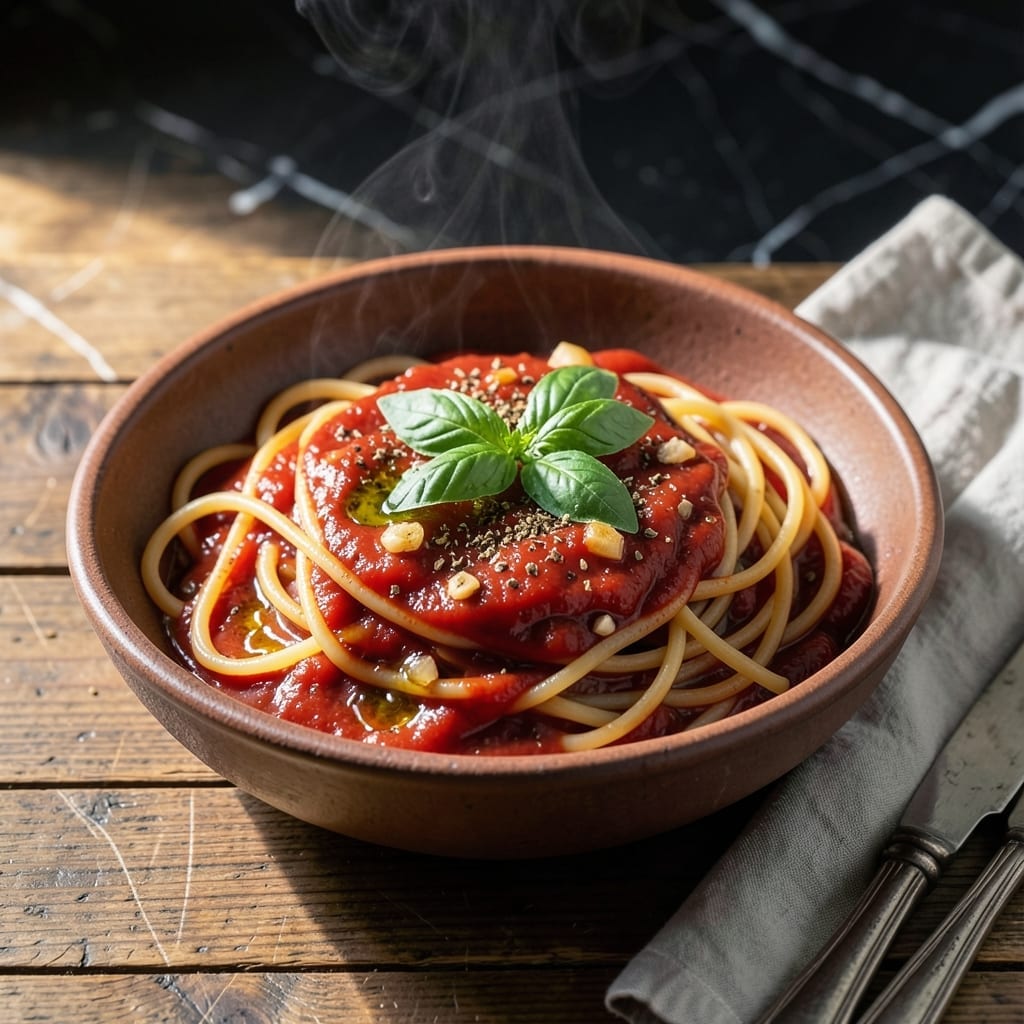
This authentic Italian sauce transforms simple San Marzano tomatoes into a rich, restaurant-quality base for pasta night. The slow simmer develops deep, complex flavors that can’t be rushed.
I’ve perfected this method over years of testing, focusing on traditional techniques that let the tomatoes shine. A touch of olive oil, garlic, and fresh herbs creates the perfect foundation without overpowering the natural sweetness.
What you’ll get is a velvety sauce with just the right balance of acidity and sweetness, clinging perfectly to each strand of spaghetti. The aroma alone will transport you to a trattoria in Naples.
Make a big batch and freeze the leftovers for quick, authentic Italian meals anytime.
Ingredients for Cento Spaghetti Sauce
Ten ingredients transform into restaurant-quality Italian sauce with San Marzano tomatoes as the star.
| Ingredient | Amount | Notes |
|---|---|---|
| San Marzano Whole Peeled Tomatoes 🍅 | 28 oz | Cento brand preferred, hand-crushed |
| Extra-Virgin Olive Oil 🫒 | ¼ cup | High-quality, cold-pressed |
| Yellow Onion 🧅 | 1 whole | Finely diced for base flavor |
| Garlic Cloves 🧄 | 4 cloves | Minced for aromatic depth |
| Fresh Basil Leaves 🌿 | ½ cup | Loosely packed, torn by hand |
| Dried Oregano 🍃 | 1 tsp | Mediterranean variety preferred |
| Red Pepper Flakes 🌶️ | ½ tsp | Adjust to heat preference |
| Sea Salt 🧂 | 1 tsp | Fine grain for even distribution |
| Freshly Ground Black Pepper 🌶️ | ½ tsp | Coarse grind preferred |
| Dry Red Wine 🍷 | ½ cup | Bold variety like Chianti |
The tomatoes are non-negotiable here. Cento San Marzano cans are the gold standard—sweeter, less acidic, and meatier than regular varieties. Look for the DOP certification on the label if you can find it. I grab mine from Whole Foods or Eataly when I’m stocking up, but most grocery stores carry Cento now. Avoid any brands that add calcium chloride—it affects the texture.
No red wine? Substitute tomato juice plus a splash of balsamic for similar depth. Fresh oregano can replace dried at three times the amount, but dried is more traditional here. If basil is out of season, spinach or parsley adds freshness without overpowering. The olive oil should be something you’d happily drizzle on bread—California Olive Ranch or Colavita are solid choices.
Sauce keeps in the fridge for up to 1 week—it actually gets better overnight. Freeze in quart-sized bags for up to 6 months. Lay bags flat to save space (and they thaw faster). Reheat gently to preserve that velvety texture (don’t boil).
Why You’ll Love This Recipe
- Five Ingredients Only: I love that this sauce needs just San Marzano tomatoes, olive oil, onion, garlic, and basil—no chopping marathons or hard-to-find spices.
- Rich Tomato Depth: The slow simmer turns those San Marzano tomatoes into a velvety sauce with sweetness from the onion and a bright finish from fresh basil.
- Freezer Friendly: Honestly, I always double the batch because it freezes beautifully for those nights I need a quick, homemade-tasting meal.
- Budget Stretcher: Here’s what sold me—it feeds my family for pennies compared to jarred sauces, and the flavor is night-and-day better.
Step-by-Step Instructions for Authentic Italian Spaghetti Sauce
Authentic flavor comes from patience and the right San Marzano tomatoes.
Step 1: Sauté Aromatics in Olive Oil
Heat the 0.25 cup Extra-Virgin Olive Oil in a heavy pot over medium-low heat until it shimmers but doesn’t smoke. Add the finely diced 1 whole Yellow Onion and cook for 8-10 minutes, stirring occasionally, until it turns translucent and just begins to caramelize.
Here’s the thing—rushing this step creates a harsh, raw onion flavor. You want the onion to melt into the oil, building a sweet foundation. As it softens, add the 4 cloves Garlic Cloves (minced) and cook for 1 minute until fragrant but not browned. Burnt garlic is bitter; we want mellow, aromatic depth.
Step 2: Deglaze with Red Wine
Pour in the 0.5 cup Dry Red Wine and increase heat to medium-high. Let it simmer for 3-4 minutes until the liquid reduces by half and the sharp alcohol smell dissipates. This step lifts all those browned bits from the pot—pure flavor concentration.
I always use a bold Chianti for this. The tannins cut through the richness of the tomatoes, and the acidity brightens the sauce. You’ll notice the color deepen as the wine reduces. This is where the complexity begins to build.
Step 3: Add Tomatoes and Seasonings
Add the 28 oz San Marzano Whole Peeled Tomatoes, crushing them by hand as they go into the pot. Cento brand is preferred for its sweet, low-acid profile. Stir in the 1 tsp Dried Oregano, 0.5 tsp Red Pepper Flakes, 1 tsp Sea Salt, and 0.5 tsp Freshly Ground Black Pepper.
Bring to a gentle simmer, then reduce heat to low. Partially cover the pot and let it cook for 45-60 minutes. The sauce should bubble lazily, not vigorously. You’re looking for the tomatoes to break down completely and the flavors to meld into a rich, cohesive sauce.
Step 4: Finish with Fresh Basil
About 5 minutes before the sauce is done, stir in the 0.5 cup Fresh Basil Leaves (torn by hand). The torn edges release more aroma than chopped basil. Simmer just long enough for the basil to wilt and infuse its sweet, peppery essence into the sauce.
Taste and adjust seasoning if needed. The finished sauce should have a deep red color, a balance of sweet and acidic notes, and a silky texture that coats the back of a spoon. If it’s too thick, add a splash of pasta water when combining with the pasta. This is the moment that matters: authentic Italian flavor, achieved through time and quality ingredients.
Pro Tips For Making Cento Spaghetti Sauce
- Crush the Tomatoes: Break up the San Marzano tomatoes by hand as you add them to the pot—this gives you chunkier texture and more control than dumping them in whole.
- Sauté Onions Slowly: Cook the yellow onion in olive oil over medium-low for at least 8-10 minutes until translucent; rushing this step leaves a raw bite that ruins the sauce.
- Add Basil Last: Stir in fresh basil leaves only in the final 5 minutes of cooking to preserve their bright flavor—I learned this the hard way after turning it into bitter green confetti once.
- Use the Tomato Juice: Don’t drain the can—pour in all the juice from the San Marzanos, it’s packed with rich tomato flavor that thins the sauce naturally.
Perfect Pairings for cento spaghetti sauce
Pasta Pairings
This sauce clings beautifully to spaghetti or linguine, but I love it with pappardelle for a heartier bite. Cook 1 lb pasta in well-salted water until al dente, then toss directly with 2 cups sauce and a splash of pasta water. 🍝
Wine Pairings
A bold Italian red like Chianti Classico or Barbera complements the acidity perfectly. For white wine lovers, try a crisp Pinot Grigio from Alto Adige—I always grab Santa Margherita when I can find it.
Bread Pairings
Serve with crusty ciabatta or garlic bread to soak up every last bit. I brush slices with olive oil, sprinkle with garlic powder, and toast under the broiler for 3-4 minutes. Warm bread is non-negotiable for me.
Salad Pairings
A simple Caprese salad with fresh mozzarella, tomatoes, and basil echoes the sauce’s flavors. For something lighter, try arugula salad with lemon vinaigrette—the peppery bite cuts through the richness. 🥗
Cheese Toppings
Freshly grated Parmigiano-Reggiano is essential, but I also love adding Pecorino Romano for a sharper bite. Use a microplane for the finest texture, and always grate just before serving for maximum freshness.
Nutrition Facts
Frequently Asked Questions
Can I use regular tomatoes instead of San Marzano?
You can, but the flavor won’t be the same. San Marzano are sweeter and less acidic. If using regular tomatoes, add 1 tsp sugar to balance the acidity and simmer for 10-15 minutes longer.
How long can I store this sauce in the fridge?
It keeps for up to 1 week in an airtight container. The flavors actually deepen overnight, making it taste even better on day two.
What if my sauce is too thick?
Thin it with pasta water or a splash of red wine. Stir in 1-2 tablespoons at a time until it reaches your desired consistency.
Can I freeze this sauce?
Yes! Freeze in quart-sized bags for up to 6 months. Lay flat to save space and thaw overnight in the fridge.

- 6 Egg Cake Recipe with Oil: Light as Air With Buttery Moisture - October 4, 2026
- 4 Bean Casserole Recipe: One-Pan Heartiness With Smoky Paprika Depth - October 4, 2026
- 3-Ingredient Keto Mug Cake Recipe: Microwave Magic in 2 Minutes - October 4, 2026