
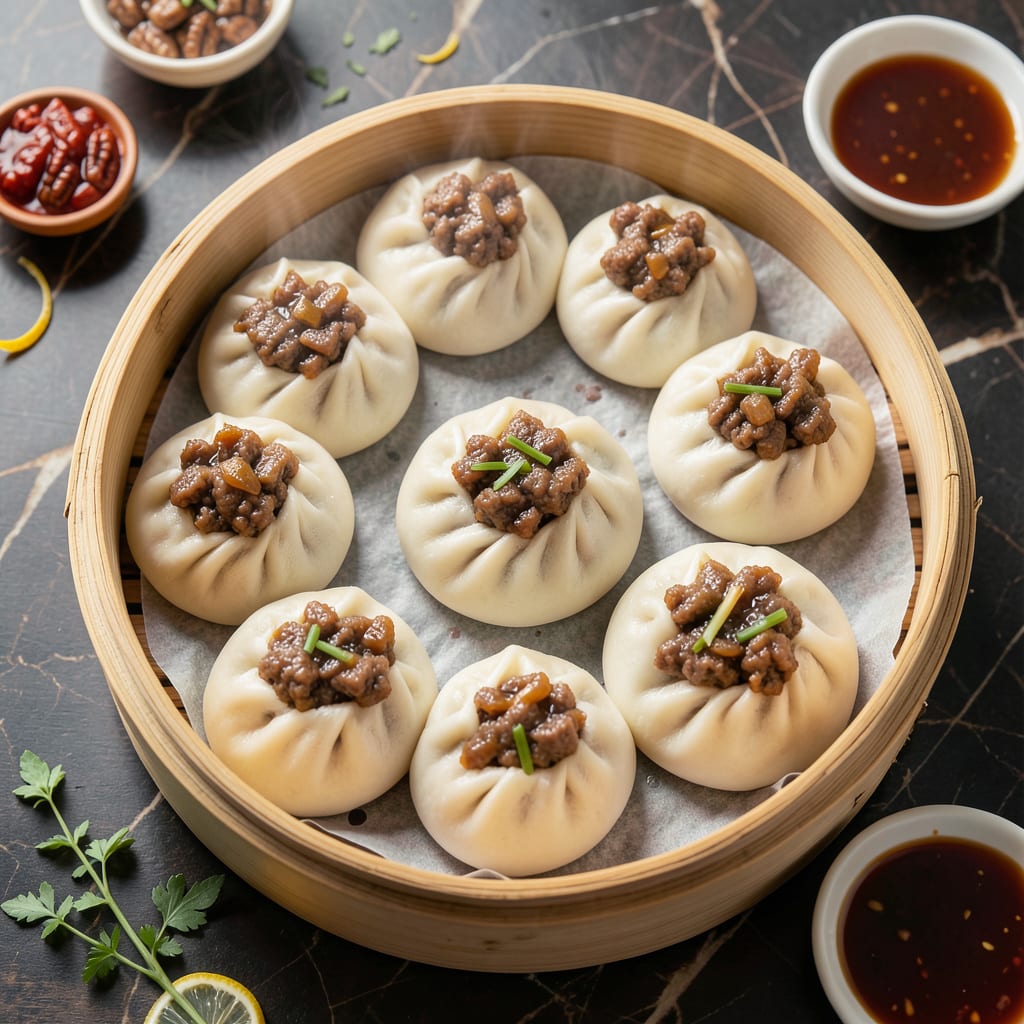
There’s something magical about pulling apart a freshly steamed bun to reveal its savory filling. This traditional technique delivers pillowy soft texture with perfectly cooked centers every time.
I’ve refined this method to ensure consistent results, even for first-time makers. The dough comes together quickly, and the steaming process guarantees moist, fluffy buns that rival any restaurant version.
Ingredients for Chinese Steamed Bun Recipe Bao
Traditional ingredients create authentic pillowy buns with perfectly balanced savory fillings every time.
| Ingredient | Amount | Notes |
|---|---|---|
| All-Purpose Flour 🌾 | 4 cups | Plus extra for dusting work surface |
| Active Dry Yeast 🍞 | 2 ¼ tsp | One packet, proofed in warm water |
| Granulated Sugar 🍚 | ¼ cup | Divided for dough and proofing yeast |
| Whole Milk 🥛 | 1 cup | Warmed to 110°F for activation |
| Vegetable Oil 🫒 | 3 tbsp | Plus extra for greasing bowl |
| Ground Pork 🐖 | 1 lb | For classic char siu bao filling |
| Soy Sauce 🫙 | 3 tbsp | Low-sodium preferred for balance |
| Oyster Sauce 🫙 | 1 tbsp | Essential for authentic umami depth |
| Sesame Oil 🫒 | 1 tsp | Toasted, for finishing aroma |
| Green Onions 🧅 | 3 whole | Thinly sliced for filling and garnish |
| Fresh Ginger 🌿 | 1 tbsp | Minced, for filling flavor base |
| Garlic Cloves 🧄 | 3 cloves | Minced, for savory depth |
| Baking Powder 🧂 | 1 tsp | For extra lift in dough |
| Salt 🧂 | 1 tsp | Divided for dough and filling |
| Parchment Paper 📄 | 12 sheets | Cut into 3-inch squares for steaming |
The flour is foundational—King Arthur all-purpose delivers consistent results. For the yeast, Fleischmann’s active dry works reliably if stored properly. The milk must be whole fat for richness in the dough (2% works in a pinch). For the pork filling, ground pork shoulder has the right fat ratio—avoid lean cuts. Most Asian markets carry authentic oyster sauce, but Kikkoman is widely available at regular grocers.
No pork? Ground chicken or turkey work well, though flavor differs. Vegetarian? Swap in mushrooms or tofu—add extra soy sauce for depth. Out of oyster sauce? Hoisin at half the amount gets close. Green onions can be regular onions if needed. The dough can be made ahead—refrigerate overnight for enhanced flavor development.
Dough keeps 24 hours refrigerated or 3 months frozen. Filling can be prepped 1 day ahead. Steamed buns are best eaten fresh but reheat beautifully—steam 5 minutes to restore that pillowy texture. Always use parchment squares to prevent sticking during steaming.
Why You’ll Love This Recipe
- Minimal Kneading: I love that the dough comes together with just flour, yeast, and a little sugar—no fancy techniques required.
- Pillowy Soft: The whole milk makes these bao so tender, they practically melt in your mouth.
- Endless Fillings: Honestly, I’ve stuffed these with everything from pork to sweet red bean paste and they’re always a hit.
- Budget Stretch: A bag of flour and a few pantry staples yield dozens of buns, making this my go-to for feeding a crowd cheaply.
Step-by-Step Instructions for Chinese Steamed Buns
Master the art of creating these cloud-like parcels with a perfectly seasoned pork filling.
Step 1: Activate the Yeast and Prepare the Dough
Warm the 1 cup Whole Milk to 110°F—this is the ideal temperature for activating the yeast without killing it. In a small bowl, combine the 2.25 tsp Active Dry Yeast with 1 tablespoon of the 0.25 cup Granulated Sugar and the warm milk. Let it sit for 5-7 minutes until frothy.
In a large mixing bowl, combine the 4 cups All-Purpose Flour, remaining granulated sugar, 1 tsp Baking Powder, and ½ tsp Salt. Pour in the activated yeast mixture and 3 tbsp Vegetable Oil. Mix until a shaggy dough forms, then knead on a floured surface for 8-10 minutes until smooth and elastic.
Step 2: Create the Char Siu Bao Filling
In a bowl, combine the 1 lb Ground Pork, 3 tbsp Soy Sauce, 1 tbsp Oyster Sauce, 1 tsp Sesame Oil, 1 tbsp Fresh Ginger (minced), 3 cloves Garlic Cloves (minced), and ½ tsp Salt. Mix thoroughly until sticky. Fold in 3 whole Green Onions (thinly sliced), reserving some for garnish.
Chill the filling for 15 minutes to allow flavors to meld. This step ensures the filling holds its shape when wrapped in the dough and develops a deeper, more balanced taste profile.
Step 3: Shape the Buns
Divide the rested dough into 12 equal portions and roll each into a 3-inch circle, keeping the rest covered with a damp towel to prevent drying. Place 1-2 tablespoons of filling in the center of each circle. Pleat the edges upward, pinching as you go to fully enclose the filling.
Twist the gathered edges slightly to seal—this traditional technique ensures the buns stay closed during steaming. Place each finished bun on a 3-inch square of Parchment Paper to prevent sticking.
Step 4: Proof and Steam to Perfection
Arrange the buns in a steamer basket, leaving 1 inch between each to allow for expansion. Cover and let proof at room temperature for 30-45 minutes until puffed by about 50%.
Bring 2 inches of water to a boil in a wok or pot fitted with the steamer basket. Steam the buns over high heat for 15-18 minutes until the dough is fully set and slightly springy to the touch. Avoid opening the lid during steaming—this causes temperature drops and uneven cooking.
Remove from heat and let rest for 2 minutes before serving. The buns should have a glossy, slightly translucent skin with a pillowy texture. Garnish with reserved green onions and serve warm.
Pro Tips For Making Chinese Steamed Bun Recipe Bao
- Proof the Yeast: Always bloom your active dry yeast in warm whole milk with a pinch of sugar for 5-10 minutes until frothy—this guarantees it’s alive and will give your bao that perfect rise.
- Knead Longer: I learned this the hard way—knead the dough for at least 10 minutes until smooth and elastic, or your buns will turn out dense instead of fluffy.
- Skip Cold Milk: Using cold whole milk straight from the fridge will slow down yeast activation—let it sit at room temperature for 10 minutes first, or your dough won’t rise properly.
- Oil the Dough: Brush the dough with a little vegetable oil before the first rise—this keeps the surface from drying out and makes it easier to shape later.
Storing and Reheating This chinese steamed bun recipe bao
Refrigerator Storage
Let your steamed buns cool completely before storing. Place in an airtight container with parchment between layers to prevent sticking. They’ll keep fresh in the fridge at 40°F or below for up to 3 days. 💡
Freezer Storage
For longer storage, freeze on a tray first until solid, then transfer to a freezer bag. They’ll maintain quality for up to 1 month. I always label with the date—trust me, you’ll forget otherwise.
Steaming Reheating
This is the best method to restore that fresh-steamed texture. Place buns in your steamer basket with 2 inches of boiling water, cover tightly, and steam for 5-7 minutes until hot throughout. The dough will soften beautifully. 🔥
Microwave Reheating
For a quick option, wrap a bun in a damp paper towel and microwave on 50% power for 45-60 seconds. This prevents the dough from drying out. Let it rest for 1 minute before eating.
Filling Safety
Always ensure reheated buns reach an internal temperature of 165°F when using pork filling. I use a instant-read thermometer to check. Never reheat more than once for food safety.
Reviving Leftovers
If your buns seem dry after storage, brush the tops with a little warm water before reheating. This simple trick brings back that just-steamed freshness you love.
Nutrition Facts
Frequently Asked Questions
What’s the secret to fluffy buns?
Knead the dough for the full 8-10 minutes until smooth. Proper proofing at room temperature for 30-45 minutes is also key for that airy texture.
Can I use a different filling?
Try ground chicken, shrimp, or even vegetarian options like mushrooms or tofu. Adjust seasoning to taste.
How do I prevent buns from sticking?
Always use parchment paper squares under each bun. This ensures easy removal and prevents them from tearing during steaming.
Why did my buns collapse after steaming?
This usually happens if they’re underproofed or the steamer lid is opened too soon. Let them rest for 2 minutes after steaming.

- 6 Egg Cake Recipe with Oil: Light as Air With Buttery Moisture - October 4, 2026
- 4 Bean Casserole Recipe: One-Pan Heartiness With Smoky Paprika Depth - October 4, 2026
- 3-Ingredient Keto Mug Cake Recipe: Microwave Magic in 2 Minutes - October 4, 2026