
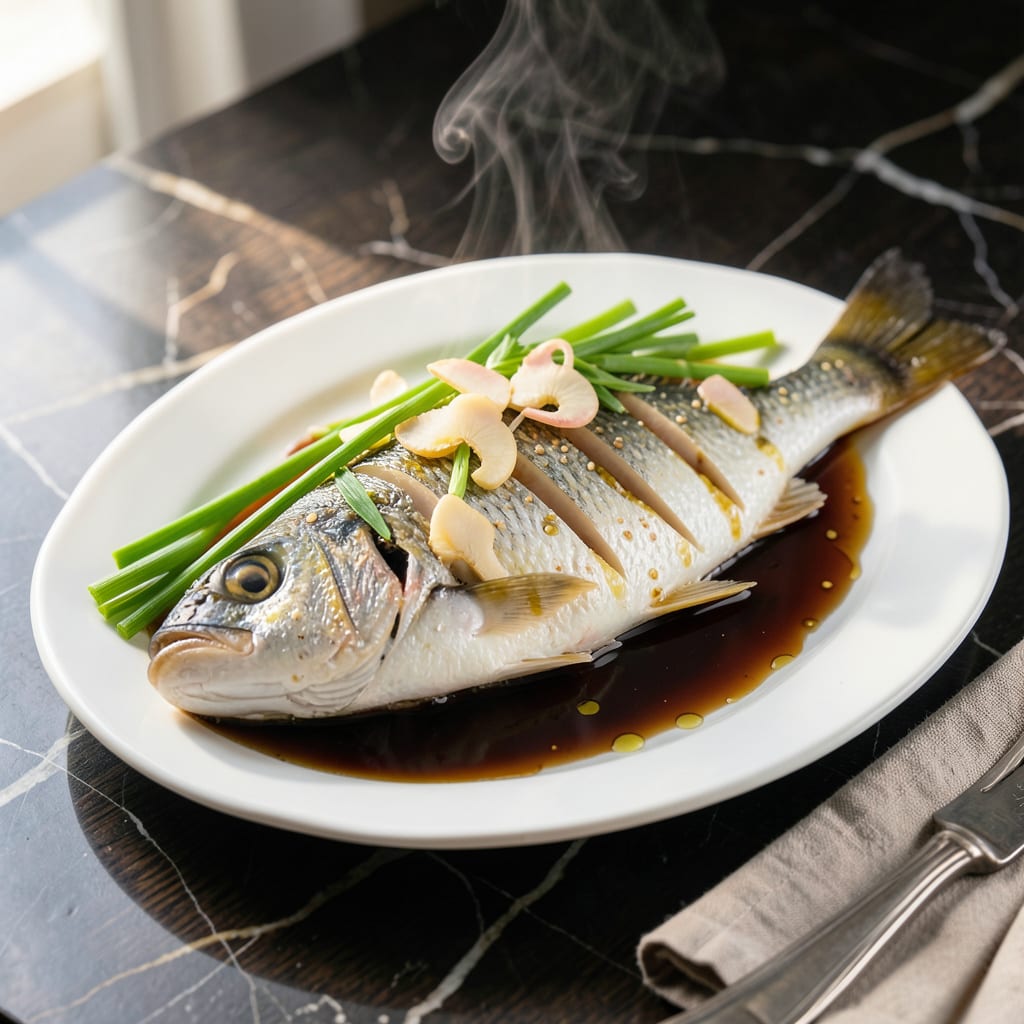
This traditional steaming method preserves the fish’s natural tenderness while infusing it with aromatic ginger and scallion flavors. The technique ensures delicate, moist flesh that flakes perfectly with each bite.
Using fresh whole fish and simple seasonings, this dish delivers restaurant-quality results at home. The hot oil finish over the ginger and scallions releases an intoxicating fragrance that defines authentic Chinese cuisine.
Ingredients for Chinese Steamed Fish
Fresh whole fish and aromatic seasonings deliver authentic Chinese flavors with minimal effort.
| Ingredient | Amount | Notes |
|---|---|---|
| Whole White Fish 🐟 | 1 ½ lb | Fresh, scaled and gutted, such as sea bass or snapper |
| Fresh Ginger 🌿 | 3 oz | Peeled and julienned into thin matchsticks |
| Scallions 🧅 | 6 whole | Thinly sliced, white and green parts separated |
| Soy Sauce 💧 | 3 tbsp | Light soy sauce preferred for color |
| Shaoxing Wine 🍶 | 2 tbsp | Chinese cooking wine, or dry sherry |
| Sesame Oil 🫒 | 1 tsp | Toasted for aromatic finish |
| Neutral Oil 🫒 | ½ cup | Peanut or vegetable oil for hot oil finish |
| Salt 🧂 | 1 tsp | Kosher or fine sea salt |
| White Pepper 🌶️ | ½ tsp | Freshly ground preferred |
| Sugar 🍚 | 1 tsp | Optional, balances flavors |
| Cilantro 🌿 | ¼ cup | Fresh leaves, roughly chopped for garnish |
| Red Chili Pepper 🌶️ | 1 whole | Thinly sliced for heat and color |
The fish is the foundation—seek out the freshest whole white fish like sea bass or snapper from a trusted seafood counter. Ask for it scaled and gutted to save time. Fresh ginger is non-negotiable; look for firm, smooth roots without wrinkles. Asian markets typically carry the best selection of ginger and scallions, often at better prices than standard supermarkets.
No Shaoxing wine? Dry sherry at equal volume works in a pinch. Light soy sauce is ideal for color, but regular soy sauce is acceptable. If avoiding sugar, a pinch of msg or a dash of mirin adds umami depth. Scallions can be swapped with chives for a milder flavor. The hot oil finish is essential—use peanut oil for its high smoke point and neutral taste.
Steamed fish is best served immediately, but leftovers keep in the fridge for 1-2 days. Reheat gently by steaming again to maintain moisture. Ginger and scallions can be prepped a day ahead and stored in the fridge. Always buy fish the same day you plan to cook it for peak freshness.
Why You’ll Love This Recipe
- One Pan Wonder: I just place the fish on a plate, top with ginger and scallions, and let the steamer do the work.
- Umami Bomb: The soy sauce and Shaoxing wine create this rich, savory depth that soaks into every bite of tender fish.
- Dinner Party Star: Honestly, it looks impressive but takes less effort than ordering takeout.
- Budget Friendly: A whole white fish stretches farther than I expected, and the simple sauce keeps costs low.
Step-by-Step Instructions for Chinese Steamed Fish
Master the technique for perfectly tender fish with fragrant ginger-scallion topping every time.
Step 1: Prepare and Season the Whole White Fish
Pat the 1.5 lb whole white fish dry inside and out with paper towels. This removes excess moisture that could steam the flesh unevenly. Make two or three diagonal slashes on each side of the fish—this allows the heat to penetrate evenly and prevents curling during cooking.
Rub the cavity and exterior with 1 tsp salt and 0.5 tsp white pepper. For extra flavor, I also sprinkle a pinch of 1 tsp sugar inside the cavity. Place the fish on a heatproof plate that fits inside your steamer or wok—this makes transfer easier later.
Step 2: Steam the Fish to Perfection
Bring 2-3 inches of water to a rolling boil in a wok or large pot with a steamer rack. When the water is at a full, vigorous boil, carefully place the plate with the fish onto the rack. Cover immediately with a tight-fitting lid to trap the steam.
Steam the fish for 8-10 minutes depending on thickness. You’ll know it’s done when the flesh turns opaque and flakes easily when tested with a fork near the thickest part. Avoid overcooking—the fish should still appear slightly translucent at the very center when removed from the steamer as it will continue cooking from residual heat.
Step 3: Prepare the Aromatic Ginger-Scallion Topping
While the fish steams, combine the 3 oz fresh ginger (julienned), white parts of 6 whole scallions (thinly sliced), 3 tbsp soy sauce, 2 tbsp shaoxing wine, and 1 tsp sesame oil in a small bowl. This mixture creates the signature aromatic sauce that defines this dish.
Thinly slice the green parts of the 6 whole scallions and 1 whole red chili pepper separately—these will be used as garnish later. The ginger and scallion whites need to be finely cut to release their flavors into the sauce, while the greens are primarily for color and freshness.
Step 4: Finish with Hot Oil and Garnishes
Once the fish is cooked, carefully remove the plate from the steamer. Discard any liquid that has accumulated on the plate. Immediately scatter the ginger-scallion mixture evenly over the fish. The residual heat will begin to cook the aromatics gently.
Heat the 0.5 cup neutral oil in a small saucepan until it just begins to shimmer—about 350-375°F. Slowly drizzle the hot oil over the ginger and scallions. You should hear a gentle sizzling sound as the oil hits the aromatics, releasing their fragrance. This hot oil technique is crucial—it unlocks the flavors and creates an irresistible aroma.
Sprinkle the reserved scallion greens and 0.25 cup cilantro over the top. Serve immediately with steamed rice to soak up the delicious sauce.
Pro Tips For Making Chinese Steamed Fish
- Score the Fish: Make shallow diagonal cuts on both sides of the fish before steaming—this lets the heat penetrate evenly and the flavors seep in deeper.
- Use Boiling Water: I learned this the hard way—always start with boiling water in your steamer to guarantee consistent, high heat from the first minute.
- Skip the Cold Fish: Take the fish out of the fridge 15-20 minutes before steaming so it cooks through without drying out on the edges.
- Ginger Last: Add the fresh ginger slices just before serving, not during steaming—this keeps its bright, sharp flavor instead of turning bitter.
Storing and Reheating Leftovers
Refrigerator Storage
Let your steamed fish cool to room temperature within 2 hours of cooking. Transfer to an airtight container—I use glass containers with locking lids to preserve freshness. Store in the fridge at 40°F or below for up to 24 hours for best texture and flavor. ❄️
Freezer Storage
While possible, freezing isn’t ideal for steamed fish as it can compromise the delicate texture. If necessary, wrap tightly in plastic wrap then aluminum foil, and freeze for up to 1 month. Thaw overnight in the fridge before reheating.
Steaming Reheating
This is my preferred method to maintain moisture. Place the fish in a steamer over 1-2 inches of boiling water for 5-7 minutes until heated through. The steam will revive the fish’s tenderness beautifully.
Microwave Reheating
For quick meals, cover the fish with a damp paper towel and microwave on 50% power in 30-second intervals until reaching 145°F. Add a splash of water to the container before reheating to prevent drying.
Serving Leftovers
Reheated fish is best enjoyed with fresh garnishes. Sprinkle with chopped cilantro and a drizzle of hot oil to revive the aromatics. Serve immediately with steamed rice to absorb the delicious sauce. 💡
Nutrition Facts
Frequently Asked Questions
What’s the best fish for this method?
Use firm, fresh whole fish like sea bass or snapper. These hold up well to steaming and stay tender. Avoid very oily fish like salmon, as their texture may become too soft.
How do I know when it’s done?
The flesh should turn opaque and flake easily with a fork. Aim for 8-10 minutes of steaming. Don’t overcook—a slight translucency at the center is fine, as it will finish cooking off the heat.
Can I skip the hot oil step?
No, the hot oil is essential! It unlocks the ginger and scallion flavors, creating the signature aroma. Use 350-375°F oil and drizzle slowly for best results.
What can I use instead of Shaoxing wine?
Dry sherry works perfectly as a substitute. Use an equal amount (2 tbsp) to maintain the dish’s authentic depth of flavor.

- 6 Egg Cake Recipe with Oil: Light as Air With Buttery Moisture - October 4, 2026
- 4 Bean Casserole Recipe: One-Pan Heartiness With Smoky Paprika Depth - October 4, 2026
- 3-Ingredient Keto Mug Cake Recipe: Microwave Magic in 2 Minutes - October 4, 2026