
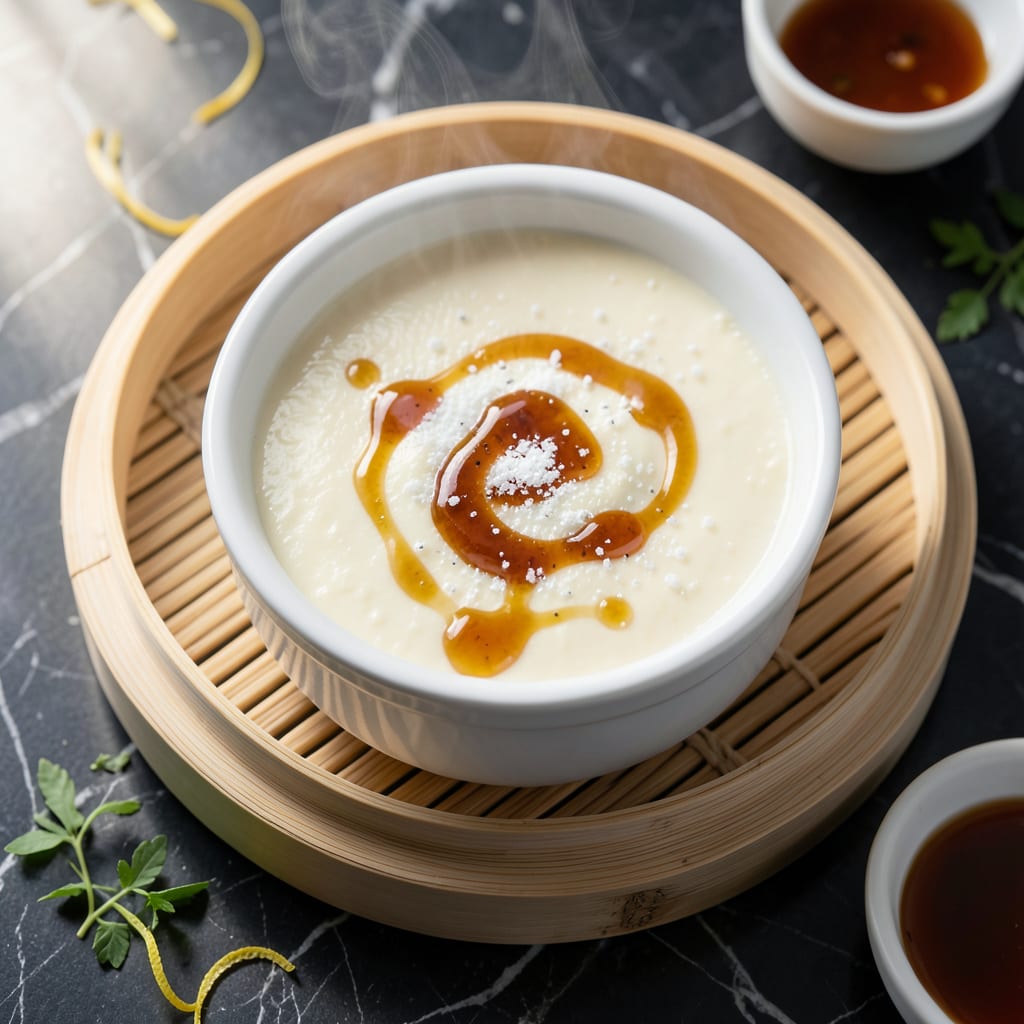
This delicate dessert captures the essence of Chinese culinary tradition with its silky smooth texture and subtle sweetness.
Using just eggs, sugar, and water, the steaming process transforms simple ingredients into a custard-like treat that’s light yet deeply satisfying. It’s a dish that celebrates simplicity and precision in equal measure.
Ingredients for Chinese Steamed Egg Custard Dessert
Silky smooth and subtly sweet, this traditional dessert relies on just a few quality ingredients for perfect texture.
| Ingredient | Amount | Notes |
|---|---|---|
| Large Eggs 🥚 | 6 whole | Room temperature for best texture |
| Granulated Sugar 🍚 | ½ cup | Adjust to taste preference |
| Warm Water 💧 | 2 cups | Filtered preferred for purity |
| Vanilla Extract 🌿 | 1 tsp | Pure extract for depth |
| Honey 🍯 | 1 tbsp | Optional for enhanced sweetness |
| Salt 🧂 | ¼ tsp | Fine grain for even distribution |
| Neutral Oil 🫒 | ½ tsp | For greasing ramekins or bowl |
Eggs are the foundation here. Farm-fresh or organic yield the richest, most stable custard. Room temperature is critical—cold eggs can cause curdling during steaming. The sugar should be fine granulated to dissolve completely in the warm water. For the water, filtered is ideal to avoid any off-flavors that might interfere with the delicate taste.
Vanilla extract adds depth, but pure vanilla is worth the splurge over imitation. Honey can substitute for some sugar if you prefer a floral note (use light-colored varieties like clover). No vanilla? A tiny pinch of almond extract works in a pinch. The salt might seem negligible, but it balances the sweetness—don’t skip it.
This custard is best served fresh but can be refrigerated for up to 2 days. Reheat gently in a steamer or microwave with a damp paper towel cover. The mixture can sit for 10 minutes before steaming if you need to prep ahead (stir well before cooking).
Why You’ll Love This Recipe
- 5-Minute Mix: I crack the eggs, whisk in sugar and warm water, and it’s ready for steaming—no fancy steps, just straightforward magic.
- Silky Vanilla Sweetness: The vanilla and honey give it this melt-in-your-mouth richness that’s somehow light yet totally satisfying.
- Guest-Worthy Treat: I serve this warm or chilled, and it always feels special without me stressing over presentation.
- Pennywise Perfection: Honestly, eggs and sugar this cheap shouldn’t taste this good, but it does every single time.
Step-by-Step Instructions for Chinese Steamed Egg Custard Dessert
Master the technique for a velvety texture that melts on the tongue with delicate sweetness.
Step 1: Prepare and Grease the Steaming Vessel
Select a heatproof bowl or ramekins that will fit inside your steamer with the lid securely closed. Using a pastry brush, lightly coat the interior with 0.5 tsp neutral oil, ensuring complete coverage—this prevents sticking and guarantees a clean release.
Place your steamer over 1-2 inches of water in a pot with a tight-fitting lid. Bring the water to a full boil before adding your custard mixture. The water level should never touch the custard container, as direct contact will create hot spots and disrupt the even steaming process.
Step 2: Create the Silky Egg Base
In a large mixing bowl, crack 6 whole large eggs and discard the shells. Whisk vigorously with a fork or balloon whisk for 1-2 minutes until no streaks remain and the mixture appears completely homogeneous. The eggs should be at room temperature to prevent temperature shock when combined with warm water.
Avoid incorporating air bubbles, which can create unsightly holes in your finished custard. If you notice foam forming on the surface, skim it off with a spoon before proceeding. This meticulous preparation ensures the signature smooth texture of authentic Chinese steamed egg custard.
Step 3: Sweeten and Flavor the Mixture
Gradually add 0.5 cup granulated sugar to the eggs while continuing to whisk. The sugar should dissolve completely, creating a pale, slightly thickened liquid. This gradual incorporation prevents graininess and ensures even distribution throughout the custard.
Next, pour in 2 cups warm water in a slow, steady stream while whisking constantly. Add 1 tsp vanilla extract, 1 tbsp honey, and 0.25 tsp salt. The mixture should now resemble a thin batter. Taste and adjust sweetness if needed, remembering that flavors will mellow slightly during steaming.
Step 4: Strain and Steam to Perfection
Pour the custard mixture through a fine-mesh sieve into your prepared steaming vessel. This critical step removes any undissolved sugar or egg fragments, guaranteeing the ultra-smooth texture that defines this dessert. Discard any solids remaining in the sieve.
Cover the vessel with its lid or foil, then carefully place it in the preheated steamer. Steam over medium-low heat for 20-25 minutes, checking at 20 minutes for doneness. The custard is ready when it appears set with a slight jiggle in the center, similar to flan, and reaches an internal temperature of 170-175°F.
Step 5: Cool and Serve
Carefully remove the custard from the steamer and let it cool at room temperature for 10 minutes. The texture will continue to set as it cools. For best results, transfer to the refrigerator and chill for at least 1 hour before serving.
Serve cool or chilled, either in the steaming vessel or inverted onto individual plates. The surface should be glossy and smooth, with a delicate, jiggly consistency that yields effortlessly to a spoon. For an elegant presentation, garnish with a drizzle of additional honey or fresh fruit just before serving.
Pro Tips For Making Chinese Steamed Egg Custard Dessert
- Strain the Eggs: Always pass the beaten eggs through a fine-mesh sieve—this removes any stubborn bits of chalazae so your custard stays velvety smooth.
- Use Warm Water: Mix the eggs with warm (not hot) water, about 100°F, to prevent curdling and help the sugar dissolve evenly before steaming.
- Steam Gentle and Low: Keep the heat at a low simmer and cover the lid with a cloth to catch drips—I learned this the hard way after ruining two batches with boiling water splashes.
- Sweeten After Steaming: Drizzle the honey or vanilla just before serving; adding it too early can throw off the custard’s texture.
Essential Equipment for This Recipe
Steamer Selection
I recommend a bamboo steamer for authenticity—it distributes heat gently and adds subtle aroma. A stainless steel steamer insert works too, fitting standard pots. Choose one with a tight lid to trap steam effectively. 💡
Heatproof Bowl
Use a heatproof glass or ceramic bowl that fits inside your steamer. I prefer Pyrex for even heat distribution. Avoid metal bowls, as they can create hot spots that overcook edges.
Fine-Mesh Sieve
A fine-mesh sieve is essential for removing egg fragments and undissolved sugar. This ensures the signature silky texture. I use a 8-inch diameter sieve for easy pouring.
Whisk Choice
Use a balloon whisk or fork for smooth blending without incorporating air bubbles. A 10-inch whisk gives good control. Avoid electric mixers—they add too much air.
Temperature Tools
An instant-read thermometer helps verify doneness at 170-175°F. I like ThermoWorks for accuracy. Also, a pastry brush ensures even oil coating in your bowl. 🌡️
Optional Extras
For presentation, have small ramekins for individual servings or a fine grater for fresh nutmeg. A long-handled spoon helps serve from deep steamers safely.
Nutrition Facts
Frequently Asked Questions
Can I use a metal bowl for steaming?
Avoid metal bowls as they create hot spots. Use heatproof glass or ceramic for even cooking. This prevents overcooked edges and ensures smooth texture.
Why does my custard have bubbles on top?
Bubbles form from whisking too vigorously. Skim off foam before steaming and use a fine-mesh sieve to remove air. Gentle handling yields the silkiest results.
How do I know when it’s done?
The custard should jiggle slightly in the center like flan. Use an instant-read thermometer—it’s ready at 170-175°F. Oversteaming causes rubbery texture.
Can I make this ahead of time?
Yes! The mixture can sit for 10 minutes before steaming. After cooking, refrigerate for up to 2 days. Reheat gently in a steamer or microwave.

- 6 Egg Cake Recipe with Oil: Light as Air With Buttery Moisture - October 4, 2026
- 4 Bean Casserole Recipe: One-Pan Heartiness With Smoky Paprika Depth - October 4, 2026
- 3-Ingredient Keto Mug Cake Recipe: Microwave Magic in 2 Minutes - October 4, 2026