
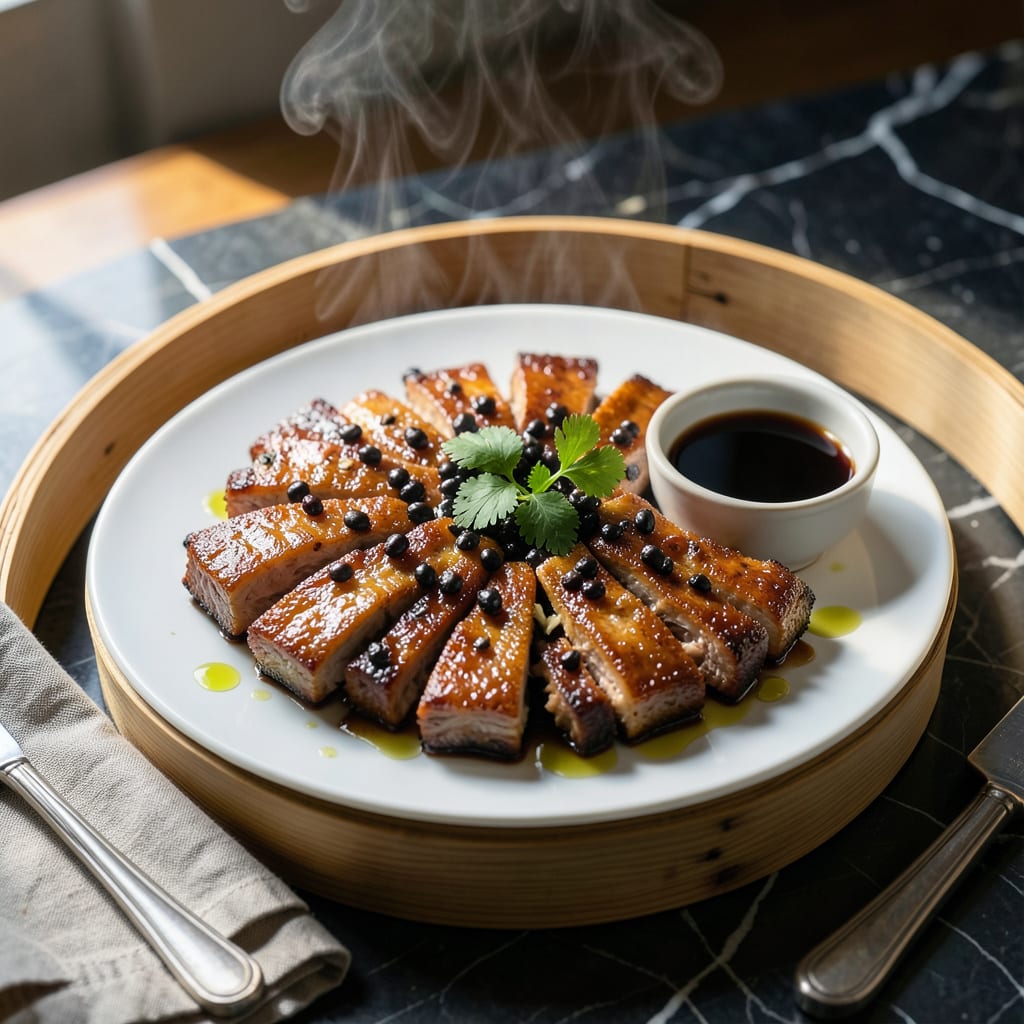
These Cantonese-style pork ribs deliver the authentic dim sum experience with minimal effort. The secret is a simple marinade of fermented black beans, garlic, and soy sauce that infuses every bite with bold flavor.
Steaming locks in juices for fall-off-the-bone tenderness. This professional technique ensures restaurant-quality results at home with just 30 minutes of prep and cooking.
Ingredients for Dim Sum Steamed Pork Ribs
Professional-grade ingredients deliver authentic Cantonese flavor with minimal effort for these succulent bites.
| Ingredient | Amount | Notes |
|---|---|---|
| Pork Baby Back Ribs 🍖 | 2 lb | Cut into individual ribs |
| Fermented Black Beans ⚫ | 2 tbsp | Rinsed and drained |
| Garlic Cloves 🧄 | 6 cloves | Minced finely |
| Soy Sauce 🥢 | ⅓ cup | Low-sodium preferred |
| Oyster Sauce 🫒 | 2 tbsp | For depth of flavor |
| Chinese Shaoxing Wine 🍶 | 2 tbsp | Or dry sherry substitute |
| Light Brown Sugar 🍚 | 2 tbsp | Balances savory notes |
| Ginger Root 🌿 | 1 tbsp | Freshly grated |
| Cornstarch 🌾 | 2 tsp | For marinade thickening |
| Sesame Oil 🫒 | 1 tsp | Toasted for aroma |
| Green Onions 🧅 | 4 whole | Thinly sliced for garnish |
| Water 💧 | 1 cup | For steaming |
The ribs are everything here. Baby back ribs from a trusted butcher like Whole Foods or your local Asian market ensure the right fat-to-meat ratio. Look for ribs with good marbling (the white streaks of fat)—this guarantees fall-off-the-bone tenderness. The fermented black beans are non-negotiable; find them in the Asian aisle or at H Mart. Avoid any with added preservatives for the cleanest flavor.
No Shaoxing wine? Dry sherry at equal amounts works perfectly. Oyster sauce can be swapped for vegetarian oyster sauce if needed, though the flavor profile shifts slightly. For a gluten-free version, use tamari instead of soy sauce. The cornstarch helps the marinade cling—skip it and the sauce slides off. Fresh ginger is key; powdered lacks the bright, zesty punch.
Marinate the ribs for at least 2 hours (overnight is ideal). Leftovers keep 3-4 days refrigerated, though they’re best fresh. Freeze uncooked marinated ribs for up to 3 months—thaw before steaming. Always steam in a single layer for even cooking.
Why You’ll Love This Recipe
- No-Fuss Steaming: I just chop the ribs, toss them with the marinade, and let the steamer do the work—no babysitting required.
- Umami Bomb: Fermented black beans and oyster sauce pack each bite with that deep, salty-sweet dim sum flavor I crave.
- Crowd Pleaser: Honestly, it’s my go-to for potlucks because everyone—even the picky eaters—goes back for seconds.
- Budget Stretcher: A single rack of baby back ribs feeds four generously, and leftovers taste even better the next day.
Step-by-Step Instructions for Cantonese-Style Steamed Pork Ribs
Master the technique for fall-off-the-bone ribs with authentic dim sum flavor.
Step 1: Prepare and Marinate the Ribs
Cut the 2 lb pork baby back ribs into individual ribs using a sharp chef’s knife. Pat them dry with paper towels to ensure the marinade adheres properly and doesn’t slide off during steaming.
In a large bowl, combine the 0.33 cup soy sauce, 2 tbsp oyster sauce, 2 tbsp Chinese Shaoxing wine, 2 tbsp light brown sugar, 6 cloves minced garlic cloves, 1 tbsp freshly grated ginger root, 2 tbsp rinsed and drained fermented black beans, 2 tsp cornstarch, and 1 tsp sesame oil. Whisk until the sugar and cornstarch dissolve completely and the mixture is smooth.
Add the ribs to the marinade, turning to coat every piece thoroughly. I always let the ribs marinate for at least 2 hours in the refrigerator, but for maximum flavor penetration, marinate overnight. This step ensures the ribs absorb all the aromatic and savory notes characteristic of Cantonese dim sum.
Step 2: Arrange the Ribs for Steaming
Line a bamboo steamer or a heatproof plate that fits inside your steaming setup with parchment paper. Poke a few small holes in the parchment to allow steam to circulate underneath the ribs, preventing them from sticking.
Arrange the marinated ribs in a single layer on the parchment, leaving a little space between each piece. This allows the steam to envelop every rib evenly. Pour any remaining marinade over the ribs just before steaming—this ensures no flavor is wasted.
Step 3: Steam to Perfection
Bring the 1 cup water to a rolling boil in a wok or large pot that will accommodate your steamer. Place the ribs in the steamer, cover with the lid, and steam over high heat for 45-50 minutes.
Check the water level halfway through steaming and replenish with hot water if it runs low. The ribs are done when the meat pulls away from the bone easily and is tender when pierced with a fork. The marinade should caramelize slightly, creating a glossy, flavorful glaze on the ribs.
Step 4: Garnish and Serve
Once the ribs are fully cooked, carefully transfer them to a serving plate. The meat should be incredibly tender, nearly falling off the bone, with a deep, savory-sweet flavor from the marinade.
Garnish with the 4 whole green onions, thinly sliced. Serve immediately while hot, as the ribs are best enjoyed fresh from the steamer. The contrast between the tender meat, the rich sauce, and the slight crunch of the green onions makes these ribs a true dim sum delight.
Pro Tips For Making Dim Sum Steamed Pork Ribs
- Pre-Cook the Ribs: Parboil the ribs for 5 minutes before marinating to remove impurities and help the flavors penetrate deeper—I learned this the hard way after my first batch tasted muddy.
- Rinse the Black Beans: Soak fermented black beans for 10 minutes and rinse well to cut the saltiness, or your ribs will end up unpleasantly briny.
- Skip Overcrowding: Leave space between ribs in the steamer so they cook evenly; I used to cram them in and ended up with soggy, uneven pieces.
- Use a Lid Gap: After years of trial and error, I now steam with the lid slightly ajar for the last 5 minutes to prevent excess condensation from watering down the glaze.
Storing and Reheating This dim sum steamed pork ribs
Refrigerator Storage
Let your ribs cool completely before transferring to an airtight container. I use glass containers with snap-tight lids. Store in the fridge at 40°F or below for up to 3-4 days. The flavors actually deepen as they rest. ❄️
Freezer Storage
For longer storage, arrange cooled ribs in a single layer on a tray to freeze first. Once solid, transfer to freezer bags with all air removed. Label with the date—they’ll keep for 3 months without losing quality. Thaw overnight in the fridge before reheating.
Steam Reheating
This method preserves texture best. Place ribs in your steamer over 1 inch of boiling water, cover, and heat for 8-10 minutes. Check water levels and add more hot water if needed. The steam revives the juiciness beautifully. 🔥
Microwave Reheating
For quick meals, place ribs on a microwave-safe plate with 1 tbsp water. Cover with a damp paper towel and heat on 70% power for 1-2 minutes. Stir or flip halfway through for even warming.
Oven Reheating
Preheat oven to 350°F. Wrap ribs in foil with 2 tbsp water and bake for 10-12 minutes. This works well for larger batches. The foil traps steam to prevent drying out.
Nutrition Facts
Frequently Asked Questions
What’s the best cut for this dish?
Use baby back ribs for the most tender results. Their smaller size and good marbling ensure fall-off-the-bone texture after steaming. Avoid spare ribs—they’re tougher and need longer cooking.
Can I skip the fermented black beans?
Not recommended—they add the signature umami depth. If unavailable, substitute with 1 tbsp miso paste or 1 tsp fish sauce, but the flavor won’t be as authentic.
Why did my ribs turn out dry?
Over-steaming is the most common cause. Stick to 45-50 minutes max and ensure your steamer has a tight lid. Also, don’t skip the parchment paper—it prevents sticking and moisture loss.
Can I make this in an Instant Pot?
Yes! Use the steamer basket with 1 cup water on high pressure for 25 minutes, then natural release. The texture will be slightly different but still delicious.

- 6 Egg Cake Recipe with Oil: Light as Air With Buttery Moisture - October 4, 2026
- 4 Bean Casserole Recipe: One-Pan Heartiness With Smoky Paprika Depth - October 4, 2026
- 3-Ingredient Keto Mug Cake Recipe: Microwave Magic in 2 Minutes - October 4, 2026